


careertrainer.ai

Practice discovery calls as live audio role-play and spot customer needs earlier, more precisely—and without any sales pressure.

Train needs analysis with Careertrainer.ai

With Careertrainer.ai, you train targeted questions, clean needs assessment, and how to handle vague answers in realistic AI role-play scenarios. This helps you improve your needs analysis measurably before you move into real customer conversations.

Live example · This is what training looks like

3 scenarios
Phone call

Your own scenario

Emily Turner

Emily Turner

Leadership

Regional Sales Enablement Manager · 38

Train discovery: turn “we need something” into measurable needs

A rep delivers shallow discovery—coach her to extract real business drivers and decision criteria.

Goal: Practice leading the rep to uncover the customer’s real needs, urgency, and success criteria. Ensure the rep can handle vague responses without derailing the call.

Practice with Emily Turner — it’s free

Metrics that show how better needs analysis drives revenue

These 4 numbers explain why structured discovery conversations are so critical for pipeline quality, win rate, and sales training needs.

95%
Buyers choose a provider with a clear vision
When you clearly identify your needs and connect them directly to business goals, your chances of being perceived as a relevant provider increase. (Source: linkedin.com, 2023)
2,3x
Higher goal achievement with data-driven sales coaching
Regular, measurable conversation training directly improves the quality of your discovery—and leads to more reliable sales results. (Source: mckinsey.com, 2024)
49%
the seller prioritizes better buyer-intent data
Without precise questions in needs analysis, buying interest often remains unclear. That’s exactly where you determine whether an opportunity is truly qualified. (Source: hubspot.com, 2024)
43%
More performance through coaching for your sales team
Build teams with consistent coaching—so their conversation skills improve faster than teams that only rely on product knowledge or one-off training sessions. (Source: salesforce.com, 2023)

Why Sales Needs Analysis often comes too late, stays too shallow, or feels too uncertain

Many discovery calls fail not because of a lack of product knowledge, but because of unclear questions, premature pitching, and too little depth in real customer conversations. That’s exactly where Careertrainer.ai comes in: a DACH-focused AI platform for hands-on conversation training through realistic live audio role-play. You’ll train needs analysis in a realistic, repeatable way—with immediate feedback and measurable skill development.

AI character for industry-focused solutions

AI role-play focus

If discovery isn’t deep enough, the entire pipeline suffers.

AI role-play training makes needs analysis practiceable—before vague answers turn into bad opportunities, price pressure, or lost deals.

Open vague answers clearlyAvoid pitching too early
Challenge 01

Vague customer replies hide your real needs

In the discovery call, you often hear phrases like “it’s basically running,” “we’ll take a look,” or “it’s not a big priority right now”—but you still can’t clearly get to the level of priority, the triggers, or the decision pressure behind it. The result: unclear opportunities, weak next steps, and forecasts based on assumptions rather than verifiable needs. With Careertrainer.ai, you train needs analysis in realistic AI role-play conversations with reserved, skeptical, or analytical counterparts—and learn to follow up more precisely.

Book a free demo
Challenge 02

Premature pitching destroys the quality of your discovery.

As soon as a prospect hints at a problem, many sales reps jump into features, case studies, or demos before the real cause, impact, and internal priority are fully understood. This reduces conversation relevance, increases objections later on, and lowers conversion rates from discovery to demo or proposal. With Careertrainer.ai, you can practice these exact moments through realistic live audio role-play—so you build conversation discipline and sharpen your needs analysis before you present.

Book a free demo
Challenge 03

Without stakeholder logic, needs analysis stays superficial.

A good needs analysis doesn’t stop at the other person’s immediate pain point—it also clarifies budget fit, decision paths, risks for the relevant department, Procurement, or management, and the internal trigger for change. If these layers are missing, opportunities in your CRM may still look well-qualified at first, but later they stall out—turning into no decision, no progress, or price comparisons. With Careertrainer.ai, you train different roles and underlying motivations in AI conversation simulations—so you can match specialist needs with a business case and buying behavior.

Book a free demo
Challenge 04

Classic discovery training is often too theoretical

Books, seminars, and one-off coaching sessions can provide frameworks and question lists—but they rarely offer the kind of repeated practice you need when the pressure is on: handling objections, sidestepping tactics, and the emotional dynamics of real conversations. As a result, teams may understand how needs analysis is supposed to sound in theory, but they often can’t apply it consistently in live calls. Careertrainer.ai closes exactly this gap with instantly available AI role-play training, realistic audio scenarios, and direct feedback on your communication style, questioning techniques, and how deep you get into needs.

Book a free demo
Target audiences

For these roles, demand analysis training is especially worth it.

Careertrainer.ai is a DACH-focused AI platform for practical conversation training through realistic live audio role-play. On this solution page for “Train needs analysis,” you’ll see how different stakeholders can carry out discovery, rollout, and success measurement using concrete AI role-play scenarios.

Sales Director

You want to train needs analysis because too many opportunities are based on gut feeling instead of clear customer needs. With Careertrainer.ai, you practice critical discovery conversations as a live conversation simulation for your whole team—and identify skill gaps in areas like question handling, depth, and next steps that can cost you revenue.

Steer pipeline quality through Discovery

  • Compare Discovery quality across your team
  • See skill gaps by conversation stage
  • More Qualified Opportunities
  • Fewer premature product pitches

Sales Manager & Team Lead

You coach Reps in everyday conversations and need to turn uncertain first calls into solid needs analyses. With Careertrainer.ai, you get repeatable practice scenarios for typical customer types—so your team can train follow-up, pain discovery, and budget questions effectively in short live audio exercises.

Coaching for real discovery conversations

  • Delve deeper into vague answers—on purpose.
  • Check your budget and priorities—clearly and upfront.
  • Make your next steps binding.
  • Spot objections instead of just identifying needs

Sales Enablement

You’re looking for scalable AI role-play training that brings new discovery standards into sales fast. With Careertrainer.ai, you can set up conversation training for needs analysis in just a few steps—define clear evaluation goals and use scores to verify whether the methodology is actually landing in the field.

Roll out needs analysis standards

  • Translate frameworks into realistic scenarios
  • Evaluate scores by learning objective
  • Shorten your onboarding and ramp-up time
  • No Trainer Bottleneck

Trainer & Admin

You need a solution that’s easy to administer and won’t fall apart in everyday scheduling. Careertrainer.ai provides structured AI role-plays, instant feedback, and clear evaluations—so you can run conversation training for needs analysis without having to plan costly one-on-one coaching sessions.

Manage your onboarding, scenarios, and progress

  • Scenarios tailored to your team
  • Track training usage centrally
  • Feedback without manual correction
  • Practice for lasting learning transfer

Account Executive / SDR

You’re handling real first conversations, getting evasive answers, and pitching too early. With Careertrainer.ai, you train needs analysis in realistic AI role-play scenarios with skeptical, time-pressured, or analytical conversation partners—until your questions become clearer and you earn more substance for the next phase.

Practice needs analysis in customer conversations

  • Identify your pain points clearly and accurately
  • Avoid short-answer responses
  • Clarify stakeholders and the decision-making pathway
  • Lead with discovery—without sales pressure

Executive Management & Revenue Operations

You decide the budget, rollout, and how to prove ROI. Careertrainer.ai is a great fit if you want to roll out measurable conversation training for needs analysis—GDPR-compliant and without high ongoing presence costs—with clear KPIs for training activity, conversation quality, and pipeline readiness.

Secure the business case and ensure a smooth rollout

  • Prove ROI with training data
  • GDPR-compliant for the DACH region
  • Start with a short implementation time
  • Scale quality across locations

So train you perform needs analysis with Careertrainer.ai

Careertrainer.ai makes discovery and first calls trainable through live audio role-play: from choosing the right scenario and a realistic Voice-AI simulation to measurable performance insights for Sales Reps, Team Leads, and Enablement teams.

1

Choose the right discovery scenario for your needs analysis

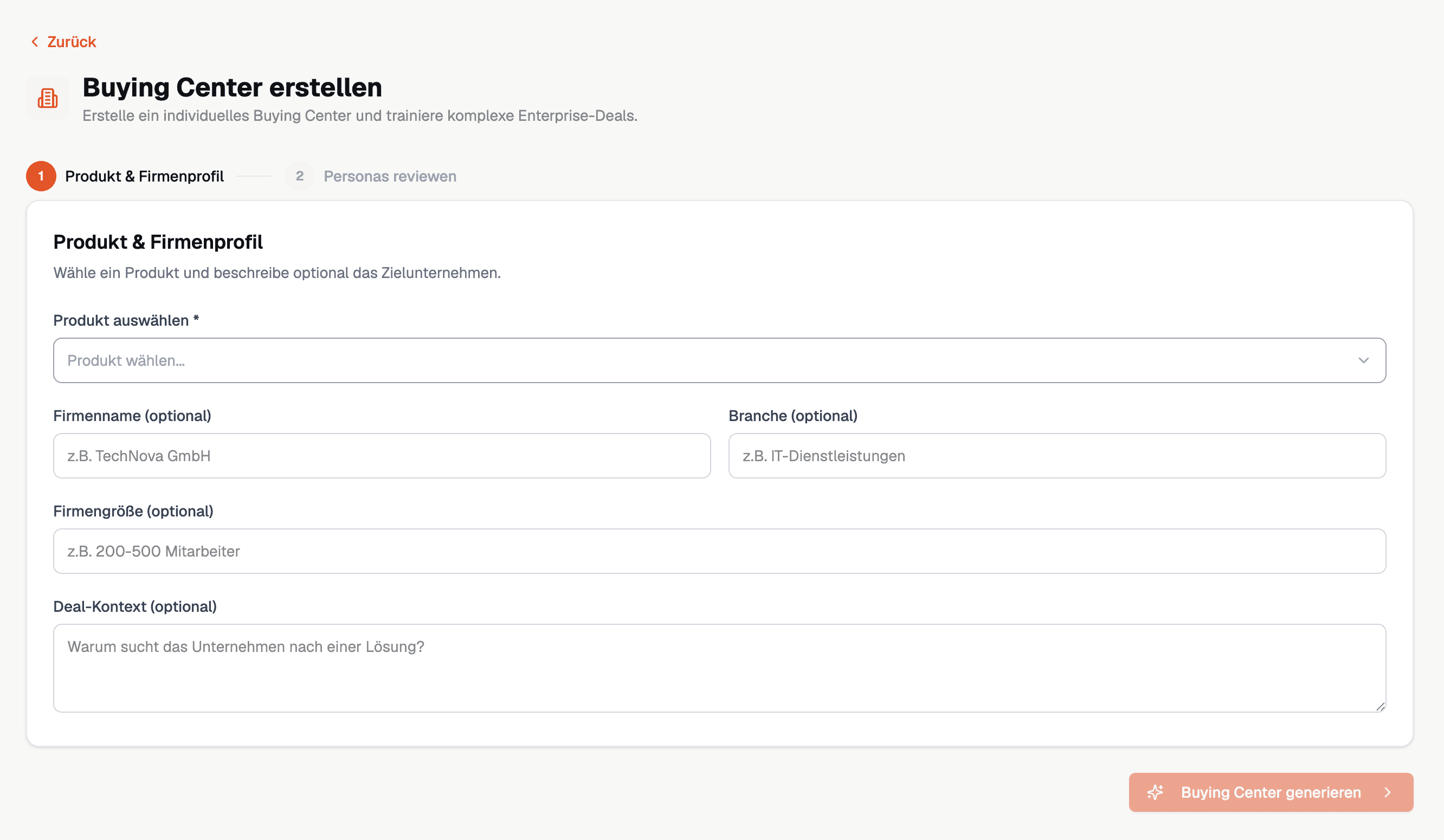
Choose an AI role-play that fits your day-to-day sales reality: first meeting, discovery call, follow-up after inbound leads, or a needs analysis with skeptical decision-makers. You can set your target customer, industry, product, typical objections, and the learning goals you want to achieve—so the training is tailored precisely to your sales situation.

Role-play generator in Careertrainer.ai
2

Train demand analysis with realistic Voice AI role-play conversations

Run a 5–15-minute live audio conversation with an AI character who dodges superficial questions, shifts priorities, or only brings up real pain points late. This is how you practice asking more precise questions, cleanly following up on vague answers, and avoiding jumping too early into pitch, demo, or solution language.

Voice AI conversation simulation in Careertrainer.ai
3

Use analytics to measurably improve your discovery quality—targeted, data-driven, and visible.

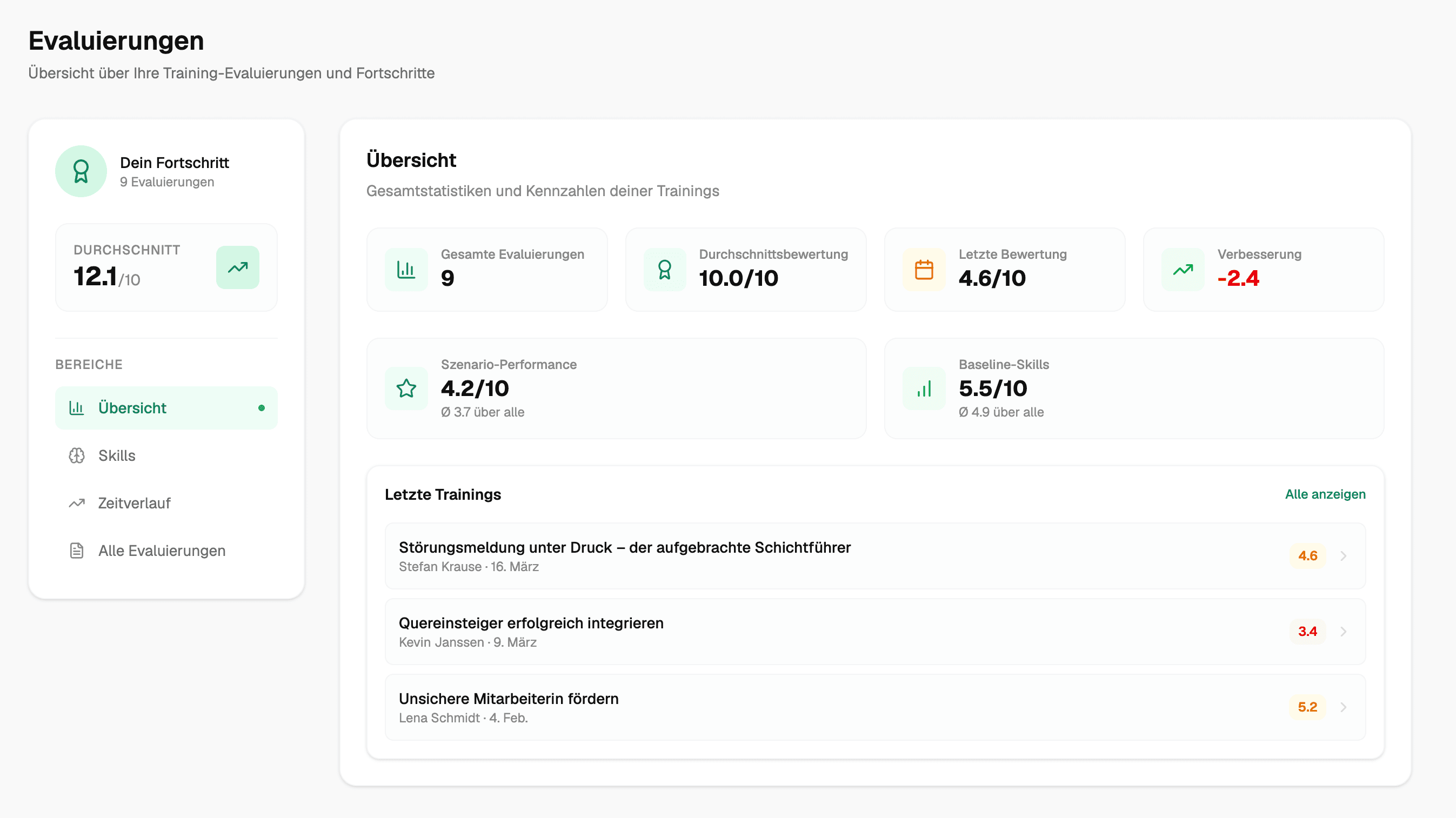
After the conversation, you’ll receive specific feedback on whether you truly made decision-making processes, problems, goals, urgency, and next steps visible. Your team can see where skill gaps show up in the needs analysis, which questions work, and how conversation quality, opportunity qualification, and training progress develop over time.

Evaluation dashboard in Careertrainer.ai
Features

The features that help you steer discovery conversations more precisely

These features help you not only practice needs-based conversations—but turn them into real sales routine: with realistic buyer reactions, clear evaluation, product-specific context, and a traceable progression at the team or user level.

01

For SDRs, AEs, and Enablement teams

Discovery conversations as real live audio role-play simulations—not theory slides

With Careertrainer.ai, you run need-based conversations as live audio role-play with realistic buyer personas. That way, you train questioning techniques, conversation structure, and prioritization—under genuine reactions instead of rigid scripts. This is especially relevant for teams that want to turn first conversations into more qualified opportunities.

  • Practice your first call, discovery, and follow-up in real conversation flow
  • Train with skeptical, analytical, or time-pressed decision-makers
  • Improve your question quality instead of jumping into a pitch or demo too early
  • Repeatable before real customer appointments or for team onboarding
Learn more
Sales training form for creating a buying center with product, company profile and deal context fields
02

For B2B offers that need clarification

Train demand assessment with your real product—not with demo examples.

When discovery in everyday life falls apart in a real product context, training stays too generic. Careertrainer.ai connects needs-based conversations with your USPs, common objections, competitors, and target customers. That makes needs analysis training closer to real deals—and immediately usable for both new and experienced reps.

  • Your own unique selling points and customer situations are built directly into the training.
  • Ideal for Software, Consulting, Industry, and complex services
  • Train your value and benefits questions tailored to your product, industry, and buying situation.
  • Helps you separate sloppy discovery from genuine relevance checks
To enable feature
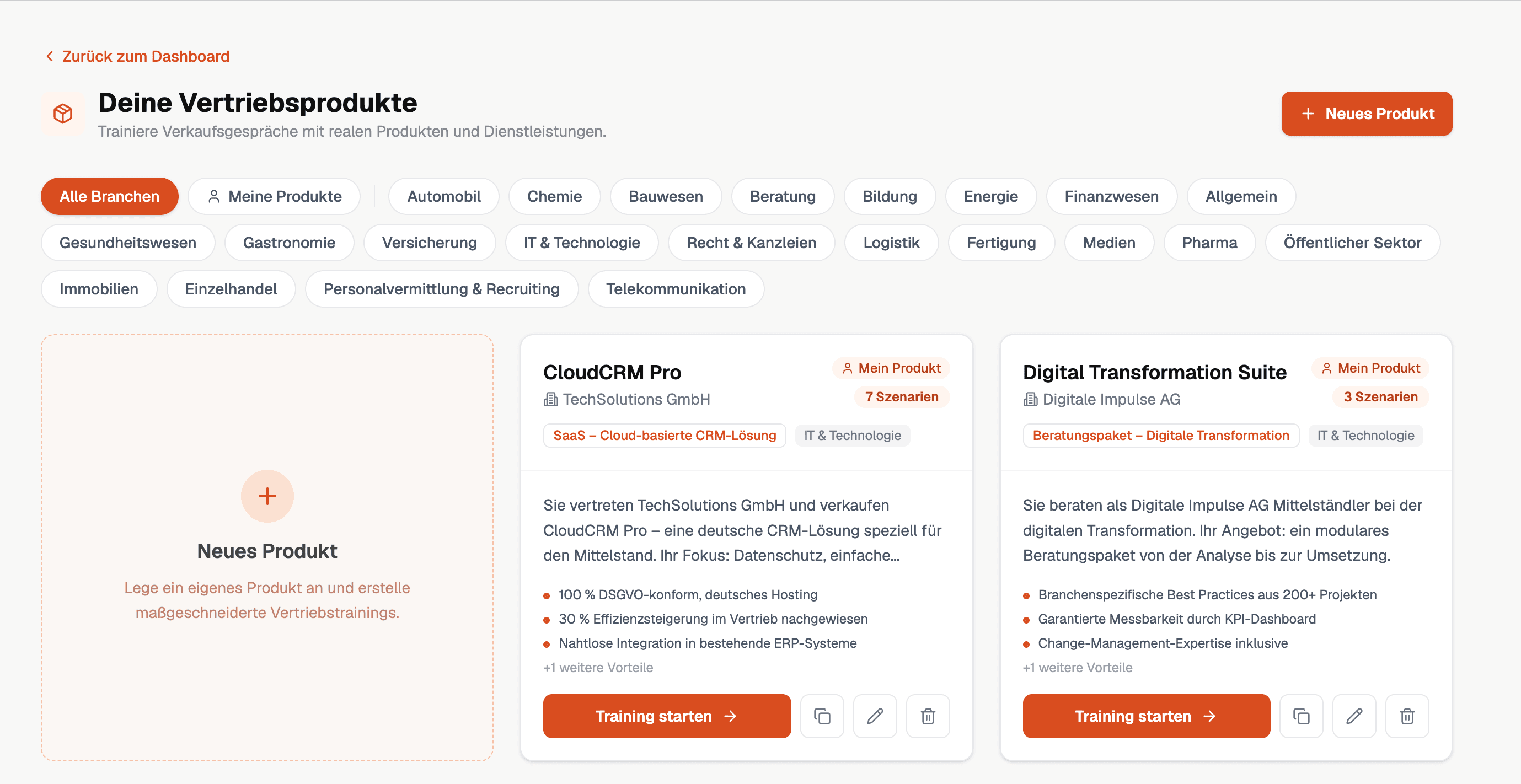
Produktspezifisches Vertriebstraining
03

Measurable conversation quality

Review after every session where your needs analysis starts to veer off course too early.

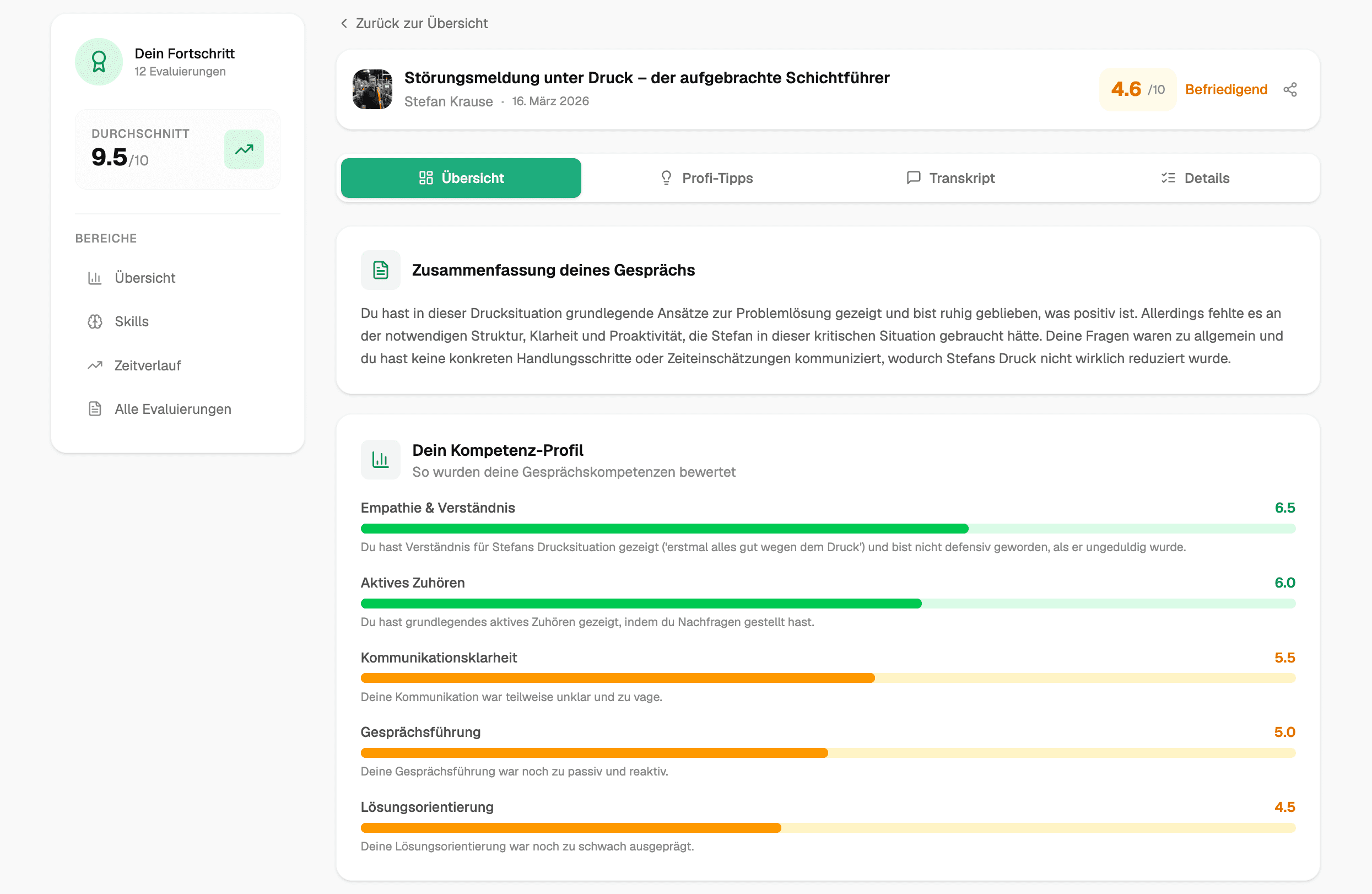
After every conversation, a second, independent AI system assesses your communication using clear criteria. You’ll see whether you truly uncovered needs, whether you pitched too quickly, or whether you missed important signals. This makes discovery coaching transparent and objective—less subjective, more actionable.

  • Scores for needs assessment, conversation management, and relationship building
  • Concrete evidence from the conversation instead of blanket criticism
  • Profi tips for handling follow-up questions, diving deeper, and planning clear next steps
  • Helpful for 1:1 coaching and consistent team standards
Learn more
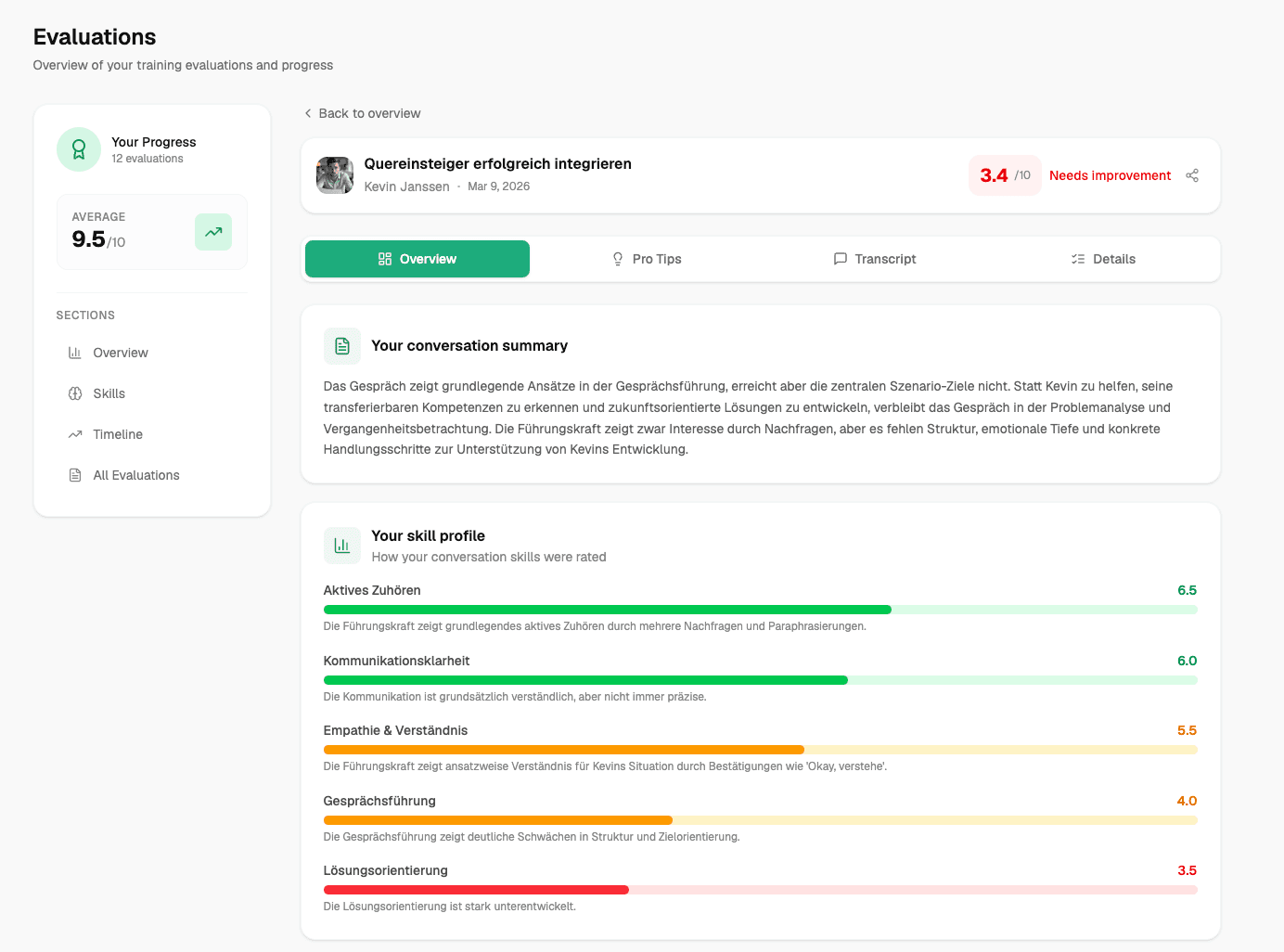
Evaluation summary and competency profile for leadership communication under pressure.
04

For Sales Leads and Revenue Owners

Turn individual trainings into measurable skill gaps during your discovery process

When multiple reps run discovery conversations with varying quality, you need more than individual feedback. Careertrainer.ai shows which competencies in your team are consistently strong—and where question asking, depth, or structure in the discovery process are missing. That way, you can coach more precisely and back progress with data.

  • Spot patterns by team, location, or experience level
  • Identify gaps in your questioning technique, depth, and conversation control
  • Compare progress across multiple sessions—no guesswork, just clear development.
  • Useful for rollouts, onboarding, and ongoing enablement
To the feature
Training evaluation dashboard displaying progress, ratings, and performance metrics for leadership development.
05

For more realistic buyer reactions during discovery

Practice needs analysis with different customer types instead of generic one-size-fits-all roles

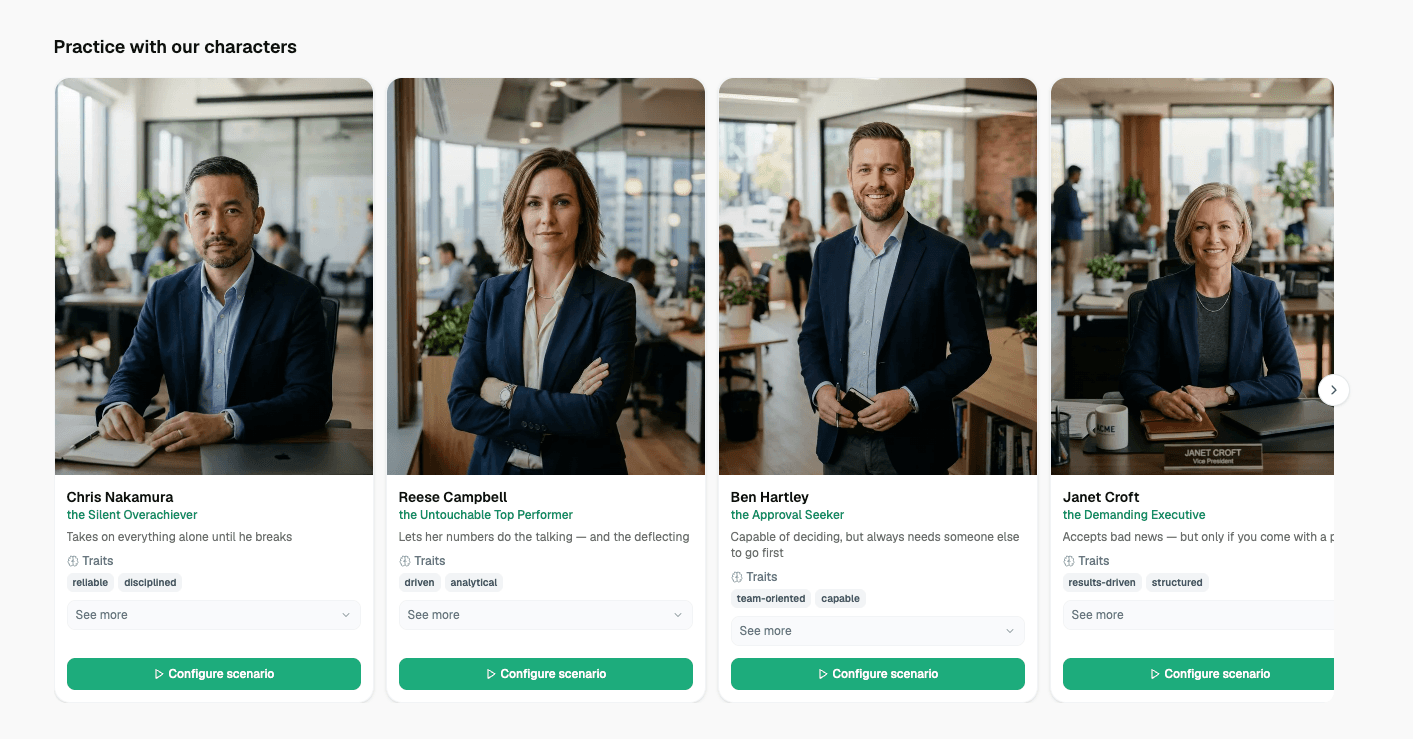
Not every customer opens up the same way. Careertrainer.ai’s AI character library models different personalities, motivations, and response patterns—so you can tailor your needs assessment to dominant, analytical, or more reserved conversation partners. That’s exactly what makes Bedarfsanalyse Trainieren practical.

  • Train on realistic AI role-play scenarios with price-sensitive, skeptical, and detail-oriented customers.
  • Test which questions—by type—actually drive openness.
  • Spot resistance early—before the conversation stays superficial.
  • More practical than generic customer role-plays
Learn more
Character selection screen with AI training personas and scenario configuration buttons

Practice with realistic AI characters

Pick a scenario that matches your situation, then jump into the AI role-play.

Filter by company context, conversation type, challenge and employee persona. Every example leads directly into your own AI role-play.

3 of 3 scenarios

Company context

Emily Turner

Emily Turner

Regional Sales Enablement Manager

Saas Hr

During enablement coaching, a Sales Rep reports a stalled deal. Discovery notes show generic pain statements, no timeline, and unclear stakeholders. Your task is to train a precise Bedarfsanalyse trainieren approach in the moment using targeted questioning and structured follow-ups.

What you'll practise

  • Qualify needs with business impact
  • Align stakeholders and timeline
  • Improve opportunity quality metrics
We need something” is not a need—let’s name the business outcome.
Daniel Wright

Daniel Wright

Head of Sales (Mid-Market)

Insurance Fintech

In a coaching workshop, you review three recent opportunities. Two deals lost because the customer’s operational requirement wasn’t captured; another stalled due to unclear evaluation criteria. The team needs a consistent Bedarfsanalyse trainieren routine that links customer needs to specific use-cases, proof points, and evaluation steps.

What you'll practise

  • Build use-case specific need statements
  • Define evaluation criteria and proof
  • Reduce late-stage surprises
This deal died on missing requirements—no more assumptions.
Sofia Martinez

Sofia Martinez

VP Sales Operations & Revenue Enablement

Telecommunications

You join a live coaching session with a rep who is struggling in an executive discovery. The buyer responds with broad statements (“we’re modernizing,” “cost savings matter”) but refuses specifics. Leadership expects improved discovery leading to better pipeline conversion and a clear training plan for the rep/team.

What you'll practise

  • Turn exec non-answers into measurable requirements
  • Calibrate urgency, ownership, and cost of delay
  • Strengthen conversion with clearer next steps
Their answers are evasive—how do we regain control professionally?

How the AI evaluates your training conversation

After every role-play a separate AI analyses your full conversation transcript — with score, goal feedback and concrete quotes from your own dialogue.

Two layers feed the overall score: scenario-specific goals (70%) and five core competencies for your training type (30%).

SummaryRating: Solid

Emily Turner · Train discovery: turn “we need something” into measurable needs

Good structure, but outcomes/timeline quantified too late

Practice leading the rep to uncover the customer’s real needs, urgency, and success criteria. Ensure the rep can handle vague responses without derailing the call.

Overall result
6.6/ 10

70% scenario goals + 30% core competencies

Scale 0–10 · backed by quotes from your conversation

Scenario goals · 70%Core competencies · 30%

Scenario goals

Scenario goals · 70%

Qualify needs with business impact

8.4 / 10

Convert vague pain into quantified outcomes, priorities, and decision drivers.

Fully achieved

Converted “we need something” into a measurable impact question (“measure to prove value”). Followed with cost drivers.

What exactly should we measure to prove value?

Align stakeholders and timeline

6.4 / 10

Define who decides, who influences, and when the purchase process starts.

Partially achieved

Timeline surfaced only as “next quarter”; you asked “by when,” but didn’t lock a decision start date/process.

maybe next quarter buying?

Improve opportunity quality metrics

6.4 / 10

Strengthen discovery notes to improve pipeline health and forecast accuracy.

Partially achieved

Improved stakeholder clarity via “who signs off,” but missing influencer mapping and next-step discovery note fields.

Who signs off by when?

Core competencies

Core competencies · 30%

Active listening

6.3

Follow-up questions, paraphrasing, targeted clarifiers

Empathy & understanding

6.8

Reading the counterpart's emotional state and perspective

Conversation control

6.5

Structured and goal-oriented without dominating

Solution focus

6.8

Developing constructive options together

Communication clarity

6.4

Clear, understandable, to the point

Details · Transcript excerpt

YouWe need something—deal is stalled. What exactly should we measure to prove value?
Emily TurnerThey’re frustrated with current tools; no clear numbers, maybe next quarter buying?
YouOkay—who feels the impact daily, how much is it costing, and who signs off by when?
Pro tip

When the rep is vague, ask one tight “so what” + “how much” first. Example: "What’s the $/time cost today if nothing changes?"

Only your wording is evaluated — not the AI counterpart's. The AI's opening of the conversation is not penalised.

Start your own scenario for free
Use Cases

What do others use Careertrainer.ai for?

Concrete use cases for leaders, HR, and people development — from the first 100 days to measurable skill tracking

From peer to manager — without learning on the job

Newly promoted team leads often run their first employee conversations with zero training. With Careertrainer they practice the typical first conversations — expectation alignment, feedback, onboarding talks — before they happen for real.

  • Learning path "First 100 days as a manager"
  • Structured onboarding across 6–8 weeks
  • Skill tracking shows progress to HR and leadership
Thomas Weber
Frank Zimmermann
Karl-Friedrich Moser
Andreas Kaufmann
Daniel Foster

Resetting expectations with a high-performing but disruptive developer

A strong individual contributor delivers results but damages team trust through blunt behavior and missed collaboration norms.

FührungMitarbeitergesprächFeedback

Learning-path progress

Kick-off
Expectations
Feedback
Conflict
Discover the onboarding solution

Choose your plan

Transparent pricing for you alone or your whole team. Enterprise and White Label kept separate – clearly split, no jargon.

Still have questions? We're happy to advise you.

Contact Us

Frequently Asked Questions about Needs Analysis Training with Careertrainer.ai

These FAQs show you how to train needs analysis in sales with Careertrainer.ai in a practical, hands-on way—how to use the training across sales teams—and when the platform is the better choice compared to classic formats or simple role-play tools.

How exactly does Careertrainer.ai help you train needs analysis?

Careertrainer.ai helps you not only understand needs analysis in theory, but actively practice it in realistic discovery conversations. You run live audio role-plays with AI conversation partners that react differently—ask follow-up questions, deflect, or reveal information step by step.

When it comes to needs analysis, this is exactly what makes the difference: in a real customer conversation, you need to ask the right questions at the right moment, recognize the connections, and still keep the conversation flowing. That practical application can hardly be replicated with static scripts or pure learning videos.

After every conversation, you get immediate feedback on how well you worked out needs, priorities, pain points, and decision criteria. This helps you quickly see whether you’re pitching too early, getting stuck on symptoms, or uncovering genuine buying motives clearly. If you want to improve your discovery conversations in a measurable way, Careertrainer.ai is a very direct, practical solution.

Who is AI “needs analysis training” with Careertrainer.ai especially useful for?

Training is especially valuable for SDRs, BDRs, Account Executives, Sales Managers, and enablement teams that want to make discovery calls more systematic and more reliable. Sales leaders also benefit when they want to improve the quality of early sales stages across the team.

Careertrainer.ai is a great fit when typical challenges show up in day-to-day work: conversations stay too superficial, opportunities get qualified too early, and reps jump into product demos before they’ve gathered key information—especially about processes, goals, and stakeholders that are often crucial later in the deal. In many cases, the root cause isn’t a lack of product knowledge, but the way conversations are run.

As a DACH-focused AI platform for hands-on conversation training via live audio role-play, Careertrainer.ai is particularly suitable for German-speaking teams that want to train realistic customer conversations—without having to arrange internal sparring partners or external trainers every time. If you want to train needs analysis because pipeline quality and forecast certainty are suffering, this is an ideal use case.

What makes Careertrainer.ai different from traditional sales training when it comes to needs analysis training?

The biggest difference is this: classic training teaches knowledge—Careertrainer.ai trains behavior under real conversation pressure. So you don’t just learn which questions would be effective. You practice using them smoothly in a real conversation, even when there are objections, uncertainty, and incomplete answers.

In seminars or workshops, role-play is often limited by time, varies in quality, and is hard to scale. Some participants talk a lot, others hardly at all. With Careertrainer.ai, every person can train the same needs-analysis scenario multiple times—using instant feedback and without scheduling coordination.

For sales teams, this is especially valuable when discovery skills shouldn’t be trained only once per quarter, but built continuously. That’s why Careertrainer.ai complements traditional training so well: theory can still be covered in enablement, while practical application is then practiced repeatedly and measurably through live audio role-play.

Why isn’t theory enough when you want to train needs analysis?

Because good needs analysis is a conversation skill—not just a question of knowledge. Many salespeople know question techniques, but they don’t apply them consistently in real calls. The reason is often time pressure: you argue too early, or you don’t dig deep enough when the customer makes vague statements.

This gap between knowing and doing usually doesn’t get smaller on its own in day-to-day work. If you only read guides or rely on call checklists, you won’t automatically get better at clearly identifying priorities, underlying causes, consequences, urgency, and the customer’s internal decision logic.

Careertrainer.ai closes this gap with repeatable practice in realistic sales scenarios. You train wording, follow-up questions, and conversation structure in a risk-free space—before you take it into real customer conversations. So if you want to train needs analysis to generate better opportunities, you need practice—not just theory.

How does a typical needs analysis training session work with Careertrainer.ai?

Typically, you start by choosing a suitable scenario—e.g., a first contact, a discovery call, or a needs discussion with a skeptical stakeholder. Then you take part in a 5–15 minute live audio role-play with an AI character that responds realistically.

During the conversation, you actively uncover the relevant information: the current situation, goals, problems, consequences, internal processes, and buying motivation. The AI doesn’t respond like a simple chatbot—it behaves like a conversation partner with its own stance, hidden motives, and varying levels of openness. This helps you train real conversation handling instead of question-and-answer scripts.

Afterward, you receive a structured evaluation with competency scores, strengths, improvement suggestions, and typical patterns in your conversation style. This way, you can quickly see where your needs analysis is already precise—and where you’re jumping too early into solutions, pricing, or product arguments.

Can I use Careertrainer.ai to practice difficult discovery situations and vague customer answers?

Yes—Careertrainer.ai is especially well suited for exactly that. In needs analysis, conversations often don’t fail because you don’t have clear answers, but because the situation is vague: “We’re just looking around,” “It hasn’t been prioritized yet,” or “Actually, it’s going quite fine.” You don’t have to shut these moments down—you need to probe professionally and go deeper.

With Careertrainer.ai, you can train precisely those scenarios: reserved conversation partners, analytical decision-makers, skeptical prospects, or people who only share information in small doses. This way, you practice following up clearly without sounding pushy—or turning the conversation into an interrogation.

That’s one of the biggest differences compared to simple script training. You don’t just memorize standard questions—you develop a feel for when to dig deeper, mirror back, structure the discussion, or prioritize next steps. If you want to train needs analysis to handle ambiguity with more confidence in real discovery calls, that’s a core use case.

How do I measure whether our needs analysis training is truly getting better?

When it comes to improving needs analysis, you shouldn’t rely on gut feeling alone. Instead, measure progress through observable conversation skills and follow-up sales metrics. At the conversation level, for example, these are relevant: the quality of your questions, the depth of your needs discovery, clarity in setting priorities, how you handle evasive answers, and your ability to connect problems to real business impact.

Careertrainer.ai supports exactly that with structured feedback after every role-play. You can see whether reps are hitting key conversation goals, reducing common failure patterns, and becoming more confident in recurring discovery situations. For teams, this makes development easier to track and understand than with purely manual role-play exercises.

In day-to-day sales, you can also look at metrics such as conversion from first call to a qualified opportunity, demo quality, the no-decision quote, or forecast stability. If you want to train needs analysis, the goal shouldn’t just be “better conversations”—it should be cleaner qualification and a more reliable pipeline.

Is Careertrainer.ai also suitable for experienced sales professionals who have already run many discovery calls?

Yes—experienced sales reps often benefit from AI role-play training just as much (or even more). Experience doesn’t automatically protect you from blind spots. Many great reps develop routines over time that work in everyday situations, but they may still leave potential on the table—like jumping to conclusions too quickly, starting to solution too early, or not going deep enough into the business impact.

If you already run a lot of customer conversations, needs analysis training with Careertrainer.ai isn’t a beginner course—it’s a way to fine-tune and calibrate your skills. You can practice more demanding scenarios, simulate tougher personality types, and align your discovery process more deliberately with complex buying centers.

For team leads and enablement owners, this is especially valuable because it’s not only juniors who train—experienced AEs can also sharpen their level in a structured way. That’s why Careertrainer.ai is a strong fit if you want to turn solid conversation skills into a truly consistent, repeatable discovery capability.

How quickly can sales teams train based on needs analysis with Careertrainer.ai?

Getting started is usually quick, because Careertrainer.ai is a DACH-focused AI platform for practical conversation training—without the heavy lift of trainer planning. Individual users can begin right away with existing scenarios, and teams can roll the training out step by step into their current enablement processes.

On a solution page like “Train Need Analysis,” this is especially relevant: you don’t need to set up a complete academy program to see value. Short, repeatable sessions before real discovery calls—or as part of onboarding, coaching, and deal reviews—are already effective. That’s what makes the format fit for everyday use.

For companies, additional building blocks can be added depending on your needs, such as team analytics, admin features, or custom scenarios. If you want to launch practical training quickly and don’t want to coordinate workshops first, Careertrainer.ai is intentionally lean and designed for fast implementation.

Can training providers or consulting firms also use Careertrainer.ai as a white-label solution for “needs assessment training”?

Yes—Careertrainer.ai is also a great fit for partners who want to offer “need analysis training” under their own brand. This applies, for example, to sales training providers, sales consultancies, HR platforms, or enablement partners who want to expand their offering with AI-powered discovery role-plays—without building their own AI infrastructure.

The advantage of the white-label approach is that you keep your brand, your customer relationship, and your pricing logic. Careertrainer.ai positions itself as an enabler in the background—not as a direct competitor to training providers. This is especially attractive for a topic like need analysis training, because partners can translate existing methods, conversation guides, and industry context into a scalable practice format.

If you’re evaluating whether to integrate AI role-play training into your training portfolio, Careertrainer.ai is therefore a strong option for creating your own, brandable offering in the DACH market.

Why is Careertrainer.ai’s DACH focus and GDPR-first approach relevant for needs analysis and role-play training?

The DACH focus matters because needs analysis depends heavily on language, conversation culture, and domain-specific precision. Discovery calls in German work differently than generic English-language sales scripts. If wording, tone, and responses don’t feel natural, the training effect quickly suffers.

Careertrainer.ai is built for the DACH region—making it especially relevant for German-speaking sales teams that need realistic live audio role-plays tailored to their market environment. On top of that, there’s the compliance angle: for many organizations, GDPR compliance, EU hosting, and a clear European framework aren’t a “nice to have,” but a core part of the tool selection.

If you want to train needs analysis while also focusing on language quality, realistic conversation scenarios, and solid baseline requirements, this focus is a real competitive advantage over generic US tools without a clearly defined DACH fit.

More Solutions

More Careertrainer.ai Solutions

Discover more professional solutions for your leadership development.