
careertrainer.ai
Practice critical salary negotiations in a safe space—before real money is on the line.

Salary Negotiation Training for Leaders with AI Role-Playing

Your leaders engage in realistic salary negotiations through AI role-playing. They learn to systematically reject unreasonable demands, handle emotional reactions professionally, and find fair solutions based on performance, budget, and market data. The result: consistent salary standards, reduced turnover due to unfair compensation, and confident leaders who excel in challenging conversations.

Live trainingSales

Practise with your situation

Leadership · Phone call

Salary adjustment numbers trigger a price-anchored pushback

Emily Parker

Emily Parker

Long-tenured high performer · 46

"No, look, the list number is what matters."

Your goal: Steer the talk from the anchored number to the job value and evidence you both can discuss. Keep the focus on observable outcomes and decide what comes next.

Practice now

Gehaltsverhandlungen: Zahlen, die überzeugen

Effektive Gehaltsverhandlungen sind entscheidend für Mitarbeiterzufriedenheit und Unternehmensbindung. Hier sind die Fakten.

70%
Mitarbeiterzufriedenheit
Mitarbeiter, die erfolgreich verhandeln, zeigen eine um 70% höhere Zufriedenheit mit ihrem Gehalt. (Kienbaum, 2022) (Quelle: kienbaum.com, 2022)
15%
Fluktuationsreduktion
Unternehmen mit transparenten und fairen Gehaltsverhandlungen reduzieren die Fluktuation um bis zu 15%. (Mercer, 2023) (Quelle: mercer.com, 2023)
2.5x
Produktivitätssteigerung
Mitarbeiter, die sich fair bezahlt fühlen, sind bis zu 2,5-mal produktiver. (Gallup, 2021) (Quelle: gallup.com, 2021)
80%
Führungskräfte-Unsicherheit
Rund 80% der Führungskräfte fühlen sich bei Gehaltsverhandlungen unsicher oder unzureichend vorbereitet. (PwC, 2022) (Quelle: pwc.de, 2022)

Für wen ist das?

Wer profitiert vom KI-Gesprächstraining für Gehaltsverhandlungen?

Ob erfahrene Führungskraft oder HR-Manager – effektive Gehaltsverhandlungen sind entscheidend. Careertrainer.ai bietet dir einen risikofreien Raum, um diese kritischen Gespräche mit realistischen KI-Charakteren zu üben und deine Verhandlungskompetenz messbar zu steigern. Mit unseren KI-Rollenspielen wirst du sicherer und souveräner.

Führungskräfte & Teamleiter

Du stehst regelmäßig vor der Herausforderung, Gehaltsforderungen deiner Mitarbeiter zu managen. Mit Careertrainer.ai kannst du schwierige Gehaltsverhandlungen in einem sicheren Übungsszenario trainieren. Das KI-Training hilft dir, souverän auf emotionale Reaktionen zu reagieren und faire, faktenbasierte Entscheidungen zu treffen, die sowohl Mitarbeiter als auch Unternehmensziele berücksichtigen. So verbesserst du deine Verhandlungssicherheit.

Was du im Gehaltsverhandlungs-Training vertiefst

  • Umgang mit überzogenen Forderungen
  • Deeskalation emotionaler Gespräche
  • Faire & faktenbasierte Argumentation
  • Mitarbeiterbindung durch Wertschätzung
  • Souveränes Auftreten bei Gehaltsgesprächen

HR-Manager & Personalentwickler

Als HR-Manager oder Personalentwickler bist du dafür verantwortlich, die Verhandlungskompetenzen deiner Führungskräfte zu stärken. Careertrainer.ai bietet dir eine skalierbare Lösung, um Gehaltsverhandlungen effektiv zu trainieren. Durch unsere KI-Rollenspiele können alle Führungskräfte einheitlich und objektiv ihre Fähigkeiten verbessern, was zu mehr Transparenz und Fairness im gesamten Unternehmen führt. Das KI-Training ist eine effiziente Ergänzung zum bestehenden Schulungsangebot.

Deine Vorteile für effektives Gehaltsmanagement

  • Skalierbares Verhandlungstraining
  • Objektives Feedback & Kompetenz-Scores
  • Standardisierung der Verhandlungsprozesse
  • Reduktion von Fluktuation durch faire Gespräche
  • Messbare Entwicklung der Führungskräfte

Geschäftsführung & C-Level

Als Mitglied der Geschäftsführung oder C-Level-Manager ist es dir wichtig, dass Gehaltsverhandlungen im Unternehmen professionell und im Einklang mit der Unternehmensstrategie geführt werden. Careertrainer.ai ermöglicht es, die Qualität dieser Gespräche unternehmensweit zu sichern und zu verbessern. Das KI-Training sorgt für eine konsistente Umsetzung der Gehaltspolitik und minimiert Risiken durch unprofessionelle Verhandlungen. Du erhältst zudem Einblicke in die Kompetenzentwicklung deines Teams.

Strategische Vorteile für die Unternehmensführung

  • Sicherstellung fairer Gehaltspolitik
  • Minimierung von Rechtsrisiken
  • Verbesserung der Mitarbeiterzufriedenheit
  • Einblicke in Verhandlungskompetenzen
  • Effizienzsteigerung in HR-Prozessen

Selbstständige & Freelancer

Auch als Selbstständiger oder Freelancer musst du regelmäßig über deine Honorare verhandeln. Mit Careertrainer.ai kannst du deine Verhandlungstechniken in einem sicheren Übungsszenario gezielt verbessern. Das KI-Rollenspiel hilft dir, selbstbewusst deine Leistungen zu präsentieren und den Wert deiner Arbeit zu kommunizieren, ohne dabei Kundenbeziehungen zu gefährden. So steigerst du deine Einnahmen und sicherst deine wirtschaftliche Zukunft durch effektives KI-Training.

Dein Weg zu besseren Honorarverhandlungen

  • Sicheres Verhandeln von Honoraren
  • Argumentation des eigenen Werts
  • Umgang mit Preisdruck & Einwänden
  • Aufbau von Verhandlungssicherheit
  • Vorbereitung auf Kundengespräche

Why use AI role-playing for salary negotiations?

Your leaders train for the toughest moments in salary negotiations—ranging from inflated demands and emotional outbursts to threats of resignation.

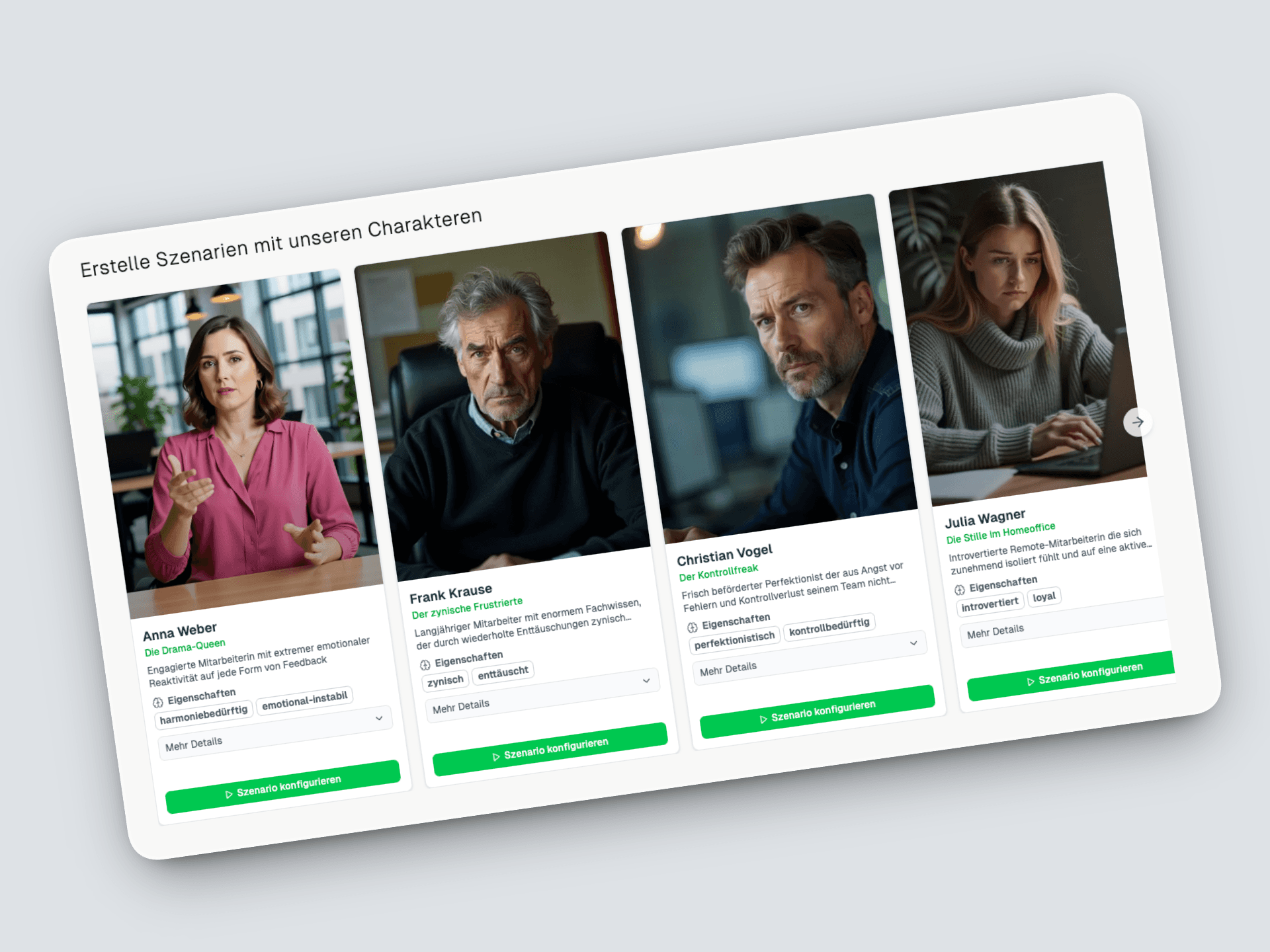
AI Character Library with 50+ Employee Types

Our AI characters are based on real personality profiles (MBTI) and respond authentically to various negotiation strategies—from the loyal employee presenting inflation arguments to the high-performing senior manager armed with specific KPIs.

MBTI-based personality profiles for realistic response patterns.

Different responses to stress, criticism, and appreciation.

Emotional speech variation with varying tempo, volume, and pauses.

Characters adapt their behavior to your leadership style—empathy fosters openness, while pressure leads to resistance.

Charaktere für KI-gestütztes Führungstraining zur Verbesserung von Kommunikation und Feedback.

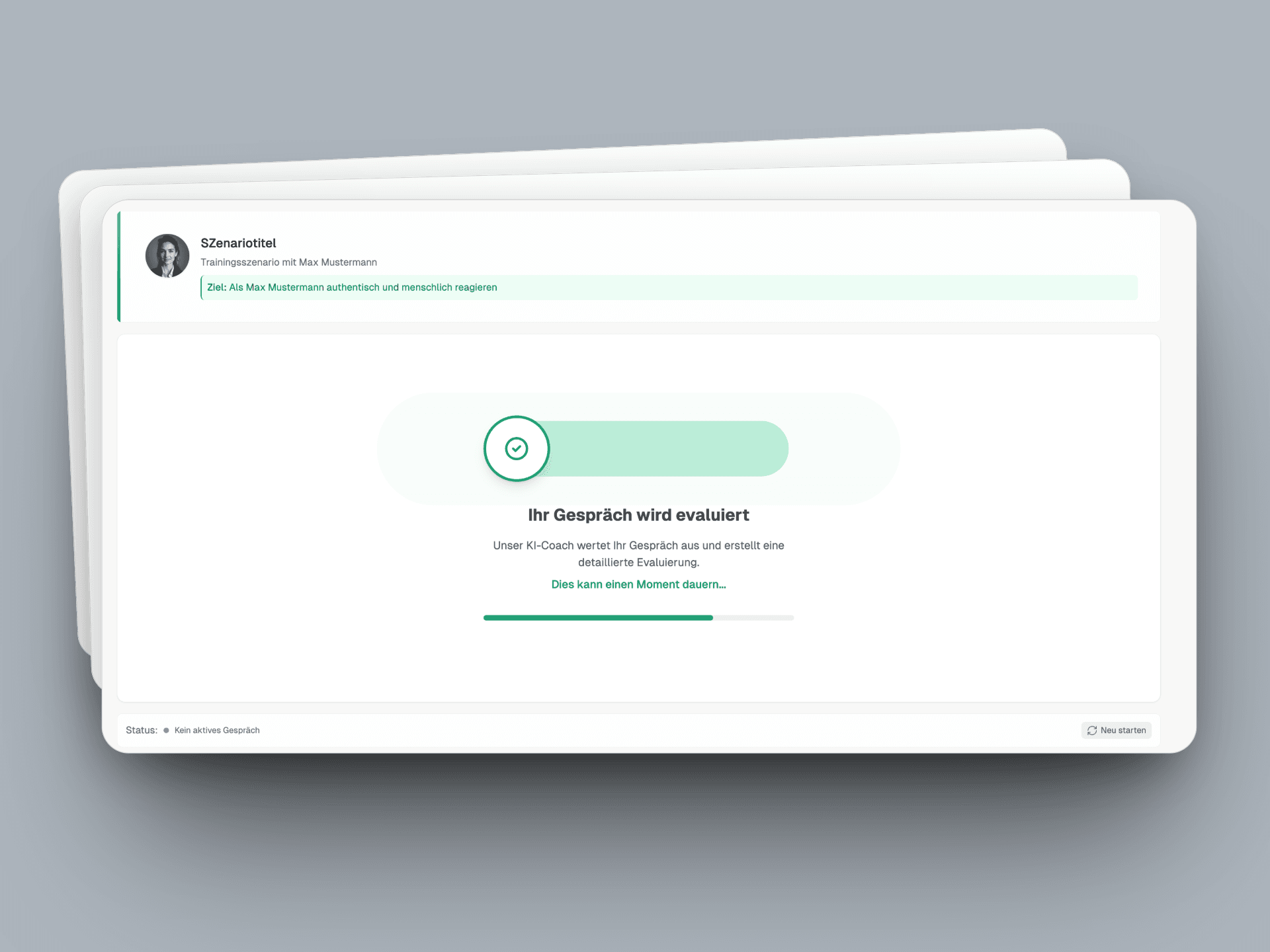
Structured AI feedback after every negotiation.

Every salary negotiation is analyzed in detail. The AI evaluates the quality of arguments, empathy, structure, and budget adherence, highlighting specific areas for improvement.

Analysis of goal achievement for each specific scenario.

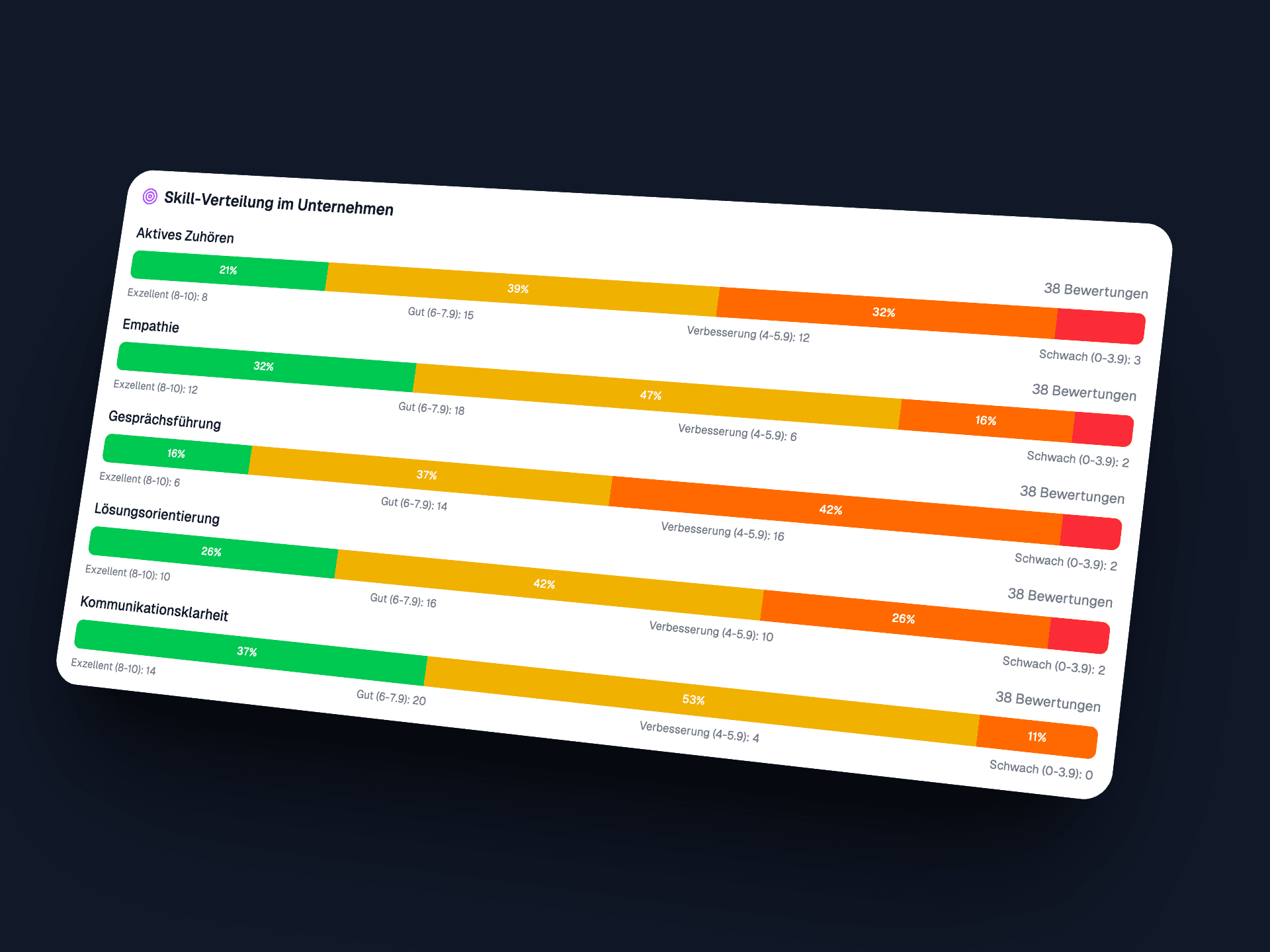
Assessment of Leadership Skills: Listening, Structure, Clarity, Empathy

Identification of Anti-Patterns: Interruptions, Accusations, Pressure for Solutions

Time-based conversation segments with specific improvement suggestions.

Clear scoring without performance ranking.

Structured AI feedback after every negotiation.

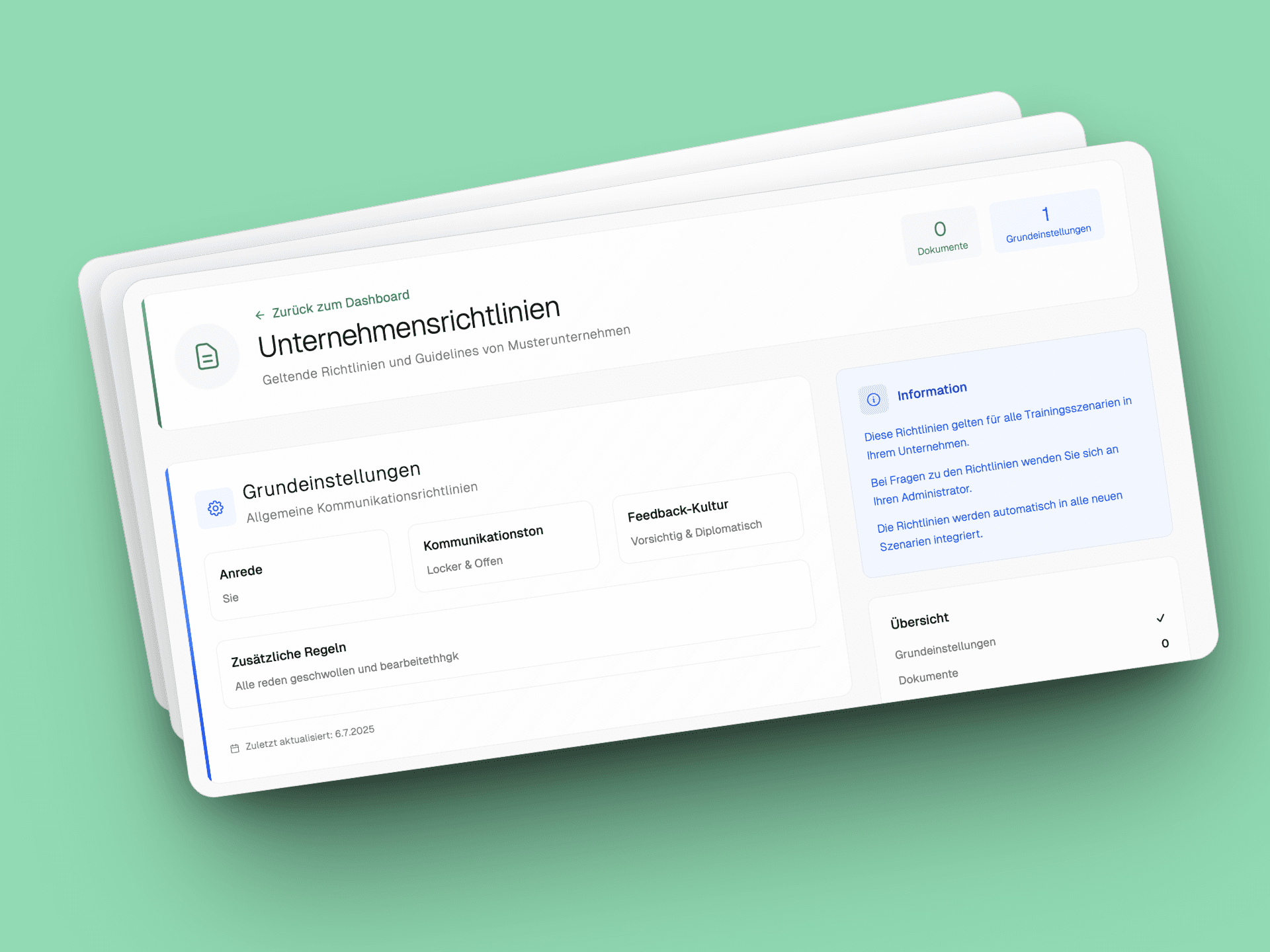
Integration of your compensation policies and budget guidelines.

The training is precisely tailored to your internal structures. The AI understands your budget limits, salary ranges, and promotion policies, evaluating each negotiation according to your specific standards.

Establish specific budget scenarios: No increase possible, fixed range available, conditional increase with performance improvement.

Trains rejection due to insufficient performance with structured reasoning.

Simulate budget cuts and salary rounds with limited resources.

Practice negotiations after returning from parental leave, relocating, or with collective agreements.

Penalizes budget overruns and highlights salary corridor violations.

Integration of your compensation policies and budget guidelines.

HR Analytics & Team Dashboard for Measurable Development

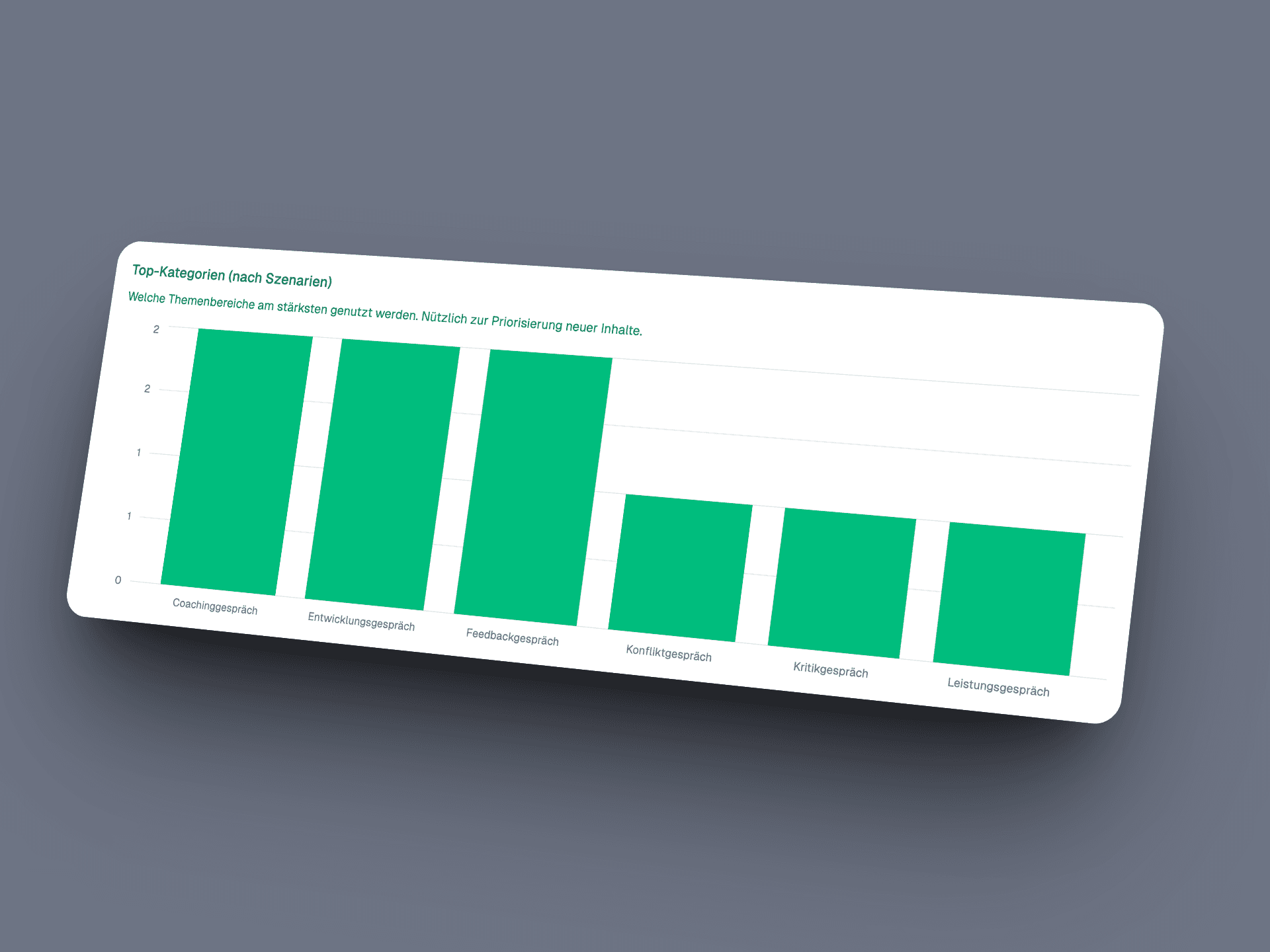
Talent development becomes measurable. HR identifies where leaders need support and where training is effective.

Individual Tracking: Progress of individual leaders over time.

Team Dashboards: Systematically identify weaknesses (budget overruns, de-escalation)

Corporate Metrics: Reduced complaints, higher employee satisfaction, and more consistent salary decisions.

Usage Statistics: Training Frequency, Completion Rates, Common Difficulty Topics

ROI Calculator for Business Case Presentation to Management

HR Analytics & Team Dashboard for Measurable Development

Scalable for 1 to 1000+ executives.

Consistent leadership development across all locations – without exponential costs and trainer shortages.

No appointment coordination or room bookings required.

Unlimited parallel usage possible.

Sessions lasting 10-15 minutes – trainable before work, during lunch breaks, or right before the actual conversation.

Clear license per executive with no additional usage fees.

Repeatable, cancelable at any time, and restartable whenever you choose.

Scalable for 1 to 1000+ executives.

GDPR-compliant & Enterprise Integration

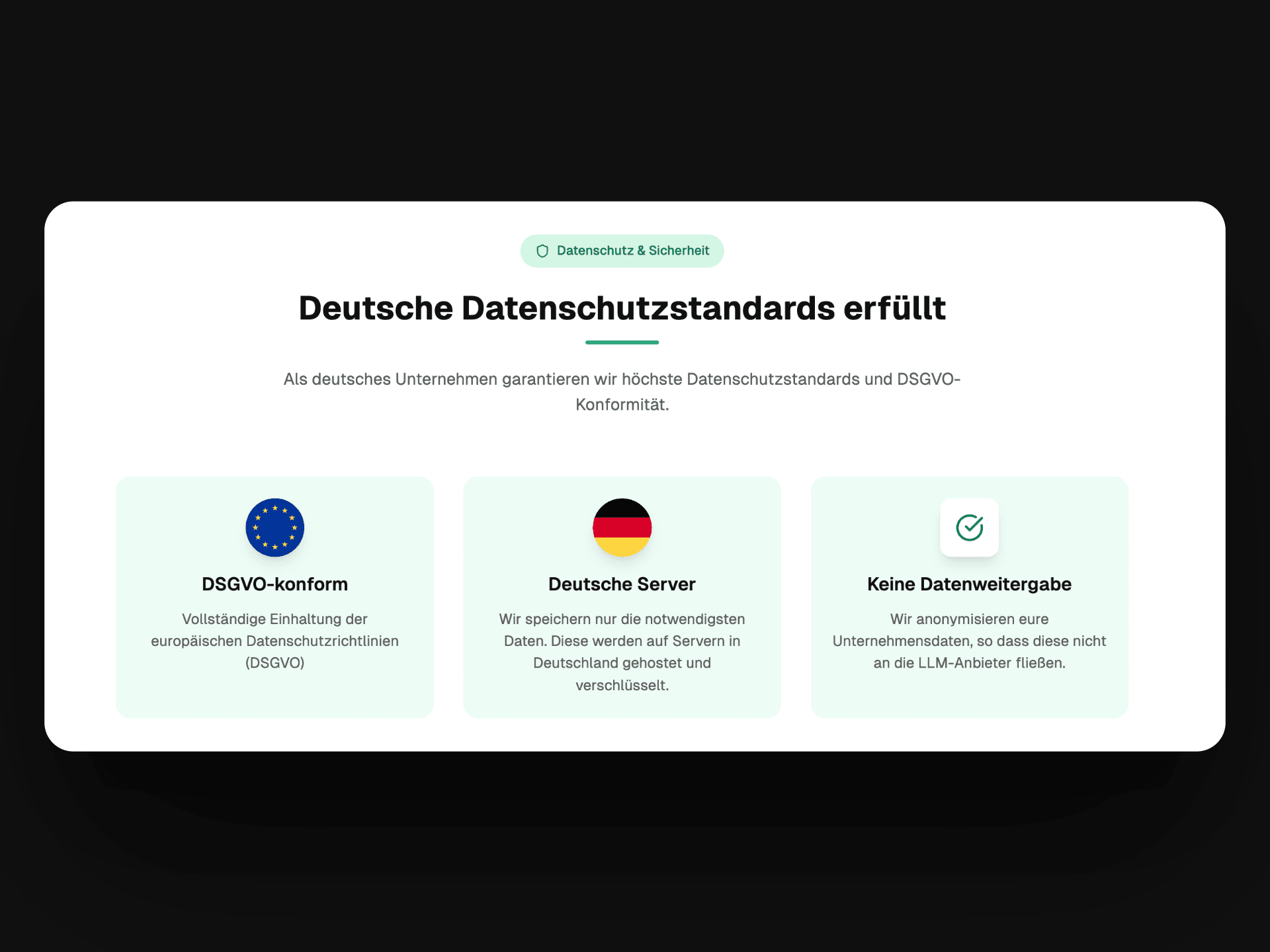
Even sensitive leadership topics can be effectively trained—ensuring German compliance and seamless IT integration.

EU hosting on German servers

Anonymized, generic scenarios – real salary data is never processed.

Single Sign-On (SSO) and API Integration

Integration with HR systems (Personio, SAP, Workday)

Central admin control for user, role, and scenario management.

GDPR-compliant & Enterprise Integration

Scenario examples

Practice with realistic AI characters

Pick a scenario that matches your situation, then jump into the AI role-play.

Filter by company context, conversation type, challenge and employee persona. Every example leads directly into your own AI role-play.

16 of 16 scenarios

Company context

Conversation type

Challenge

Employee persona

Emily Parker

Emily Parker

Long-tenured high performer

Family-led midmarket companyFeedbackconversationDefensive response to feedbackLong-tenured high performer

In the conference room near Finance, Emily calls from her desk with a quick question about salary numbers. You need to respond while she is already anchored to the list figure.

What you'll practise

  • Ask before naming numbers
  • Reframe price as context
  • Agree next step for clarity
No, look, the list number is what matters.
Open in generator

In the appScenario pre-filled, fully editable

James Carter

James Carter

Junior with high expectations

Tech scale-upKonfliktloesungAuthority challengeJunior with high expectations

Between two meetings in the hybrid team area, James faces you about salary expectations while his interim sign-off route is unclear. He does not treat your authority as settled, so the talk turns tense fast.

What you'll practise

  • Name the authority concern
  • Clarify decision rights fast
  • Agree one next behaviour
Since when does your line decide salaries?
Open in generator

In the appScenario pre-filled, fully editable

Alex Taylor

Alex Taylor

Vocal critic

Production shift operationPriorisierungFear of changeVocal critic

On the phone during a tight shift break at the workshop, Alex calls as soon as the pay framework update is mentioned. He raises salary expectations, but the tone says he fears the change will remove his control.

What you'll practise

  • Name the hidden concern
  • Reassure with concrete fairness
  • Agree the next small step
This new pay framework will make me look slow.
Open in generator

In the appScenario pre-filled, fully editable

Sophie Morgan

Sophie Morgan

Informal leader

Retail branch operationDelegation conversationDefensive response to feedbackInformal leader

Across from you in the staff office behind the checkout, Sophie hears about salary expectations tied to a change in targets. She immediately interrupts, because the feedback came late and feels like judgement rather than a signal.

What you'll practise

  • Separate observation from judgement
  • Name the team impact clearly
  • Ask for her perspective and next action
That is not what happened on my shift.
Open in generator

In the appScenario pre-filled, fully editable

Daniel Walker

Daniel Walker

Return after overload

Corporate matrix organisationChange KommunikationOverload signalsReturn after overload

Daniel picks up during a tight window on the phone, because the roster changes again this week. Since his return, he feels people talk past him when pay topics come up. You need to let him vent, then reflect the core impact before discussing what comes next.

What you'll practise

  • Acknowledge the emotional signal
  • Separate capacity from timing
  • Agree a small next step
Look, I’m not refusing. I’m done being managed like a schedule problem.
Open in generator

In the appScenario pre-filled, fully editable

Jordan Blake

Jordan Blake

New team member with leadership ambition

Remote and hybrid teamTeam AlignmentLoyalty conflictNew team member with leadership ambition

Across the shop floor, you catch Jordan at the back desk between two customer queues. He looks tense because a leadership change has created competing expectations about salary decisions. He wants the team aligned, but he keeps hinting that he is pressured from two sides.

What you'll practise

  • Define role responsibilities sharply
  • Name the conflicting expectations
  • Agree one boundary for team messaging
I don’t want to break the team. I just don’t know which line you mean.
Open in generator

In the appScenario pre-filled, fully editable

Rachel Bennett

Rachel Bennett

Experienced senior close to exit

Skilled-trades businessFeedbackconversationFeeling micromanagedExperienced senior close to exit

In the middle of your calendar gap, Rachel calls and asks for a quick clarification on the phone. She says the last round of pay discussions felt like constant re-approval of her work. She wants the scope and expectations stated plainly before she engages again.

What you'll practise

  • Confirm the competence concern
  • State the exact decision scope
  • Convert checkpoints into outcome milestones
I’ve been on jobs longer than some policies. So why do we re-check everything?
Open in generator

In the appScenario pre-filled, fully editable

Michael Brooks

Michael Brooks

Quiet talent

Production shift operationKonfliktloesungOverload signalsQuiet talent

At your desk across from you, Michael stops by after a meeting with the procurement office. He looks composed, but he keeps his answers short and avoids any talk about capacity when pay topics come up. You have a small window before the next committee call, so the conversation must stay concrete.

What you'll practise

  • Name observable overload signals
  • Set priority boundaries for the next weeks
  • Agree relief action and follow-up
I’m okay. Really. I just don’t want this to turn into a capacity label.
Open in generator

In the appScenario pre-filled, fully editable

Casey Hayes

Casey Hayes

Long-tenured high performer

Corporate matrix organisationPriorisierungFeeling micromanagedLong-tenured high performer

During a quick phone check-in, Casey starts by commenting on the same salary data you shared last week. Then you notice the frustration hiding behind polite wording and veiled doubt.

What you'll practise

  • Clarify the delegated next action
  • Separate tone from the real issue
  • Agree a follow-up check point
Hm. So you want me to drive this salary call, right.
Open in generator

In the appScenario pre-filled, fully editable

Overall result

How the AI evaluates your training conversation

After every role-play a separate AI analyses your full conversation transcript — with score, goal feedback and concrete quotes from your own dialogue.

Two layers feed the overall score: scenario-specific goals (70%) and five core competencies for your training type (30%).

Emily Parker · Salary adjustment numbers trigger a price-anchored pushback

Partly steers from anchored salary number to job value

Rating: Solid
Scenario goals · 70%Core competencies · 30%

70% scenario goals + 30% core competencies · Scale 0–10 · backed by quotes from your conversation

Pro tip

In a matrix, separate “list figure” from job value: say, "What outcome are we protecting before we discuss the number?"

Only your wording is evaluated — not the AI counterpart's. The AI's opening of the conversation is not penalised.

Practise with your situationScale 0–10 · backed by quotes from your conversation

Use Cases

What do others use Careertrainer.ai for?

Concrete use cases for leaders, HR, and people development — from the first 100 days to measurable skill tracking

From peer to manager — without learning on the job

Newly promoted team leads often run their first employee conversations with zero training. With Careertrainer they practice the typical first conversations — expectation alignment, feedback, onboarding talks — before they happen for real.

  • Learning path "First 100 days as a manager"
  • Structured onboarding across 6–8 weeks
  • Skill tracking shows progress to HR and leadership
Laura Schneider
Mira Kowalski
Cem Yildirim
Timo Lindner
Manager
Amelia Wright

Meeting about quiet withdrawal after committee delays

Extra work, no payoff

LeadershipChangeFeedback

Learning-path progress

Week 3 of 6
Kick-off
Expectations
Feedback
Conflict
Discover the onboarding solution

Transparent pricing

Choose your plan

Transparent pricing for you alone or your whole team. Enterprise and White Label kept separate – clearly split, no jargon.

Still have questions? We're happy to advise you.

Contact Us

Frequently Asked Questions about Salary Negotiation Training

Why do leaders often struggle with salary negotiations?
Salary negotiations are emotionally charged and require multiple competencies simultaneously: structured argumentation, empathy, budget awareness, and de-escalation. Many leaders have never learned how to reject unreasonable demands without damaging the relationship. The most common mistakes include reacting too emotionally, lacking a fact-based counter-strategy, exceeding budget limits, or allowing the conversation to escalate. AI role-playing enables risk-free training for these critical moments—without real consequences.
How realistic are AI salary negotiations?
Our AI characters are based on MBTI personality profiles and simulate authentic human behavior. They respond differently to various conversation strategies: a loyal ISFJ employee will become emotional and reference their tenure, while a pragmatic ENTJ leader will argue factually based on market value. The AI simulates realistic emotions—disappointment, anger, tears, threats of resignation—and adapts to your behavior, just like real people. Each negotiation feels unique.
What budget scenarios can I train in the AI simulations?
The AI simulations cover all realistic budget situations that executives may face. You can train in scenarios such as: salary negotiations without available budget (complete denial required), with a fixed budget range (e.g., 3-5% increase possible), with conditional increases based on performance improvement, during company budget cuts, or when a raise must be denied due to inadequate performance. Each scenario demands different skills: structured denial with empathy, negotiation within tight constraints, fair performance assessment, and perspective development. The AI evaluates whether you adhere to budget guidelines while maintaining the relationship with the employee.
Can we integrate our own salary policies and budgets?
Yes, completely. You upload your compensation structures, budget limits, and promotion policies. The AI then automatically takes your specific guidelines into account: budget overruns are penalized, salary range violations are flagged, and evaluations are conducted according to your internal standards. This way, your leaders are trained not on abstract best practices, but on your concrete company policies. The result: consistent salary negotiations across Germany based on the same criteria.
How do I train the rejection of salary increases for poor performance?
The AI simulations are specifically designed to prepare you for these challenging conversations. You will practice fact-based refusals of salary increases, addressing specific performance deficiencies, setting measurable improvement goals, all while maintaining the employee's dignity. The AI simulates typical reactions such as surprise, defensiveness, emotional responses, or threats of resignation. You will learn to separate the person from their performance, communicate clear expectations, and collaboratively create a development plan. Feedback will indicate whether your arguments were coherent, if you remained empathetic, and whether the employee understood the message.
What sets your training apart from traditional seminars?
Traditional salary negotiation seminars teach theory but lack practical experience under stress. You hear best practices and may practice once with a colleague—but never face the truly challenging moments: emotional breakdowns, aggressive threats of resignation, or fact-based demands for a 12% increase backed by market data. Our AI role-playing scenarios allow for unlimited training in these critical situations—anonymously, without fear of embarrassment, and with immediate feedback. Your leaders can repeatedly engage in the same negotiation, test different strategies, and systematically improve their skills.
How do we measure the success of the training?
You will receive detailed analytics on three levels: Individual tracking shows the progress of individual leaders over time. Team dashboards identify systematic weaknesses (e.g., excessive budget overruns, poor de-escalation). Company metrics measure business impact: reduced complaints to the works council, higher employee satisfaction in pulse surveys, and more consistent salary decisions across departments. Additionally, we track qualitative improvements: enhanced argumentation quality, more empathetic communication, and more structured conversation management.
What about sensitive salary data and data protection?
All training data is encrypted and stored on German servers in compliance with GDPR regulations. The AI operates using anonymized, generic scenarios—real salary data of your employees is never used, stored, or processed. Your compensation policies are recorded as abstract parameters (e.g., budget limit of 5 percent, salary range of €52,000–€68,000), without association to real individuals. Each manager can only view their own training progress, with no access to others' data.
How long does a salary negotiation simulation take?
A complete negotiation simulation lasts 10-15 minutes—short enough for quick training before a real salary discussion, yet long enough to create realistic conversation dynamics with multiple escalation levels. Your leaders can practice in the morning before work, train during their lunch break, or mentally prepare just before the actual conversation. The immediate AI feedback after each simulation takes 2-3 minutes and highlights specific areas for improvement.
How do you ensure consistent salary standards within the company?
The AI evaluates all negotiations based on your established company policies—regardless of location, department, or the individual negotiation style of the manager. A manager in Munich and a team leader in Hamburg are trained using the same criteria: identical budget limits, consistent salary range logic, and uniform evaluation standards. The team dashboard highlights systematic deviations, enabling HR to quickly identify when specific departments negotiate too generously or too restrictively. The result: fair and consistent salary negotiations nationwide.
Can we create custom scenarios for our specific situations?
Yes, fully customizable. In addition to our 15+ predefined standard scenarios, you can model company-specific situations: salary negotiations after parental leave, compensation adjustments due to relocation, promotion discussions with collective agreements, salary rounds during budget cuts, and rejections due to inadequate performance. You define the starting situation, character type, budget limits, and evaluation criteria. The AI takes care of the rest, creating authentic negotiation partners that precisely reflect your specific challenges.
What is the cost of professional salary negotiation training with AI?
The investment is based on company size and usage intensity. For medium-sized enterprises (50-200 executives), the annual investment typically ranges from €15,000 to €35,000—significantly more affordable than traditional seminar rollouts with external trainers. Enterprise clients with customized scenarios, dedicated support, and advanced analytics invest between €40,000 and €80,000 annually. Book a free demo to receive an accurate estimate tailored to your situation.
How quickly do we see improvements in our leaders?
Initial behavior changes are evident after just 3-5 training sessions per leader, typically within 2-3 weeks of active use. Measurable business improvements—such as reduced complaints, more consistent salary distribution, and higher employee satisfaction—become apparent after 2-3 months. The most significant effects arise from ongoing training: leaders who complete 1-2 simulations before each real salary discussion consistently outperform their untrained counterparts.
Does the training also work for inexperienced leaders?
Especially beneficial. Inexperienced leaders gain the most, as they often have never conducted a challenging salary negotiation. The AI offers various difficulty levels: beginners start with cooperative characters and clear scenarios, while advanced users train against aggressive negotiators who threaten termination and present complex demands. The tiered feedback adapts to the user's experience level—novices receive fundamental tips on conversation structure, while seasoned managers receive fine-tuning on de-escalation techniques.

More Solutions

More Careertrainer.ai Solutions

Discover more solutions for sales and leadership development — organized by use case.

SalesSales5 solutions