careertrainer.ai
|

Guide & AI Training for Leaders

ISTJ personalities lead.

This guide assists leaders in effectively managing ISTJ employees and unlocking their potential.

Personality Type

What distinguishes ISTJ?

Myers-Briggs Personality Type

Scientifically grounded personality analysis

MBTI Personalities
ISTJ personalities are characterized by their reliability and systematic approach in the workplace, solving problems with quality and efficiency. However, they may struggle with spontaneous changes and emotional communication, often preferring to handle tasks independently rather than delegating them.
Cognitive Functions
Conscious & unconscious processes
Strengths & Challenges
Individual development areas
Leadership Strategies
Optimal team leadership
Discover suitable leadership strategies below

Characteristics of ISTJ Types

You can identify ISTJ employees by their punctuality, adherence to clear processes, and meticulous task completion using checklists. When faced with last-minute changes, they tend to be reserved and prefer to ask for details rather than make spontaneous decisions.

Communication with ISTJ Personalities

You communicate clearly, structurally, and factually: provide goals, deadlines, and expected outcomes in writing, preferably with a checklist or process description, so that ISTJs can leverage their systematic and quality-oriented approach. You announce changes early, explain the rationale behind them, and present a step-by-step plan along with a transition phase to minimize uncertainty. When delegating, you clearly define roles, responsibilities, and quality criteria, agree on regular status updates (e.g., brief weekly reports), and address concerns factually rather than relying on emotional arguments.
Leadership Strategies

Dos & Don'ts for different leadership situations with ISTJ personalities

Select a leadership situation to see the appropriate strategies and cautions for ISTJ personalities.

Recommended Strategies

Proven approaches for Delegation and Control for Leaders with ISTJ Employees

Clarity and detail in task delegation.

Tell your ISTJ employee: "I would like you to prepare this report by Friday. It should include the following points: A, B, and C."

ISTJs value clarity and detail, as they prefer to focus on a task and complete it to the best of their ability. Clear instructions help them feel confident and perform their work efficiently.

Provide regular feedback.

Schedule weekly feedback meetings with your ISTJ employee to discuss progress and make any necessary adjustments.

ISTJ types value structured and constructive feedback that helps them perform their tasks more effectively. These regular check-ins provide them with the reassurance that they are on the right track.

Pitfalls to Avoid

Common pitfalls in Delegation and Control for Leaders with ISTJ Employees

Avoid spontaneous changes.

If you need to make changes to a task, inform your ISTJ employee as early as possible and explain the reason for the change.

ISTJs are not particularly flexible, and spontaneous changes can throw them off balance. Early communication helps them adjust to new situations and avoid stress.

Set no unrealistic expectations.

Do not expect your ISTJ employee to take on a task that falls outside their primary responsibilities spontaneously.

ISTJs are highly conscientious and take their responsibilities very seriously. They may feel overwhelmed when unexpectedly assigned new tasks, especially if these do not align with their strengths.

AI role-plays with ISTJ personalities

Train leadership skills with ISTJ characters

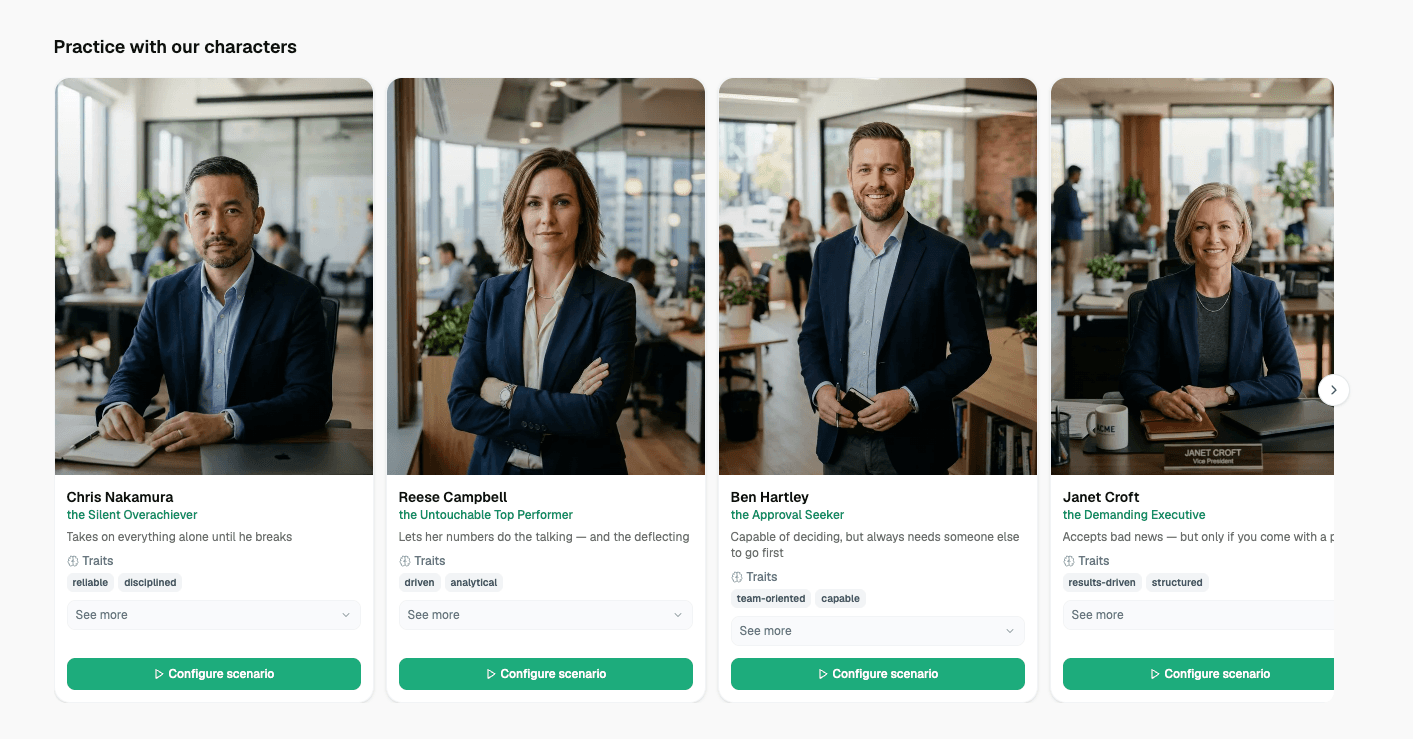
Discover realistic leadership situations with ISTJ personalities. Learn how to lead different characters successfully and leverage their strengths.
AI Role-play
ISTJ
Arjun Mehta
Employee Conversation

The Silent Burnout

mit Arjun Mehta

Character: Arjun Mehta
Category: Employee Conversation
Language:DE

Arjun has been with the company for 12 years as a Senior Developer, consistently delivering excellent performance. Six months ago, he was passed over for a promotion to Senior Architect, a position awarded to a 32-year-old colleague with only three years at the company. Arjun simply said, "I understand," and continued working. For the past three months, he has been working until 9 PM daily, declining team activities due to "too much to do," and appears restless and fatigued. Last week, HR reported a certificate of incapacity for work due to exhaustion, which Arjun declined but still came to work. Yesterday, a colleague saw him crying in the stairwell. Today at 4 PM, you plan to discuss this with him, noting: "I want to talk to you about your situation."

Goal as a Leader

You want to ensure that Arjun openly discusses his health issues and expresses his concerns about the promotion. It is important for Arjun to realize, "My manager sees my value and genuinely wants to help me." The conversation should conclude with specific relief measures (e.g., immediate leave, team reinforcement, task redistribution). Ideally, the manager should clearly explain the promotion decision from that time and demonstrate genuine appreciation for Arjun's years of excellent work.

AI Role-play
ISTJ
Christian Vogel
Development Conversation

Delegation to Reluctant Controllers

mit Christian Vogel

Character: Christian Vogel
Category: Development Conversation
Language:DE

Christian was promoted to team leader four months ago and has since been working regularly until 9 PM. In the past six weeks, he personally took on three important tasks that his team could have handled. Last week, he checked a team member's work at 10:30 PM and sent a list with 15 corrections. Yesterday, a team member complained to you that Christian does not trust them and that they cannot develop their skills. Three weeks ago, Christian emphasized in a conversation, "I need to ensure that the quality is right." You have asked him for a meeting today because an important task needs to be delegated.

Goal as a Leader

Encourage Christian to delegate a specific important task to a team member and to develop a structured delegation plan with realistic safety mechanisms that address his concerns while reducing control.

AI Role-play
ISTJ
Sabine Fischer
Employee Conversation

Work-Life Integration in Special Circumstances

mit Sabine Fischer

Character: Sabine Fischer
Category: Employee Conversation
Language:DE

Sabine has been regularly working from home until 11 PM for the past five months to catch up on hours missed during the day. In the last three weeks, she had to leave early four times due to school calls. Yesterday, she left an important meeting at 2 PM, saying, "I'm so sorry, the school called." This morning, a colleague expressed concern that Sabine looks exhausted and has mentioned several times that she is only getting 4-5 hours of sleep at night. Three months ago, Sabine insisted in a conversation, "I can handle this; I don't need special treatment." You have scheduled a meeting with her for today at 4 PM.

Goal as a Leader

Encourage Sabine to openly discuss her dual responsibilities and collaboratively develop a flexible work model that legitimizes her needs as a single mother, rather than compensating for them through unacknowledged extra work.

AI Role-play
ISTJ
Frank Krause
Motivation Conversation

Channeling cynicism into constructive energy.

mit Frank Krause

Character: Frank Krause
Category: Motivation Conversation
Language:DE

Frank has been with the company for over 20 years and possesses extensive expertise. In the past five years, he has witnessed three major change initiatives fail, in which he initially participated with enthusiasm. For the past 18 months, he has been commenting on every new initiative with sarcastic remarks. Last month, he dramatically rolled his eyes in a meeting and said, "We've been through this before - it always ends the same." Last week, two younger colleagues complained that his constant negative comments were demotivating them. Yesterday, he left an important meeting after 10 minutes, stating, "Let me know when we're talking about reality instead of wishful thinking." Two years ago, he was still appreciated for his engagement. You have scheduled a conversation with him for today at 2:00 PM.

Goal as a Leader

Encourage Frank to stop his destructive comments and contribute his knowledge constructively, without disregarding his legitimate concerns.

AI Role-play
ISTJ
Werner Lange
Employee Conversation

Empathetically Overcoming Technology Resistance

mit Werner Lange

Character: Werner Lange
Category: Employee Conversation
Language:DE

Werner prints approximately 40 emails daily and archives them in folders. For the past three weeks, the team has been using new software, which has been explained to Werner five times so far—yesterday he asked for clarification on the same basic functions for the sixth time. "It used to be much easier with paper," is his mantra. Colleagues spend about 45 minutes each day assisting him with identical tasks. The day before yesterday, he canceled an important meeting because he "can't manage the video conference." His 23 years of expertise are valuable, but his fear of technology is increasingly holding him back. A colleague remarked, "Werner is technically brilliant, but digitally left behind." You have scheduled a meeting with him today at 10:00 AM.

Goal as a Leader

Help Werner recognize that his fear of technology is surmountable and take initial concrete steps to independently build digital basic skills instead of remaining in learned helplessness.

AI Role-play
ISTJ
Marco Schulz
Motivation Conversation

Making tacit knowledge visible

mit Marco Schulz

Character: Marco Schulz
Category: Motivation Conversation
Language:DE

Marco has been consistently reliable for two years, yet he has not contributed to a single one of the 23 team meetings. Last week, he sat in the back corner with his head down while the team discussed a solution for which he had privately proposed an elegant alternative the previous week—one that you praised. Yesterday, you asked him in the hallway why he hadn't shared his idea in the meeting. "The others have more experience," he mumbled before quickly leaving. A colleague reported to you this morning, "Marco thinks he doesn't matter to the team. He said he should just do his tasks and not disturb anyone." Three months ago, during his annual review, you had advised him to engage more actively. Today at 2:00 PM, you have invited Marco for a discussion.

Goal as a Leader

Support Marco in making a small initial contribution at the next team meeting by reducing his fear of judgment and providing him with structured, achievable steps.

Myers-Briggs Personality Library

Each of the 16 MBTI types has unique strengths and leadership styles. Discover how to successfully lead different personality types.

Frequently Asked Questions

How do I have a difficult conversation with an ISTJ?

Thoroughly prepare for the conversation by providing specific facts, examples, and clear expectations. Be punctual and get straight to the point. Objectively explain the benefits of the change for quality and reliability, offer concrete steps with timelines, and summarize the outcome in writing.

How do I motivate an ISTJ employee?

Provide clear written goals and structured processes, regularly acknowledge diligent work in specific terms, and explain the practical benefits of changes step by step. Allow for personal responsibility within established guidelines, provide lead time for new tasks, and offer objective feedback rather than emotional appeals.

How do I handle conflicts when an ISTJ is involved?

Speak objectively and specifically; present facts, clear rules, and a timeline. This way, you can leverage the reliability and systematic nature of the ISTJ for a pragmatic solution. Avoid emotional accusations, allow time for reflection, and assign clear tasks with accountability and deadlines to ensure that changes remain manageable and quality is maintained.

How do I conduct a coaching conversation with an ISTJ?

Prepare yourself with clear facts, specific goals, and a structured process. Set clear expectations and firm deadlines. Explain changes objectively in terms of their benefits, allow time for reflection, and agree on small, concrete steps for implementation or delegation.