
careertrainer.ai

AI role-plays for leaders

Learning to Conduct Mediation Conversations

When team members block each other and positions harden, it's crucial to learn how to facilitate mediation conversations that transform adversaries back into colleagues. Engage in AI role-play scenarios where intelligent AI characters simulate emotional escalations and hidden power dynamics, allowing you to practice the mediator role without igniting real conflicts.

Realistic AI Characters
Train with real scenarios from your daily work
Structured Checklists
Preparation with professional conversation guides
Enterprise & Privacy
German software, GDPR-compliant for companies
Product Demo

Try for free

Thomas Weber

Thomas Weber

Head of IT

Mediation Conversation

Practice scenario

Practice a realistic conversation with our AI employee. Improve your conversation skills in a safe environment.

Mediation Conversation Guide & Preparation
Mediation Conversations Guide

Follow this proven 5-phase structure for professional and successful Mediation Conversations.

The 5 Phases for successful Mediation Conversations

1

Creating a Positive Atmosphere

5-10 minutes

Begin the conversation with a friendly greeting and create a relaxed environment. Show genuine interest in the person and their feelings.

Tips

  • Ask open-ended questions to break the ice.

Example phrases

  • "Ich freue mich, dass wir heute sprechen können. Wie geht es Ihnen?"
  • "Ich habe gemerkt, dass Sie in letzter Zeit viel gearbeitet haben. Wie empfinden Sie die aktuelle Situation?"
  • "Ich möchte sicherstellen, dass Sie sich wohlfühlen, bevor wir beginnen."

Standard situations

"How was your weekend?"

"Is there something you would like to share?"

"I really appreciate your work. What are your thoughts on the recent developments?"

2

Situation Analysis & Understanding

15-20 minutes

Collaboratively analyze the current situation and engage in active listening. Ask questions to gain a clear picture of the circumstances.

Tips

  • Ask specific questions to avoid misunderstandings.

Example phrases

  • "Könnten Sie mir bitte schildern, was genau passiert ist?"
  • "Wie haben Sie die letzten Herausforderungen erlebt?"
  • "Ich möchte Ihre Sichtweise besser verstehen. Was ist Ihnen besonders aufgefallen?"

Standard situations

"How do you assess the current situation?"

"What are your main concerns in this situation?"

"Are there any aspects that you find particularly challenging?"

3

Focusing on Strengths & Potential

10-15 minutes

Collaboratively identify strengths and potential. Encourage the employee to reflect on their skills and achievements.

Tips

  • Praise specific achievements to foster motivation.

Example phrases

  • "Ich habe gesehen, dass Sie in der letzten Präsentation großartige Arbeit geleistet haben."
  • "Welche Ihrer Fähigkeiten glauben Sie, könnten in dieser Situation hilfreich sein?"
  • "Wie könnten wir Ihre Stärken besser nutzen?"

Standard situations

"I have great confidence in your abilities."

"Your teamwork has led to great results."

"What strengths do you think you can bring to the current situation?"

4

Planning Support Measures

15-20 minutes

Collaboratively develop concrete steps to improve the situation. Discuss how you, as a leader, can provide support.

Tips

  • Formulate clear and realistic goals.

Example phrases

  • "Welche konkreten Maßnahmen könnten wir ergreifen, um die Situation zu verbessern?"
  • "Ich kann Ihnen Unterstützung in Form von Ressourcen anbieten. Was benötigen Sie?"
  • "Wie können wir sicherstellen, dass Sie die benötigte Unterstützung erhalten?"

Standard situations

"Let's define the next steps together."

"How can we reduce your workload?"

"What specific support do you need right now?"

5

Motivation & Positive Outlook

10-15 minutes

Conclude the conversation with a positive outlook and encourage the employee to remain optimistic. Emphasize the progress made and the opportunities ahead.

Tips

  • Create a positive perspective for the future.

Example phrases

  • "Ich bin zuversichtlich, dass wir gemeinsam positive Veränderungen erreichen werden."
  • "Ihr Engagement ist entscheidend für den Erfolg. Lassen Sie uns darauf aufbauen."
  • "Ich freue mich auf unsere nächsten Schritte und was wir gemeinsam erreichen können."

Standard situations

"I appreciate your openness and look forward to our collaboration."

"Together we will tackle the challenges."

"I am convinced that we are on the right track."

Full Mediation Conversation guide

All phases, examples, and dialogues on one page

Open full guide

The Challenges in
Mediation Conversationsn

In the Leadership context, conducting Mediation Conversations confidently is one of the most demanding tasks. You should know these typical pitfalls to successfully master Mediation Conversations.

Manager Avatar 1
Maintaining Neutrality Despite Personal Proximity
You are close to both parties in the conflict and must remain completely impartial. Even the smallest gesture can be interpreted as favoritism. Achieving absolute neutrality is nearly impossible when you are aware of both parties' backgrounds and work with them daily. One party may quickly feel disadvantaged, exacerbating the conflict. A breakthrough is only possible when you recognize your own assumptions, make them transparent, and establish clear mediation rules.
Manager Avatar 2
De-escalating Emotional Escalation
Suddenly, voices are raised, accusations are thrown, and personal attacks replace factual arguments. The conversation goes in circles, positions harden, and objective solutions seem increasingly distant. Successful mediators learn to recognize early warning signs and intervene before escalation spirals out of control—by establishing clear conversation rules and structured speaking turns for both parties.
Manager Avatar 3
Shifting from Accusations to Needs
The conversation often gets bogged down in blame, leaving true needs unspoken. You end up addressing only symptoms instead of root causes, and even superficial solutions quickly dissolve. The key lies in targeted questions that redirect from accusations to needs, revealing where both parties' needs overlap—this is where the potential for genuine solutions resides.
Manager Avatar 4
Balancing Unequal Power Dynamics
One party dominates the conversation through status or personality, while the other party hardly dares to express their position. The apparent "solution" is not based on genuine consensus but rather on intimidation, leading to future problems. Successful mediation requires structured speaking turns that guarantee equal speaking time for both parties and create protected moments in which the quieter individual can speak without interruption.
Manager Avatar 5
Avoid Quick Fixes
The pressure is high, and you feel responsible for solving the problem. As a result, a weak compromise is reached that leaves no one truly satisfied. The conflict simmers on and will soon resurface. An hour of intensive mediation with genuine understanding is more valuable than three superficial conversations—invest the time in addressing the deeper causes before seeking solutions.
Manager Avatar 6
Truly Understanding Both Perspectives
You may think you’ve heard both sides, but in reality, you’ve only scratched the surface. Behind every accusation lie stories, fears, and past wounds that don’t surface with just a simple inquiry. If you don’t grasp these deeper layers, you end up mediating between positions rather than between people. The result feels contrived and fragile. Genuine understanding arises only through patient, authentic listening and the willingness to acknowledge the uncomfortable truths from both sides.
AI Role-Playing

MasterMediation Conversationswith Careertrainer.ai

From scenario selection to detailed feedback – Careertrainer makes Mediation Conversation training in the Leadership context simple, effective, and measurable.

1
Select Mediation Conversation scenario

Select Scenario

Choose the appropriate scenario from various Mediation Conversations or create your own individual training scenario.

2
Train Mediation Conversation with AI

Conduct Conversation with AI

Conduct a realistic Mediation Conversation with our AI. Train different situations and conversation flows in a safe environment.

3
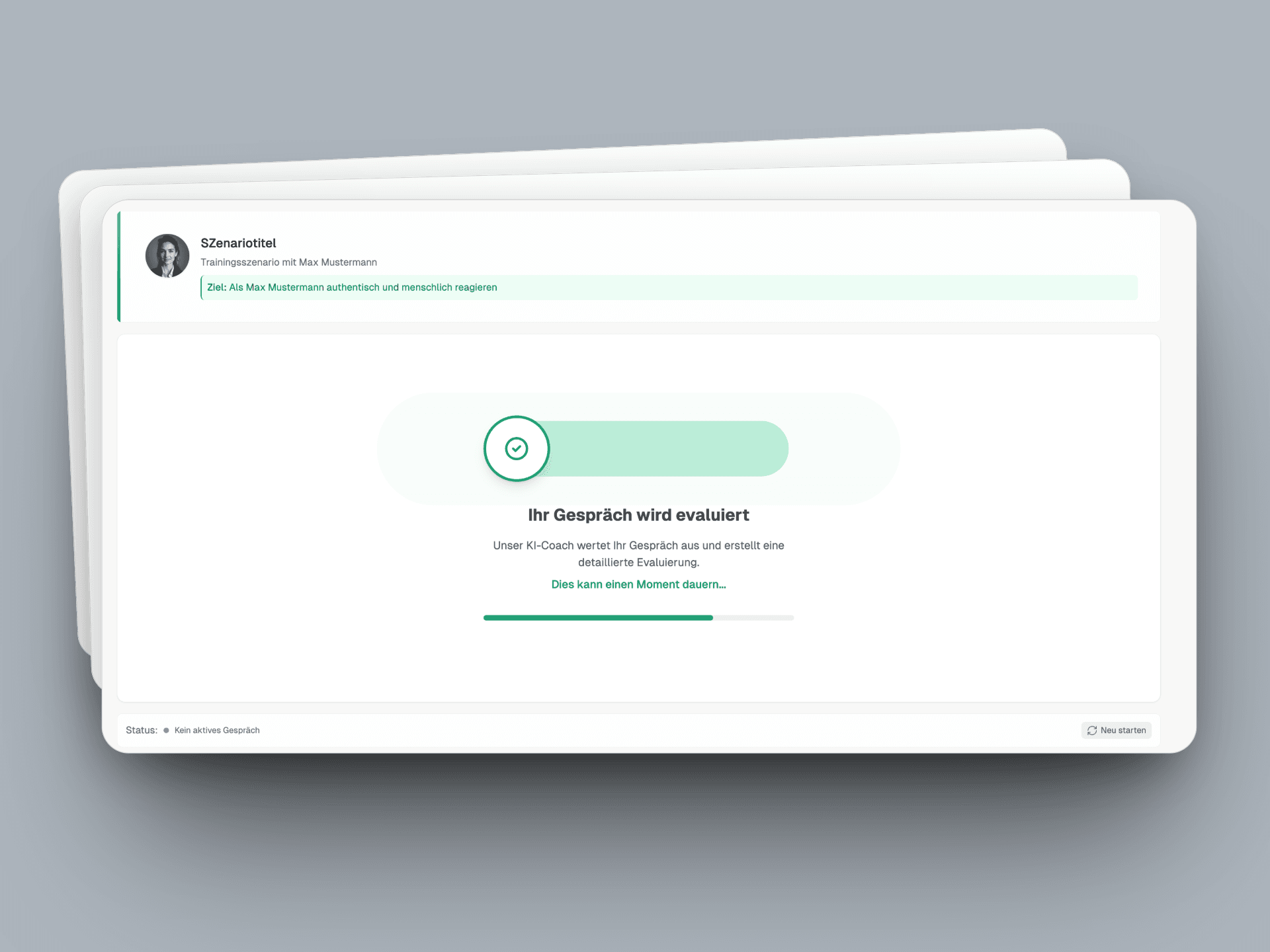
Feedback on Mediation Conversation

Receive Feedback

Receive detailed, constructive feedback on your Mediation Conversation and concrete improvement suggestions for practice.

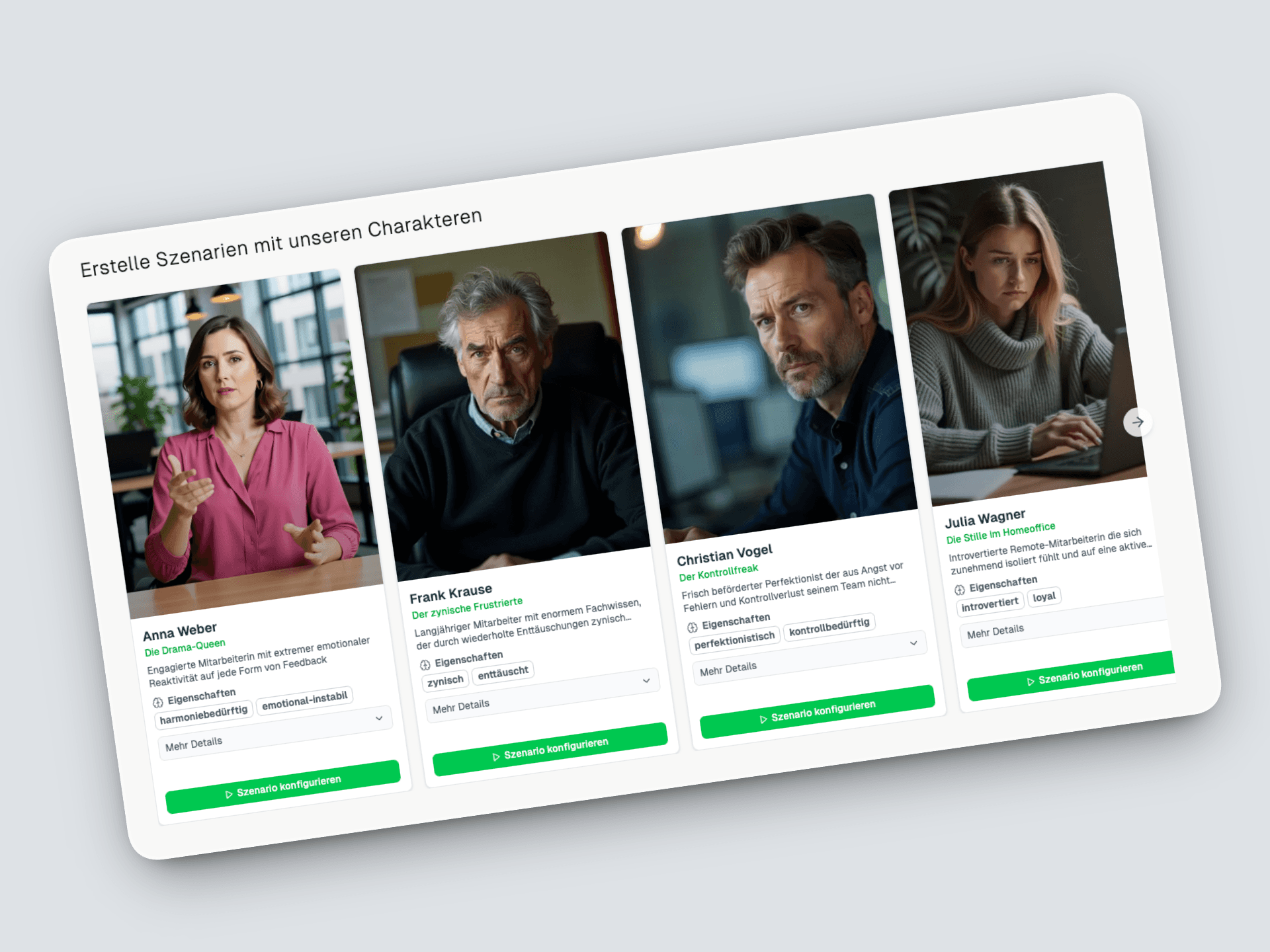
AI Character Library

Train Mediation Conversations with AI characters

Every employee is different – and reacts differently to feedback. Our characters are built on scientifically validated personality models and simulate realistic conversation dynamics: from the insecure junior employee to the critical senior developer.

Every character reacts differently

Peter Grabowski

Peter Grabowski

The defensive pragmatic ops manager

Manufacturing & Energy

Personally procured a gas heater 3 years ago – the heat pump topic feels like criticism of his own decision.

defends past decisionstakes suggestions personallyneeds framing change not blame
Introverted
Extroverted
Detail-oriented
Conceptual
Analytical
Emotional
Structured
Flexible
Thomas Weber

Thomas Weber

The skeptical IT decision-maker

IT & Cybersecurity

Analytical and slightly defensive – defends his team even though he knows NIS2 can't be managed alone.

references internal know-howblocks external solutionswants complement not replacement
Introverted
Extroverted
Detail-oriented
Conceptual
Analytical
Emotional
Structured
Flexible
Laura Schneider

Laura Schneider

The quiet top performer

Technology

Wants more responsibility but won't say so. Only opens up after genuine empathetic follow-up questions.

doesn't voice wishes directlywaits for invitationshows engagement through actions not words
Introverted
Extroverted
Detail-oriented
Conceptual
Analytical
Emotional
Structured
Flexible
Karl-Friedrich Moser

Karl-Friedrich Moser

The time-pressed executive

IT & Compliance

15 minutes max – only wants cost of non-compliance vs. cost of the solution. No technical details.

interrupts at detailsasks for numbers immediatelywants decision basis
Introverted
Extroverted
Detail-oriented
Conceptual
Analytical
Emotional
Structured
Flexible
16+
Different Personality Types
50+
Realistic scenarios
24/7
Available for training anytime
Questions & Answers

Frequently Asked Questions

When is the right time for a mediation conversation?

A mediation conversation is appropriate when a conflict is affecting collaboration, but both parties are fundamentally still willing to communicate. Ideal indicators include: ongoing tensions despite informal attempts at resolution, impacts on team dynamics or project outcomes, or when colleagues actively avoid each other. Important: Do not wait until the conflict has escalated and positions have hardened— the earlier you mediate, the greater the chances of success.

How can I optimally prepare for a mediation conversation?

Effective preparation includes conducting individual meetings with both parties to understand their perspectives, establishing the mediation framework (neutral space, adequate time, clear conversation rules), reflecting on your own stance and recognizing any potential biases, as well as being equipped with specific mediation techniques for various conversation situations. The best preparation is practicing in realistic scenarios before the actual situation arises.

What should I do if one party refuses to cooperate?

If someone is refusing or blocking the mediation process, start by addressing their concerns in a one-on-one conversation and inquire about their needs for participation. Often, underlying fears of exposure or a lack of trust in the process are at play. Clearly explain your role as a neutral mediator and the benefits for both sides. Sometimes, it helps to break the mediation down into smaller steps or to initially allow for written communication only.

How can I train mediation conversations using AI role plays?

Careertrainer.ai offers realistic mediation scenarios where you engage with two AI characters in conflict simultaneously. You practice the mediator role while the AI characters respond emotionally, interrupt each other, or display power dynamics—just like in real workplace situations. After each conversation, you receive detailed feedback on your neutrality, de-escalation techniques, and conversation management. This allows you to explore various mediation approaches without risk and learn to maintain control even in heated situations.