
Sophie Morgan
Midmarket CEO
AutomotiveDiscovery callWe already have a providerMidmarket CEO
In your office at 4:10 pm, Sophie calls to benchmark dealer offers by checklist. She keeps saying other quotes look identical, and she has to justify the choice internally. If you fail to clarify the risk behind the cheapest option, she will have the wrong signature on her desk.
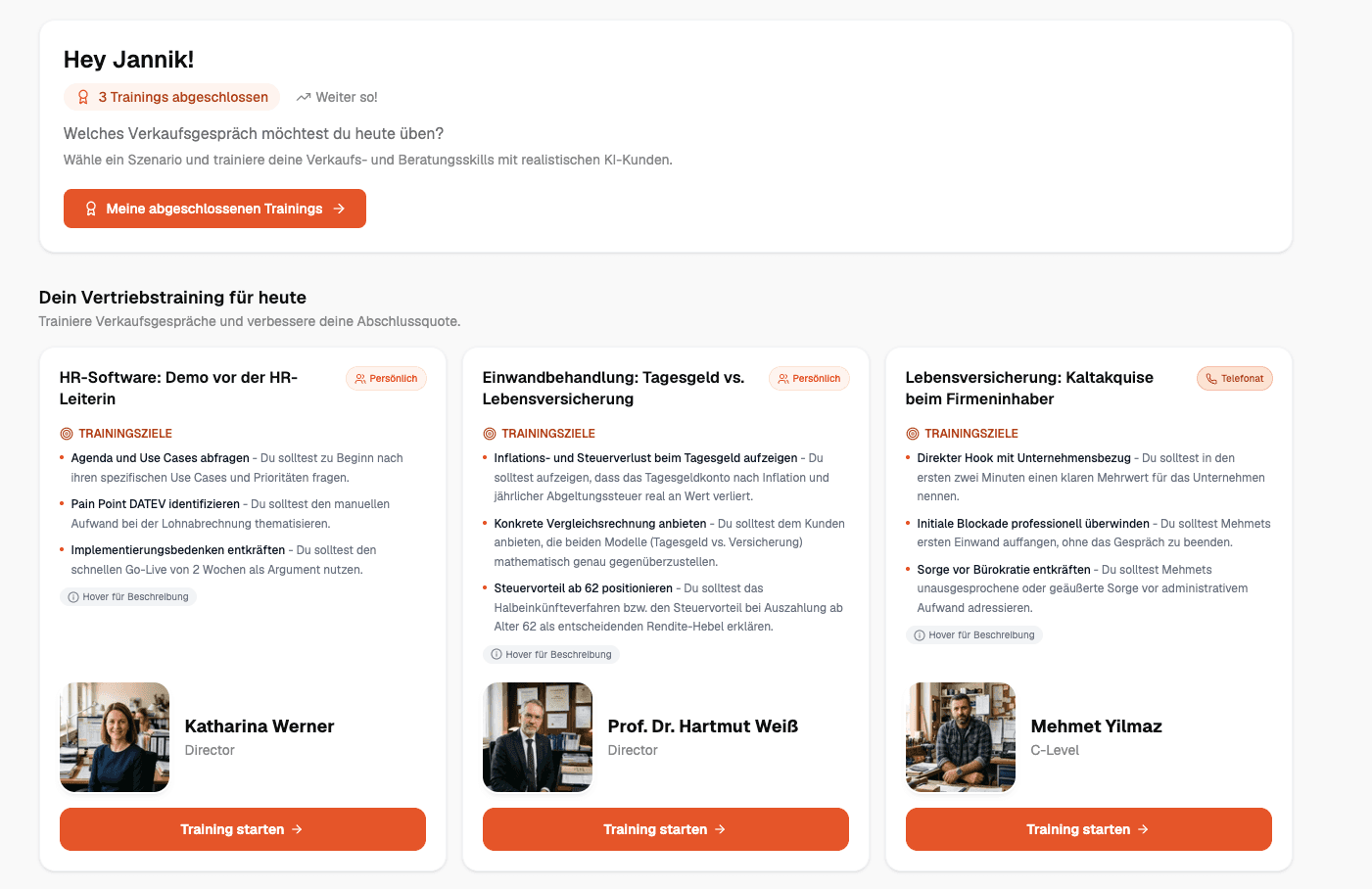
What you'll practise
- Define comparison criteria
- Name hidden risk drivers
- Land one differentiator
„Our lot turnover is on a timer, so I need clean numbers.”
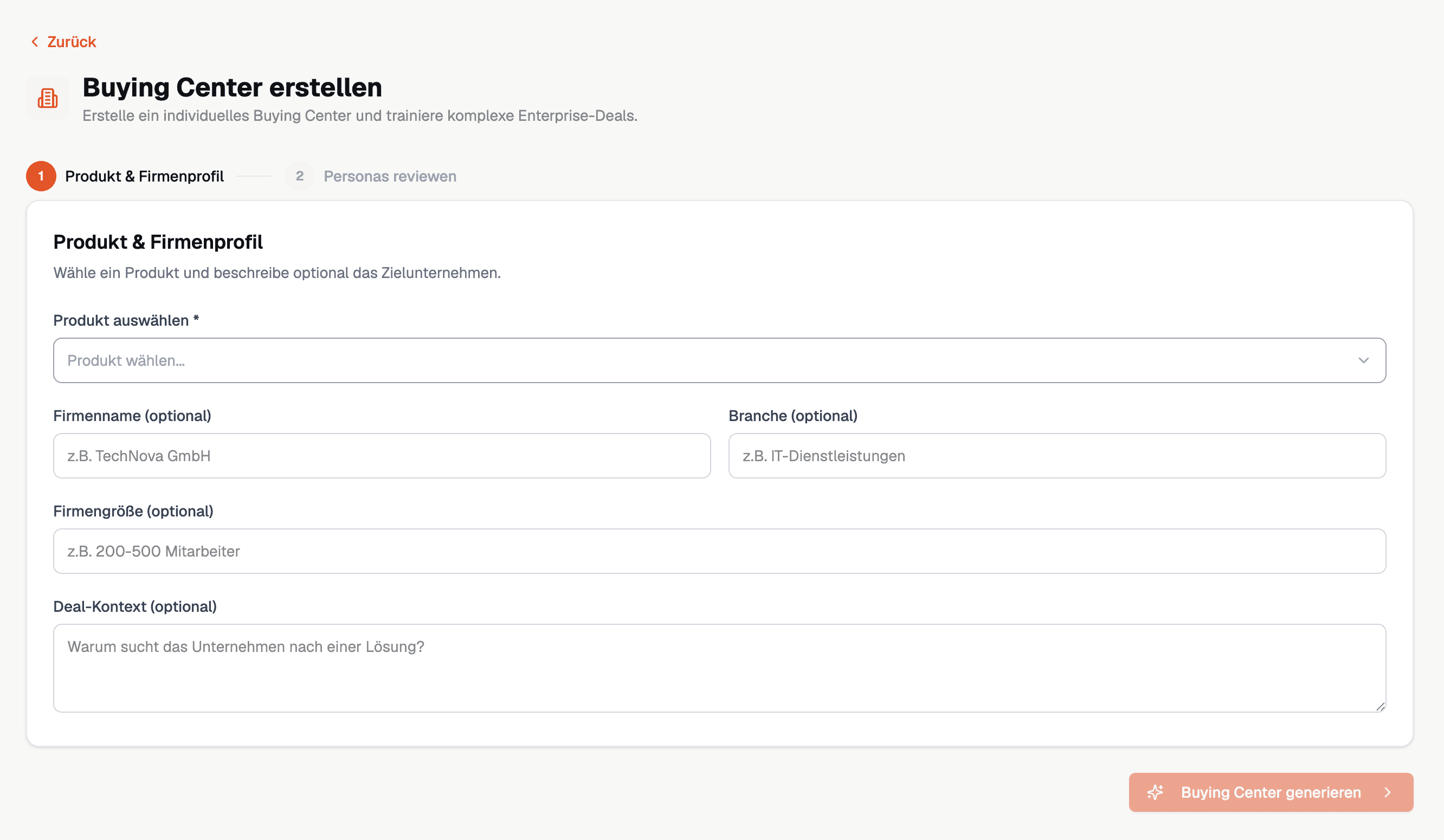
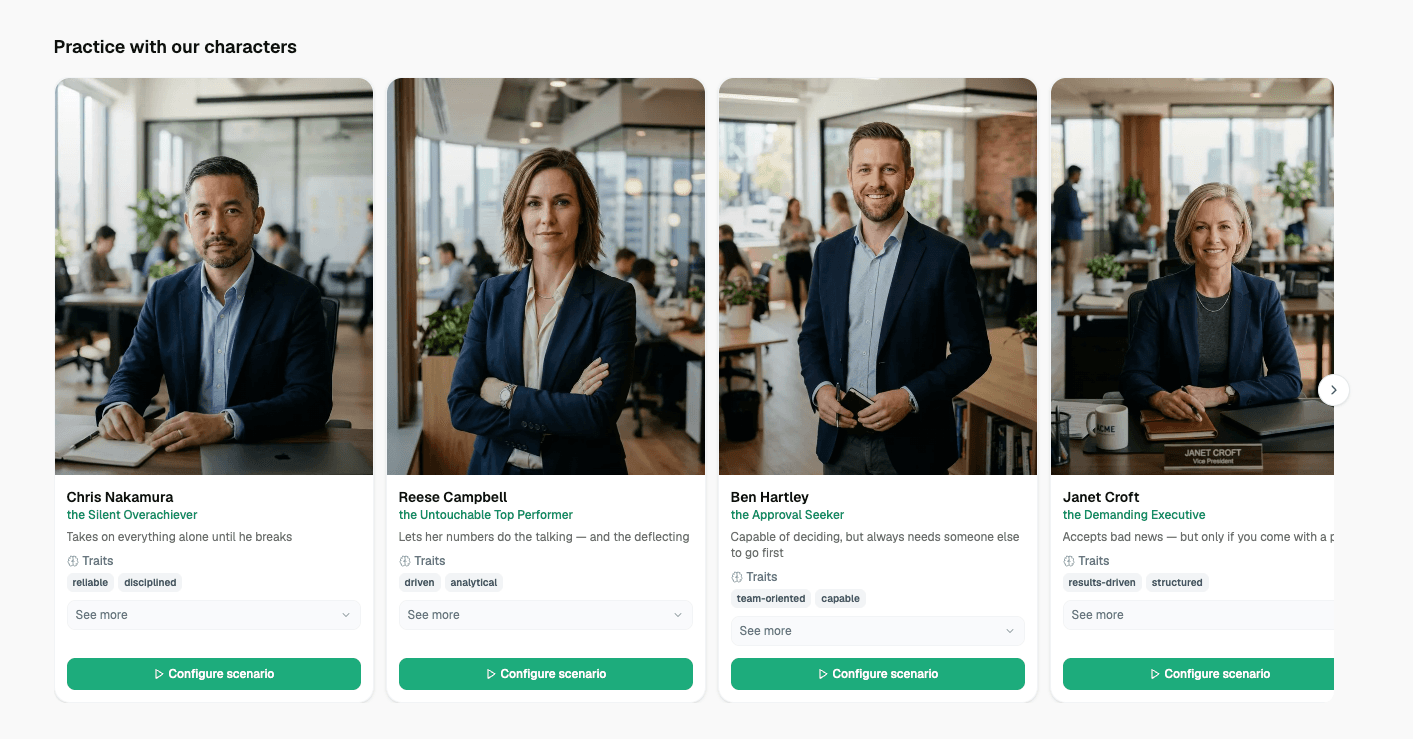
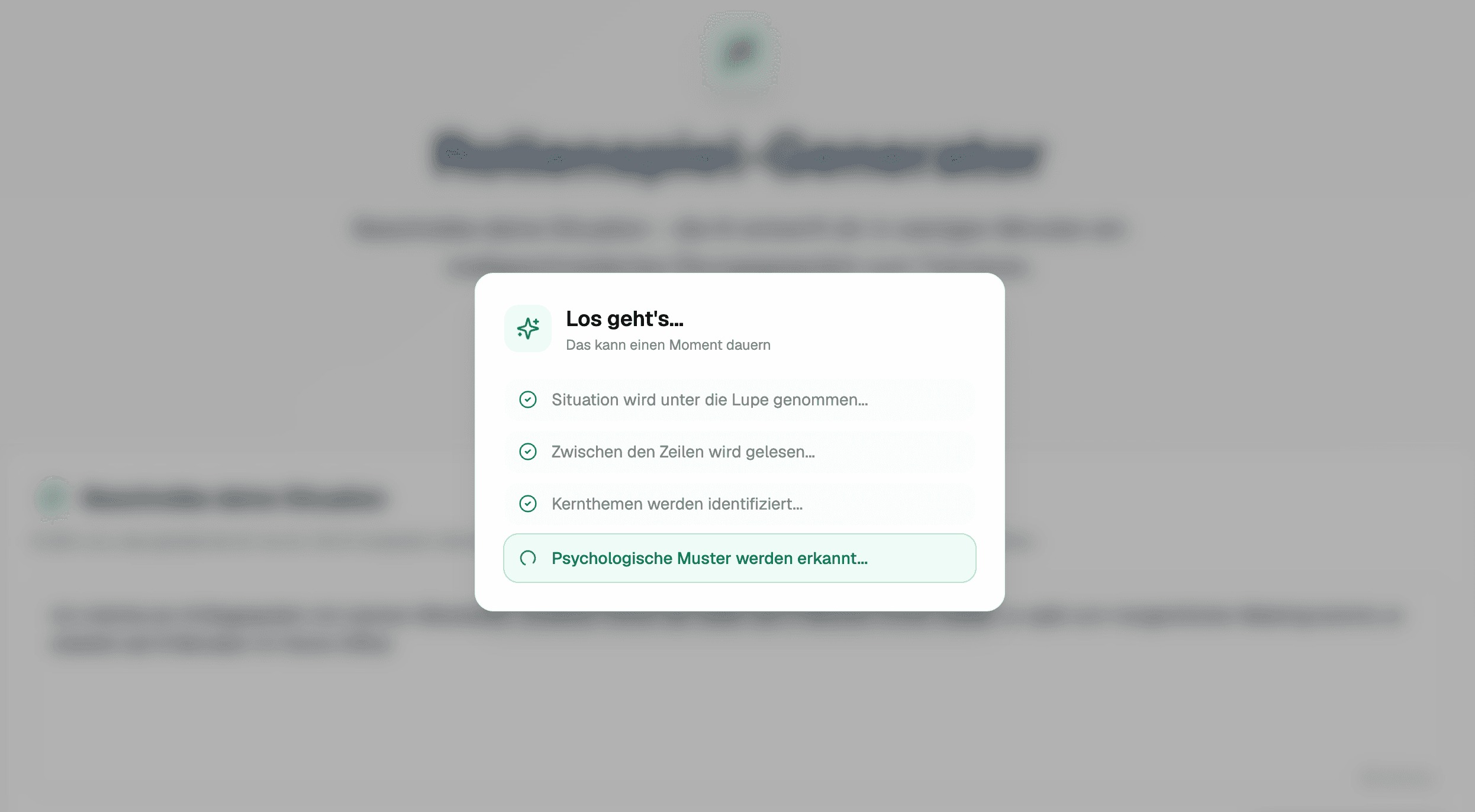
In the appScenario pre-filled, fully editable




.png&w=3840&q=75)