careertrainer.ai

Practice critical customer conversations about freight rates, service levels, and tenders in real-time live audio role-play—with instant feedback.

Sales training in logistics for price negotiations, objections, and closing confidence

Careertrainer.ai helps you train sales conversations in transport, freight forwarding, and contract logistics realistically. With AI role-play, you practice objection handling, negotiations, and discovery calls without risk—with measurable, data-driven evaluation.

Live example · This is what training looks like

12 scenarios
Phone call

Practise with your product

Emily Parker

Emily Parker

Sales·Discovery
The skeptical mid-market CEO

Midmarket CEO · 39 · ISTJ

Cross-IndustryDiscovery callMidmarket CEO

Phone call comparison trap for transport quotes

Your quote gets compared to a checklist.

In the conference room, you reach Emily right before the carrier shortlist meeting. She compares today’s transport offers line by line.

Goal: Help Emily spell out the checklist she is using, and what failure would cost her this quarter. Bridge from her comparison table to the one service difference that matters most to her lane reliability.

Learning goals

  • Define reliability criteria
  • Expose the cheapest risk

What to expect

  • Ask for lane, cutoff and dwell-time specifics
  • Name the failure cost in operations terms
Practise with your product

Metrics that make price negotiations and logistics sales tangible

These 4 figures show why strong negotiation, clear service-based argumentation, and quick responses in logistics sales directly impact your margin and close rates.

8,1%
Logistics share of the GDP in Germany
The industry is large and highly competitive. If you handle customer conversations better, you protect your rates and win tenders more easily. (Source: statista.com, 2024)
79%
B2B buyers expect competent guidance
In price-driven conversations, a tariff alone isn’t enough. Customers want sellers who can clearly assess needs, risks, and the right service level. (Source: salesforce.com, 2023)
17%
More chances to close with a fast follow-up
Especially after an initial call or a tender process, speed matters. Trained teams respond to objections more structuredly and stay in the game. (Source: insideSales.com, 2021)
60%
Cost advantage over in-person training
For recurring sales conversation training, AI training is often significantly more efficient than traditional formats that require ongoing scheduling and trainer time. (Source: hrforecast.de, 2024)

When logistics sales are under pressure in everyday situations

In transport, freight forwarding, and contract logistics, success isn’t driven by pricing alone—but by how well you can lead conversations under pressure: price, time, and escalation. With Careertrainer.ai, you can train those critical moments through realistic AI role-play—practical, measurable, and without risk to real customer relationships.

AI character for industry-focused solutions

AI role-play focus

Make difficult price negotiations trainable.

With Careertrainer.ai, you practice critical customer conversations as realistic AI role-plays and get instant feedback on objection handling, negotiation, and closing confidence.

Handle feedback pressure smoothlyLead the Buying Center
Challenge 01

Spot market comparisons break down your freight rates.

Buyers push back with daily prices, freight exchanges, and cheap offers—while your customer still expects fixed time slots, stable contract terms, and escalation reliability. If you then only talk about rates, you risk losing margin, contract quality, or even the tender itself. With Careertrainer.ai, you can train these price negotiations as AI role-play, so you can convincingly address reliability, service levels, and risk mitigation.

Book a free demo
Challenge 02

Too many decision-makers are slowing down the deal in the buying committee.

In logistics sales, you often sit across from procurement, warehouse management, supply-chain leaders—and sometimes even Finance—but every stakeholder evaluates your offer using different criteria. If you don’t address benefits, risk, and operational impact in a way that fits each role, the deal drags on—or falls apart shortly before the contract is awarded. Careertrainer.ai trains these conversation situations with realistic AI characters, so you can run discovery, objection handling, and negotiations more confidently with every stakeholder.

Book a free demo
Challenge 03

New sales reps pitch plans and prices—but not the service impact.

Many teams have product knowledge—but not enough conversation training for real objections that come up during live calls, like delivery performance, shipment notification (Avisierung), returns, or peak handling. That extends ramp-up times, increases pressure to discount, and makes close rates between experienced and new colleagues unnecessarily volatile. Careertrainer.ai scales your sales training and sales coaching with repeatable AI role-play scenarios, so new sales reps reach a solid, real conversation level faster.

Book a free demo
Challenge 04

Service issues put your existing customers—and your cross-selling potential—at risk.

A delayed shipment, damaged goods, or an escalation in the warehouse can turn a stable customer relationship into a sensitive conversation about blame, SLAs, and price pressure. In those moments, if you get defensive or give in too quickly, you risk losing trust, additional business, and often even your access to the next negotiation. With Careertrainer.ai, you can train exactly these difficult customer conversations as realistic conversation simulations—so you can handle complaints early, address responsibility clearly, and keep the relationship stable.

Book a free demo

Sales training in logistics: safely train customer conversations, objections, and price negotiations — practice typical scenarios with AI.

Four hands-on practice scenarios for “Sales training in logistics: safely rehearse customer conversations, objections, and price negotiations”: Train typical conversations with realistic AI characters in Careertrainer.ai.

Filter by industry, situation, objection and buyer persona. Every example leads directly into your own AI role-play.

12 of 12 scenarios

Industry

Situation

Objection

Buyer persona

Emily Parker

Emily Parker

Midmarket CEO

Cross-IndustryDiscovery callMidmarket CEO

In the conference room, you reach Emily right before the carrier shortlist meeting. She compares today’s transport offers line by line.

What you'll practise

  • Define reliability criteria
  • Expose the cheapest risk
  • Reframe to one differentiator
We have three bids. The lowest one looks fine on paper.
James Carter

James Carter

Small Business Owner

Cross-IndustryDemoSmall Business Owner

On site at the warehouse dock in the afternoon rush, James meets you for a quick look. He keeps steering the talk back to list price and compares it to last month’s invoice.

What you'll practise

  • Frame value before numbers
  • Connect demo to cash impact
  • Qualify the rate context
Show me the rate, and I’ll tell you right away if it hurts my margin.
Alex Taylor

Alex Taylor

Midmarket CFO

Cross-IndustryExecutive briefingMidmarket CFO

You dial Alex on a morning call block, and he answers briskly. He immediately says the reason for the call changed inside finance.

What you'll practise

  • Acknowledge agenda shift fast
  • Re-anchor to measurable transport costs
  • Propose a negotiation path
I’m not interested in the usual courier story. Focus on cash risk.
Sophie Morgan

Sophie Morgan

Midmarket CTO

Cross-IndustryClosingMidmarket CTO

Across from you in the production office, Sophie meets you between standup and a test run. She says she planned a quick topic, then immediately pivots to who is actually responsible.

What you'll practise

  • Clarify decision ownership
  • Bring the right attendee next
  • Confirm boundaries and follow-up
I can discuss it technically, but ownership is somewhere else.
Daniel Walker

Daniel Walker

IT Director

Energy & RenewablesActive closingBudget lockedIT Director

Late afternoon on a phone call, you reach Daniel about renewing transport reliability services. He sounds careful, saying finance will freeze anything new this quarter. If this renewal stalls, his routing integrations and SLA reporting will take the hit.

What you'll practise

  • Clarify freeze window first
  • Offer phased renewal entry
  • Tie to logistics SLA outcomes
I’m not approving anything new while the CFO is in audit mode.
Jordan Blake

Jordan Blake

HR Director

Cross-IndustryCold call openingCall back laterHR Director

On site at a warehouse trade hub, you start a quick face to face chat with Jordan. She cuts in immediately, saying she has no time for unexpected requests. If you push too hard, her HR team will get stuck handling rumors about training that never had approval.

What you'll practise

  • Send one relevant value hook
  • Ask for the real approval owner
  • Propose a low-effort next step
I don’t need another vendor story today, I need it to fit our schedules.
Rachel Bennett

Rachel Bennett

Head of Sales

ConstructionDiscovery callNeed to discuss with partnerHead of Sales

In a quick phone call, you reach Rachel about improving transport lead times for site deliveries. She’s skeptical and warns that approvals go through committees and sign offs. If this call creates expectations, her pipeline targets get dragged into follow up chaos she cannot control.

What you'll practise

  • Map decision path without pressure
  • Clarify Rachel’s approval boundaries
  • Define a realistic next discovery step
Who signs the service scope, not who says yes first?
Michael Brooks

Michael Brooks

Procurement Lead

AutomotiveCustomer complaint handlingBad past experienceProcurement Lead

At your desk after a site visit, Michael greets you politely but starts with anger about repeated delivery failures. He says procurement now gets blamed for SLA breaches with plant schedules. If this conversation goes nowhere, he risks customer escalations and loses credibility in monthly supplier reviews.

What you'll practise

  • Listen and mirror the escalation core
  • Identify the repeat failure pattern
  • Agree on a scoped fix step
I’m smiling, but procurement gets hammered when your loads miss our window.
Casey Hayes

Casey Hayes

Marketing Director

Cross-IndustryExecutive briefingMarketing Director

You dial Casey Hayes, and she starts with lane volumes and service-level targets. She interrupts any vague talk about “reliability” with hard numbers from last quarter.

What you'll practise

  • Ask a lane-specific question
  • Use KPI proof, not features
  • Confirm the decision lever
Well. If you cannot cite OTIF, I cannot defend the higher rate.
Laura Hughes

Laura Hughes

Operations Director

Cross-IndustryActive closingCall back laterOperations Director

On site, Laura Hughes says the comparison pilot is already running and you only have ten minutes. Then she shifts to logistics planning paperwork, asking you to justify why another round matters now.

What you'll practise

  • Identify the decision owner
  • Lock a deadline tied to pilot
  • Agree a low-friction next step
We already planned the pilot, so extra info does not help.
Owen Foster

Owen Foster

General Practitioner

Cross-IndustryGhosting recoveryCall back laterGeneral Practitioner

You reach Owen Foster by phone, and he thanks you while keeping the line vague. He says nothing is “urgent,” but his voice tightens when you mention delivery gaps last month.

What you'll practise

  • Surface the real risk
  • Offer two concrete time options
  • Confirm next action owner
Look, I cannot afford another late delivery—patients feel it.
Riley Stone

Riley Stone

Private Customer

Cross-IndustryChurn prevention with existing customerWe already have a providerPrivate Customer

Across from you, Riley Stone keeps pointing to the current carrier contract and habits. You notice she avoids mentioning incidents, then mentions “one more change” feeling too risky.

What you'll practise

  • Name the staying-put cost
  • Find the trigger to switch
  • Propose a controlled pilot
We have been with them for years, and it is not broken.

How the AI evaluates your training conversation

After every role-play a separate AI analyses your full conversation transcript — with score, goal feedback and concrete quotes from your own dialogue.

Two layers feed the overall score: scenario-specific goals (70%) and five core competencies for your training type (30%).

SummaryRating: Solid

Emily Parker · Phone call comparison trap for transport quotes

Turn price into lane reliability metrics

Help Emily spell out the checklist she is using, and what failure would cost her this quarter. Bridge from her comparison table to the one service difference that matters most to her lane reliability.

Overall result
6.7/ 10

70% scenario goals + 30% core competencies

Scale 0–10 · backed by quotes from your conversation

Scenario goals · 70%Core competencies · 30%

Scenario goals

Scenario goals · 70%

Define reliability criteria

6.4 / 10

Ask for the exact delivery and handling criteria Emily will score. Pin it to lane rules, cutoff times, and acceptable exceptions so the evaluation is concrete.

Partially achieved

You named lane cutoff and dwell time, but didn’t add at least one more concrete reliability detail tied to how you run the move.

Emily, I’ll score bids on lane cutoff and dwell-time risk, okay?

Expose the cheapest risk

8.4 / 10

Surface what the lowest-priced option likely leaves out, using operational risk language. Tie the risk to measurable impact on handovers, penalties, or reschedules.

Fully achieved

You connected the lowest price to a specific operational risk and stated the downstream impact on the quarter’s plan.

And if the truck misses handover, that blows our plan; your lane differentiator?

Reframe to one differentiator

6.4 / 10

Land one clear, scorable differentiator aligned to Emily’s criteria. Keep it short and decision-ready so she can update the shortlist immediately.

Partially achieved

You asked for a differentiator, but you didn’t force a one-difference summary mapped back to her lane reliability scoring.

And if the truck misses handover, that blows our plan; your lane differentiator?

Core competencies

Core competencies · 30%

Needs analysis

6.4

Systematically uncover needs and requirements

Value articulation

6.9

Present concrete value for the customer

Objection handling

6.7

Address objections professionally and constructively

Closing orientation

7.0

Work toward a close or clear next step

Relationship building

6.5

Build trust and rapport

Details · Transcript excerpt

YouEmily, I’ll score bids on lane cutoff and dwell-time risk, okay?
Emily ParkerWe have three bids. The lowest one looks fine on paper. Yeah.
YouAnd if the truck misses handover, that blows our plan; your lane differentiator?
Pro tip

To pin reliability, ask for cutoff plus dwell-time by lane. Example: "If we miss handover, what's the replacement timeline and cost?"

Only your wording is evaluated — not the AI counterpart's. The AI's opening of the conversation is not penalised.

Practise with your product

Train your team for pricing conversations, objections, and tenders in logistics sales

With Careertrainer.ai, you practice critical customer conversations in transport, freight forwarding, and contract logistics as practical AI role-plays. From your first discovery call to tough price negotiations, you train realistic conversation scenarios, respond to typical objections, and develop measurable communication skills with instant feedback.

1

Choose the right scenario for your sales case

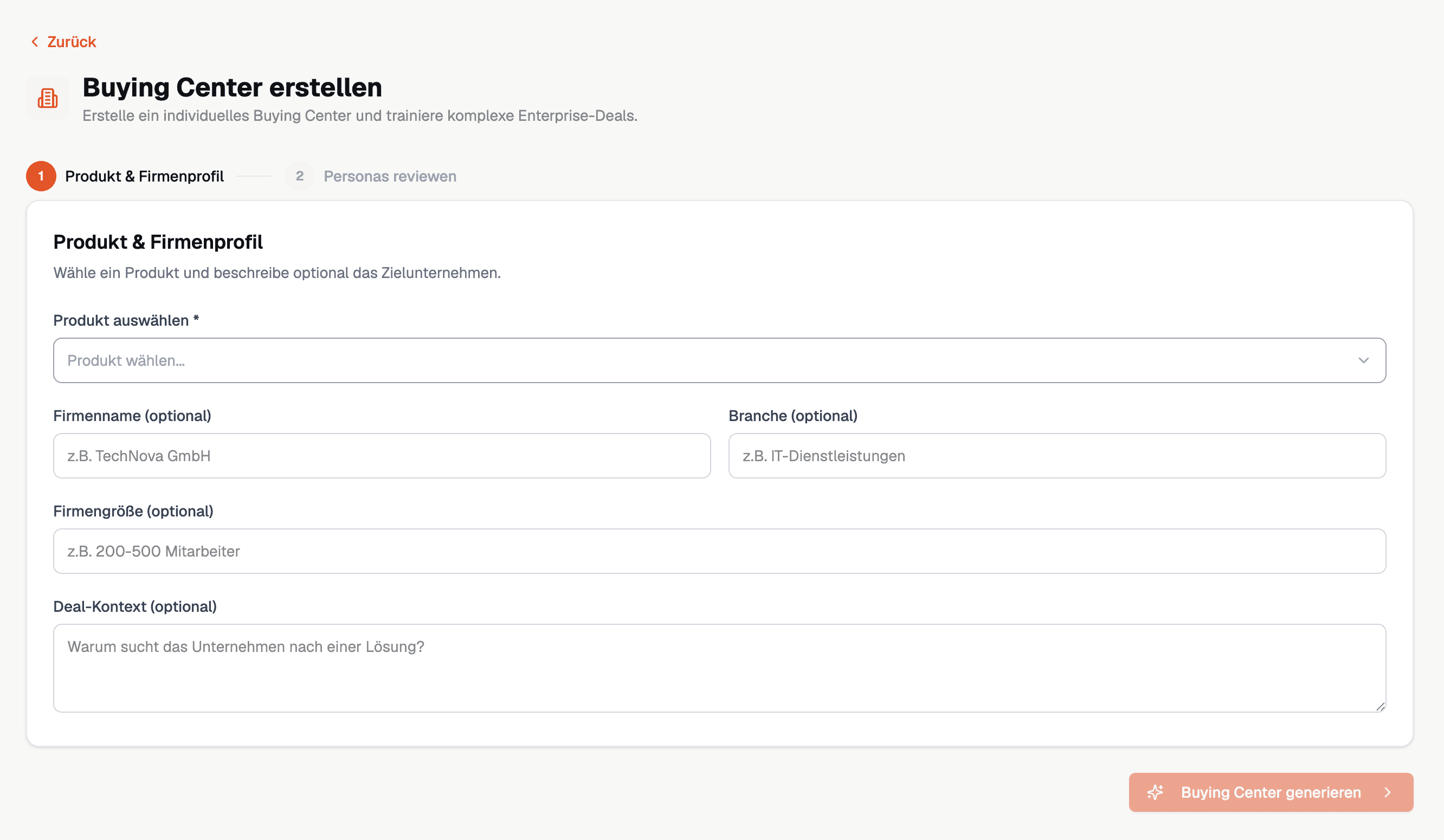
Choose an AI role-play that matches your day-to-day sales reality: for example negotiating freight rates, explaining service levels, working through tenders, or handling price comparisons with competitors confidently. You’ll train with realistic roles such as procurement managers, supply chain managers, operations leaders, or plant logistics specialists—tailored to transport, freight forwarding, or contract logistics.

Role-Play Generator in Careertrainer.ai
2

Practice customer conversations as a live audio simulation

Start a 5–15-minute conversation training session and run your negotiation the way it will later happen in the real appointment: under time pressure, with a discount request, doubts about the SLA, questions about delivery quality, or critical objections from the Buying Center. The Voice AI responds dynamically to how you lead the conversation—so you combine objection handling, sales training, and sales coaching in a realistic simulation.

Voice AI conversation simulation in Careertrainer.ai
3

Analyze feedback and track measurable progress

After every conversation, you’ll receive clear, specific feedback on your needs assessment, argumentation, objection handling, price defense, and closing confidence. That way, you can see whether you’re protecting your margin properly, whether your differentiation through reliability and service comes across credibly, and whether you’re showing up more confidently in the next negotiation round.

Evaluation Dashboard in Careertrainer.ai

Typical conversation scenarios in logistics sales

In sales for transport, freight forwarding, and contract logistics, conversations often don’t fail due to performance—but because of decision pressure, internal approvals, and operational risks. With Careertrainer.ai, you can train exactly these moments through realistic live audio role-play, repeat them, and evaluate your progress with concrete feedback.

Price Negotiation

The purchasing manager says: “You’re 6% more expensive than the existing partner.”

You’re in a procurement negotiation for an industrial company—despite the fact that your delivery reliability, response times, and escalation structure are clearly stronger. The conversation turns quickly when you jump straight to discounting instead of addressing risk, service levels, and total costs. What works is steering the price comparison back to solid KPIs such as on-time delivery, special trip frequency, and claim costs. In AI role-play training, you practice defending your margin without falling into justification or price dumping.

Practice the conversation with Stefan
Initial consultation

The Supply Chain Manager complains about disruptions—but doesn’t specify a clear need

In your first conversation, a potential customer will often talk about late deliveries, missing transparency, and constant “firefighting” in day-to-day operations. If you pitch your services too early, you’ll stay interchangeable—and you won’t learn which locations, SLA requirements, or escalation paths are truly critical. It works better to run a structured discovery process based on shipment structure, cut-off times, seasonal peaks, and your internal decision criteria. With Careertrainer.ai, you can practice these discovery conversations realistically and immediately see where you’re still asking too surface-level questions.

Practice the conversation with Nadine
Buying Center

During the bidding deadline, Procurement, Plant, and Logistics managers are all being pulled in different directions.

In the procurement call leading up to the tender, the buying team wants the best offer: the plant logistics manager demands maximum supply reliability, while the logistics director insists on clean integration with existing processes. This is where many conversations lose clarity—because every question gets answered in isolation, without bringing the interests of the buying center together. It helps to surface competing priorities openly, set clear order of importance, and translate your reasoning cleanly for each stakeholder. That’s exactly what you can train in AI role-play: you practice navigating real conversational pressure across multiple perspectives.

Practice the conversation with Markus
Objection Handling

The customer shuts you down: “For special trips, you were too slow last year.”

During an ongoing conversation, an existing customer brings up an earlier escalation—and, in doing so, questions your reliability from the start. If you downplay what happened or jump straight into defense, mistrust only grows. The better approach is to acknowledge the specific incident, state the underlying causes and the safeguards in place today, and then bring the focus back to your current performance. In an AI role-play, you can rehearse this sensitive objection handling again and again—until you stay calm, steady, and credible.

Practice the conversation with Birgit
Why Careertrainer.ai is a great fit for logistics sales teams

The features that make price negotiations, tenders, and buying centers trainable

Careertrainer.ai combines realistic live audio role-play training with measurable evaluation for everyday sales in transport, freight forwarding, and contract logistics. Instead of training abstract sales theory, you practice concrete conversations about freight rates, service levels, tendering, objection handling, and closing pressure.

01

For SDRs, AEs, and Key Account Managers in transport and contract logistics

Train sales conversations along real logistics sales phases

Whether it’s moving Outbound into a new target industry, running Discovery with the Head of Procurement, or Closing after a tender process— you train live conversations along the real sales process. That’s especially valuable in a market where margins, service commitments, and response speed directly impact win rates and your forecast.

  • Practice targeted scenarios around volume, relationship dynamics, SLAs, and peak seasons.
  • Prepare price negotiations ahead of a tender submission or your annual review meeting
  • Live audio, not a script: closer to real phone calls and on-site meetings
  • Ideal for onboarding and repeatable sales coaching
Learn more
Sales training form for creating a buying center with product, company profile and deal context fields
02

When rates, surcharges, and existing partners become objections

Practice objections about price, service, and switching providers realistically—through AI role-play training.

In logistics sales, deals rarely turn on a single sentence. More often, they hinge on recurring objections—pressure on pricing, a lack of willingness to switch, or concerns about operational disruptions. With Careertrainer.ai, you rehearse these exact critical moments through AI role-play and test which conversation approach really works for each customer type.

  • Cleanly counter: “You’re more expensive than our existing partner.”
  • Handle objections related to OTIF, cut-off, and escalation
  • Compare multiple response strategies to discount pressure
  • Measurable objection handling training instead of relying on guesswork after the call
Learn more
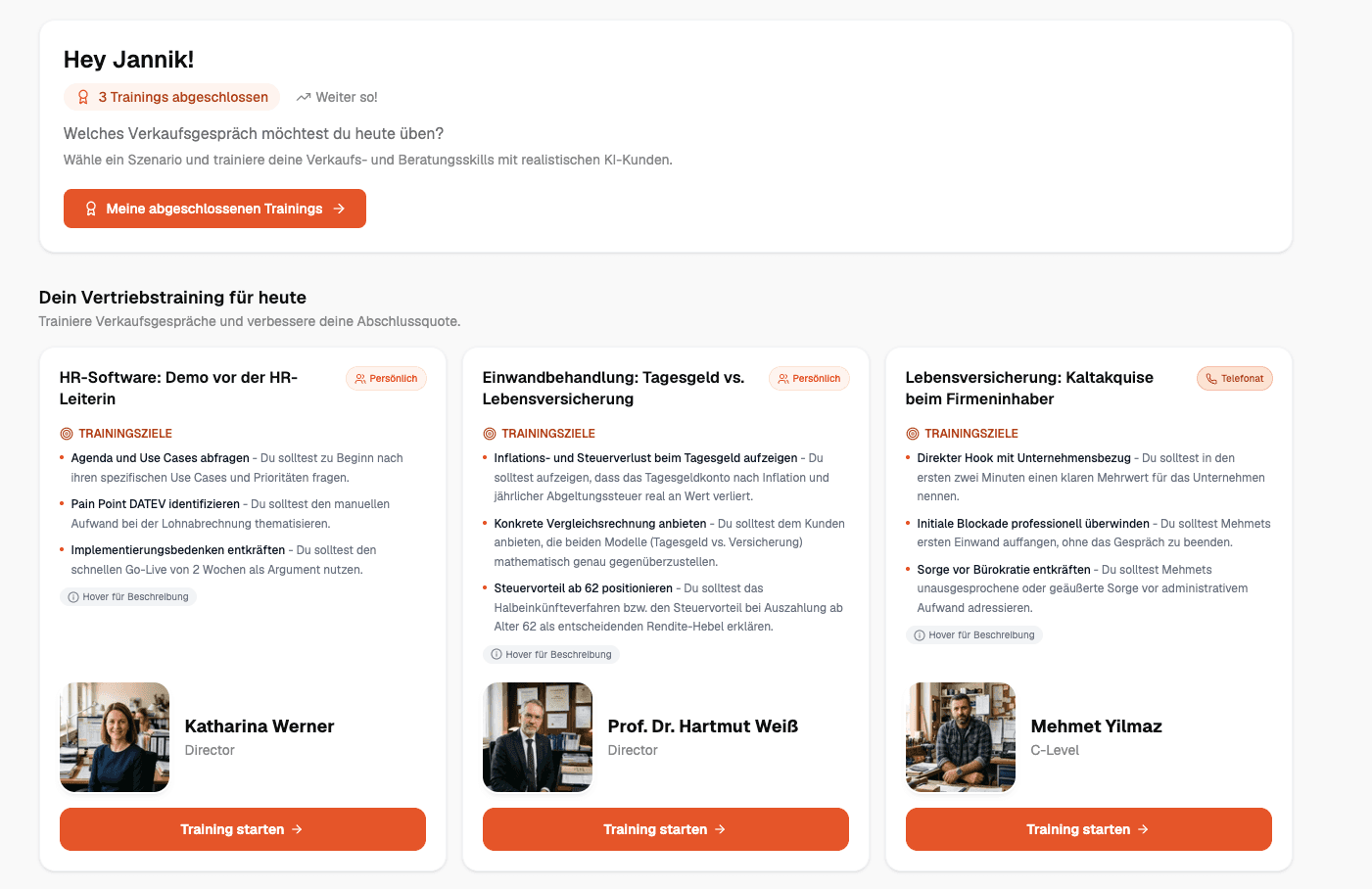
Dashboard for sales training sessions, featuring personalized training goals and participant profiles.
03

Because CFOs, Procurement, and Operations don’t respond to the same arguments

Train different buyer types within your buying committee—so you can role-play the real dynamics.

A CFO focuses on cost efficiency and retention, the Head of Procurement on comparability and negotiation flexibility, and the operational leadership on service quality and disruption-free operations. Careertrainer.ai reflects these differences in realistic conversations—so your sales training doesn’t get stuck with generic, one-size-fits-all customer scenarios.

  • Reach CFOs, Procurement, and Operations with the right tone
  • Analytical buyers expect KPIs, reliable commitments, and clear next steps
  • Test dominant buyers for their pace, price discipline, and closing strength.
  • Helps with stakeholder mapping and multi-threading in your accounts
Learn more
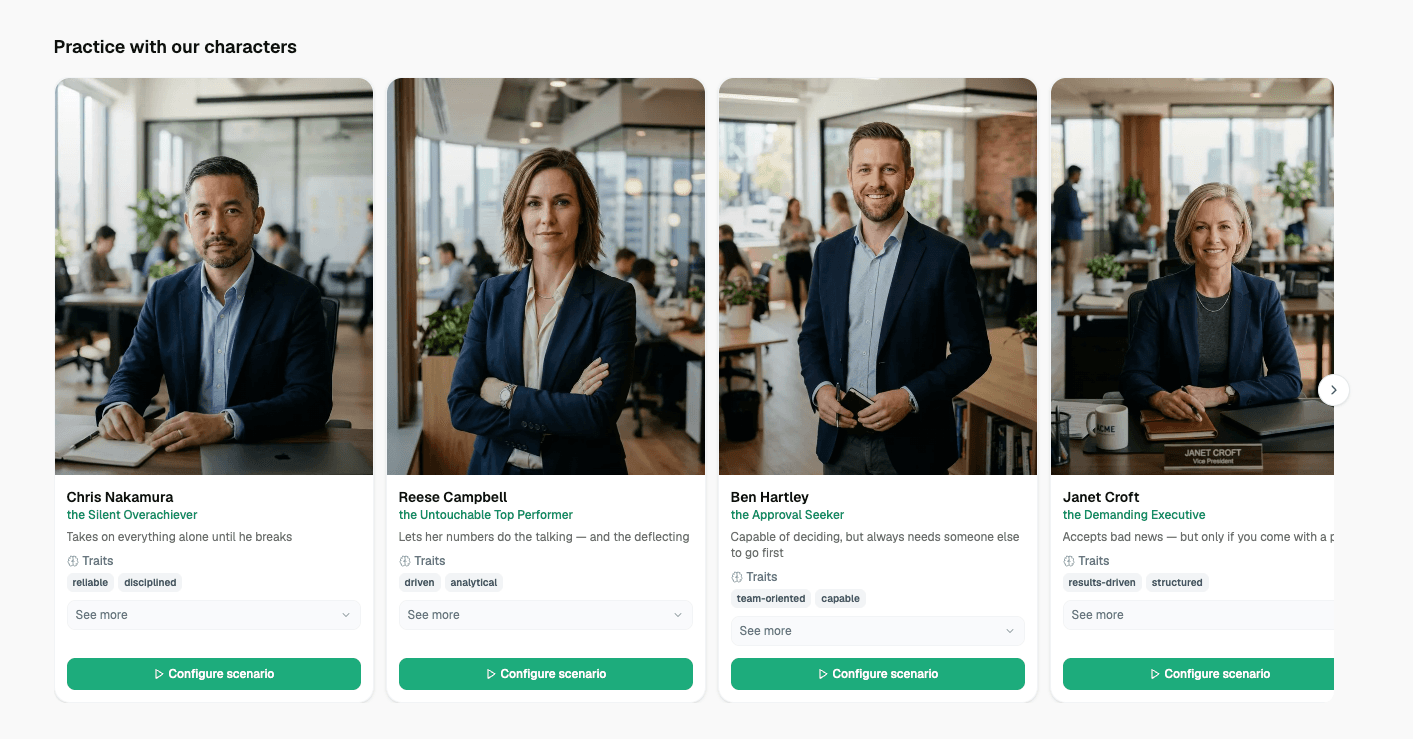
Character selection screen with AI training personas and scenario configuration buttons
04

Make conversation quality visible in negotiation and discovery

See immediately after every round what you brought into the conversation.

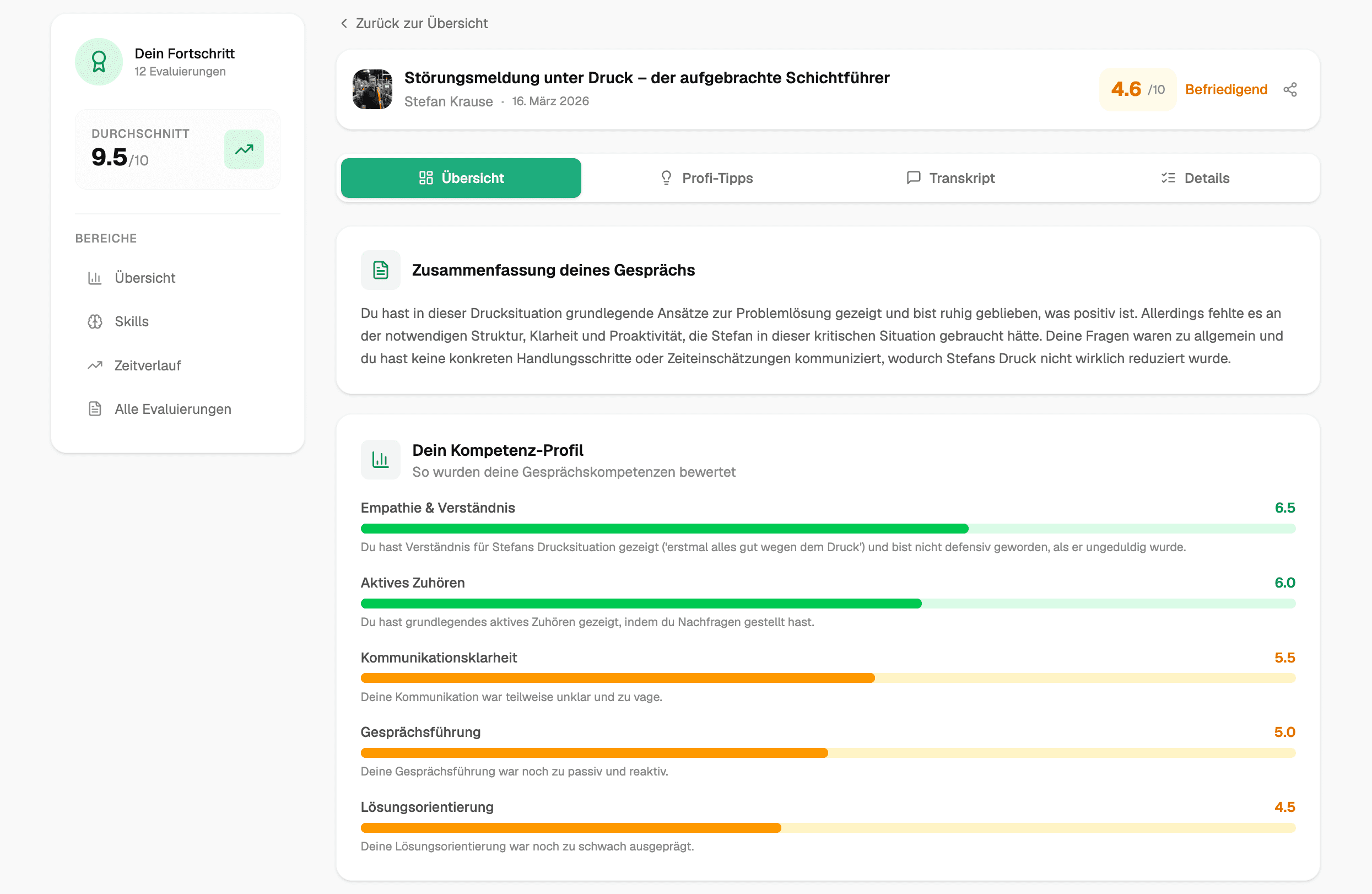
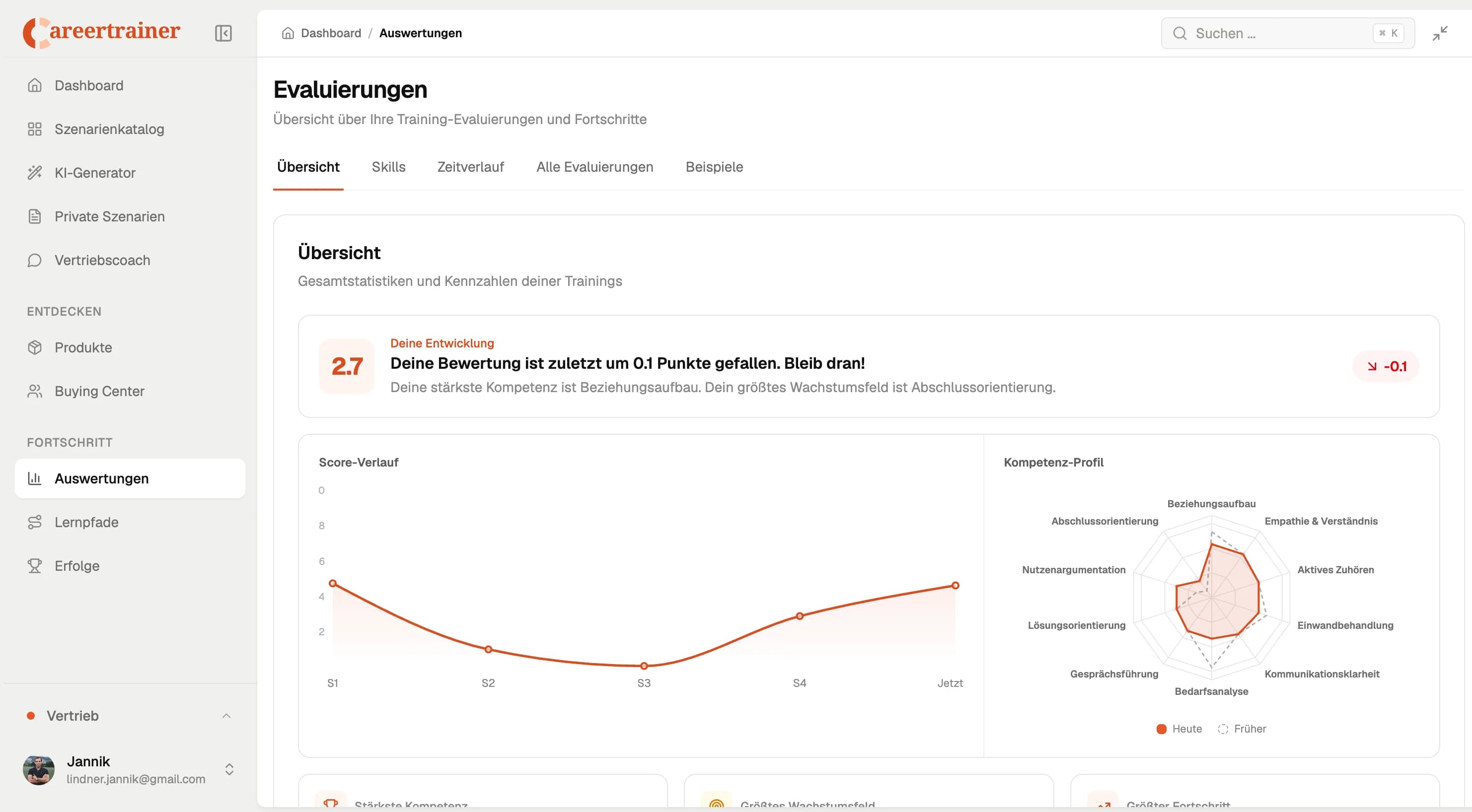
After every role-play, a second AI system evaluates—independently—how well you identified needs, argued value, handled objections, and guided the conversation to the next step. That’s how conversation training turns into reliable sales coaching with concrete evidence—not a vague gut feeling after the customer meeting.

  • Scores for needs analysis, value-based selling, and closing skills
  • Evidence from the conversation—not generic trainer feedback
  • Pro Tips for Your Next Tender, Pricing, or QBR Meeting
  • Compare progress across multiple sessions and teams
Learn more
Evaluation summary and competency profile for leadership communication under pressure.
05

For teams using real customer data, pricing logic, and sensitive conversation content

GDPR-compliant conversation training for the DACH market

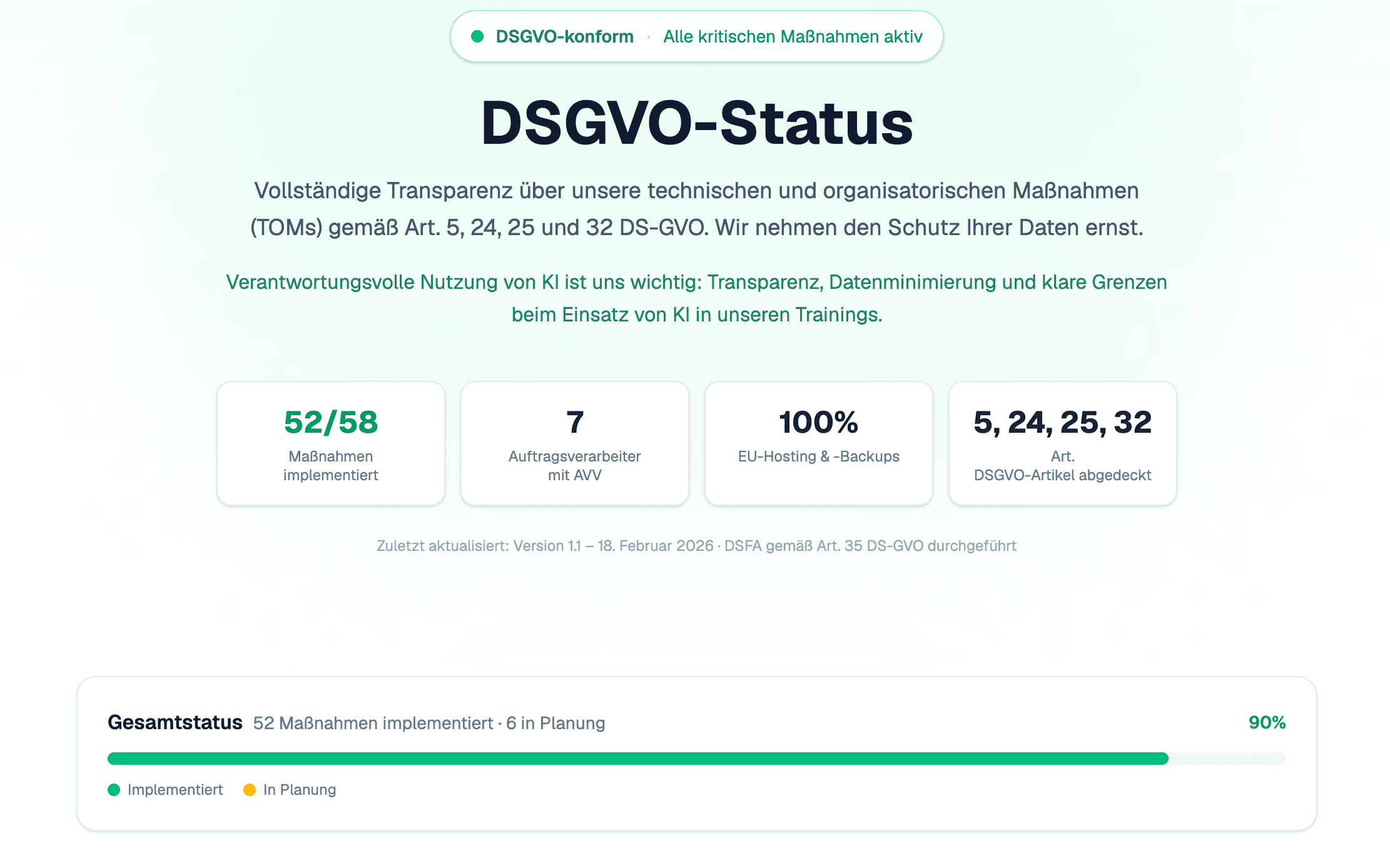
If you’re role-playing tenders, price lists, customer setups, or other sensitive account information, you need more than a generic US tool. Careertrainer.ai is built for the DACH region, with EU hosting and data protection options that are robustly documented—so professional sales organizations can rely on them.

  • EU Hosting without third-country transfer
  • Suitable for sensitive pricing and tendering details
  • Important for DACH teams with compliance and data protection requirements
  • Enterprise options such as SSO, audit logs, and data retention periods
Learn more
DSGVO compliance status overview for AI training, highlighting implemented measures and data protection commitment.
Roles & Responsibilities

These sales roles in Transport and Logistics benefit particularly from Careertrainer.ai.

If you sell in Transport, Freight Forwarding, or Contract Logistics, Careertrainer.ai trains you for the exact conversations where margin, deal success, and customer retention are decided. With AI role-play and conversation simulations, you can train price discussions, tenders, and objections in a measurable way.

Field sales for logistics & freight forwarding sales

You run initial calls, lane reviews, and price negotiations with Procurement, logistics management, or plant logistics. Careertrainer.ai turns these into practical AI role-play conversations focused on freight rates, transit times, and service commitments—so you handle objections confidently and improve your closing rates in the field.

Pricing and service argumentation in the field

  • Keep freight rates competitive against low-cost providers
  • Explain turnaround times and cut-off dates clearly and accurately.
  • Objection handling training for Diesel and tolls
  • Identify Discovery stage opportunities and potential
  • Increase your close rate after appointments

Inside Sales & Telesales

In inside sales, it’s all about how quickly you respond to spot requests, follow-up questions, and post-call outreach. With Careertrainer.ai, you practice live audio exercises for phone-based conversation situations in logistics sales—everything from following up after a quote to handling urgent pricing and timing pressure.

High call throughput—without sacrificing quality

  • Qualify leads with a spot request in minutes
  • Follow up after an open offer
  • Set a Price Anchor on the Phone
  • Answer SLA-related follow-up questions confidently
  • Get more appointments from inbound leads
Popular

Key Account Management

Existing customers in logistics expect more than good prices—they expect consistent performance across OTIF, claims, and forecasts. With Careertrainer.ai, you can improve your conversation training for annual business reviews, rate adjustments, and escalations within the buying center—so you can defend your contribution margin and negotiate renewals with more confidence.

Help existing customers develop under KPI pressure

  • Train for annual procurement meetings
  • Adjust Pricing When Costs Increase
  • Handle OTIF and service issues proactively
  • Cross-selling in new customer relationships
  • Protect your margins with extensions

Tender & Procurement Manager

In tenders, it’s not just pricing that matters—it’s also your ability to handle follow-up questions, negotiate effectively, and clearly explain risks. With Careertrainer.ai, you train realistic conversation simulations for RFQs, specification documents (Lastenheft), implementation plans, and procurement negotiations—before a real tender enters the hot phase.

Prepare job postings with structure

  • Answer RFQs precisely
  • Defend tender logic in procurement
  • Explain implementation risks
  • Lead the buying center conversation in a negotiation call
  • Increase your win rate in tenders and bids

Sales Director (Logistics)

You don’t just want to coach individual salespeople—you want to standardize pricing conversations and sales training across regions, branches, or product lines. Careertrainer.ai delivers AI training with analysis, clear skill-gap visibility, and comparable practice scenarios for FTL, LTL, ocean freight, or contract logistics.

Make team performance comparable across locations

  • Identify skill gaps in your sales phase
  • Benchmark price negotiations across your team
  • Coaching you can steer based on the reasons for lost deals
  • Speed up the ramp-up of new sales reps
  • Analyze progress by region

Sales Enablement & Sales Training

If you train sales teams in transport and logistics, you need more than theory and role-play sessions in a seminar room. With Careertrainer.ai, you can use repeatable practice scenarios for discovery, objection handling, and closing conversations—and measure which teams truly improve under pressure, during service objections, or when working on tenders.

Repeatable AI sales training with real-world practice

  • Build scenarios by segment
  • Objection Handling Training for Price and Service
  • Sales onboarding for new reps
  • Measure learning progress quarter by quarter
  • Plan with coaching, not gut instinct

Frequently Asked Questions about Pricing Conversations, Objections, and AI-Powered Training in Logistics Sales

Find answers to typical specialist questions from Transport, Freight Forwarding, and Contract Logistics—plus the key questions on how to train these conversations in a practical, real-world way with Careertrainer.ai.

What makes great sales training for logistics sales?

Great sales training in logistics prepares you for conversations where freight rates, service levels, risk, and internal approvals all need to be negotiated at the same time. It’s not enough to memorize product features. What matters is whether you can clearly translate value, reliability, and the operational impact during the conversation.

Training becomes truly practical when you practice typical scenarios, such as price negotiations with procurement, presenting a bid to multiple decision-makers, or handling follow-up questions about SLAs, liability, contract terms, or capacity. In transportation and freight forwarding, deals often don’t fall apart because of price alone—but because your counterpart assesses operational risks as higher than your contribution to performance.

A strong sales training program therefore combines conversation structure, objection handling, questioning techniques, and negotiation skills. If you train recurring real conversation situations—rather than just consuming slides—you’ll feel significantly more confident in customer meetings.

What objections come up most often when selling transport and logistics services?

Most often, you’ll hear objections around price, comparability, and risk: “You’re more expensive than our current provider,” “Any freight forwarder can do that,” “We first need reliable commitments on delivery quality,” or “For the tender, your offer isn’t good enough yet.”

On top of that, there are industry-typical follow-up questions about delivery rate, complaint handling, escalation paths, peak-season capacity, interfaces, tracking, and response speed in a disruption. In the Buying Center, Procurement often asks about rates and contract terms, Operations looks for stability in day-to-day business, and Management focuses on scalability as well as risk mitigation.

What matters most: Many objections are not a final rejection—they’re a test of your reasoning and how you make your case. If you respond to objections with discounts too early, you’ll lose margin. It’s better to clarify the underlying cause, set priorities, and define the decision criteria first—then argue targeted, point by point.


How do you conduct price negotiations in logistics—without immediately turning into a discount seller?

The most important step is not to defend the price in isolation. In logistics, you rarely buy just a single rate—you’re agreeing to a performance promise that affects delivery reliability, the complaint rate, internal effort, and customer satisfaction. If you don’t make these impacts visible, you’re left with nothing but a pure tariff comparison.

In strong price negotiations, you first clarify what the customer truly wants to secure: on-time delivery, fewer escalations, stable processes, special solutions, transparency, or less coordination effort. Then you argue the value of your service exactly in those areas. Only after that do potential terms, bundles, contract lengths, or scope of services make sense.

A clear sequence helps: define the need, name the risks, make the added value concrete, set the comparison criteria—and only at the very end discuss price reductions. This way, you negotiate more professionally and protect your margin better.

How do you prepare for tenders and buying center conversations in transport and logistics?

Answering the question list alone isn’t enough for tenders. Before the call, you need to understand who truly makes the decision—and which interests within the buying center are competing with each other. Procurement, logistics leadership, operations, IT, and management often evaluate the same proposal using completely different criteria.

That’s why you should prepare separate talking points for each role: for procurement, focus on cost logic and the reliability of the calculations; for operations, cover feasibility and escalation processes; for IT or process owners, outline data flows and integration; for management, address scaling, risk, and business impact. This way, you don’t come across like a vendor with a standard pitch—you sound like a partner who understands the day-to-day realities of the operation.

In addition, take the critical questions off the table in advance. Which services are not included? Where are the limits during peak times? How do you handle disruptions? When you prepare these points clearly, you don’t just win tenders more easily—you also reduce follow-up questions and price pressure.

What typical mistakes happen in logistics sales conversations?

A common mistake is bringing up price lists too early—before you’ve truly understood the customer’s needs, risks, and decision criteria. When that happens, you automatically end up competing on price alone. The same applies if you just claim reliability instead of translating it into concrete impacts for the customer.

Many sellers also talk about service in a way that’s far too generic. Statements like “high quality” or “excellent support” rarely convince in day-to-day B2B. Your argument only becomes effective when you make it operational—showing what it means in practice: fewer follow-up questions, clearer escalation paths, more consistent delivery, faster responses to exceptions, or less internal coordination effort.

A third mistake is talking only to Procurement and ignoring other stakeholders. Especially in transport, freight forwarding, and contract logistics, deals often fall through because the operational team or the specialist side wasn’t brought in. That’s why strong conversations need to be specific, role-based, and handled properly.

How does Careertrainer.ai help you handle pricing discussions and objections in logistics sales?

Careertrainer.ai is a DACH-focused AI platform for hands-on conversation training through live audio role-play. For logistics sales, that means you practice real sales conversations about freight rates, tenders, service levels, and procurement pressure—in 5 to 15 minutes, instead of just reading theory.

The difference is in the conversation dynamics. You talk to realistic AI characters that respond like buyers, logistics managers, or operational decision-makers—bring objections, follow up, and shift the tone. That way, you don’t just train your arguments, but also your timing, questioning techniques, negotiation skills, and calm under pressure.

After each run, you get immediate feedback against clear evaluation criteria—covering typical mistakes and concrete improvement opportunities. This is especially valuable when you want to repeatedly train price discussions, tender dates, or complex buying-center scenarios without any risk to real customer relationships.

What makes Careertrainer.ai different from traditional sales training or logistics sales seminars?

Classic seminars primarily teach knowledge: models, conversation techniques, playbooks, and examples. Careertrainer.ai, on the other hand, trains you to apply what you’ve learned in real conversations. You have to react live, ask follow-up questions, handle objections, and keep your thread under pressure.

This is especially important in logistics sales, where customer conversations rarely follow a textbook. A buyer increases price pressure, operations doubts whether it’s feasible, and another decision-maker joins the call, shifting priorities. E-learning or dry role-play sessions often struggle to reflect these dynamics properly.

Careertrainer.ai complements seminars in a smart way—or replaces parts of them—when you want to practice regularly. You can train anytime, without scheduling a trainer session, and you receive immediate, criteria-based feedback. For teams, that means scalable conversation training with measurable progress—rather than one-off inputs that don’t translate into sustained practice.

Which roles in sales for transport, freight forwarding, and contract logistics is Careertrainer.ai suitable for?

Careertrainer.ai is a great fit for sales roles that regularly handle challenging customer conversations—field sales in logistics and freight forwarding, Account Executives for contract logistics, Key Account Managers, inside sales with responsibility for offers and follow-ups, as well as Sales Leads who want to build negotiation confidence across the team.

The training is especially useful when you’re speaking with multiple decision-makers—not just delivering a standard pitch. Typical scenarios include discovery calls, tender presentations, price negotiations, objection training against competing proposals, and conversations where you need to sell service rather than just offering a discount.

The platform also works well for new employees, because it helps them get into realistic conversation patterns faster. Experienced salespeople benefit too when they want to run through sensitive meetings in advance, sharpen their argumentation, or test alternative negotiation approaches in a risk-free setting.

How measurable is conversation training with Careertrainer.ai for logistics sales?

Conversation training with Careertrainer.ai is measurable because every simulation is evaluated against fixed criteria. You don’t just rely on a gut feeling—you get concrete competency scores, clearly defined goals per scenario, achieved milestones, and common anti-patterns that can hold you back in real conversations.

This is especially helpful for logistics sales, because you can track progress against real requirements: better needs discovery, more precise objection handling, stronger price argumentation, more structure in buying-center conversations—or fewer premature discount concessions. Teams and leaders can identify skill gaps more effectively than with individual ride-alongs or subjective assessments.

The platform doesn’t replace revenue forecasting, but it makes competency development visible and repeatable. If you want to offer training and also manage it systematically, that measurability is a clear advantage over purely manual training formats.

How quickly can you get started with Careertrainer.ai for selling logistics services?

Getting started is intentionally lightweight. You don’t need a long rollout to begin training real conversations. Individual users can start right away with tailored AI role-play scenarios and practice common situations—such as pricing discussions, discovery, or objection handling—in areas like transport, freight forwarding, or contract logistics.

Teams can get going just as quickly, too—because Careertrainer.ai is a DACH-focused platform built for practical, live-audio conversation training. You don’t need to coordinate time-consuming trainer sessions. Instead, you can integrate conversation training directly into your sales day-to-day: as a warm-up before customer meetings, as a follow-up after deals you lost, or as an ongoing coaching format.

If you want to cover specific types of conversations, scenarios can also be adapted to your products, objections, or target customers. This way, you move from generic sales training to a setup that genuinely fits your sales process.

Can training providers use Careertrainer.ai for sales training in Transport & Logistics under their own brand?

Yes—Careertrainer.ai is also designed for partners who want to offer sales training for transport, freight forwarding, or contract logistics under their own brand. This applies, for example, to sales training providers, consultancies, enablement partners, or HR platforms looking to integrate AI role-play into their existing offering.

Especially in logistics sales training, this makes sense because customers often want to practice highly industry-specific conversation situations: tenders, pressure to decide, service-based argumentation, escalation calls, or buying committee meetings. With Careertrainer.ai, partners can deliver these trainings under their own branding, using their own customer relationship and pricing model—without having to develop their own AI infrastructure.

Careertrainer.ai positions itself as an enabler rather than a direct competitor to training providers. The architecture is multi-tenant and built for white-label solutions. If you want to expand your training business or scale it digitally, this is a great approach.

Other Industries for Sales Training

Discover industry-specific sales training and sales conversations for other industries.

A
AI sales training for consulting firms

AI sales training for consulting firms

Train your consulting sales team with AI role-play training for pitch situations, client meetings, and proposal presentations.

Learn more
P
Public sector sales training: help agencies confidently navigate complex procurement processes

Public sector sales training: help agencies confidently navigate complex procurement processes

Train with Careertrainer.ai on realistic AI role-play training for sales training, objection handling, and public-sector conversations: authorities, procurement law, long buying-center processes, and high-stakes follow-up questions—delivering measurable conversation training for sales teams.

Learn more
A
AI Sales Training for Staffing Agencies & Recruiting

AI Sales Training for Staffing Agencies & Recruiting

Train your recruiters and sales teams in staffing and recruitment with AI role-play training for new customer acquisition, candidate interviews, and fee negotiations.

Learn more
A
AI Sales Training for SaaS & Software

AI Sales Training for SaaS & Software

Train your software sales teams with AI role-playing for improved discovery calls, confident technical objection handling, and shorter sales cycles.

Learn more
AI Sales Training for Logistics & Transport

AI Sales Training for Logistics & Transport

Train your logistics sales teams with AI role-playing for complex tender negotiations, price defense, and new customer acquisition in a highly competitive market.

Learn more
AI Sales Training for Medical Technology

AI Sales Training for Medical Technology

Train your MedTech sales team with AI role-playing for product demonstrations, clinical negotiations, and complex multi-stakeholder discussions.

Learn more
Objection handling

Practise the most common sales objections

Compact objection handling drills for sales conversations in Sales Training for Logistics: Practice customer conversations, objections, and price negotiations with confidence.

Train objection handling for “Call back later” — targeted AI role-play practice

Train “Call back later” objection handling with Careertrainer.ai in realistic live audio role-plays. Practice the right responses, the psychological drivers behind them, and clear…

Practise response

Objection Handling: Train “I need to talk to my partner first”

Practice the objection “I need to talk to my partner first” with Careertrainer.ai through realistic live audio role-plays. Learn the right follow-up questions, understand the psyc…

Practise response

Train handling objections: “No budget” in B2B sales

Train with Careertrainer.ai to practice realistic, live audio role-plays for handling the B2B objection “no budget.” Rehearse responses to real customer statements, clearly explai…

Practise response

Handle the objection “Send me an offer” confidently

Train your objection handling for “Could you send me an offer?” with realistic AI role-play training in live audio. Practice the right follow-up questions, understand the psycholo…

Practise response

Handle the objection “We’ve already had bad experiences with something like this before”

Practice objection handling for “I had a bad experience” with realistic AI customers in live audio role-plays. Learn how to address the emotional hesitation smoothly, understand t…

Practise response

Handle the objection “I need to align this internally first”

Practice handling objections with “align internally” in realistic live audio AI role-plays with AI customers. You’ll train concrete response strategies—so you don’t just wait pass…

Practise response

Full overview: sales objections and AI conversation practice