careertrainer.ai

Practice Buying Center conversations, evidence-based argumentation, and handling objections from Procurement and Application teams—realistically through live audio.

Safely train sales conversations with clinics and practices

Careertrainer.ai helps you train challenging sales conversations in medical technology with realistic AI role-play. You’ll practice sales training, conversation training, and objection handling for long sales cycles, regulatory requirements, and evidence-based decisions.

Live example · This is what training looks like

12 scenarios
Phone call

Practise with your product

Olivia Bennett

Olivia Bennett

Sales·Cold Call
Skeptical head of sales

Head of Sales · 50 · CISB

Cross-IndustryDiscovery callWe already have a providerHead of Sales

Olivia compares medtech vendors and fears the wrong decision

The comparison table controls everything

You dial Olivia, and she answers from her office during a vendor comparison sprint. She has a checklist open and expects you to justify relevance fast.

Goal: Reframe the decision criteria away from raw price toward measurable risks, like training effort and regulatory documentation burden. Use her comparison process to highlight one difference that matters

Learning goals

  • Extract the real evaluation criteria
  • State the main differentiator clearly

What to expect

  • Reframes comparison criteria to risk and evidence
  • Names decision criteria tradeoffs
Practise with your product

Metrics in sales that truly matter for clinics and practices

When you train for complex MedTech conversations, budget pressure, the buying center, and evidence-based decision-making aren’t a side issue—they’re at the core of the sale.

79%
Purchasing prioritizes cost reduction
In budget and procurement decisions, the winning arguments often come down to price and cost-effectiveness. That’s exactly why targeted objection handling training is worth it—especially for rounds where budgets are on the line. (Source: gartner.com, 2024)
6–10
Stakeholders are often involved.
In complex B2B purchases, it’s rarely just end users and sales talking to each other. You need to handle medical, commercial, and technical perspectives clearly and consistently. (Source: linkedin.com, 2021)
77%
Buyers expect reliable, trustworthy advice
In demanding sales conversations, product knowledge alone isn’t enough. Decision-makers expect clear context, evidence, and concrete next steps. (Source: forrester.com, 2023)
5–15 min
Fits into your real preparation window
Short training intervals fit naturally before customer appointments, tender rounds, or pricing discussions—so your conversation training is actually used in everyday sales work. (Source: hbr.org, 2024)

Where MedTech sales conversations really start to derail

In hospitals and practices, it’s rarely just a great product that decides. You need to bring evidence, cost-effectiveness, real user value, and procurement objections together in short, critical moments—right in the conversation. That’s exactly why Careertrainer.ai lets you train demanding sales conversations with AI role-play in a realistic way.

AI character for industry-focused solutions

AI role-play focus

When evidence, procurement, and implementation collide

Careertrainer.ai makes critical MedTech conversations trainable as live-audio AI role-play scenarios, so you can deliberately practice objections, Buying Center dynamics, and long sales cycles.

Make evidence-based arguments with confidenceBring buyers and users together
Challenge 01

Without solid evidence, the conversation can fall apart—even if the product advantage is there.

In MedTech sales, a strong feature set isn’t enough if physicians, practice owners, or end users ask about clinical benefits, process relief, and clear, comparable evidence. If you lack precise, evidence-based argumentation, you risk losing trust, stalling the demo, and missing the next decision-making round. Careertrainer.ai helps you train these exact live conversations as AI role-play—complete with follow-up questions on outcomes, workflow, and economic plausibility.

Book a free demo
Challenge 02

Procurement and end users are pulling the deal in different directions.

While the medical team focuses on handling, safety, and acceptance, Procurement pushes for discounts, standardization, and solid total cost of ownership (TCO) arguments. If you don’t bring both perspectives together in the same conversation, cycles get longer, stakeholders stall, and offers get stuck in the buying center. Careertrainer.ai trains this multi-party logic with realistic AI role-play scenarios for handling objections, negotiation, and conversation management between end users and procurement.

Book a free demo
Challenge 03

Long ramp-up phases cost you direct deals in the field.

New colleagues don’t just need product knowledge—they also need to confidently handle pricing conversations, objections that come up close to operations, procurement logic, and challenging follow-up questions from clinics and practices. Traditional sales training is often too generic, which leaves room for uncertainty in first conversations and can weigh on your pipeline, forecast, and conversion rates. Careertrainer.ai shortens ramp-up time with industry-relevant conversation training, where teams repeatedly practice the typical stages of the sales process and receive immediate, concrete feedback.

Book a free demo
Challenge 04

After go-live, the conversation determines whether you scale up or stand still.

After you roll out a system, the critical follow-up conversations often come later: users report friction, doctors demand stronger evidence of added value, and accounts reveal potential for upgrades, add-on modules, or additional locations. If this moment isn’t handled well, complaint risk rises, reference opportunities drop, and cross-selling doesn’t happen. With Careertrainer.ai, you can train exactly these sensitive follow-up conversations through AI role-play—so sales coaching doesn’t stop after the first deal.

Book a free demo

Medical Technology Sales Training: Train sales conversations with clinics and practices safely—practice typical conversations with AI

Four practical scenarios for “Medical Device Sales Training: Safely practice sales conversations with clinics and practices”: Train typical sales conversations with realistic AI characters in Careertrainer.ai.

Filter by industry, situation, objection and buyer persona. Every example leads directly into your own AI role-play.

12 of 12 scenarios

Situation

Objection

Buyer persona

Maya Turner

Maya Turner

Midmarket CEO

Cross-IndustryGatekeeper block on phoneMidmarket CEO

Late morning, you’re dialling the clinic procurement office again. The gatekeeper answers first.

What you'll practise

  • Clarify approval chain
  • Reduce gatekeeper risk
  • Secure a correct handoff
Let me be clear, our committees approve medtech changes, not guesses.
James Carter

James Carter

Small Business Owner

Cross-IndustryDiscovery callSmall Business Owner

It’s 10 minutes before your on site visit starts. James stands by a tray rack and wants specifics first.

What you'll practise

  • Ask one precise expert question
  • Use proof, not feature claims
  • Turn answers into next step
I don’t need theory; tell me how this changes day to day handling.
Alex Taylor

Alex Taylor

Midmarket CFO

Cross-IndustryExecutive briefingMidmarket CFO

Alex answers and immediately starts discussing last quarter’s cash conversion. Your demo reason is suddenly irrelevant to him.

What you'll practise

  • Acknowledge and summarize shift
  • Bridge to cost and risk
  • Request CFO next data
If this isn’t about total cost over the maintenance cycle, I’m out.
Hannah Reed

Hannah Reed

Midmarket CTO

Cross-IndustryDiscovery callMidmarket CTO

You meet Hannah across from you in the hospital IT corner. She waves off responsibility and says this won’t land on her desk.

What you'll practise

  • Clarify integration ownership
  • Keep matrix handoff clean
  • Secure next team contact
I’m not the decider for rollout responsibility, and I’m not signing for it.
Daniel Walker

Daniel Walker

IT Director

Cross-IndustryExecutive briefingBudget lockedIT Director

You reach Daniel on a phone line during a tight budget cycle. He sounds tense, because the CFO is scrutinizing every IT euro this quarter.

What you'll practise

  • Clarify freeze vs timing
  • Offer phased entry plan
  • Build defensible business case
Our quarter closes in weeks, and I can’t justify new spend.
Jordan Blake

Jordan Blake

HR Director

Cross-IndustryGatekeeper block on phoneCall back laterHR Director

On site, Jordan meets you in a corridor outside the HR office. She looks rushed and says she does not have time for “another vendor talk” today.

What you'll practise

  • Break the reflex rejection
  • Ask one precise HR question
  • Request a narrowly defined next step
Not today. HR is holding the line on workloads, you know.
Olivia Bennett

Olivia Bennett

Head of Sales

Cross-IndustryDiscovery callWe already have a providerHead of Sales

You dial Olivia, and she answers from her office during a vendor comparison sprint. She has a checklist open and expects you to justify relevance fast.

What you'll practise

  • Extract the real evaluation criteria
  • State the main differentiator clearly
  • Quantify the risk of cheapest options
Our evaluation is a matrix. Price moves, but risk stays.
Michael Brooks

Michael Brooks

Procurement Lead

Cross-IndustryCustomer complaint handlingBad past experienceProcurement Lead

At the hospital meeting room, Michael sits with a stack of incident logs. He sounds friendly at first, then vents because the SLA breach keeps repeating.

What you'll practise

  • Listen and mirror the core
  • Clarify SLA and responsibility gaps
  • Agree a concrete compliance next step
We paid for reliability, and the schedule slipped again.
Casey Hayes

Casey Hayes

Marketing Director

Cross-IndustryActive closingMarketing Director

You are on a short phone call with Casey at a hospital medtech account. She starts listing pilot endpoints, then asks what you do differently this time.

What you'll practise

  • Confirm sign-off owner early
  • Tie questions to pilot endpoints
  • Request a specific next step
We already started collecting usability data, so clarify ownership.
Grace Cooper

Grace Cooper

Operations Director

Cross-IndustryDiscovery callCall back laterOperations Director

You meet Grace on site, with her phone constantly vibrating beside the ward logistics board. She planned to speak for five minutes, then pivots into a polite “not right now” about scheduling.

What you'll practise

  • Diagnose the real stalling trigger
  • Ask direct timing and decision constraints
  • Propose two workable meeting slots
We cannot slip timelines, so tell me what changes on delivery.
Owen Foster

Owen Foster

General Practitioner

Cross-IndustryCold call openingBad past experienceGeneral Practitioner

You dial Owen for a quick call, and he answers with a tired “what does it cost” right away. His tone carries frustration from a past supplier where the promises did not match day-to-day practice.

What you'll practise

  • Delay the number with value framing
  • Qualify the price context fast
  • Set a relevance check for next step
Before money, tell me the patient impact and the workflow.
Riley Stone

Riley Stone

Private Customer

Cross-IndustryActive closingWe already have a providerPrivate Customer

You meet Riley in a clinic hallway after her appointment, and she keeps nodding at familiar suppliers. She agrees to “keep it as is,” but her follow-up questions show she is worried about switching risk and regret.

What you'll practise

  • Identify the trigger that raises status quo cost
  • Translate risk into a limited trial boundary
  • Move to a next step with clear exit criteria
I have been burned once, so show me why now is different.

How the AI evaluates your training conversation

After every role-play a separate AI analyses your full conversation transcript — with score, goal feedback and concrete quotes from your own dialogue.

Two layers feed the overall score: scenario-specific goals (70%) and five core competencies for your training type (30%).

SummaryRating: Solid

Maya Turner · Get past the gatekeeper on a clinic tender call

Tighten approval-chain questions while keeping the gatekeeper calm

Keep the call professional while identifying who signs off for medtech approvals. Confirm the next step and timeline without making the assistant the target.

Overall result
6.8/ 10

70% scenario goals + 30% core competencies

Scale 0–10 · backed by quotes from your conversation

Scenario goals · 70%Core competencies · 30%

Scenario goals

Scenario goals · 70%

Clarify approval chain

6.5 / 10

Identify who signs off clinical and procurement decisions for medtech. Make the approval path and timing explicit enough to be forwarded.

Partially achieved

You identified a sign-off owner, but didn’t confirm the exact timing tied to the approval process.

Who signs off medtech spec changes, and the approval date?

Reduce gatekeeper risk

8.5 / 10

Keep statements grounded in operational impact and committee relevance. Avoid promises that could create follow-up pressure on the gatekeeper.

Fully achieved

Your phrasing stayed calm and professional, reducing escalation risk for the gatekeeper.

Okay. Please route to regulatory lead; timeline is within 10 business days.

Secure a correct handoff

6.5 / 10

Ask for the right callback contact or internal forward route. Turn the call into a concrete next contact step that fits the clinic’s process.

Partially achieved

You got a concrete next-contact instruction, but it lacked the exact role name used for committee submission.

Please route to regulatory lead; timeline is within 10 business days.

Core competencies

Core competencies · 30%

Needs analysis

6.5

Systematically uncover needs and requirements

Value articulation

7.0

Present concrete value for the customer

Objection handling

6.8

Address objections professionally and constructively

Closing orientation

7.0

Work toward a close or clear next step

Relationship building

6.6

Build trust and rapport

Details · Transcript excerpt

YouWho signs off medtech spec changes, and the approval date?
Maya TurnerOur committee approves. If it escalates, I need a clear owner.
YouOkay. Please route to regulatory lead; timeline is within 10 business days.
Pro tip

For clean handoffs, ask one chain step: "Who owns sign-off, and who is the next reviewer for the committee packet?"

Only your wording is evaluated — not the AI counterpart's. The AI's opening of the conversation is not penalised.

Practise with your product

Train challenging MedTech conversations with Careertrainer.ai

Choose a realistic sales scenario from your day-to-day sales work, run the conversation via live audio, and get immediate, measurable feedback on objections, evidence-based argumentation, and the next step in closing the deal. This is how sales training, conversation training, and objection training become practical—and measurable.

1

Select a realistic conversation from a clinic, practice, or retail setting

You start with an AI role-play that matches your current sales phase: an initial discovery call with real-world practice, a budget round with the hospital purchasing team, a demo follow-up with end users, or negotiations ahead of the next procurement step. With Careertrainer.ai, you can realistically role-play common Buying Center roles—so you can practice objection handling exactly where deals in medical technology often get stuck.

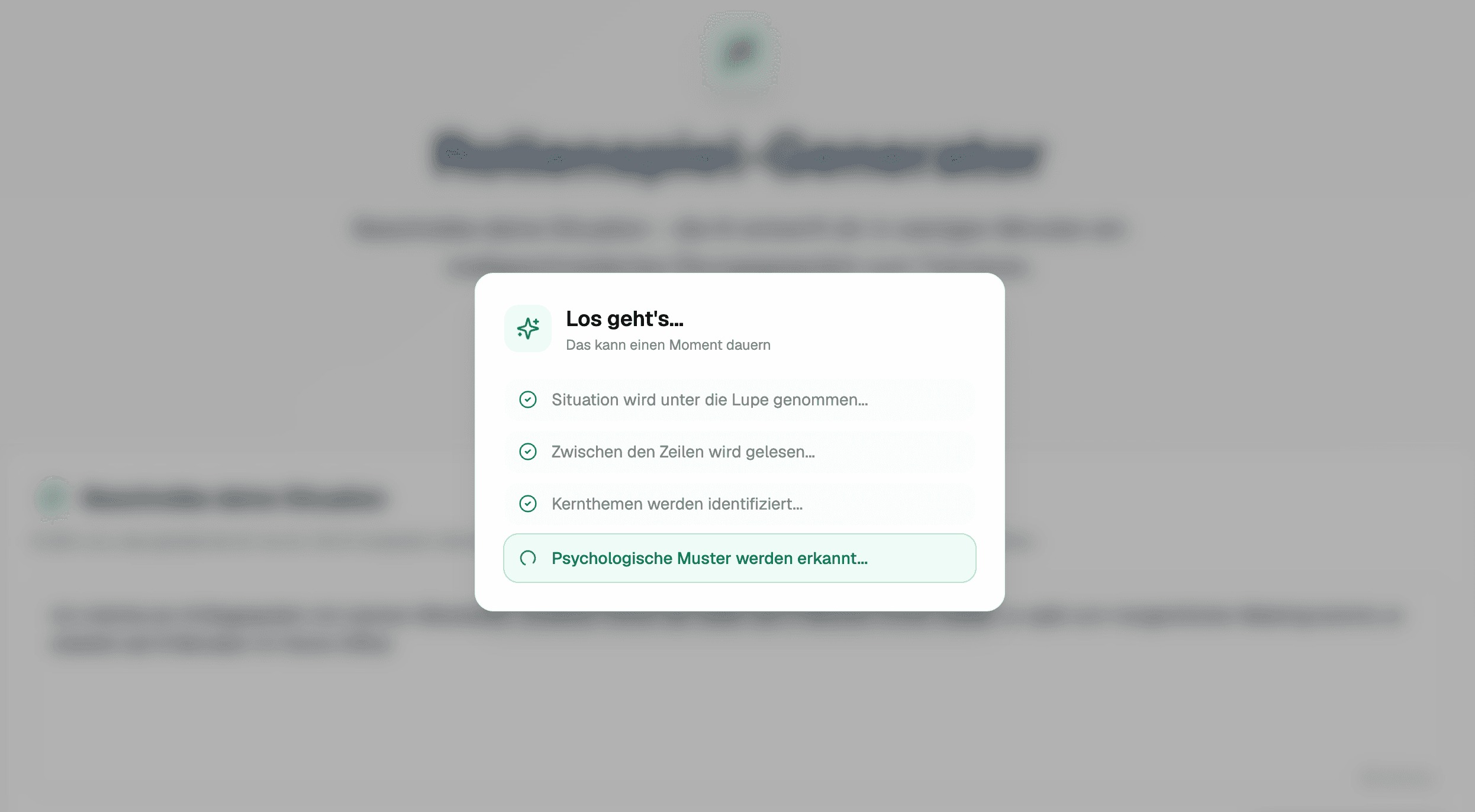
Role-play generator in Careertrainer.ai
2

Train your conversations with Voice AI under real pressure

You lead a 5 to 15-minute live audio conversation with an AI counterpart that responds like a real buyer, chief physician, practice owner, or end user. This is how you train your value-based arguments, clinical evidence, cost-effectiveness, regulatory know-how, and common objections—such as price pressure, low priority, or skepticism about switching.

Voice AI conversation simulation in Careertrainer.ai
3

Analyze your feedback and measure progress in everyday sales scenarios

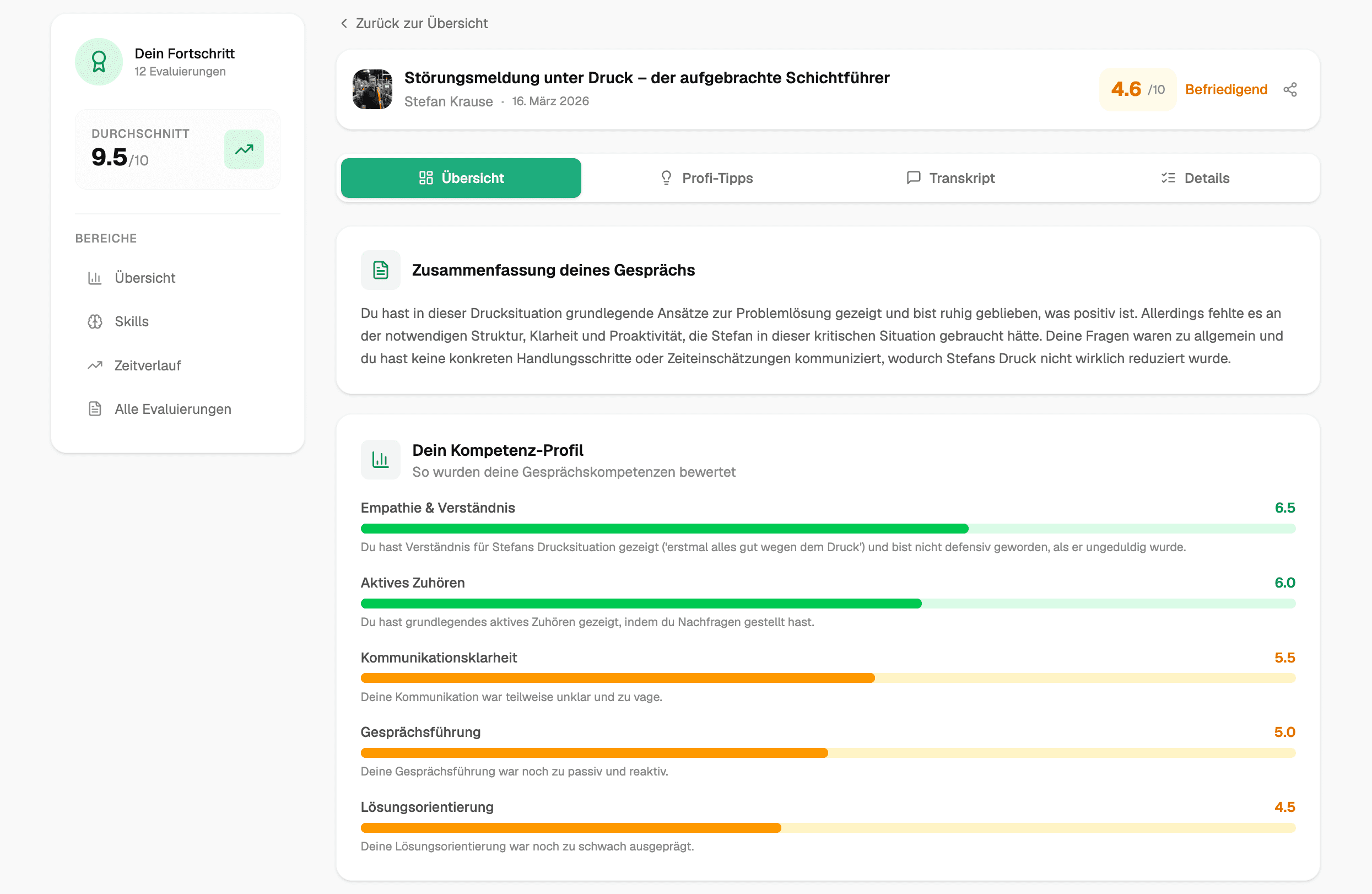
After the conversation, you can see exactly how securely you identified needs, handled objections, addressed stakeholders, and secured the next step. The feedback shows where your sales coaching should focus—and how your conversation quality improves in a measurable way across multiple conversation training sessions.

Evaluation dashboard in Careertrainer.ai

Typical sales conversations with hospitals, medical practices, and procurement teams

In MedTech sales, conversations often don’t turn on the product—they hinge on the Buying Center, evidence, and budget logic. With Careertrainer.ai, you can train typical situations from clinic and practice selling as AI role-play: from your first technical call to the tough procurement discussion, with realistic feedback—and the option to repeat critical sections on demand.

Initial consultation

The practice owner says: “Sounds good, but I still don’t see a clear added value in day-to-day work.”

You’re speaking with a practice owner who finds your device technically interesting, but can’t see a tangible benefit for day-to-day workflow, staff, or billing. At this point, the conversation quickly turns into a low-stakes product pitch—without a clear next step. It works when you first clarify the supply and workflow process, patient volume, and current bottlenecks—then derive the relevant value for your counterpart from that. With Careertrainer.ai, you can practice this exact conversation as an AI role-play and test how your Discovery approach lands with the other person.

Practice the conversation with Dr. Keller
Handling Objections

Procurement in hospitals is blocking it: “For the additional cost, we’re missing a solid, reliable business case.”

After receiving positive feedback from the app, you’re in the meeting with the hospital procurement team—where the price will only be approved if you can make clear, economic arguments. The conversation is challenging because clinical benefit alone isn’t enough in the procurement round. It helps if you translate Total Cost of Ownership, downstream costs, time savings, and relevant evidence into the organization’s budget logic. In the AI role-play, you practice precisely this kind of objection handling under pressure—and you get immediate feedback on both your argumentation and your conversational approach.

Practice the conversation with Sabine
Buying Center

A lead physician is interested, the surgical team lead is skeptical, and procurement is critical—how to handle a meeting with three competing priorities.

During the joint meeting, the chief physician supports the solution medically, while the operating room leadership fears the effort involved in switching processes and Procurement insists on standardization. These discussions often break down when you only cater to the loudest stakeholder and lose the others in the process. Better works a conversation that addresses benefits, implementation effort, and procurement risk separately for each role—and then aligns everyone on a clear shared next step. With Careertrainer.ai, you can train exactly this scenario realistically as a challenging AI role-play.

Practice the conversation with Prof. Weiss
Product demo

Your demo stalls: “Who trains the team—and what happens when errors occur during day-to-day operations?”

In the demo with ward staff or OP managers, the focus suddenly shifts from features to onboarding, safety, and real day-to-day usability. If you explain only the functions now, it quickly gives the impression of extra effort instead of genuine relief. You succeed when you walk through the use case along the clinical process and address training, rollout, and risk minimization in a clear, practical way. You can run the conversation as an AI role-play multiple times—so your demo holds up even when faced with tough, critical questions.

Practice the conversation with Nora
Follow up

After the offer and trial phase, there’s silence—despite the positive feedback you get from the app.

You’ve submitted your application, the offer is on the table—and still the clinic hasn’t responded for weeks, despite your follow-ups. In many cases, it’s not a lack of interest, but an internal blocker: approval processes, prioritization, or coordination with procurement. Instead of only asking again for the status, a conversation helps—one that uncovers what’s holding decisions back and activates your internal champion to move the next step forward. With Careertrainer.ai, you train exactly this sensitive follow-up scenario using realistic resistance and a clear evaluation.

Practice the conversation with Tobias
For MedTech Sales

The features that make complex clinic and practice conversations truly trainable

Careertrainer.ai combines hands-on sales training with industry-specific AI role-play scenarios for MedTech sales. You practice realistic conversations with Procurement, end users, and specialist departments—then get instant feedback and measure your progress in discovery, objection handling, negotiation, and stakeholder management.

01

For Field Sales, Key Account, and Enablement

Live audio training for real sales situations in everyday MedTech operations

Train your conversations along your real sales stages—not with generic role-plays. Whether it’s a first customer contact in practice, a discovery conversation in the clinic, or negotiations before the procurement step: Careertrainer.ai recreates typical MedTech scenarios as live-audio role-play with realistic responses.

  • Discovery, demos, objection handling, and closing—built into one clear training flow
  • Practice for 5–15 minutes between client visits—or right before your pitch.
  • Ideal for long cycles with multiple follow-ups and forecast pressure
Learn more
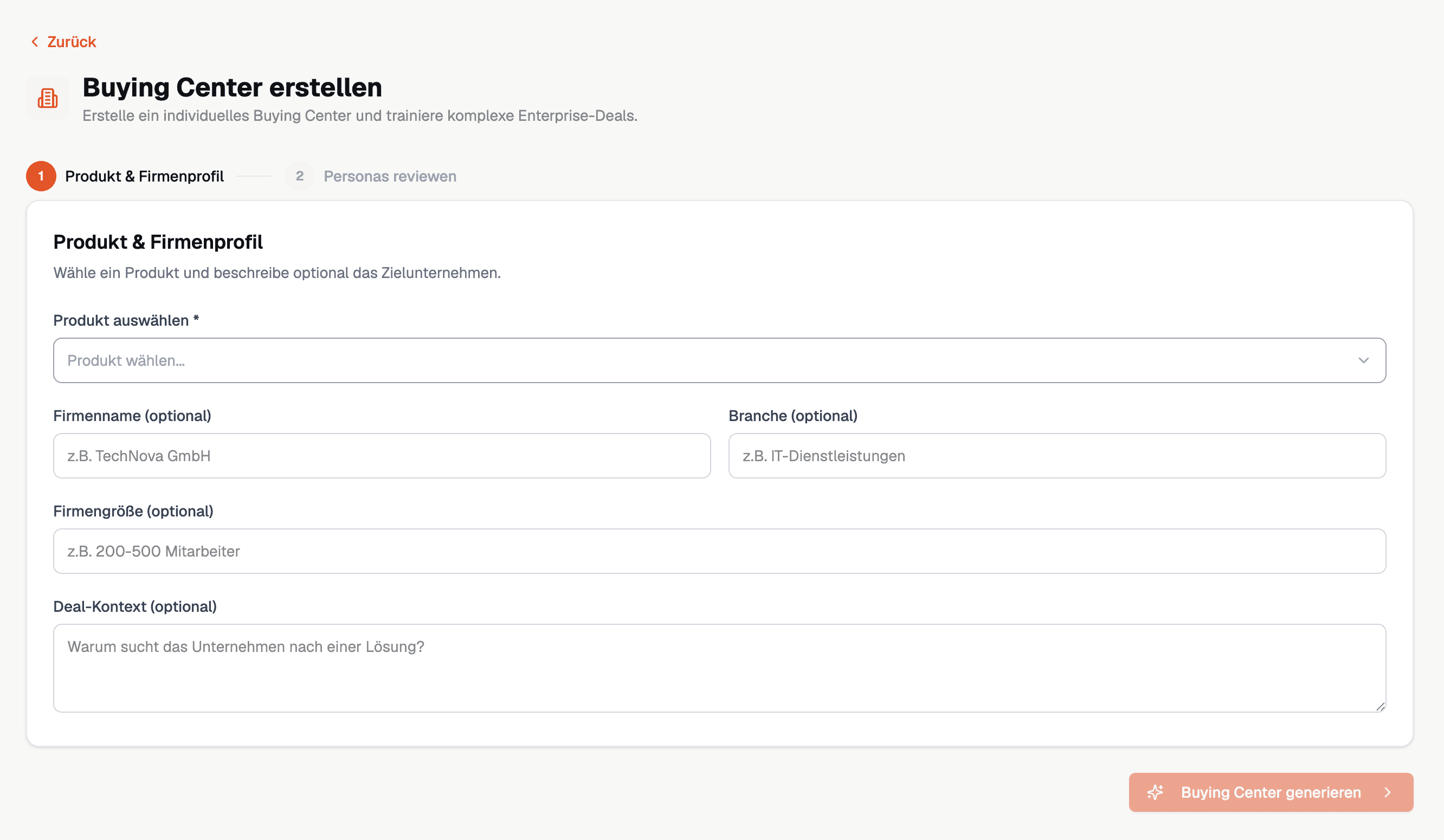
Sales training form for creating a buying center with product, company profile and deal context fields
02

If your buyers and end users don’t want the same things

Buying Center Training for Hospital Sales with Multiple Stakeholders

In medical technology sales, you rarely win with a single conversation. With Careertrainer.ai, you train the dynamics between users, procurement leadership, IT, the finance/operations management side, and the specialist department—so you sharpen your stakeholder mapping, set up multi-threading properly, and don’t lose deals within the buying center.

  • Train your conversations with Procurement, Chief Physicians, IT, and Operating Room leadership.
  • Get ready for BANT, MEDDIC, or MEDDPICC with practical, real-world AI role-play training
  • Identify blockers, top performers, and missing persona coverage earlier
Learn more
Sales deal simulations page with custom buying center creation feature
03

For Different Decision-Maker Types

Buyer Personas for evidence-based, price-sensitive conversation partners

Not every stakeholder responds to the same arguments. Train to handle analytical Controllers, skeptical procurement managers, relationship-oriented practice owners, or dominant specialist decision-makers—and find out which value propositions, studies and data, ROI approaches, and questions actually work in each conversation.

  • Analytical buyers assess evidence, risk, and the downstream impact of the process
  • Procurement responds differently than end users or medical leadership.
  • Test your value proposition against price, budget, and switching barriers
Learn more
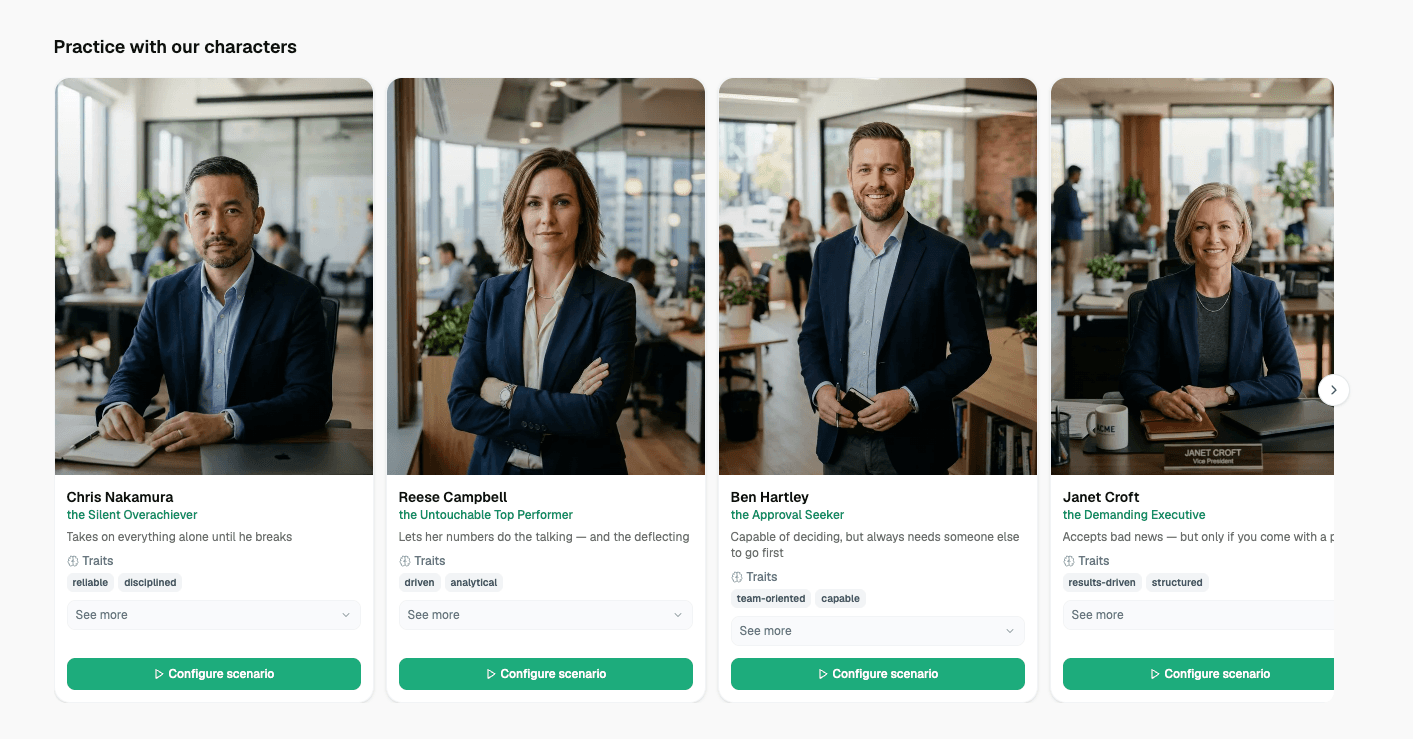
Character selection screen with AI training personas and scenario configuration buttons
04

When cost-effectiveness competes with user value

Objection handling training for budget pressure, evidence-based questions, and incumbent account providers

Many MedTech deals don’t fall apart because of the product—they stall over typical objections: no budget, no clear clinical value, an ongoing contract with the existing partner, or implementation effort that’s simply too high. With Careertrainer.ai, you can train exactly these situations repeatedly—until your objection handling holds up even under pressure.

  • Practice objections like budget freezes, lack of evidence, or pressure to offer discounts.
  • Repeat the critical sections until your argumentation and timing are spot on.
  • Compare strategies for hands-on practice, hospital procurement, and specialist users
Learn more
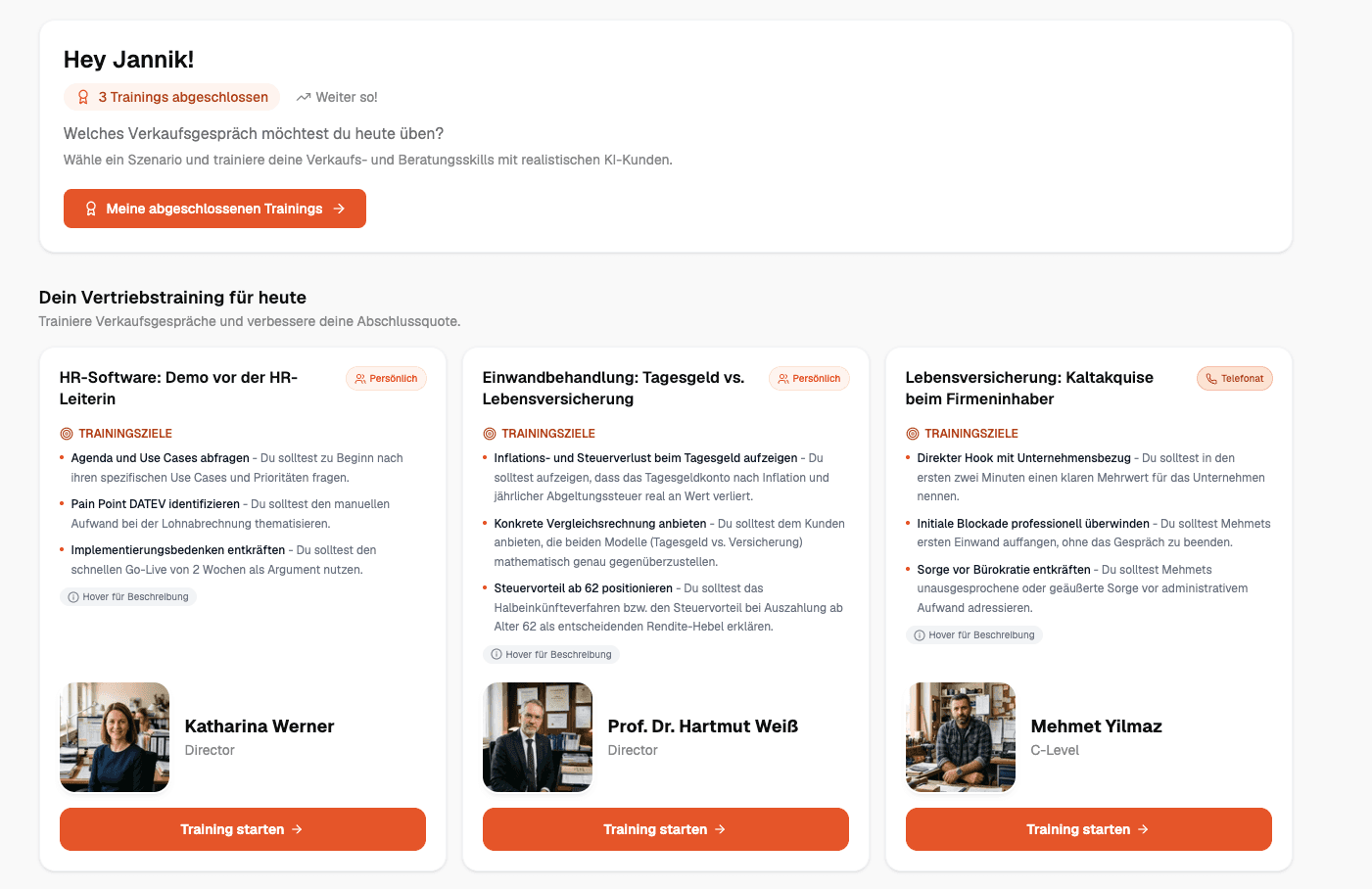
Dashboard for sales training sessions, featuring personalized training goals and participant profiles.
05

Measurable results—not guesswork

Conversation evaluation with concrete feedback on your sales skills

After every role-play, you get a structured assessment of your conversation skills—how you lead the discussion, analyze needs, build value-based arguments, handle objections, and drive toward a close. That means sales coaching doesn’t stay a subjective impression; it becomes a repeatable system to improve win rate, speed up ramp-up, and raise overall conversation quality across your team.

  • Scores backed by evidence from the conversation—not blanket criticism.
  • Shows you where your Discovery, Value Messaging, or Closing is weak
  • Helpful for onboarding, coaching, and team reviews in sales
Learn more
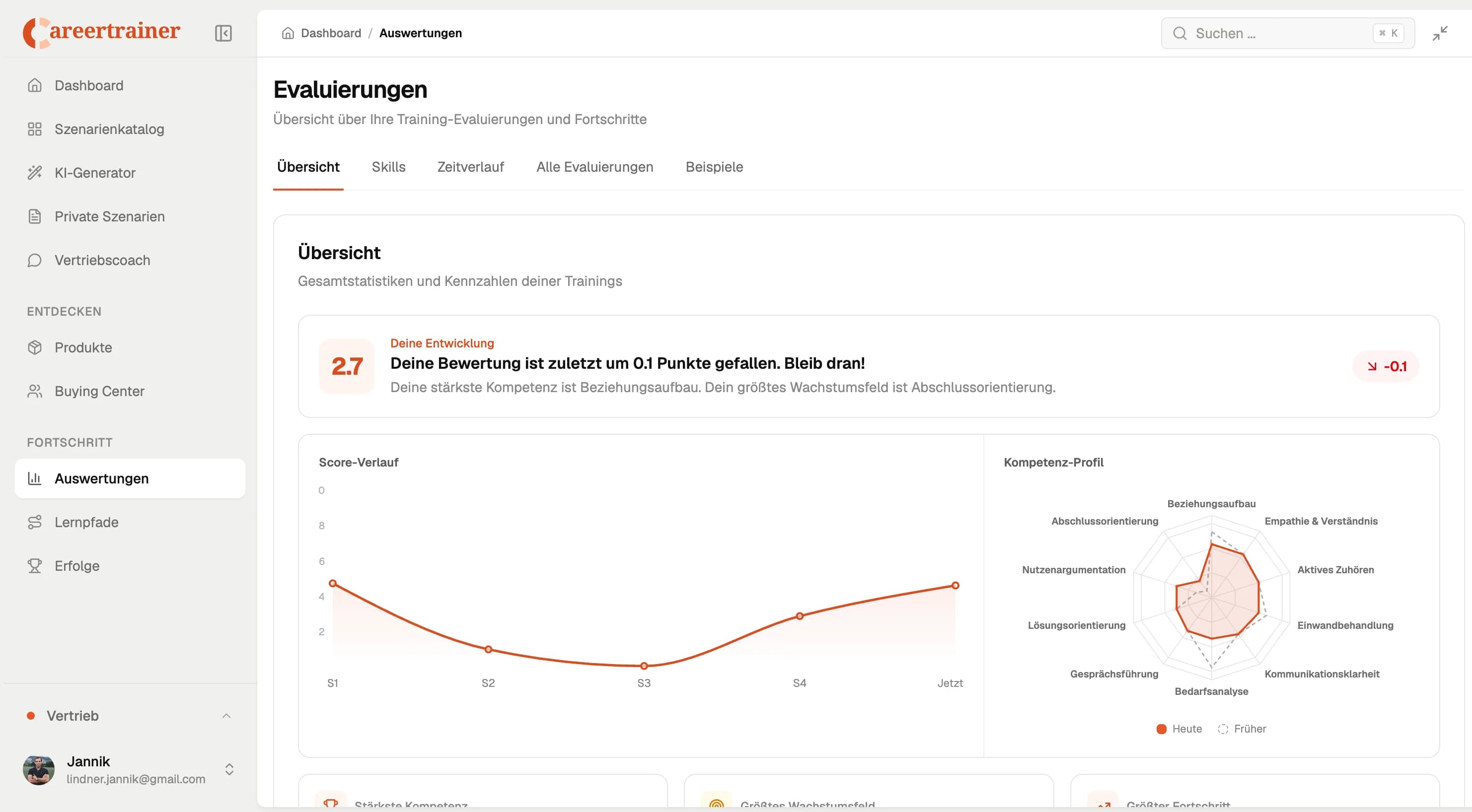
Evaluation summary and competency profile for leadership communication under pressure.
06

Relevant for regulated procurement environments

GDPR-compliant conversation training for sensitive healthcare contexts

If you train in regulated environments, data protection and clear data flows aren’t a nice-to-have. Careertrainer.ai is designed for DACH requirements and is a fit for teams that want to run realistic role-play training for clinic conversations, price negotiations, and sensitive sales cases—without unclear third-country transfers.

  • EU hosting without third-country data transfers for your training data
  • Built to fit healthcare-adjacent compliance and data protection requirements
  • Important for companies that can’t allow US-based tools
Learn more
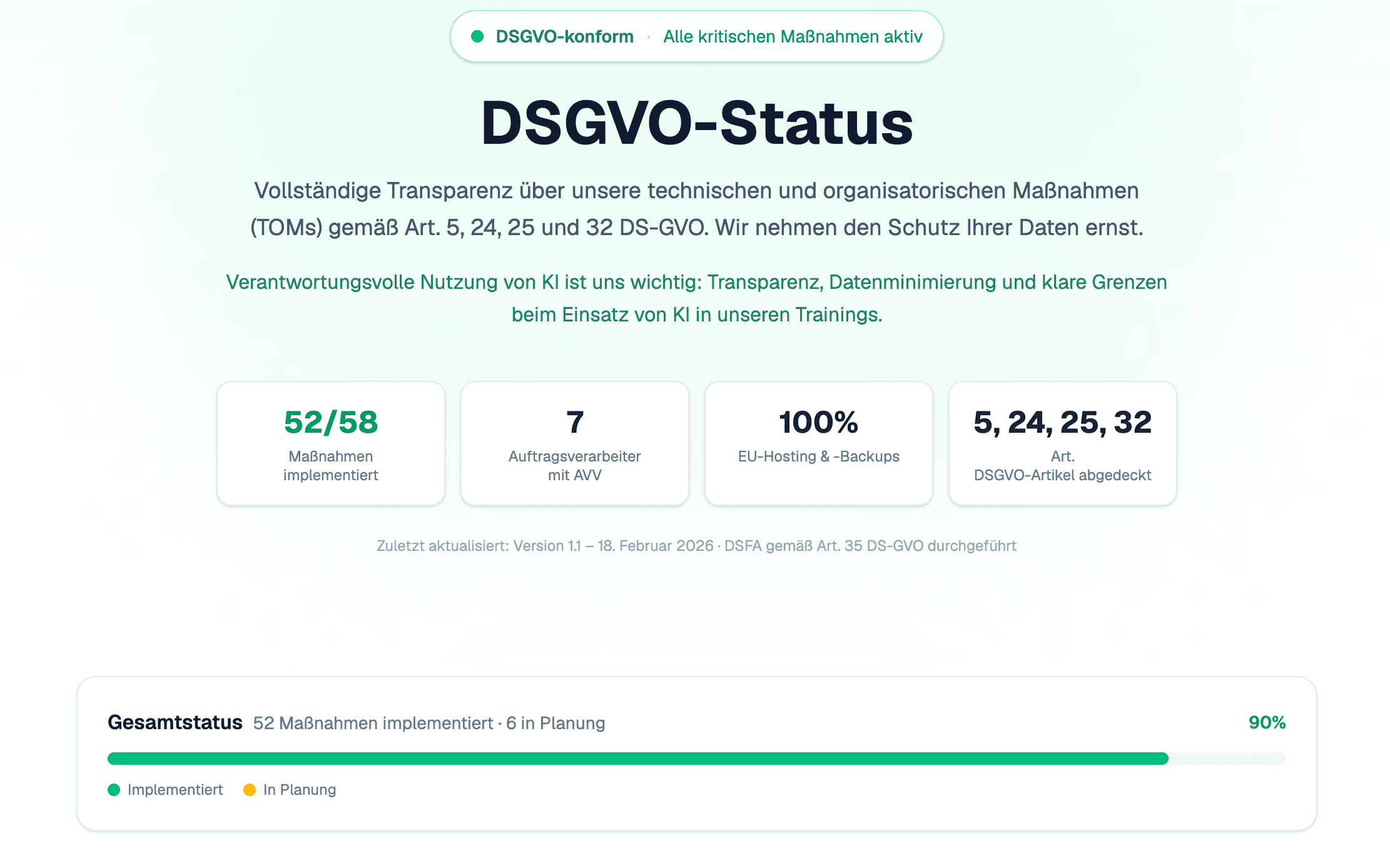
DSGVO compliance status overview for AI training, highlighting implemented measures and data protection commitment.
Roles & Responsibilities

Teams use Careertrainer.ai when clinic and practice conversations need to land with precision.

Whether you’re in field sales, KAM, or sales management: with Careertrainer.ai, you can train critical MedTech conversations as realistic AI role-plays—before you ever meet the client in a real appointment. This makes conversation training for procurement, users, and the buying center measurable, repeatable, and easy to improve over time.

Clinical Field Sales

You speak with the operating leadership, users, or the specialist department before procurement even gets involved. Careertrainer.ai turns that into industry-relevant conversation simulations for first meetings, needs analysis, and objection handling—so you can position your value, evidence, and next steps clearly and confidently.

Clarify user value before the procurement decision.

  • Intro call with OR leadership
  • Run a needs-based conversation instead of a product demo
  • Explain evidence clearly
  • Train objections when switching over

Field Sales Practice

In specialist medical practices, owners, medical assistants (MFA), and budget realities often decide together on the next step. With Careertrainer.ai, you practice AI role-play for sales training in practice distribution—from opening appointment slots to price questions, investment hurdles, and handling skeptical user reactions.

Lead real-life conversations with a tight budget

  • Owners block it due to cost
  • MFA questions the effort involved
  • Explain real-world value in everyday life
  • Make follow-up appointments binding
Popular

Key Account Management

When an purchasing consortium, hospital group, or central unit is involved in the negotiations, a single good one-on-one conversation is no longer enough. Careertrainer.ai supports your conversation training for complex Buying Center scenarios—so you can align commercial efficiency, contract logic, and clinical value during negotiation meetings.

Train your buying center and pricing logic

  • Procurement requests a comparison quote
  • Argue for Total Cost of Ownership (TCO), not per-unit pricing.
  • Balancing Chief Physician responsibilities with procurement
  • Secure your contract extension

Product Specialist in the Field

With complex, explanation-required systems, you need to answer technical questions—without slipping into feature lists. Careertrainer.ai provides live audio exercises for follow-up demos, clinical follow-up questions, and conversation simulations with critical users—so interest turns into real pipeline.

Answer technical questions during sales calls.

  • Train your demo follow-up conversation
  • Interpret clinical evidence
  • Clarify any questions about integration
  • Book your next test session

Procurement & Purchasing Team

Once procurement, the scope of work, and formal requirements take over, conversations quickly turn into a pure price comparison. With Careertrainer.ai, you can practice objection handling and AI training for tender rounds—so you structure how you present side conditions, differentiation, and sound business arguments.

Prepare structured pitch interviews with confidence

  • Defend your performance scope
  • Beat the cost-versus-value logic.
  • Offset discount pressure smoothly
  • Identify No-Bid Risks Early

MedTech Sales Leadership

You don’t just want to improve individual conversations—you want to see where your team is missing key competencies in medical technology discussions. Careertrainer.ai combines sales coaching with measurable AI role-play training, skill-gap analysis, and feedback across discovery, objection handling, and closing readiness.

Steer team performance with conversation data

  • Identify Skill Gaps in the First Phase
  • Shorten the ramp-up time for new reps
  • Steer coaching by deal phase
  • Measure progress per team

Frequently Asked Questions about MedTech Sales Calls and Training with Careertrainer.ai

Here you’ll find practical answers to typical sales conversation situations with clinics, practices, procurement teams, and end users—plus clear, concrete questions about how you can realistically train these conversations with Careertrainer.ai.

What makes sales conversations in medical technology so challenging?

MedTech sales is demanding because decisions are rarely made by a single conversation partner. You typically sell into a Buying Center made up of end users, specialist departments, procurement, administration—and sometimes MedTech and even executive management.

And there’s more: hospitals and practices don’t just want product features. They expect a solid combination of evidence, economic value, process benefits, and real-world practicality in everyday operations. Users often look for safety and ease of use, while procurement focuses on costs, standardization, and contract logic.

That’s exactly why a strong pitch deck alone is rarely enough. You succeed when you read roles accurately, identify objections early, and tailor your arguments to each conversation partner—without sounding inconsistent.

What objections in sales to hospitals and practices come up most often?

Typical objections are about price, evidence, existing vendors, internal approvals, and lack of priority. You often hear statements like: “We don’t have the budget for that right now,” “We’re already working with an established provider,” “For that, I need solid data,” or “This first has to go through Procurement.”

In practice, time pressure, team buy-in, and billing logic often come into play as well. In clinics, it gets more complex because medical value, procurement, standardization, and internal processes all intersect.

What matters: not every objection is a rejection. Very often, it’s a sign that the other person still sees risk, effort, or internal hurdles. That’s why good objection handling starts by clarifying the real underlying context—before you make your case.

How do you make a convincing case in MedTech conversations when procurement and end users have different priorities?

You’ll convert better when you don’t state benefits in a generic way, but translate them into language that’s tailored to each stakeholder. Users typically care about safety, result quality, ease of use, and everyday relief. Procurement, on the other hand, weighs costs more heavily—along with comparability, implementation reliability, and contractual stability.

Instead of sending the same product story to everyone, use different supporting evidence and conversation goals for each role. For users, a concrete case example on how to handle it can be persuasive. For procurement, it’s often more effective to focus on arguments like follow-on costs, process standardization, or the effort required to implement.

The key is that your messages work together. When you connect user value with business efficiency, you reduce friction in the buying center and increase the likelihood of getting to the next credible step in the deal.

How can you prepare effectively for a sales conversation with a clinic or medical practice?

A strong preparation starts with a clear, concrete conversation goal. Before you begin, clarify whether you want to qualify needs, present evidence, address objections, or secure the next step. Without a clear target, MedTech conversations can quickly become informative—but remain non-committal.

Next, prepare three things properly: the roles in the conversation, the most likely objections, and the right supporting evidence. Think about who is likely to act as a user, who is more of an economic decision-maker, and who could be a potential blocker. Also prepare short answers to questions about price, evidence, and switching or implementation.

It also helps to have a plan for how you’ll run the conversation: strong opening questions, a clear thread for the need, and a specific next step. Especially in longer sales cycles, it’s often not the close during the meeting that matters most, but the quality of the next commitment.


Which mistakes cost you most often the next step in long MedTech sales cycles?

A common mistake is jumping into the product presentation too early. If you haven’t clearly clarified the need, internal priorities, and the decision logic, even a strong solution can start to feel interchangeable.

It’s also critical to avoid focusing only on medical or only on business benefits. In medical technology, you often lose ground when you don’t bring procurement and end users along at the same time. And vague closing questions are costly: if you don’t agree on the next step concretely, opportunities decay in the follow-up.

Other typical pitfalls include defensive discussions about price, missing evidence-based support, and an overly generic conversation style. The more complex the buying center, the more important clarity, prioritization, and disciplined conversation management are across multiple phases.

Which metrics are truly useful for sales training in MedTech sales?

Useful metrics are the ones that connect conversation quality with sales progress. This includes, for example, the % of agreed next steps, conversion between sales stages, time to the next appointment, objection rates in pricing discussions, or progress on strategic target accounts.

During training itself, you should focus on observable behavioral signals: the quality of needs-discovery questions, how you handle requests for evidence, clarity in stakeholder management, and confidence when dealing with budget or procurement objections.

Less helpful are activity-only numbers without context. It’s not just about how many conversations you have—it’s whether you get better in critical moments of a conversation. That’s why strong KPIs show whether conversation training leads to measurable increases in commitment throughout the sales process.

How exactly does Careertrainer.ai help you with sales conversations in clinics and practices?

Careertrainer.ai is a DACH-focused AI platform for hands-on conversation training through live audio role-play. For MedTech sales, that means you practice real conversation situations with common counterparts—like procurement, practice owners, OR leadership, technical users, or a commercial decision-maker—rather than just reading conversation scripts.

The value comes from the concrete practice. For example, you can train discovery, evidence-based argumentation, pricing discussions, procurement rounds, or tough objection moments in 5 to 15 minutes. After every conversation, you get immediate feedback on how effectively you uncovered needs, handled objections, and secured the next step.

That’s especially helpful for long sales cycles, because you can repeat critical parts before you’re sitting in the real meeting with a hospital or a practice. This turns sales training and sales coaching into a repeatable format with measurable skill development.

What makes Careertrainer.ai different from seminars or classic sales coaching for MedTech teams?

The biggest difference is the training mode: with Careertrainer.ai, you practice the conversation yourself as a live audio role-play—not just talk about conversation techniques. Seminars and classic coaching often provide solid models, but they typically don’t deliver enough repetition in day-to-day pressure.

This is especially relevant in medical technology, because conversations with hospitals, practices, and procurement rarely follow a straight, linear path. You need to be able to respond spontaneously to follow-up questions, skepticism, price resistance, and different stakeholders. That specific skill is trained through repeatable AI role-plays in a much more practical way than theory alone.

On top of that, you get instant feedback, flexible availability, and scalable quality for teams. If you want to rehearse a conversation ahead of a real appointment, Careertrainer.ai is usually much closer to the conversation reality you’ll face than a one-off seminar.

Is Careertrainer.ai also a good fit if you already have experience in MedTech sales?

Yes—especially in situations like these, Careertrainer.ai can be a smart choice. Experienced sellers rarely struggle with the basics. They stumble on the fine details: pitching too early, leading stakeholders without clarity, reacting defensively on price, or not defining the next steps clearly in complex buying centers.

With Careertrainer.ai, you can train exactly these critical scenarios on purpose. Instead of generic sales training, you practice specific conversation situations—for example, a budget round with hospital procurement, a skeptical technical discussion with end users, or a negotiation where evidence and cost-effectiveness are both required.

This is also valuable for senior profiles, because you can test which phrasing works best without any risk. Experience doesn’t replace practice when conversations are commercially relevant, politically sensitive, or strongly regulated.

How fast can you get started with Careertrainer.ai in MedTech sales?

The onboarding is intentionally lightweight. You don’t need a long training setup to start practicing real conversations. Individuals can begin right away with relevant sales scenarios and complete their first live audio training sessions in a short time.

Careertrainer.ai is also designed for fast rollout for teams. Especially if you want sales reps in the field, Key Account Management, or sales leadership to train consistent conversation standards, you can use scenarios and feedback criteria in a structured way—without waiting for trainer appointments or in-person formats.

It’s particularly useful right before important meetings, product launches, or new target customers. If you notice today that pricing discussions, evidence-based arguments, or stakeholder management aren’t landing well, you can start the training on short notice instead of waiting until next quarter.

Can training providers or consultancies offer Careertrainer.ai for MedTech sales under their own brand?

Yes—Careertrainer.ai is also designed for partners who want to offer AI role-play training under their own brand. This is especially useful if you’re a training provider, sales consultancy, or enablement partner and want to make sales conversations with clinics and practices trainable—without having to develop your own AI platform.

In the context of medical technology sales training, the white-label model makes sense because partners can keep their industry expertise, content, and customer relationships. Careertrainer.ai works behind the scenes as the enabler: with a tenant-capable architecture, your own branding, and the ability to integrate the offering into an existing training or consulting setup.

What matters most is positioning: Careertrainer.ai doesn’t step in as a direct competitor for your relationship with your customers. Instead, it provides the technical foundation for scalable, realistic conversation training.

Other Industries for Sales Training

Discover industry-specific sales training and sales conversations for other industries.

A
AI sales training for consulting firms

AI sales training for consulting firms

Train your consulting sales team with AI role-play training for pitch situations, client meetings, and proposal presentations.

Learn more
P
Public sector sales training: help agencies confidently navigate complex procurement processes

Public sector sales training: help agencies confidently navigate complex procurement processes

Train with Careertrainer.ai on realistic AI role-play training for sales training, objection handling, and public-sector conversations: authorities, procurement law, long buying-center processes, and high-stakes follow-up questions—delivering measurable conversation training for sales teams.

Learn more
A
AI Sales Training for Staffing Agencies & Recruiting

AI Sales Training for Staffing Agencies & Recruiting

Train your recruiters and sales teams in staffing and recruitment with AI role-play training for new customer acquisition, candidate interviews, and fee negotiations.

Learn more
A
AI Sales Training for SaaS & Software

AI Sales Training for SaaS & Software

Train your software sales teams with AI role-playing for improved discovery calls, confident technical objection handling, and shorter sales cycles.

Learn more
S
Sales Training for Logistics: Practice customer conversations, objections, and price negotiations with confidence

Sales Training for Logistics: Practice customer conversations, objections, and price negotiations with confidence

Train with Careertrainer.ai on realistic AI role-play for logistics sales: sales training, conversation training, objection handling, and sales coaching for transport, freight forwarding, and contract logistics—practical, measurable, and GDPR-compliant.

Learn more
AI Sales Training for Logistics & Transport

AI Sales Training for Logistics & Transport

Train your logistics sales teams with AI role-playing for complex tender negotiations, price defense, and new customer acquisition in a highly competitive market.

Learn more
Objection handling

Practise the most common sales objections

Compact objection handling drills for sales conversations in Medical Technology Sales Training: Safely practice sales conversations with hospitals and practices.

Handle objections: “We already have a provider” (train)

Train objection handling for “We already have a provider” with realistic AI role-plays for high-touch B2B sales. Practice live by audio with tailored responses to incumbent-provid…

Practise response

Train objections handling for “No budget” with AI role-play training

Train the exact customer statement “No budget” in realistic live audio role-plays with Careertrainer.ai. Practice follow-up questions, psychologically sound response strategies, a…

Practise response

Train objection handling “The contract is still running” with AI role-play training

Train the objection “We’re still contractually bound” in realistic live audio AI role-plays with AI customers. Practice responses that fit SaaS, Telco, insurance, and energy sales…

Practise response

Handle the objection “I need to align this internally first”

Practice handling objections with “align internally” in realistic live audio AI role-plays with AI customers. You’ll train concrete response strategies—so you don’t just wait pass…

Practise response

Train objection handling for “I don’t have time” with AI role-play training

Train with Careertrainer.ai to practice realistic live audio role-plays for phone prospecting and first conversations. Learn how to handle the objection “I don’t have time” in a p…

Practise response

Handling objections: Train “Please send me some materials first.”

Practice the common B2B objection “Please send me the documents first” with realistic live audio role-plays on Careertrainer.ai. Learn to distinguish between genuine interest and …

Practise response

Full overview: sales objections and AI conversation practice