careertrainer.ai

Practice advisory conversations focused on trust, needs, regulation, and pricing hesitation in realistic live audio simulations.

AI Role-Play Sales Training for Financial Services

Careertrainer.ai trains sales and conversation situations in financial sales with practical AI role-play scenarios. You can practice objection handling, needs discovery, and closing conversations without risk—plus get immediate feedback.

Live example · This is what training looks like

12 scenarios
Phone call

Practise with your product

Rachel Bennett

Rachel Bennett

Sales·Discovery
Skeptical sales leader gate

Head of Sales · 45 · ENTP

Financial ServicesCold call openingHead of Sales

Head of Sales rejects your call instantly

She says no, then hangs up fast.

At 4:58 pm, Rachel picks up between two pipeline stand-ups. She immediately cuts in, saying she gets calls all day and has no time.

Goal: Build relevance fast by referencing her sales funnel reality, not generic finance talk. Ask one focused question that earns a few minutes without sounding like a pitch.

Learning goals

  • Earn two minutes with relevance
  • Avoid pitching when rejected

What to expect

  • Deliver one contextual value statement referencing sales pipeline
  • Ask a single funnel-focused question within the first minute
Practise with your product

Numbers that make sales coaching in the finance space more predictable

These metrics show why structured conversation training is commercially relevant—especially for advice-intensive financial products.

77%
Trust decides the deal
In financial sales, credible advice often matters more than product details alone. (Source: edelman.com, 2024)
53%
Customers compare you more on price
When offers start to feel interchangeable, clean, thorough needs assessment becomes your lever against price pressure. (Source: pwc.de, 2023)
64%
Compliance remains the top risk in sales
Training helps you communicate sensitive statements about products, suitability, and the advisory situation more confidently. (Source: deloitte.com, 2024)
2x
Practice doubles your chance of transferring skills to real life.
Putting active conversation practice into role-play makes communication behavior measurably better than theory-only formats. (Source: oecd.org, 2023)

Where finance sales truly comes under pressure in real conversations

In sales of complex financial products, deals rarely fail due to product knowledge alone. More often, conversations break down over trust, regulatory requirements, Buying Center dynamics, or in pricing rounds where the underlying needs weren’t uncovered clearly enough. Careertrainer.ai lets you train exactly these sensitive situations with hands-on AI role-play scenarios—as

AI character for industry-focused solutions

AI role-play focus

Train your conversations with real deal pressure

AI role-play training makes sensitive advisory conversations in financial sales repeatable, measurable, and risk-free to practice.

Trust Before the Product PitchLead the Buying Center
Challenge 01

Trust disappears the moment coaching starts to feel like a product push.

In financial sales, a conversation often goes off track the moment a customer senses sales intent instead of a careful needs assessment—or when regulator-sensitive statements about returns, risk, and suitability come up. The result: longer sales cycles, lower close rates, and avoidable compliance risks already in the first or second conversation. With Careertrainer.ai, you can train exactly these advisory conversations through AI role-play. So you build trust, ask precise questions, and phrase sensitive statements with confidence—securely and in line with the requirements.

Book a free demo
Challenge 02

Multiple decision-makers steer the conversation in different directions.

In bAV, company insurance coverage, financing, or investment solutions, it’s rarely just one person at the table. You’ll typically have the management team, Finance, HR, or external tax advisors—each with their own priorities and objections. If advisors don’t manage the buying-center dynamics properly, deals stall, follow-ups lose focus, and offers gradually lose momentum internally. Careertrainer.ai simulates exactly these stakeholder constellations in conversation training, so you can anchor value, risk, and next steps per role—confidently and consistently.

Book a free demo
Challenge 03

Price comparisons reduce the value of complex consulting to nothing more than tariff-level pricing.

Many candidates start the conversation by referencing comparison portals, bank offers, or statements like “it’s cheaper elsewhere”—and they reduce a complex financial product that needs explanation to just fees or the monthly payment. That hurts margins, increases price-sensitivity, and weakens your chances of closing if your objection handling and value-based argumentation aren’t solid. Careertrainer.ai trains these “price round” moments with realistic conversation simulations—so you can anchor need, risk, and long-term value instead of price lists.

Book a free demo
Challenge 04

New consultants often sound unsure—even when they know the products.

In the onboarding of many financial sales teams, product and specialist knowledge gets covered quickly—but in real customer conversations, key skills like timing, objection handling, and language confidence during sensitive advisory phases are missing. As a result, new colleagues take too long to reach an effective productive conversation rate, run more iterations with their managers, and lose meetings early in the pipeline. Careertrainer.ai closes this gap with scalable sales training and immediate feedback—so teams reach real conversation standards faster.

Book a free demo

Sales training for financial services: AI role-play scenarios for advisors and sales teams—practice typical client conversations with AI

Four hands-on practice scenarios on “Sales training for financial services: AI role-plays for advisors and sales teams”: Train typical conversations with realistic AI characters in Careertrainer.ai.

Filter by industry, situation, objection and buyer persona. Every example leads directly into your own AI role-play.

12 of 12 scenarios

Situation

Objection

Buyer persona

Emily Parker

Emily Parker

Midmarket CEO

Financial ServicesDiscovery callWe already have a providerMidmarket CEO

On a Tuesday morning, you dial Emily Parker and she starts with a benchmark sheet. She quickly asks which fees match the cheapest quote, not what might go wrong.

What you'll practise

  • Ask risk criteria first
  • Separate fees from value
  • Name one failure scenario
Your fees match the lowest line, right?
Noah Mitchell

Noah Mitchell

Small Business Owner

Financial ServicesDiscovery callCall back laterSmall Business Owner

Late afternoon at your meeting desk, you face Noah Mitchell and he is already in a pilot review. He says he will “take a look” but keeps the conversation in scope and timeline terms.

What you'll practise

  • Separate politeness from intent
  • Get the pilot endpoint date
  • Agree a next step with evidence
I am not saying no, but we are already testing.
Alex Taylor

Alex Taylor

Midmarket CFO

Financial ServicesExecutive briefingBudget lockedMidmarket CFO

As you dial Alex Taylor, he interrupts with a single list price on the third ring. He wants to know if you can explain value quickly, because procurement is already comparing line items.

What you'll practise

  • Control the price frame
  • Probe budget lock timing
  • Tie value to measurable impact
That is the list price, sure. What is the value driver?
Sophie Morgan

Sophie Morgan

Midmarket CTO

Financial ServicesExecutive briefingCompliance reasonsMidmarket CTO

In a busy office corridor near lunch, you meet Sophie Morgan across from you. She starts with the compliance question she drafted today, not the topic from your calendar invite.

What you'll practise

  • Acknowledge hijack fast
  • Bridge to decision criteria
  • Agree a timeline-based next step
I only have ten minutes, so start with compliance evidence.
Liam Edwards

Liam Edwards

IT Director

Financial ServicesChurn prevention with existing customerIT Director

You dial Liam just as he starts signing off last quarters’ change request list. He sounds tense and says he will not own the renewal follow-up.

What you'll practise

  • Name the real approver
  • Handle soft refusal on ownership
  • Set a safe handover action
I’m not the one who takes ownership of renewals, alright?
Jordan Blake

Jordan Blake

HR Director

Financial ServicesDiscovery callBudget lockedHR Director

In the lobby across from Jordan’s office, you get one short slot before her weekly HR metrics review. She listens politely, then says any new spend will not be visible this quarter.

What you'll practise

  • Diagnose freeze vs timing
  • State a one-sentence business case
  • Suggest a phased entry step
I can’t put spend on my dashboard while CFO is watching.
Rachel Bennett

Rachel Bennett

Head of Sales

Financial ServicesCold call openingHead of Sales

At 4:58 pm, Rachel picks up between two pipeline stand-ups. She immediately cuts in, saying she gets calls all day and has no time.

What you'll practise

  • Earn two minutes with relevance
  • Avoid pitching when rejected
  • Start discovery with one measurable item
I’m not your target audience, sorry. Calls like this pop up daily.
Oliver Harris

Oliver Harris

Procurement Lead

Financial ServicesExecutive briefingProcurement Lead

You meet Oliver in a conference room after lunch, when the contract review calendar looks overloaded. He nods along but immediately mentions that decisions go through committees.

What you'll practise

  • Clarify the approval sequence
  • Negotiate demo scope to match process
  • Request the right invite and timing
Sure, we can look. But only if you respect the approval chain.
Casey Hayes

Casey Hayes

Marketing Director

Financial ServicesCustomer complaint handlingMarketing Director

You dial into Casey’s office line. Casey is still fired up about last month’s reporting delay and the impact on campaigns.

What you'll practise

  • Clarify the exact failure
  • Acknowledge the reputational cost
  • Agree a concrete corrective next step
We missed the numbers, and the board noticed.
Laura Hughes

Laura Hughes

Operations Director

Financial ServicesExecutive briefingCompliance reasonsOperations Director

You walk into the meeting room where Laura cuts straight to timelines. She planned a quick decision, but her compliance checks are blocking anything that looks vague.

What you'll practise

  • Ask for the missing compliance artifact
  • Demonstrate proof with operational specifics
  • Confirm a sign-off path and timing
I need the KYC and AML evidence mapped to our process.
Henry Clark

Henry Clark

General Practitioner

Financial ServicesGhosting recoveryGeneral Practitioner

Henry picks up after your call attempt. You can hear he is not angry, but he has not moved on renewal and he wants it handled fast.

What you'll practise

  • Find the real reason for delay
  • State the consequence of no movement
  • Offer two time slots for commitment
I am not refusing, I just cannot afford another delay.
Riley Stone

Riley Stone

Private Customer

Financial ServicesActive closingWe already have a providerPrivate Customer

You greet Riley across from you in a quiet corner of the office. She is polite, but she keeps pointing to her current advisor and says nothing should change.

What you'll practise

  • Identify the trigger to change
  • Put status quo in numbers
  • Propose a low-risk pilot step
I know my advisor already, and that is the point.

How the AI evaluates your training conversation

After every role-play a separate AI analyses your full conversation transcript — with score, goal feedback and concrete quotes from your own dialogue.

Two layers feed the overall score: scenario-specific goals (70%) and five core competencies for your training type (30%).

SummaryRating: Solid

Emily Parker · Differentiate against the comparison table in discovery

Lead with risk criteria, then map how the differentiator survives the fee table

Clarify what matters in the decision beyond list price, including regulatory and trust risk. Lock the differentiator to Emily’s stated failure scenario and decision criteria.

Overall result
6.7/ 10

70% scenario goals + 30% core competencies

Scale 0–10 · backed by quotes from your conversation

Scenario goals · 70%Core competencies · 30%

Scenario goals

Scenario goals · 70%

Ask risk criteria first

8.4 / 10

Identify Emily’s decision criteria before discussing costs. Tie at least one question to trust, compliance governance, or year-end risk impact.

Fully achieved

You asked about accountability for the cheap quote failing, before making any broad value claim.

Which risk owners sign off if the cheap quote fails?

Separate fees from value

6.4 / 10

Separate fee items from value drivers in the buyer’s language. The trainee should clarify what the cheapest option leaves uncovered.

Partially achieved

You contrasted what the low price covers (FX and uptime) but did not clearly state what it omits for governance end to end.

Low price covers only FX and uptime, who handles audit controls?

Name one failure scenario

4.2 / 10

Bridge the differentiator to a concrete failure scenario Emily fears. The trainee should make the differentiator measurable through her checklist categories.

Not achieved

You did not land on one clear differentiator tied to Emily’s specific failure scenario; you stayed on accountability and coverage.

Which risk owners sign off if the cheap quote fails?

Core competencies

Core competencies · 30%

Needs analysis

6.4

Systematically uncover needs and requirements

Value articulation

6.9

Present concrete value for the customer

Objection handling

6.7

Address objections professionally and constructively

Closing orientation

7.0

Work toward a close or clear next step

Relationship building

6.5

Build trust and rapport

Details · Transcript excerpt

YouWhich risk owners sign off if the cheap quote fails?
Emily ParkerRight now your benchmark sheet looks like a tender comparison. I want line items, not stories.
YouLow price covers only FX and uptime, who handles audit controls?
Pro tip

Tie the low quote to a named failure and ask one accountability question. Example: "If month 12 fails, who owns audit controls?"

Only your wording is evaluated — not the AI counterpart's. The AI's opening of the conversation is not penalised.

Practise with your product

Train challenging advisory conversations in financial sales with Careertrainer.ai

Careertrainer.ai helps you plan sales training, conversation training, and objection handling training for advice-intensive financial products as a live-audio practice. You rehearse real-life scenarios from financial sales, respond to price resistance, trust questions, and regulatory…

1

Choose the right AI role-play for your sales situation

Choose an exercise scenario that fits your sales day-to-day: first meetings, needs discovery, objection handling under price pressure, or closing conversations with a skeptical customer—plus roles like a spouse in the buying center or a business decision-maker. This way, you don’t just train generally; you practice the exact conversation moments where consulting quality, trust, and your chances of closing make the difference.

Role-play Generator in Careertrainer.ai
2

Run the conversation live in the Voice AI simulation

Run a realistic AI audio role-play with an AI counterpart that reacts like a real customer, prospect, or decision-maker in the finance space: cautious when it comes to risk, critical about costs, sensitive to regulation, and only receptive after a clear, well-structured needs assessment. You’ll practice questioning techniques, conversation leadership, and value-based pitching under real conversational pressure—not just theory or script knowledge.

Voice AI conversation simulation in Careertrainer.ai
3

Analyze feedback and measure progress in your sales coaching

After every conversation, you’ll get a clear evaluation of the key sales levers in financial services—e.g., needs analysis, building trust, handling objections, call structure, and readiness to close. This helps you see exactly where you can improve your appointment rate, conversion, close rate, and overall call quality—and which conversation trainings you should repeat next.

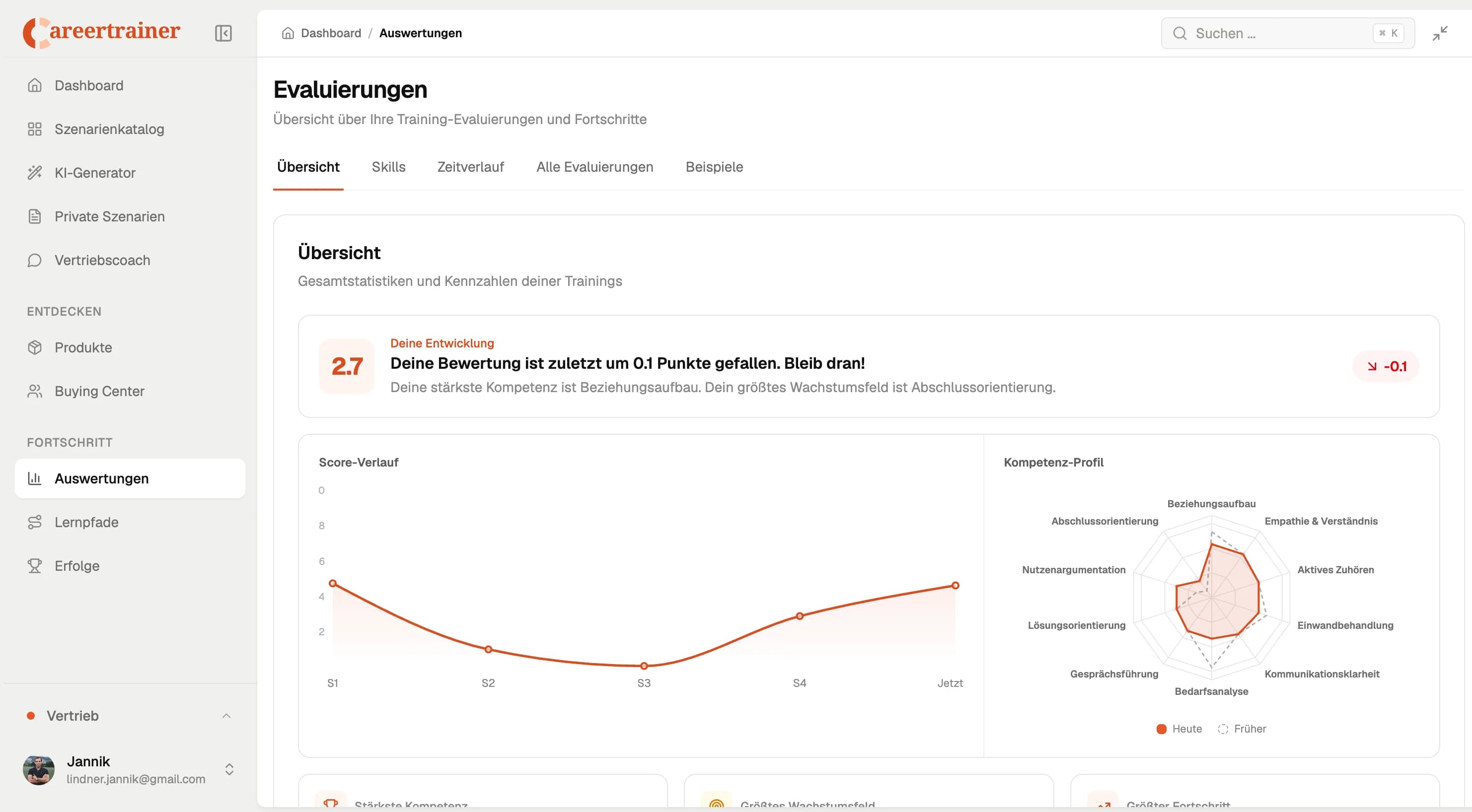
Evaluation Dashboard in Careertrainer.ai

Typical consultant conversations in financial sales

In sales, trust, the depth of customer needs, and clear, well-structured conversation management often determine the next step—especially when explaining complex financial products. With Careertrainer.ai, you can train for these high-stakes moments in realistic AI role-plays: from the first consultation through to pricing and closing discussions.

First call

“I want to understand who I’m actually trusting here.”

A high-value new customer comes to the first consultation through a recommendation—but responds cautiously to standard questions and product slides. The conversation can quickly go off track if you jump too early into returns, pricing, or contract details before trust and the actual context are clearly established. A better approach is to start with their goals, decision logic, and your understanding of their prior experiences with advice—rather than diving straight into products. With an AI role-play on Careertrainer.ai, you practice exactly this type of opening and get immediate feedback on structure, pace, and trust-building.

Practice the conversation with Katrin
Needs assessment

When your partner says in the appointment: “We don’t want to sign anything that we don’t fully understand.”

In a sales or consulting meeting, it’s not only the actual prospect at the table—an often more critical partner is there too, questioning the value, the risk, and the contract term. It gets harder when you address only the obvious conversation leader and ignore the second voice in the buying committee. What works better is actively involving both perspectives, calling out any gaps in understanding, and making the decision criteria visible. You can train this repeatedly with AI role-play training—until you can confidently lead even multi-person conversations like these.

Practice the conversation with Thomas
Handling Objections

Sounds good—but is it regulatorily appropriate for my specific situation?

Commercial customers are often interested in the beginning, but become noticeably more cautious as soon as suitability, documentation, and liability questions come up. Many conversations lose momentum here because consultants either dodge the issue or overwhelm the customer with technical jargon. The most effective approach is to clearly, calmly, and understandably frame the regulatory requirements—without losing sight of the customer’s specific needs. With Careertrainer.ai, you can train this kind of objection handling as a live conversation and test different phrasing options against each other directly.

Practice the conversation with Sven
Pricing Call

Your offer is more expensive than that of your house bank.

After a good consultative call, objections to price often come up late in the conversation—even though the need has essentially been confirmed. It becomes critical when you bring up discounting right away, because you end up undermining the value of your advice yourself. The effective approach is to lay out the comparison basis first, weigh the risks, clarify the service scope, and define decision criteria—before you negotiate on terms and pricing. You can practice this pricing conversation repeatedly in Careertrainer.ai using AI role-play, so you stay calm under price pressure and communicate strong, convincing arguments.

Practice the conversation with Melanie
Final interview

The customer is hesitant despite being interested: “I’ll think about it overnight.”

The facts are clear, the customer understands the value—yet right before the decision they stall and push for a postponement. These conversations stay unresolved if you simply accept the hesitation instead of uncovering the real remaining barrier. Better: pick up on buying signals, pinpoint uncertainty with precision, and agree on the next concrete step—clearly and decisively. That’s how you train, in realistic role-play, a closing conversation that doesn’t pressure—but consistently moves the customer to a decision.

Practice the conversation with Daniel
Why Careertrainer.ai fits financial sales teams

The features that let you truly train for high-stakes advisory conversations

Careertrainer.ai combines hands-on sales training with realistic AI role-play scenarios for advice-intensive financial products. That way, you don’t practice trust-building, needs assessment, objection handling, and closing pressure in the abstract—you train them in real conversation situations with instant feedback and evaluation.

01

For consultants, account managers, and sales leaders

Sales training built around real finance conversations—no product monologues

In financial sales, it’s rarely just the product brochure that determines the outcome—it’s how clearly you uncover needs, build trust, and drive the next step. Careertrainer.ai recreates realistic live audio conversations from first contact through to closing, so advisors, insurance and retirement specialists, and B2B financial sales teams can work on repeatable improvements in conversion, win rate, and overall conversation quality.

  • Practice your first meetings, discovery, objection-handling, and closing with real conversation logic.
  • Train against skeptical investors, CFOs, or Procurement—not against generic standard scripts.
  • Measurable scores for needs analysis, value-based selling, and closing effectiveness
Learn more
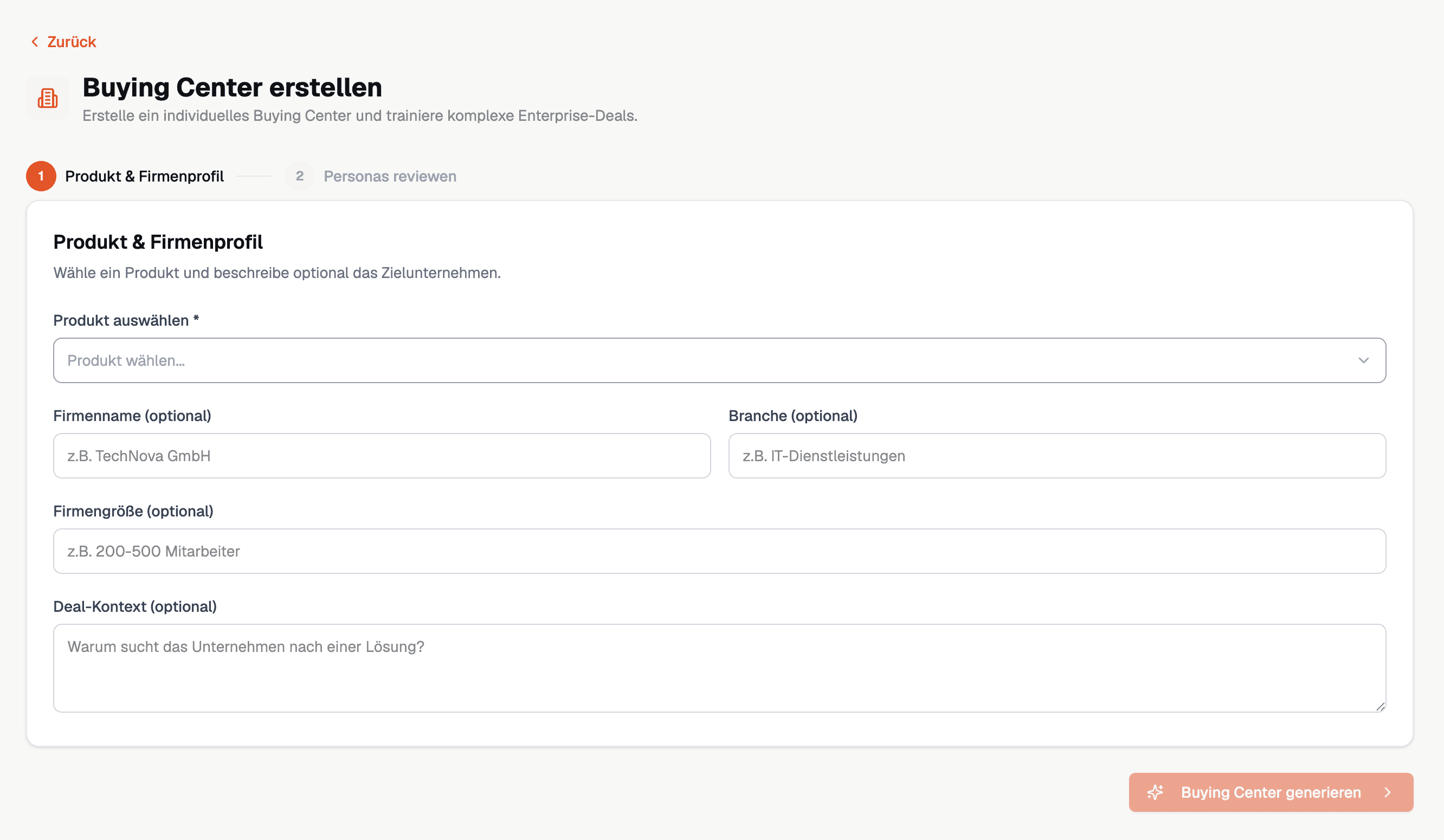
Sales training form for creating a buying center with product, company profile and deal context fields
02

If pricing, trust, or switching providers is holding you back

Objection handling training for common blockers in financial sales

Whether it’s “too expensive,” “I want to compare first,” or “we’ll stay with our home bank”: when you’re selling finance solutions that require explanation, deals often fall through on recurring objections. With Careertrainer.ai, you can train the same situation again and again—test different conversation strategies and see immediately which response works for which customer type.

  • Train pricing resistance, commission skepticism, and change resistance realistically through AI role-play training.
  • Compare handling objections, reframing, and value-based benefit statements—without any risk on a real lead
  • Ideal as a warm-up before client meetings, annual reviews, or follow-up on proposals
Learn more
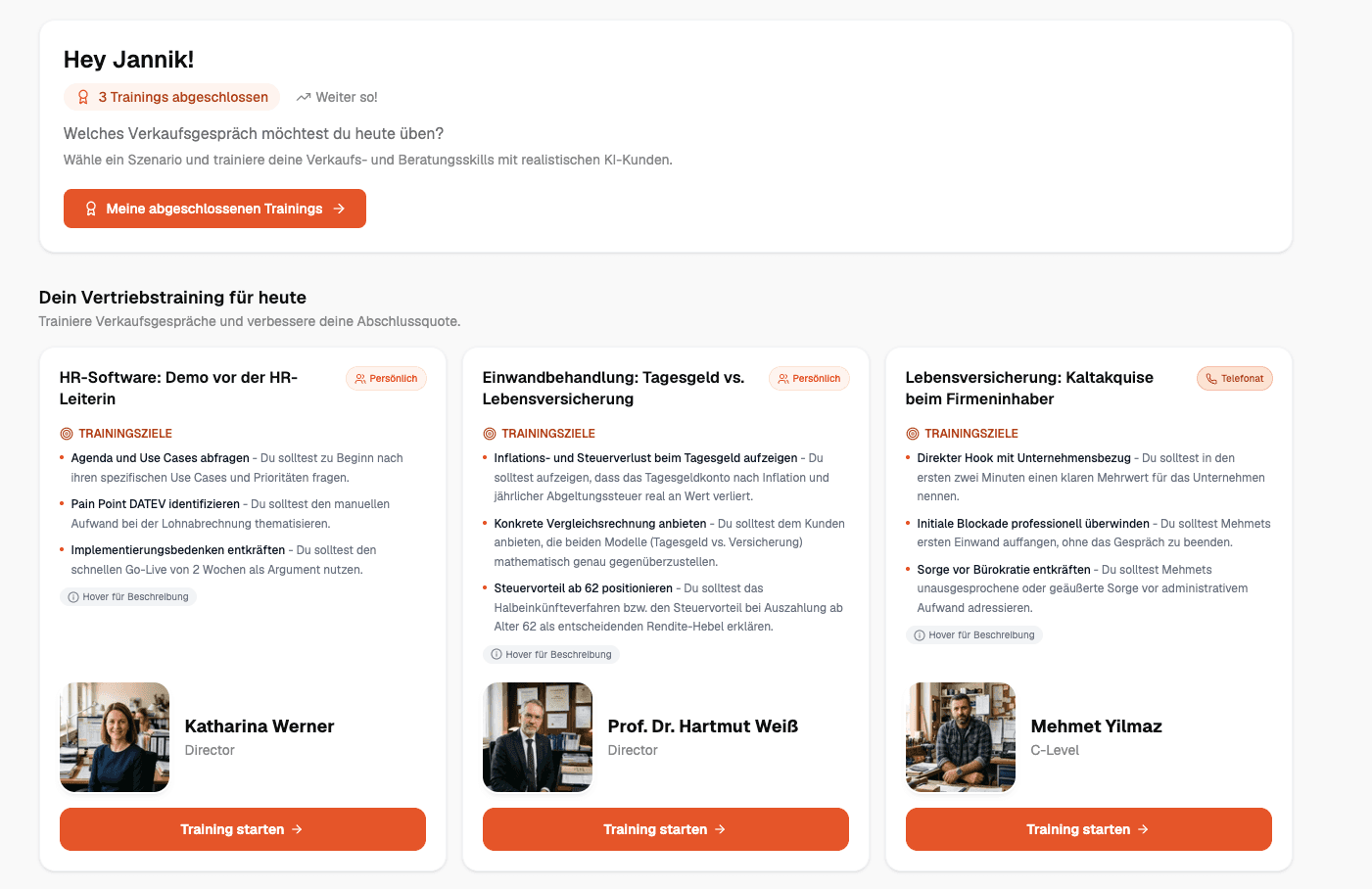
Dashboard for sales training sessions, featuring personalized training goals and participant profiles.
03

For different customer types and decision-maker roles

Buyer Personas for Conversations with Investors, CFOs, and Analytical Reviewers

Not every customer responds to the same conversation style. With Careertrainer.ai, you can train against different buyer types: the number-driven CFO, the security-focused existing customer, the critical Procurement lead, or the relationship-oriented entrepreneur. This way, you don’t just improve your pitch—you also strengthen your stakeholder mapping and your ability to adapt your conversations within the buying center.

  • Analytical decision-makers test evidence, risks, and regulatory compliance more rigorously
  • Relationship-oriented customers are sensitive to pressure and to overly pushy product pitches.
  • Helps with multi-threading in complex B2B financial deals with multiple stakeholders
Learn more
Character selection screen with AI training personas and scenario configuration buttons
04

For sales coaching backed by reliable, measurable data

Conversation evaluation that turns training data into real coaching approaches

After every role-play, a second AI system independently analyzes your conversation. This is especially valuable for sales leaders and Enablement teams in the finance sector—teams that need more than gut feeling, but reliable insights into weaknesses in needs discovery, objection handling, commitment, and closing.

  • Proof from the conversation—not generic feedback without context.
  • Identify gaps in discovery, strengthen your value-based argumentation, and build confidence in the next step
  • Ideal for individual sales coaching and consistent, team-wide quality standards
Learn more
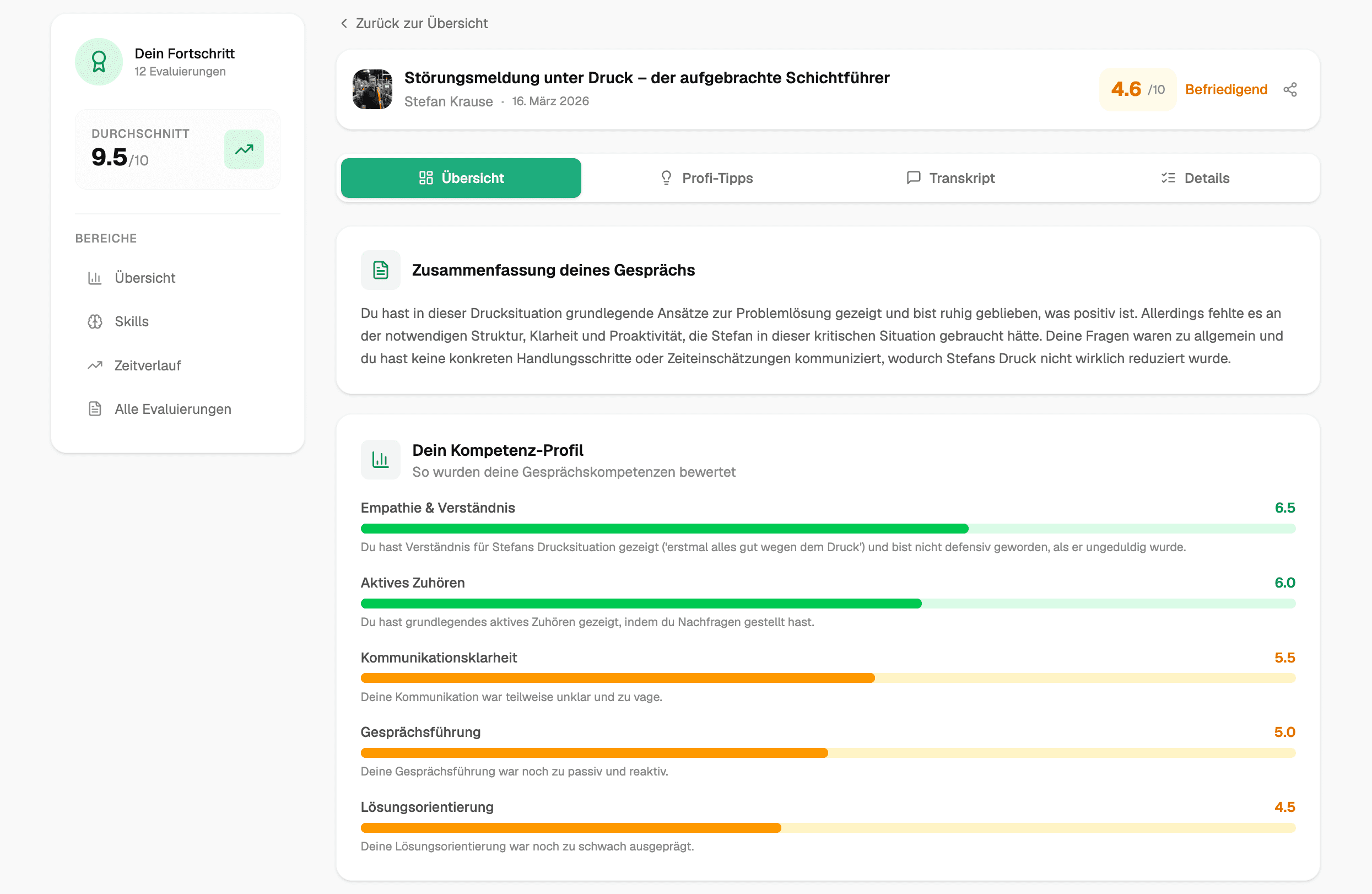
Evaluation summary and competency profile for leadership communication under pressure.
05

Built for sensitive customer data and regulated environments

GDPR-compliant conversation training for regulated financial organizations

When advisory calls touch sensitive customer information, personal planning topics, or internal sales data, a generic US tool often isn’t enough. Careertrainer.ai is built for the DACH region and supports finance sales teams with EU hosting, clear data flows, and data protection options designed to meet regulated requirements.

  • EU hosting without unnecessary transfers outside the country
  • Useful when checking compliance with Data Protection, IT, or the relevant business department
  • Designed for regulated sales processes with higher documentation requirements
Learn more
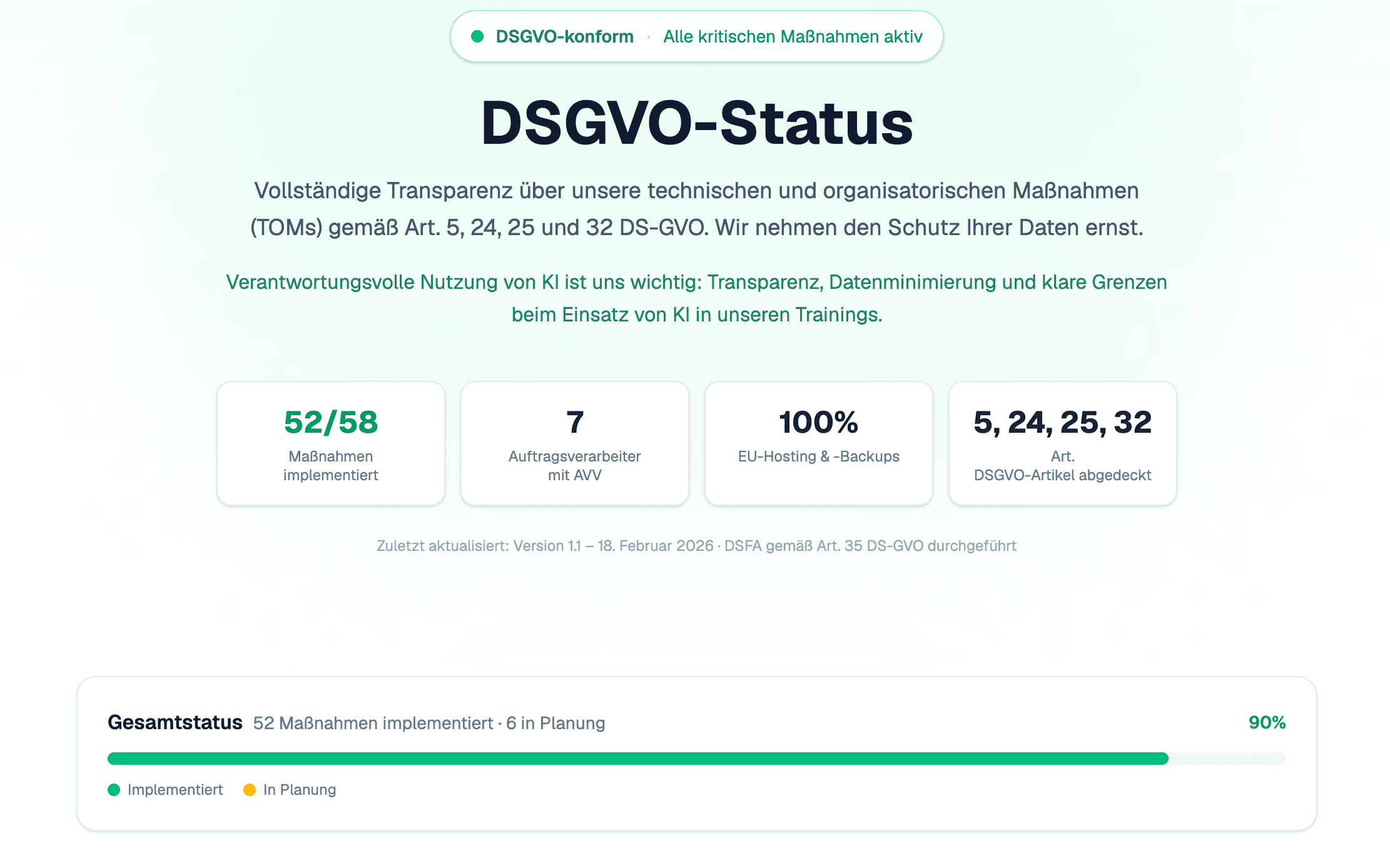
DSGVO compliance status overview for AI training, highlighting implemented measures and data protection commitment.
Roles & Responsibilities

These roles train with Careertrainer.ai exactly the conversations that cost money in financial sales—right now.

Whether it’s consulting, placement, or team coordination: with Careertrainer.ai, you practice sensitive customer conversations as AI role-play instead of during a live appointment. That makes sales training in the finance space measurable, repeatable, and close to the real pressure of closing.

Field Sales Financial Advisor

You conduct first appointments, assess protection or investment needs, and you need to build trust before you even discuss products. Careertrainer.ai turns that into realistic conversation training—with skeptical private clients, price questions, and liability concerns. And in the next step, you’ll get feedback on how deep the needs analysis goes, your conversation structure, and your closing rate.

Build trust before the product pitch—cleanly and convincingly

  • First call with a skeptical new customer
  • Needs Analysis Without Product Pitch
  • Objection: “I don’t want you to push anything on me.”
  • Explaining commission and how it works when it feels like you’re hitting a “pricing barrier”
  • Feedback on Conversation Structure
Popular

Wealth Advisors & Private Banking

For larger deals, ROI numbers alone rarely decide the outcome. It’s your risk appetite, expectation management, and the trust behind your recommendation that make the difference. With Careertrainer.ai’s AI role-play training, you practice investment conversations with demanding customers who compare options, ask critical questions, and—when volatility hits—demand immediate hedging and risk mitigation.

Lead complex investment conversations with precision.

  • Explain the reason for the asset reallocation
  • Clearly identify risk profiles
  • Compare with competitor offerings
  • Objection to fees and cost-to-revenue ratio
  • Book your next session—commitment confirmed

B2B Advisor for Corporate Clients

In corporate/ B2B sales, you’ll often face buying centers, questions about liquidity, risk coverage, and decision paths between the CFO, management, and executive assistants. With Careertrainer.ai, you can simulate these realistic conversations as sales training for financial services—so you qualify needs, priorities, and closing chances more effectively in complex B2B meetings.

Practice buying center dynamics in mid-sized companies

  • The CFO asks about the impact on liquidity
  • GF prioritizes cost over risk
  • Multiple decision-makers in the call
  • Cross-sell opportunities from real customer needs
  • Increase the quality of every opportunity

Inside Sales & Sales Support Assistant

You prepare client advisory meetings, follow up with quotations, and handle incoming questions before a case in your CRM moves on—or gets lost. With Careertrainer.ai, you can run short live audio role-play exercises for follow-up calls, document requests, and appointment scheduling. This helps ensure fewer leads stall between first contact and closing.

Follow-up calls without leaks in the funnel

  • Follow up on missing documents
  • Reserve your spot after the quote
  • Confirm deadlines and clarify timelines
  • Objection: “I’ll get back to you later.”
  • More show-up in client advisory meetings

Sales Directors & Regional Managers

You don’t just want to improve individual conversations—you want to steer sales coaching across your team using real patterns: needs discovery, objection handling, closing behavior, and gaps in activity. With Careertrainer.ai, you can see through conversation training and analytics where your advisors regularly miss the mark—whether it’s pricing, regulatory requirements, or building trust.

Make team skill gaps visible

  • Skill gap analysis by conversation stage
  • Training by region or team
  • Coaching under Price and Discount Pressure
  • Track progress over quarters
  • Measure KPIs before and after training

Sales Enablement & Academy

You standardize sales training for new consultants, career switchers, and experienced teams—without training quality varying from location to location. With Careertrainer.ai, you scale AI training for realistic consulting conversations, compliance-minded objections, and product explanations—and measure which practice scenarios actually drive behavior change.

Scale onboarding and coaching rollout

  • Reduce ramp-up time for new advisors
  • Build scenarios by department
  • Use a consistent scoring logic
  • Start mandatory training before launching your campaigns
  • Analyze team progress

Frequently Asked Questions about Advisor Calls in Financial Sales

Here you’ll find practical answers to challenging sales conversations in financial services—and how you can train them targeted with Careertrainer.ai.

What makes great sales training in financial services effective?

Good sales training in financial services doesn’t just improve product knowledge—it primarily improves how you behave in real conversations. What matters most is whether you can build trust, uncover needs clearly, classify regulatory requirements in a way clients can understand, and answer pricing questions without offering a discount too quickly.

Especially with complex, explanation-heavy financial products, conversations rarely fail because of missing facts. More often, they fall apart because the customer senses uncertainty, can’t clearly see the added value, or feels pushed too early. That’s why effective training should realistically reflect the full conversation flow: first call, needs discovery, objection handling, proposal discussion, and closing.

Make sure your sales training practices concrete conversation situations—such as a skeptical private customer, an analytical CFO, a purchasing discussion with multiple stakeholders, or a customer who hesitates on price. Only then does theory turn into real conversation confidence.

Why is trust in financial services sales often more important than the product pitch?

Because financial decisions are almost always tied to risk, uncertainty, and long-term consequences. A customer isn’t just buying a product—they’re also buying the confidence that you understand their situation and can guide them through a complex decision clearly and professionally.

An early product pitch in financial sales often feels like pressure. If you move too quickly to rates, returns, or terms before you’ve clarified needs, goals, and concerns, your chances of closing drop. In advisory conversations about retirement planning, financing, coverage, or investment topics, clients typically want to first understand whether you’re providing advice that’s credible, easy to follow, and truly relevant.

Trust is built through strong questions, clear language, transparency about limits, and a calm approach when handling objections. If you build trust effectively, you’ll have to argue less about price—and you’ll move more smoothly to the next step in your sales process.

How do you handle price resistance in consulting conversations—without giving in immediately?

Price resistance shouldn’t be treated as a pure price question—it’s often a signal that the value is still unclear, priorities aren’t aligned, or trust is missing. When a customer says it’s too expensive, what’s often missing is the link between their current situation and the specific value your solution delivers.

A helpful three-step approach: ask first, then place it in context, and finally support it with proof. Clarify what the customer is comparing your price to, what alternative they have in mind, and what the consequences of not acting would be. After that, you can position the price in relation to risk, supply gaps, liquidity, time saved, or planning certainty.

Avoid trying to overpower price resistance with product details or offering discounts too early. It’s usually better to sharpen the need once more and clearly anchor the benefits. This brings the conversation back to relevance—not just cost.

Which objections occur most frequently in financial services?

Typical objections in financial sales revolve around trust, timing, comparability, price, and regulatory skepticism. You’ll often hear statements like: “I’d like to think about it first,” “This sounds more expensive than my current provider,” “I don’t really understand the difference yet,” “It’s not the right time for that right now,” or “I don’t want to sign anything that I can’t fully understand.”

In B2B settings, you also encounter objections from buying centers: the specialist department is interested, but procurement pushes for better terms, compliance expects documentation, and the management team wants to assess risk and ROI. In private customer business, uncertainty, delaying tactics, and price comparisons are often the dominant themes.

The key is not to see objections as a disruption. They show you where the conversation still has gaps—trust, clarity, priority, or decision certainty. Strong objection training prepares you for these exact patterns.

Which mistakes in needs assessment for financial products most often cost you the deal?

The most common mistake is jumping too early into solutions, product logic, or plan/tariff details. If you haven’t understood your customer’s starting point, goals, risks, and decision criteria deeply enough, your offer quickly starts to feel interchangeable—and price automatically moves to the center of the conversation.

Just as critical are leading questions, unclear conversation management, and overlooking quiet objections. Many consultants ask broadly, but not precisely enough about priorities, existing gaps, past experiences, or the internal decision-makers involved. In B2B/enterprise sales, it’s also often underestimated how strongly multiple stakeholders can influence the process.

Good needs assessment means: understand the starting situation, sharpen what’s relevant, make the consequences of not acting tangible—and only then move into a recommendation. Once you master this part, conversion, conversation quality, and win rates improve noticeably.


How does Careertrainer.ai help me with sales training for financial services?

Careertrainer.ai is a DACH-focused AI platform for hands-on conversation training through live audio role-play. For financial services, that means you practice real advisor conversations with AI counterparts that respond to trust, regulation, price hesitation, and customer needs the way a real client or decision-maker would.

Instead of just reading theory, you run 5 to 15-minute conversations based on concrete situations—for example, an initial meeting, needs analysis, proposal presentation, objection handling, or closing discussion. After each session, you get immediate feedback: competency scores, specific improvement suggestions, and clear criteria showing what worked—and what your conversation failed to deliver.

This is especially useful when you want to repeatedly train difficult conversation phases without risking real customer contact. As a result, conversation training in financial sales becomes measurable, flexible, and much closer to day-to-day selling than stand-alone e-learning.

What sets Careertrainer.ai apart from traditional seminars or generic e-learning in financial sales?

The biggest difference is the training mode: with Careertrainer.ai, you practice the conversation yourself—rather than just learning about it. Classic seminars and e-learning convey knowledge, but they rarely simulate the moment when a customer is skeptical, pushes back on price, or dodges your question during a sensitive follow-up.

Careertrainer.ai uses realistic AI role-play scenarios with live audio. You respond in real time to objections, changes in tone, and follow-up questions. Then you receive immediate, criteria-based feedback. That makes progress repeatable—and measurable for both individuals and teams.

This is especially relevant in financial services, because conversation quality depends on more than just subject-matter expertise. If you want to train under pressure—building trust, demonstrating deeper needs, and ensuring regulatory safety—interactive conversation training is closer to real life than slides, videos, or role-plays that depend on a trainer’s schedule.

Is Careertrainer.ai also worth it for experienced advisors—not just for beginners?

Yes—experienced consultants often benefit even more. As your experience grows, conversations usually become more complex, the pressure to close increases, and you deal with a higher number of demanding stakeholders. At that point, you handle fewer standard calls and more situations where timing, prioritization, and objection handling determine what happens next.

Careertrainer.ai isn’t basic training only for beginners—it’s a practice space for real sales scenarios. You can train specific tough cases: price-sensitive existing customers, critical business accounts, compliance-sensitive conversations, or decision-makers who probe deeply from a technical perspective. With direct evaluation, you can see where—despite your experience—you still have recurring patterns that cost you deals.

Experienced teams often use the platform as a warm-up before important meetings, to prepare new argumentation approaches, or to bring conversation quality across the team to a consistent level.

How do you make sales coaching measurable with Careertrainer.ai in the finance sector?

Sales coaching becomes measurable when it’s not just activity that’s visible, but conversation quality. Careertrainer.ai evaluates your training conversations using clear criteria—for example, needs discovery, questioning techniques, handling objections, conversation structure, or closing orientation.

After each role-play, you get immediate feedback with competency scores, specific strengths, areas for improvement, and guidance on typical mistakes. For teams, you can spot skill gaps: Who struggles in price discussions? Who is strong in the first contact but weaker at closing? Where does the team need additional coaching?

This is especially valuable in financial sales, because many traditional metrics—like appointment rate or conversion rate—only reveal late on where conversation management breaks down. With Careertrainer.ai, you can identify which stage of the conversation needs improvement earlier, and steer coaching more precisely.

How quickly can I get started with Careertrainer.ai in financial sales?

As an individual, you can get started quickly because Careertrainer.ai is designed for short live audio training sessions. You don’t need a trainer calendar, extensive preparation, or real customer contact. That’s why 5 to 15 minutes of practice can fit between appointments or right before important calls.

For teams, getting started is just as streamlined—especially when the common conversation situations are already clear, such as first meetings, needs discovery, pricing discussions, or closing phases. Companies can use standardized scenarios and tailor them to their sales reality when needed—for example to match product categories, target customer segments, or typical objections in the finance context.

If you want to bring conversation training into your daily routine fast, this low level of organizational effort is a major advantage over traditional in-person formats or infrequent coaching sessions.

Can training providers use Careertrainer.ai as a white-label solution for sales training in the financial services industry?

Yes—Careertrainer.ai can be used by training providers, consultancies, HR platforms, or enablement partners as a white-label solution. This is especially useful if you want to offer sales training for financial services under your own brand while keeping your customer relationship.

In financial sales, this is particularly practical because conversation training often needs to be tailored to the industry, regulatory requirements, target audience, and typical objections. Partners can embed AI role-plays for advisor conversations, pricing discussions, needs analysis, or buying center scenarios into their own offering—without having to build their own AI infrastructure.

Careertrainer.ai positions itself as an enabler, not a competitor to your end customers. The architecture is multi-tenant, designed for your own branding, and fits partners who want to run their own programs, own pricing, and their own customer relationships.

Other Industries for Sales Training

Discover industry-specific sales training and sales conversations for other industries.

A
AI sales training for consulting firms

AI sales training for consulting firms

Train your consulting sales team with AI role-play training for pitch situations, client meetings, and proposal presentations.

Learn more
P
Public sector sales training: help agencies confidently navigate complex procurement processes

Public sector sales training: help agencies confidently navigate complex procurement processes

Train with Careertrainer.ai on realistic AI role-play training for sales training, objection handling, and public-sector conversations: authorities, procurement law, long buying-center processes, and high-stakes follow-up questions—delivering measurable conversation training for sales teams.

Learn more
A
AI Sales Training for Staffing Agencies & Recruiting

AI Sales Training for Staffing Agencies & Recruiting

Train your recruiters and sales teams in staffing and recruitment with AI role-play training for new customer acquisition, candidate interviews, and fee negotiations.

Learn more
A
AI Sales Training for SaaS & Software

AI Sales Training for SaaS & Software

Train your software sales teams with AI role-playing for improved discovery calls, confident technical objection handling, and shorter sales cycles.

Learn more
S
Sales Training for Logistics: Practice customer conversations, objections, and price negotiations with confidence

Sales Training for Logistics: Practice customer conversations, objections, and price negotiations with confidence

Train with Careertrainer.ai on realistic AI role-play for logistics sales: sales training, conversation training, objection handling, and sales coaching for transport, freight forwarding, and contract logistics—practical, measurable, and GDPR-compliant.

Learn more
AI Sales Training for Logistics & Transport

AI Sales Training for Logistics & Transport

Train your logistics sales teams with AI role-playing for complex tender negotiations, price defense, and new customer acquisition in a highly competitive market.

Learn more
Objection handling

Practise the most common sales objections

Compact objection handling drills for sales conversations in Sales training for financial services: AI role-play simulations for advisors and sales teams.

Handle the objection “We’ve already had bad experiences with something like this before”

Practice objection handling for “I had a bad experience” with realistic AI customers in live audio role-plays. Learn how to address the emotional hesitation smoothly, understand t…

Practise response

Handle the objection “I need to align this internally first”

Practice handling objections with “align internally” in realistic live audio AI role-plays with AI customers. You’ll train concrete response strategies—so you don’t just wait pass…

Practise response

Handle objections: “We already have a provider” (train)

Train objection handling for “We already have a provider” with realistic AI role-plays for high-touch B2B sales. Practice live by audio with tailored responses to incumbent-provid…

Practise response

Handle the “No interest” objection—and train with AI

Practice handling the objection “no interest” in realistic live audio role-play scenarios for both cold and warm outreach. With Careertrainer.ai, you’ll learn the right response s…

Practise response

Handle the objection “We don’t need that” with confidence

Practice handling the “no need” objection in realistic live audio AI role-plays with customer simulations. Train the right response strategies for SDRs and Account Executives in B…

Practise response

Handle the objection “Send me an offer” confidently

Train your objection handling for “Could you send me an offer?” with realistic AI role-play training in live audio. Practice the right follow-up questions, understand the psycholo…

Practise response

Full overview: sales objections and AI conversation practice