
careertrainer.ai

AI role-plays for leaders

Mastering Conflict Conversations

When tensions rise and emotions run high, learn to navigate conflict conversations as a confident mediator through AI role-playing scenarios. Realistic AI simulations prepare you for heated discussions and teach you effective de-escalation techniques.

Realistic AI Characters
Train with real scenarios from your daily work
Structured Checklists
Preparation with professional conversation guides
Enterprise & Privacy
German software, GDPR-compliant for companies
Product Demo

Try for free

Jess Parker

Jess Parker

Conflict Conversation

Practice scenario

Practice a realistic conversation with our AI employee. Improve your conversation skills in a safe environment.

Key Takeaways

  • Nutze das Vier-Ohren-Modell, um die Perspektive deines Gegenübers besser zu verstehen und gezielt zu antworten.
  • Beginne das Gespräch mit einer offenen Frage, um den Dialog zu fördern und Widerstände abzubauen.
  • Vermeide es, in die Verteidigungshaltung zu gehen; stattdessen, erkenne die Bedenken deines Gegenübers an.
  • Führe das Gespräch in einer neutralen Umgebung, um die emotionale Anspannung zu reduzieren.
  • Beende das Gespräch mit einem klaren Aktionsplan, der beide Parteien einbezieht und zukünftige Schritte definiert.
  • Dokumentiere die Ergebnisse des Gesprächs, um Missverständnisse zu vermeiden und Verbindlichkeit zu schaffen.
  • Reflektiere nach dem Gespräch über den Prozess und identifiziere mögliche Verbesserungen für zukünftige Konfliktgespräche.
Conflict Conversation Guide & Preparation
Conflict Conversations Guide

Follow this proven 5-phase structure for professional and successful Conflict Conversations.

The 5 Phases for successful Conflict Conversations

THEORY READ — PRACTICE NOW

Practice this conversation with AI

Discover why Jess really wants to leave and make a concrete, immediate commitment to change the situation.

Motivation: The Team Member Who Wants to Quit

Jess Parker

Jess Parker

Medium

Senior · ENFP

Wants to drive impactful changes and be recognized as an innovator, but battles the inner conflict of whether to stay loyal to a team she likes or leave for a company that will actually implement her ideas.

Premium·5-10 Minuten·With feedback

Practice now
1

Vorbereitung & neutraler Einstieg

5-10 Minuten

Du schaffst einen sicheren Rahmen für das Konfliktgespräch. Kläre vorab Fakten, wähle einen neutralen Ort und signalisiere durch deine Haltung: Hier geht es um Lösungen, nicht um Schuldzuweisungen.

Tips

  • Notiere drei konkrete Situationen mit Datum, Uhrzeit und Verhalten – Fakten schlagen Gefühle
  • Wähle einen Raum mit zwei gleichwertigen Stühlen, nicht dein Büro mit Schreibtisch dazwischen
  • Schalte Handy und Computer aus – jede Ablenkung wird als Respektlosigkeit interpretiert
  • Formuliere dein Ziel vorab in einem Satz: "Thomas soll verstehen, wie sein Verhalten Innovation blockiert"

Example phrases

  • "Mir sind in den letzten Wochen Situationen aufgefallen, die ich mit Ihnen klären möchte."
  • "Ich habe drei konkrete Beispiele, über die wir sprechen sollten."
  • "Es geht nicht um Schuld, sondern um eine Lösung für das Team."

Standard situations

"Thomas, ich habe drei Situationen aus den letzten Meetings dokumentiert, die ich mit Ihnen besprechen möchte."

"Mir ist aufgefallen, dass jüngere Kollegen sich zunehmend zurückhalten – ich möchte mit Ihnen verstehen, warum."

"Ich schätze Ihre Erfahrung sehr, gleichzeitig beobachte ich Dynamiken, die ich ansprechen muss."

"Lassen Sie uns gemeinsam schauen, wie wir Ihre Expertise nutzen können, ohne dass andere verstummen."

Difficult situations

"Thomas, ich spreche Sie direkt an, weil ich Sie als zentralen Teil der Lösung sehe – nicht als Problem."

"Ich weiß, dass Sie anders denken, aber die Fakten zeigen ein Muster, das wir nicht ignorieren können."

"Es gibt keine Beschwerden über Sie, aber es gibt Beobachtungen, die ich nicht übergehen kann."

"Ich erwarte nicht, dass Sie mir sofort zustimmen – aber ich erwarte, dass Sie sich die Beispiele anhören."


2

Sachverhaltsklärung & aktives Zuhören

15-20 Minuten

Du lässt Thomas seine Sicht schildern, ohne zu unterbrechen. Durch gezieltes Nachfragen trennst du Fakten von Interpretationen und verstehst die Motive hinter dem Verhalten.

Tips

  • Notiere während des Gesprächs Schlüsselwörter, nicht ganze Sätze – zeigt Aufmerksamkeit ohne Protokollcharakter
  • Spiegele seine Körpersprache leicht (Matching), um Rapport aufzubauen, aber übertreibe nicht
  • Wenn er ausweicht, benenne es direkt: "Sie sprechen über die Kollegen, nicht über Ihr Verhalten. Bleiben wir bei Ihnen."
  • Frage nach konkreten Alternativen: "Was hätten Sie tun können, um Julia zu unterstützen statt sie zu stoppen?"

Example phrases

  • "Wie haben Sie diese Situation erlebt?"
  • "Was genau wollten Sie in diesem Moment erreichen?"
  • "Sie sagen, Sie wollten helfen – wie hat Ihr Gegenüber das wahrgenommen?"

Standard situations

"Lassen Sie mich ein konkretes Beispiel nennen: Am 14. März im Meeting... Wie haben Sie das erlebt?"

"Sie sagen, Sie wollten vor Fehlern bewahren. Gleichzeitig hat Julia danach ihren Vorschlag zurückgezogen. Wie passt das zusammen?"

"Ich höre mehrfach, dass Sie auf Ihre Erfahrung verweisen. Was befürchten Sie, wenn diese Erfahrung nicht sofort eingebracht wird?"

"Ihre Absicht war positiv, keine Frage. Die Wirkung war eine andere. Können Sie nachvollziehen, wie Julia das erlebt hat?"

Difficult situations

"Sie rechtfertigen Ihr Verhalten mit Ihrer Erfahrung. Aber Erfahrung rechtfertigt nicht, andere mundtot zu machen. Sehen Sie den Unterschied?"

"Ich höre viel über die Fehler der anderen, wenig über Ihr eigenes Verhalten. Bleiben wir bei Ihnen."

"Sie sagen, Julia hätte weiter argumentieren sollen. Warum sollte sie, wenn Sie jede Diskussion im Keim ersticken?"

"Ihre Erfahrung ist wertvoll, aber sie wird wertlos, wenn niemand mehr zuhört. Ist Ihnen das bewusst?"

3

Problemanalyse & Perspektivenwechsel

10-15 Minuten

Du führst Thomas zur Einsicht, indem du die Wirkung seines Verhaltens auf das Team spiegelst. Durch gezielte Fragen hilfst du ihm, die Perspektive anderer einzunehmen und das eigentliche Problem zu erkennen.

Tips

  • Benenne die Diskrepanz klar: "Sie wollen X erreichen, tatsächlich erreichen Sie Y. Wie passt das zusammen?"
  • Nutze zirkuläre Fragen, um Perspektivenwechsel zu erzwingen: "Was würde Julia über diese Situation sagen?"
  • Mache persönliche Konsequenzen sichtbar: "Wenn das Team verstummt, verlieren Sie Ihre Relevanz als Experte."
  • Wenn er blockt, benenne die Blockade: "Sie weichen aus. Was macht es so schwer, die andere Perspektive zu sehen?"

Example phrases

  • "Sie wollen helfen, aber Sie erreichen das Gegenteil. Wie erklären Sie sich das?"
  • "Was würde Julia sagen, warum sie ihren Vorschlag zurückgezogen hat?"
  • "Woher wissen Sie, dass neue Ideen nicht funktionieren, wenn Sie nie zuhören?"

Standard situations

"Thomas, Sie wollen das Team vor Fehlern schützen. Tatsächlich verstummt das Team. Wie erklären Sie sich diese Diskrepanz?"

"Was glauben Sie, wie Julia die Situation im Meeting erlebt hat? Versetzen Sie sich in ihre Position."

"Ihre Absicht ist gut, die Wirkung ist destruktiv. Welche davon zählt mehr für das Team?"

"Wenn das Team keine Vorschläge mehr macht, verlieren wir Innovationskraft. Das gefährdet mittelfristig alle, auch Sie. Verstehen Sie das?"

Difficult situations

"Sie weichen meiner Frage aus. Ich frage noch einmal: Warum verstummt das Team?"

"Sie sagen, nur Ihre Erfahrung zählt. Dann brauchen wir kein Team, dann reichen Sie allein. Ist das Ihr Ziel?"

"Sie rechtfertigen sich seit 20 Minuten. Wann fangen Sie an zu reflektieren?"

"Ihre Erfahrung wird wertlos, wenn niemand mehr zuhört. Das ist die Realität. Akzeptieren Sie sie, oder wollen Sie weiter diskutieren?"

4

Lösungsentwicklung & Vereinbarungen

20-25 Minuten

Du entwickelst gemeinsam mit Thomas konkrete Verhaltensalternativen und vereinbarst messbare Veränderungen. Hier wird aus Einsicht Handlung – mit klaren Erfolgskriterien und Konsequenzen.

Tips

  • Operationalisiere jede vage Aussage sofort: "Was genau bedeutet das? Woran würde ich das messen?"
  • Maximal drei konkrete Verhaltensregeln – mehr überfordert und wird nicht umgesetzt
  • Vereinbare Messbarkeit: "Ich werde im nächsten Meeting beobachten" – schafft Verbindlichkeit
  • Lass Thomas die Vereinbarung selbst zusammenfassen – wer es ausspricht, committed sich stärker

Example phrases

  • "Was werden Sie ab morgen konkret anders machen?"
  • "Wie genau sieht 'mehr zuhören' aus? Woran würde Julia das merken?"
  • "Nicht versuchen – tun. Können Sie sich darauf festlegen?"

Standard situations

"Sie lassen jeden Vorschlag mindestens zwei Minuten laufen, bevor Sie kommentieren. Können Sie sich darauf festlegen?"

"Wenn Sie Bedenken haben, stellen Sie erst eine Frage: 'Welche Aspekte hast du bereits geprüft?'"

"Formulieren Sie Ihre Erfahrung als Angebot: 'Ich habe 2015 etwas Ähnliches erlebt, möchtest du wissen, was wir gelernt haben?'"

"Ich werde im nächsten Meeting beobachten. In vier Wochen sprechen wir über Ihre Fortschritte."

Difficult situations

""Ich werde versuchen" ist keine Vereinbarung. Entweder Sie tun es, oder Sie lassen es. Was gilt?"

"Sie haben verstanden, dass sich etwas ändern muss. Jetzt müssen Sie liefern. Keine Ausreden mehr."

"Wenn Sie diese drei Regeln nicht einhalten können, müssen wir über Ihre Rolle im Team sprechen. Ist das klar?"

"Ich erwarte keine Perfektion, aber ich erwarte erkennbare Veränderung. Alles andere hat Konsequenzen."

5

Abschluss & Follow-up

5-10 Minuten

Du sicherst die Vereinbarungen ab, klärst nächste Schritte und beendest das Gespräch konstruktiv. Follow-up-Termine schaffen Verbindlichkeit und zeigen Thomas, dass du es ernst meinst.

Tips

  • Fasse die Vereinbarungen zusammen und lass Thomas explizit bestätigen: "Sind wir uns einig?"
  • Vereinbare einen konkreten Follow-up-Termin mit Datum und Uhrzeit, nicht "in ein paar Wochen"
  • Dokumentiere das Gespräch schriftlich und informiere Thomas darüber – schafft Verbindlichkeit
  • Schließe sachlich, nicht versöhnlich: "Ich erwarte Veränderung" statt "Das wird schon"

Example phrases

  • "Sind wir uns über diese drei Verhaltensregeln einig?"
  • "In den nächsten vier Wochen werde ich gezielt darauf achten."
  • "Am 15. April um 10 Uhr sprechen wir über Ihre Fortschritte. Tragen Sie sich den Termin ein."

Standard situations

"Zusammengefasst: Zwei Minuten ausreden lassen, Fragen vor Kritik, Erfahrung als Angebot. Einverstanden?"

"Am 15. April um 10 Uhr sprechen wir über Ihre Fortschritte. Bis dahin beobachte ich Ihr Verhalten in Meetings."

"Sie erhalten eine schriftliche Zusammenfassung unserer Vereinbarungen bis morgen Mittag."

"Ich biete Ihnen Unterstützung an, aber ich erwarte auch, dass Sie Ihre Vereinbarungen einhalten."

Difficult situations

"Wenn sich in vier Wochen nichts geändert hat, führen wir ein formelles Gespräch mit Personalabteilung. Ist das klar?"

"Ich habe Ihnen konkrete Regeln gegeben. Wenn Sie die nicht einhalten können, müssen wir über Ihre Rolle sprechen."

"Das war Ihre Chance, Thomas. Beim nächsten Mal gibt es keine Diskussion mehr, sondern Konsequenzen."

"Ich erwarte keine Perfektion, aber ich erwarte erkennbare Veränderung. Alles andere ist inakzeptabel."

Full Conflict Conversation guide

All phases, examples, and dialogues on one page

Open full guide

Ein Konfliktgespräch ist eine gezielte Kommunikation, die darauf abzielt, bestehende Spannungen und Meinungsverschiedenheiten zwischen zwei oder mehr Parteien konstruktiv zu lösen. Besonders im beruflichen Umfeld ist die Fähigkeit, solche Gespräche effizient zu führen, von entscheidender Bedeutung, um die Zusammenarbeit zu fördern und das Arbeitsklima positiv zu beeinflussen. Ohne eine angemessene Konfliktlösung können Missverständnisse eskalieren, die Arbeitsmoral sinken und letztlich die Produktivität des gesamten Teams beeinträchtigt werden.

Was macht ein Konfliktgespräch besonders herausfordernd? Es sind vor allem die emotionalen Dynamiken, die es schwierig machen. Unterschiedliche Perspektiven und Bedürfnisse prallen aufeinander, oft begleitet von Stolz oder festgefahrenen Überzeugungen. In unserem Szenario ist Patrick Vogler, ein fachstolzer Sommelier, weniger offen für Veränderungen, die er als Bedrohung für die Qualität ansieht. Diese Ausgangslage erfordert ein hohes Maß an Empathie und Kommunikationsgeschick, um den Dialog konstruktiv zu gestalten.

Eine strukturierte Vorbereitung ist der Schlüssel zu einem erfolgreichen Konfliktgespräch. Kommunikationsmodelle wie das Vier-Ohren-Modell oder die Gewaltfreie Kommunikation bieten wertvolle Ansätze, um die eigenen Aussagen bewusst zu gestalten und die Perspektive des Gegenübers besser zu verstehen. Eine klare Gesprächsstruktur hilft dir, das Gespräch zielorientiert zu lenken und Missverständnisse frühzeitig zu klären.

Auf dieser Seite erwartet dich ein umfassender 5-Phasen-Leitfaden, der dir Schritt für Schritt zeigt, wie du ein Konfliktgespräch vorbereitest, durchführst und nachbereitest. Du erhältst konkrete Beispielformulierungen, um schwierige Situationen souverän zu meistern, und lernst häufige Fehler zu vermeiden. Mit realistischen KI-Simulationen kannst du das Gelernte direkt anwenden und deine Fähigkeiten als souveräner Mediator weiterentwickeln.

Ein erfolgreiches Konfliktgespräch schafft nicht nur Klarheit, sondern verwandelt Widerstände in wertvolle Impulse für Veränderung.

The Challenges in
Conflict Conversationsn

In the Leadership context, conducting Conflict Conversations confidently is one of the most demanding tasks. You should know these typical pitfalls to successfully master Conflict Conversations.

Manager Avatar 1
Accusatory Approach
You begin with accusations instead of objective observations. The employee immediately becomes defensive, and the conversation escalates into a power struggle rather than a constructive problem-solving dialogue.
Manager Avatar 2
Motive Interpretation
You attribute conscious intentions instead of sharing your own perception. The focus shifts from the situation to incorrect assumptions, obstructing genuine clarification of the underlying causes.
Manager Avatar 3
Solution Monologue
You present ready-made solutions without involving the employee. Dictated measures are not supported and may be sabotaged, as no one feels a sense of ownership.
Manager Avatar 4
Emotional Contagion
You lose the neutral facilitator role and become caught in the conflict spiral yourself. Objective communication becomes impossible when you are emotionally drawn in.
Manager Avatar 5
Loss of Structure
You abandon the proven 5-phase structure when the situation becomes emotional. Without a systematic approach, you jump aimlessly between topics and lose control of the conversation.
Manager Avatar 6
Bias Trap
You unconsciously take a side instead of moderating neutrally. Your credibility as a mediator diminishes, making fair conflict resolution impossible.
AI Role-Playing

MasterConflict Conversationswith Careertrainer.ai

From scenario selection to detailed feedback – Careertrainer makes Conflict Conversation training in the Leadership context simple, effective, and measurable.

1
Select Conflict Conversation scenario

Select Scenario

Choose the appropriate scenario from various Conflict Conversations or create your own individual training scenario.

2
Train Conflict Conversation with AI

Conduct Conversation with AI

Conduct a realistic Conflict Conversation with our AI. Train different situations and conversation flows in a safe environment.

3
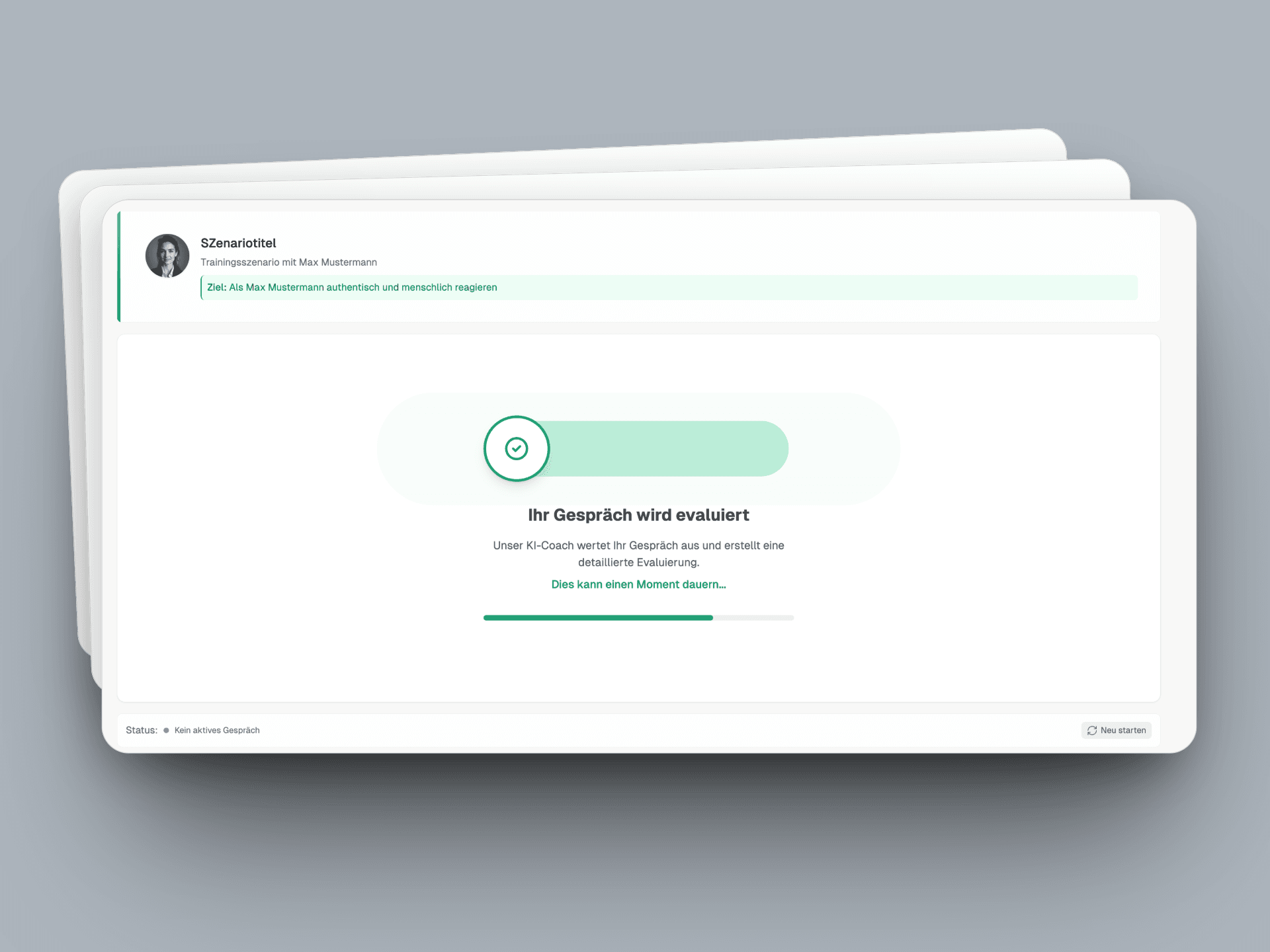
Feedback on Conflict Conversation

Receive Feedback

Receive detailed, constructive feedback on your Conflict Conversation and concrete improvement suggestions for practice.

Practice Scenario
Jess Parker

Jess Parker

ENFP

Your most creative team member is ready to walk out the door. Can you save the relationship before she signs with the competitor?

Try this scenario
Checklists for Conflict Conversations

Our checklists for successful Conflict Conversations

With a clear checklist, you prepare optimally for your Conflict Conversation and avoid typical mistakes in a Leadership context.

Typical Use Cases

Standard Conflict Conversation
This checklist provides a universal guide for leaders to conduct conflict conversations in a structured and results-oriented manner. It is applicable when a conflict situation arises between employees or between a leader and an employee, requiring clarification regardless of the specific cause.
View immediate checklist
Conflict Between Employees
This checklist helps leaders to mediate conflicts between two or more employees. The challenge is to remain neutral, consider all perspectives, and facilitate a mutual solution without taking sides or dictating the answer.
View immediate checklist
Dealing with Defensive Employees
This checklist assists managers in conducting conversations with employees who respond defensively, dismissively, or even aggressively to feedback or conflict discussions. The goal is to break through the defensive posture and enable constructive communication.
View immediate checklist
Conflict Regarding Misconduct
This checklist is designed for leaders to conduct conversations when an employee has clearly exhibited misconduct that violates company policies, team rules, or legal regulations. The focus is on clearly identifying the misconduct, the consequences, and the expectations for future behavior.
View immediate checklist
Repeated Conflict Conversation
This checklist is designed for managers who need to conduct a conflict conversation again because previously made agreements were not adhered to or problematic behavior has recurred. The focus is on confronting the repetition, analyzing the causes, and initiating more consistent measures.
View immediate checklist

Discover all checklist examples and create your individual checklist with our generator on the detail page.

View all checklists for Conflict Conversations
AI Character Library

Train Conflict Conversations with AI characters

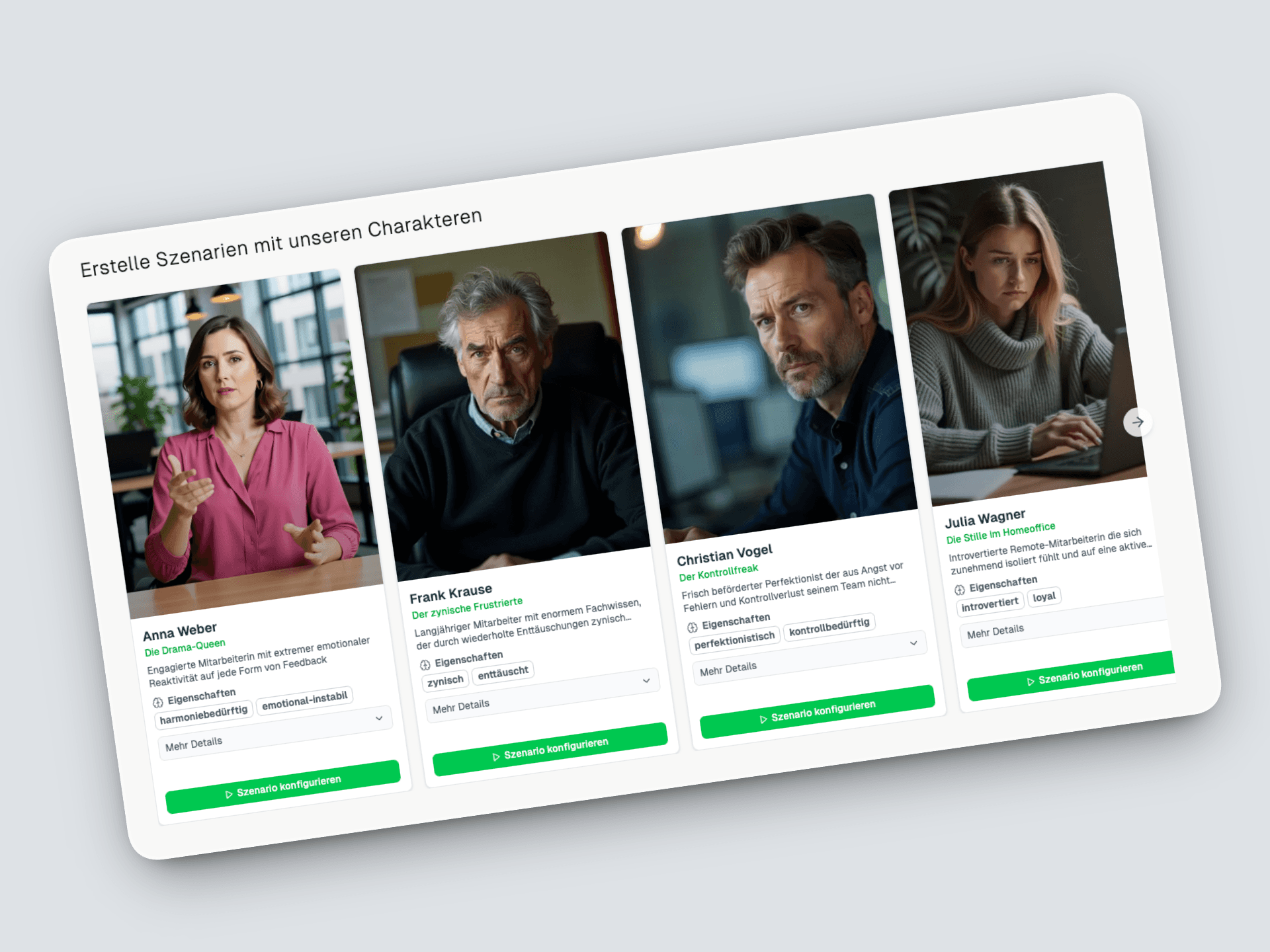
Every employee is different – and reacts differently to feedback. Our characters are built on scientifically validated personality models and simulate realistic conversation dynamics: from the insecure junior employee to the critical senior developer.

Every character reacts differently

Dr. Anna Berger

Dr. Anna Berger

The ambitious part-time returner

Healthcare

Excellent senior doctor returning with a part-time request. Fears part-time will be seen as a career brake.

emphasizes capabilityimmediately sets perception boundariesseeks creative solutions when understood
Introverted
Extroverted
Detail-oriented
Conceptual
Analytical
Emotional
Structured
Flexible
Sophia Berger

Sophia Berger

The ambitious top advisor

Insurance

Excellent closing numbers, but fears coaching juniors will hurt her own figures.

emphasizes own performanceworries about commission lossneeds career perspective
Introverted
Extroverted
Detail-oriented
Conceptual
Analytical
Emotional
Structured
Flexible
Marcus Berger

Marcus Berger

The fallen top performer

Private Banking

Was formerly a top performer, now 40% below target. Blames market conditions, but missed the digital shift.

references external factorsdefends old methodsopens up with support not blame
Introverted
Extroverted
Detail-oriented
Conceptual
Analytical
Emotional
Structured
Flexible
Frank Zimmermann

Frank Zimmermann

The tough negotiator

Procurement

Seasoned buyer who treats negotiations as sport. The decision is made – he just wants a lower price.

mentions competitor offers immediatelydemands discountstests pain threshold
Introverted
Extroverted
Detail-oriented
Conceptual
Analytical
Emotional
Structured
Flexible
16+
Different Personality Types
50+
Realistic scenarios
24/7
Available for training anytime
Questions & Answers

Frequently Asked Questions

When is the right time for a conflict conversation?

Conflict conversations should take place as soon as a conflict begins to affect collaboration, but before it fully escalates. Ideal occasions include ongoing tensions between team members that impact productivity, open or hidden conflicts that strain the work environment, situations where you, as a leader, need to intervene because the parties involved cannot resolve the conflict on their own, or when colleagues actively avoid each other. Important: Do not wait until the conflict escalates and entrenched positions develop – the earlier you mediate, the greater the chance of success. However, avoid barging into the acute conflict situation. Invite the parties involved to a separate, scheduled conversation in a neutral setting.

How can I optimally prepare for a conflict conversation?

Effective preparation begins with individual discussions with both parties involved in the conflict to understand their perspectives without immediately passing judgment. Gather information about the conflict without taking sides. Choose a neutral space and allocate sufficient time without the pressure of a deadline. The proven five-phase structure can assist you: Start with a neutral, respectful introduction and clear conversation rules, clarify the facts through active listening from both sides, collaboratively analyze the causes and encourage perspective shifts, develop solutions together instead of dictating them, and agree on concrete steps with follow-up. Importantly, your role is that of a mediator, not a judge – remain neutral and help both sides find their own resolution.

How do I remain neutral in a conflict conversation when I know one of the parties better?

Neutrality is one of the greatest challenges, especially when you have a history with those involved. Honestly reflect on your own assumptions before the conversation and acknowledge them to yourself. During the discussion, ensure that both sides receive equal speaking time and that you ask questions of both parties equally. Avoid subtle signals such as nodding more at one side or interrupting gestures towards the other. If you notice that you are internally taking a position, pause briefly and take a breath. Summarize the perspectives of both sides to demonstrate that you have heard them both. If you find that you cannot remain neutral, consider bringing in a third person as a mediator – this is not a weakness but a professional approach.

What should I do if the conflict conversation escalates and becomes emotional?

When voices get louder or personal attacks begin, intervene immediately. Calmly but firmly say, "Stop, let's take a short break," or "I can see that emotions are running high. Let's take a moment to breathe." Remind everyone of the agreed-upon conversation rules: "We agreed that everyone can speak without being interrupted." Give both sides structured speaking time without interruptions. Label the emotion neutrally: "I can see that this is very upsetting for you," instead of saying, "Don't get upset." Shift the focus from accusations to needs: "What exactly do you need for the collaboration to work?" If the escalation cannot be stopped, end the conversation and schedule a new appointment—sometimes the participants need time to calm down.

Why should we systematically train conflict conversations in the company?

Conflict conversations are crucial for team dynamics and productivity; however, many leaders either avoid them or unintentionally escalate the situations. Common mistakes include starting with accusations instead of objective observations, which causes employees to become defensive immediately, unconscious bias that undermines credibility as a mediator, dictating solutions instead of collaboratively developing them, which leads to a lack of ownership, and emotional contagion, where the leader themselves gets caught in the conflict spiral. The consequences are measurable: unresolved conflicts cost an average of 15 percent of the working time of all involved, escalated conflicts lead to resignations with high recruitment costs, and a poor conflict culture poisons the entire work environment. Systematic training empowers leaders to facilitate neutrally, de-escalate situations, and develop sustainable solutions. The return on investment through improved team dynamics and reduced turnover is significant.

How do we implement conflict conversation training for larger leadership teams?

Careertrainer.ai enables personalized training without coordination efforts for various leadership levels. After setting up the admin dashboard, you invite leaders via a link, and the training starts immediately. Each leader selects relevant scenarios – from team conflicts to performance issues and personality clashes. The different AI characters simulate various conflict reactions, ranging from aggressive and defensive to closed-off and emotionally distressed. Each leader trains independently in short sessions between meetings, available 24/7. The HR dashboard displays who is training on which scenarios and where challenges arise, such as maintaining neutrality, handling escalations, or developing collaborative solutions instead of dictated measures.

How do we measure the success of conflict management training within the company?

The HR dashboard provides detailed metrics on training effectiveness. The completion rate indicates the training activity of leaders. The average score assesses mediation skills based on specific criteria such as starting neutrally without accusations, actively listening to both parties in conflict, maintaining neutrality without taking sides, successfully de-escalating emotional moments, and developing collaborative rather than dictated solutions. The skill gap analysis identifies challenges at the team level, for example, when many leaders struggle to remain emotionally neutral or when they present their own solutions too quickly. Usage trends document continuous versus one-time training. Unlike external seminars that only provide participation certificates, you receive data-driven insights for targeted adjustments.

How can I train conflict conversations with AI role-playing?

Careertrainer.ai offers realistic conflict conversation scenarios featuring multiple AI characters in conflict, based on the Myers-Briggs model. You engage in live audio conversations and practice the role of a mediator while the AI characters react emotionally, interrupt each other, or display power dynamics. The AI adjusts its responses to your moderation style – with neutral, structured moderation, the characters open up and work towards solutions, whereas bias or accusations lead to further escalation of the conflict. After each conversation, you receive detailed feedback: Were you neutral? Did you listen to both sides equally? Were you able to de-escalate? Were common solutions developed? You train without social risk with unlimited repetitions. The platform is available 24/7 for sessions lasting between 15 and 30 minutes. Try two scenarios for free without a credit card.