
Train and persuade with value propositions.
Customers do not buy benefits they do not understand. Train the conversations where you translate features into real customer benefits.
The best solution can lose to a competitor that communicates its benefits more effectively. In B2B sales, deals fail not because of the product, but because salespeople think in terms of features rather than customer benefits. Careertrainer.ai simulates realistic sales conversations where your team practices benefit-driven arguments under real conditions—with AI customers who ask questions, raise objections, and only make a purchase when the benefits are clear to them. After each conversation, there is specific feedback: what was convincing, where the argumentation became too technical, and how to improve.
Try for free

Thomas Weber
Head of IT
Practice scenario
Practice a realistic conversation with our AI employee. Improve your conversation skills in a safe environment.
Why the Value Proposition Often Fails in Everyday Sales
Everyone knows the theory: sell benefits instead of features. In practice, this is challenging—especially under pressure, with technically complex products, and in front of demanding customers. These five patterns can cost you sales.
Feature dumping instead of benefit argumentation
Salespeople know their product inside and out – and that becomes a problem. Instead of highlighting the specific benefits for the customer, they list features. The customer hears technical details but doesn't understand what it means for their everyday life.
Generic value propositions instead of tailored arguments.
Standard phrases like "You save time and money" sound like marketing brochures and fail to convince anyone. Customers want to know exactly how they save time, how much, and what that means for their specific work routine. Without a connection to their individual situation, the argument remains hollow.
Benefits claimed rather than proven
A value proposition without evidence is merely a claim. B2B customers want numbers, references, or at least a logical rationale. Many salespeople accurately state the benefits but fail to provide proof, resulting in a loss of credibility.
Benefit arguments collapse in the face of objections.
As long as the customer is listening, the argument holds. Once an objection arises – 'That's too expensive,' 'We've already done that,' 'We don't need that' – many salespeople lose their focus and revert to a defensive mode instead of reframing the benefits.
No feedback on whether the argument resonates with the customer.
In real sales practice, systematic feedback on conversation quality is lacking. Whether the value proposition was convincing only becomes apparent in the results—either a deal or a rejection. By then, it’s too late to make improvements.
Your team trains value proposition skills with Careertrainer.ai.
Careertrainer.ai simulates realistic sales conversations where salespeople learn to translate features into customer benefits and communicate these benefits convincingly, individually, and reliably. Immediate feedback is provided after each conversation.
AI customers who only make purchases when the benefits are clear.
The AI characters behave like real B2B decision-makers: they listen, ask questions, weigh options, and respond to feature lists with skepticism. Each character has their own priorities: one wants to reduce costs, another aims to minimize risks, and a third wants to impress the board. Tailoring the benefits to these priorities leads to success. Generic arguments will fall short.
Over 50 AI characters with unique priorities and decision-making styles.
Realistic responses to strong and weak benefit arguments.
Voice conversations – 10 to 25 minutes, just like a real client meeting.
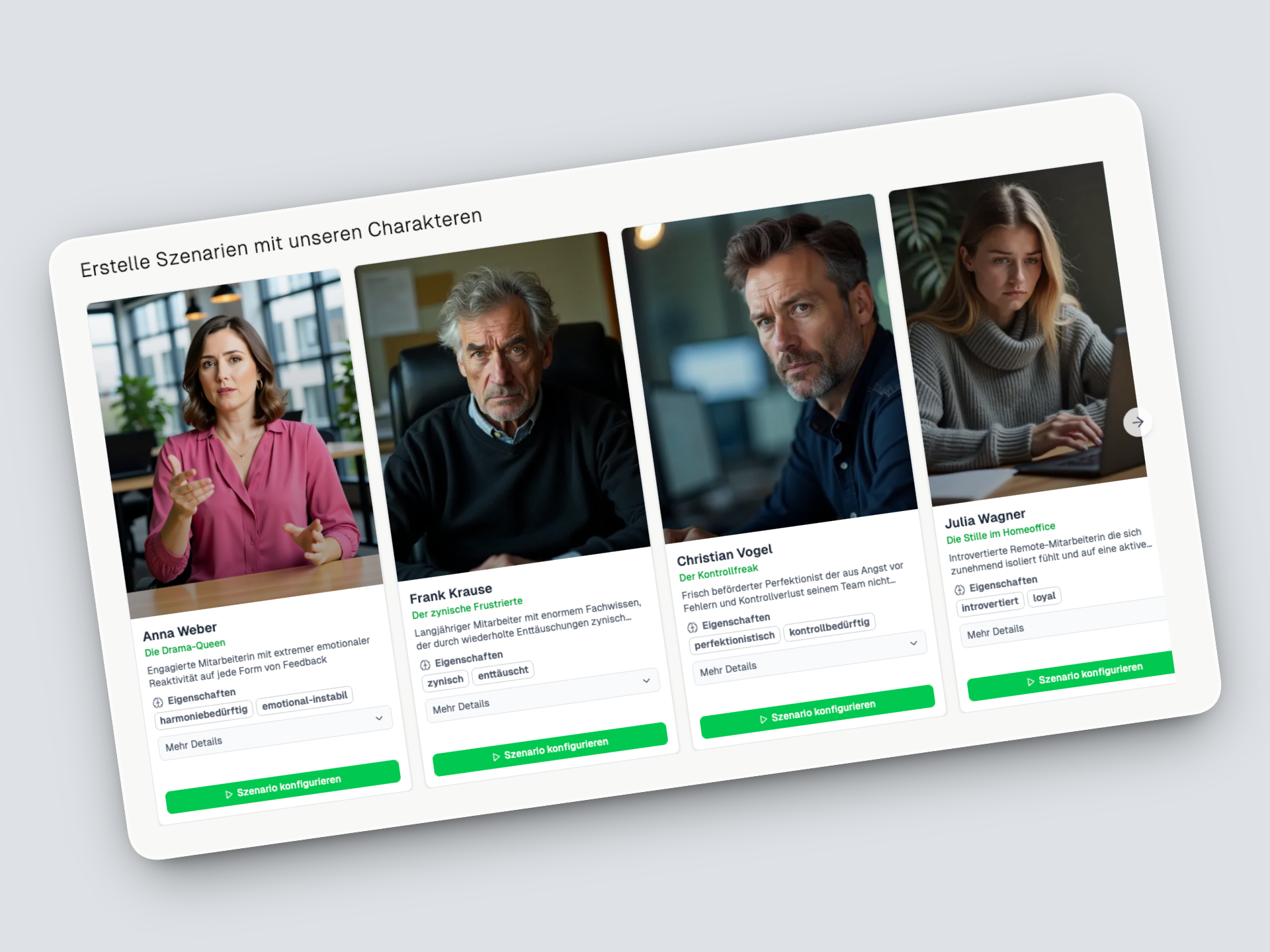
Concrete feedback after every conversation.
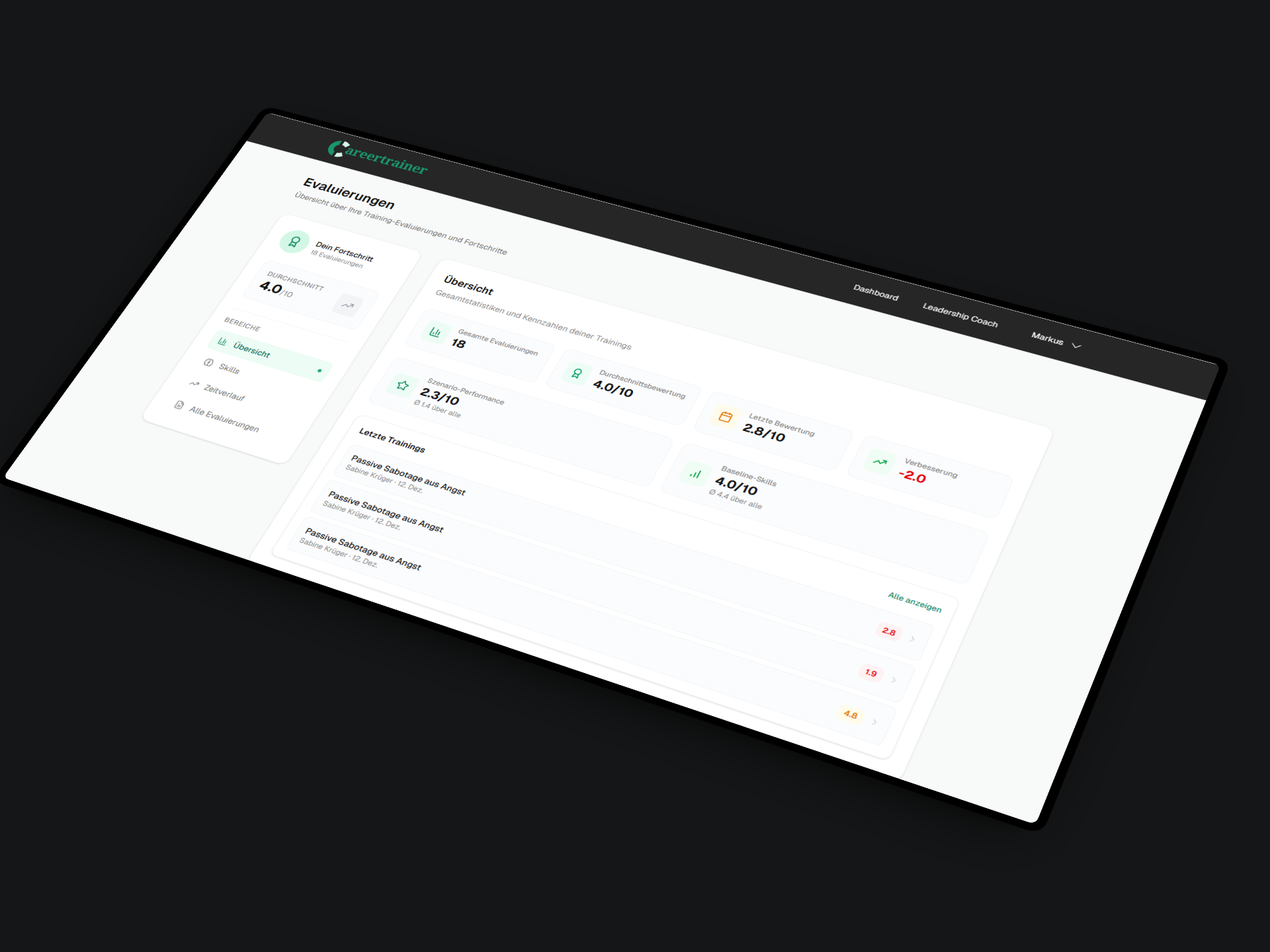
After each practice conversation, the AI analyzes the conversation quality based on defined sales competencies: Was the benefit clearly and individually articulated? Were features translated into customer advantages? Was the benefit supported with evidence? The feedback focuses on specific points in the conversation, highlighting moments where the argument was convincing or remained too abstract.
Evaluation of benefit arguments, needs analysis, and objection handling
Concrete discussion points as a basis for feedback.
Professional tips with alternative phrasing and improved value propositions.
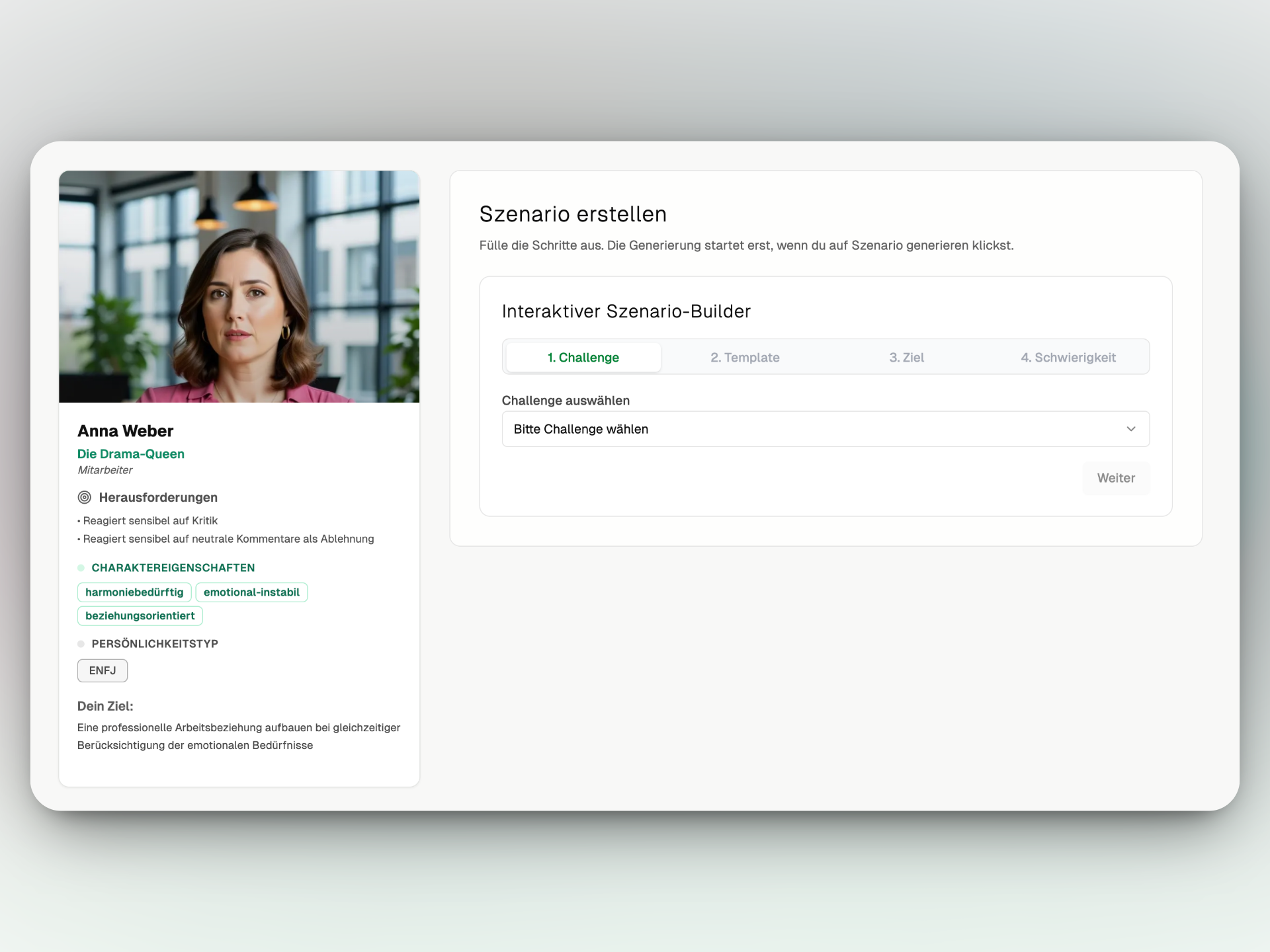
Custom sales scenarios with your products and objections.
The pre-defined scenarios cover typical sales situations. However, genuine value propositions require real products. With the Scenario Generator, you can describe your solution, target customers, and common objections – and the AI will create a training scenario in which salespeople can communicate the benefits of your specific product.
Scenario Generator creates training from free-text situation descriptions.
Customizable to your products, target customers, and typical objections.
Scenarios created in minutes, ready to play immediately.
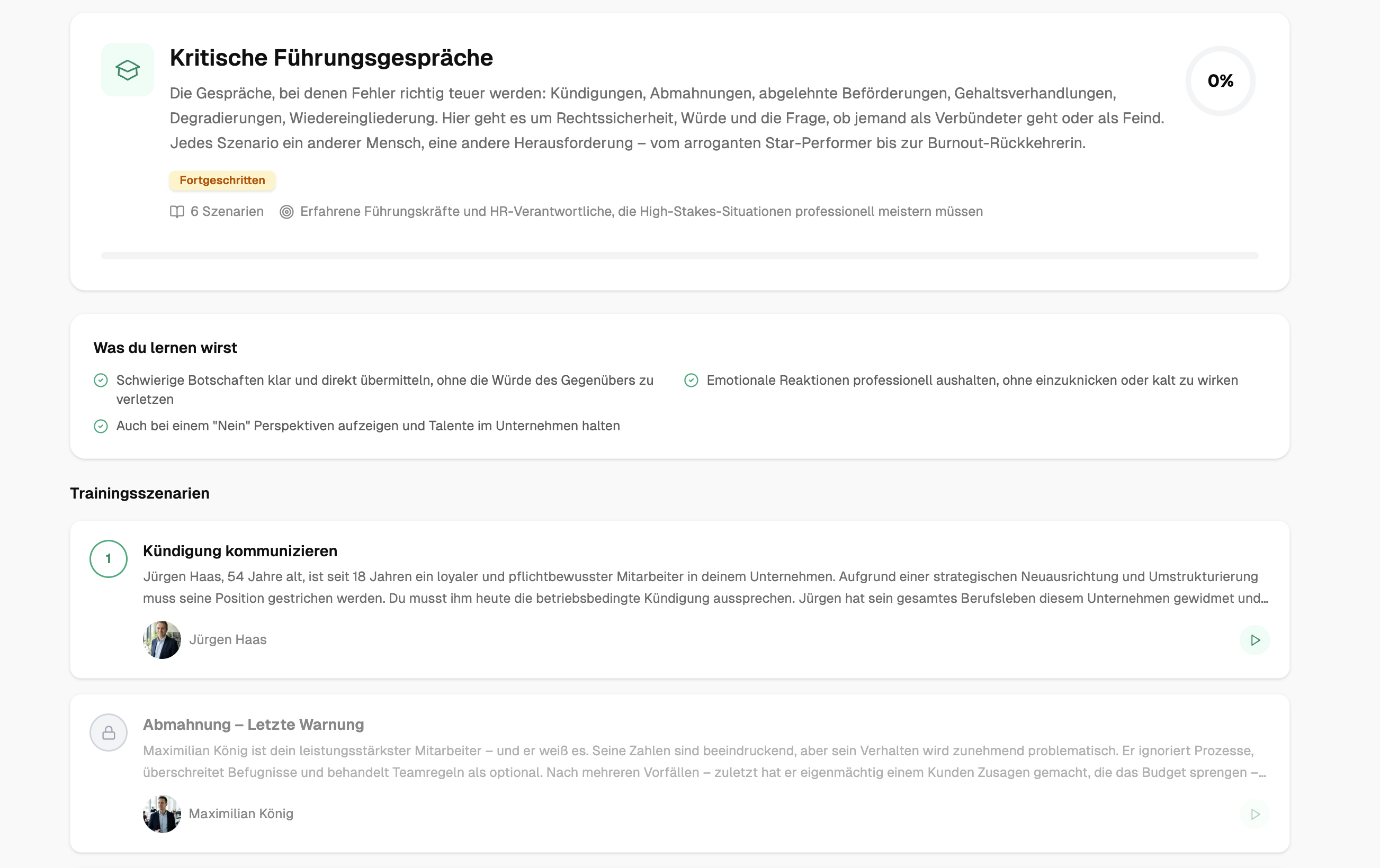
Structured learning paths for systematic skill development.
Instead of isolated individual exercises, sales professionals go through curated training series: from needs analysis as a foundation to individual benefit formulation and benefit argumentation under objection pressure. Each learning path systematically builds competencies and makes progress visible.
Progressively challenging scenarios.
Mandatory and optional deepening scenarios per path
Progress bars and completion tracking for every employee.
Measure competence development and adjust strategically.
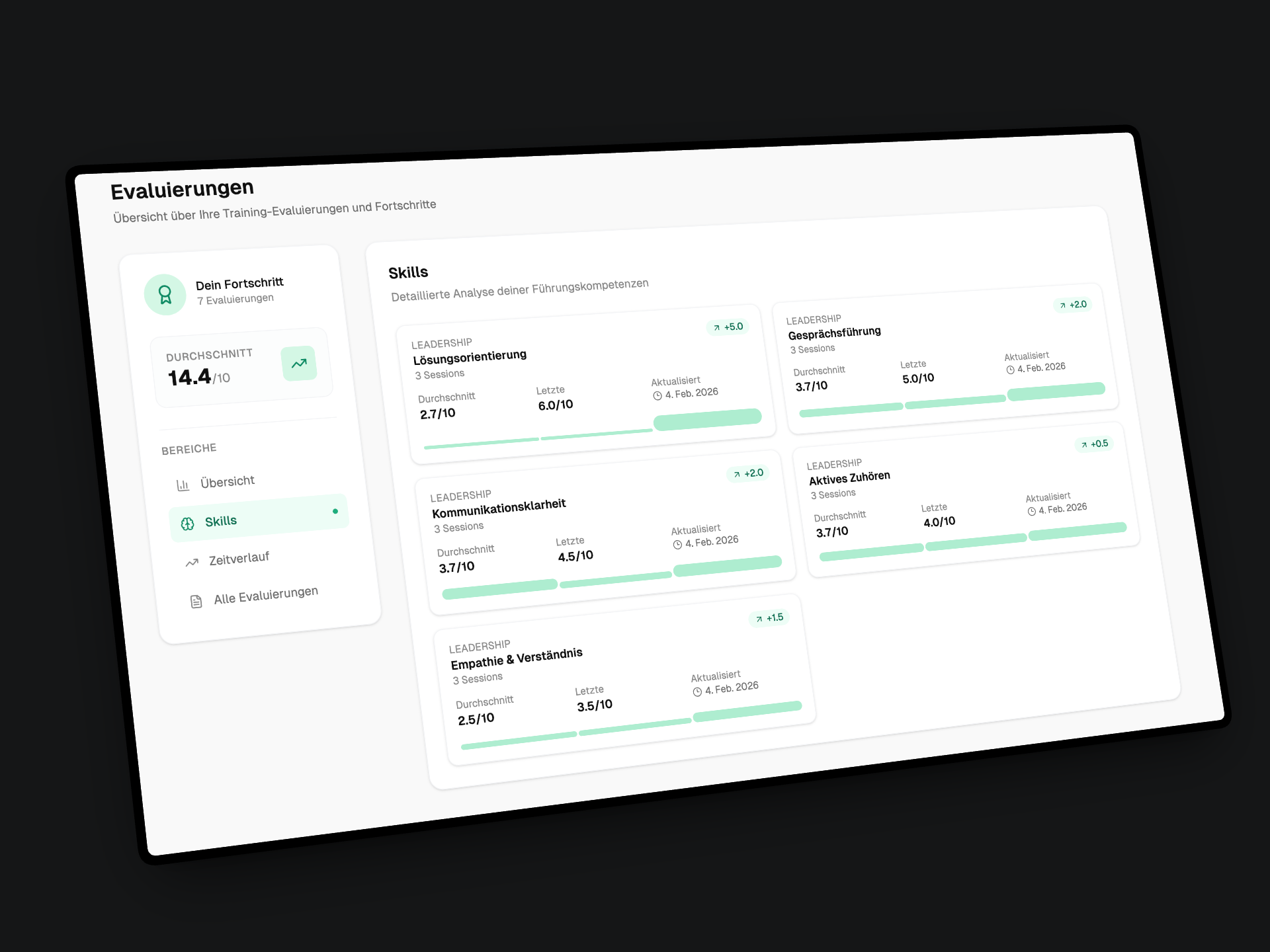
The skill gap analysis reveals for each salesperson and team where the value proposition is strong and where it falters. Who argues convincingly but does not listen actively? Who analyzes needs well but fails to translate them into benefits? This data helps sales leaders deploy training where it will have the greatest impact.
Strengths/Weaknesses Profile per Sales Representative and Team
Development trends over 7 and 30 days
Export for HR documentation and training certificates
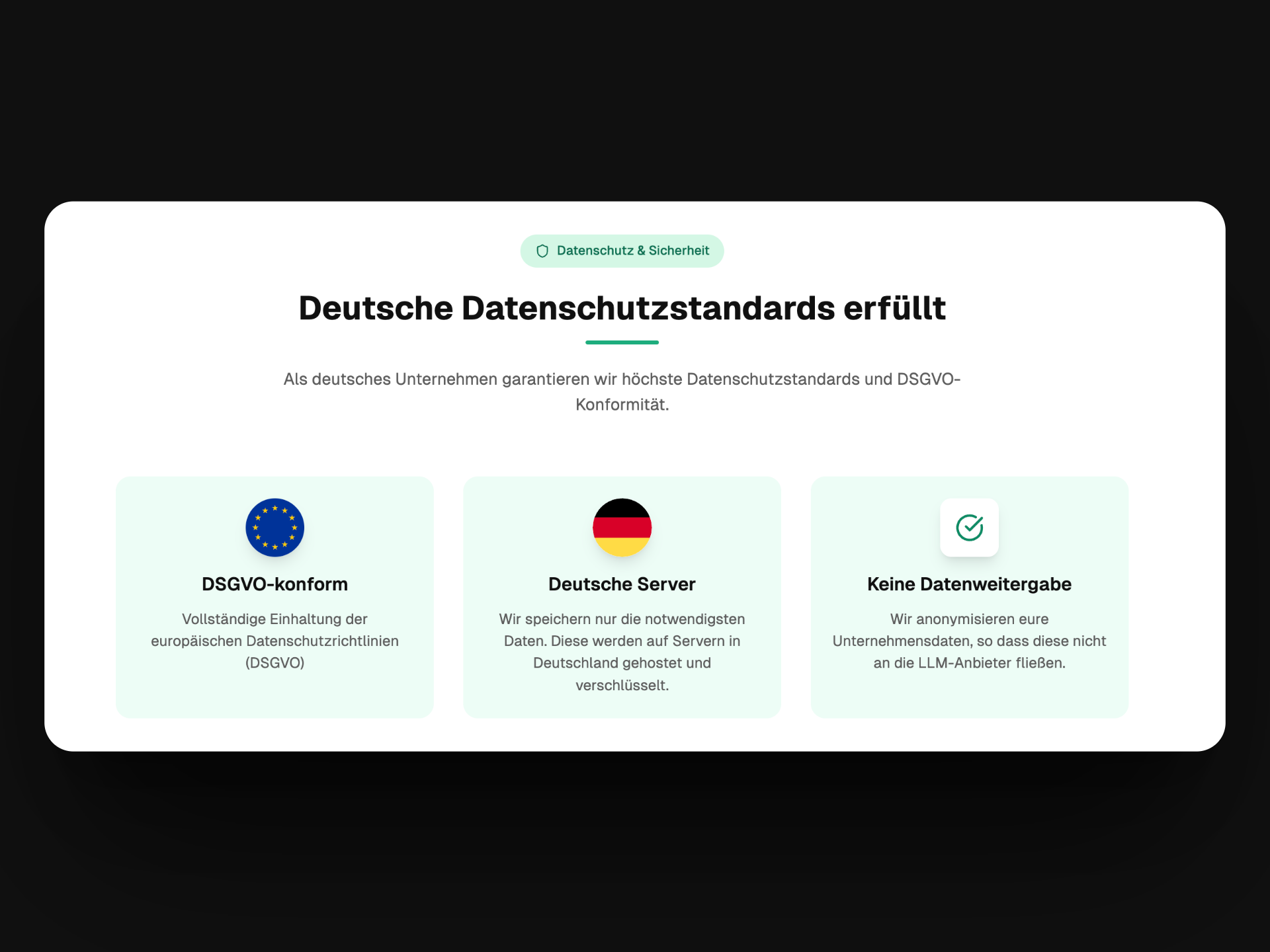
GDPR-compliant and hosted in Germany
All conversation data is encrypted and processed on German servers. Sales representatives train in a secure environment—practice calls are not used for performance evaluations. This allows everyone to refine their arguments without fear of judgment.
GDPR-compliant, EU hosting, Made in Germany
Training data is only accessible to the employee themselves.
No sharing of sensitive conversation content with third parties.
Train sales conversations with realistic buyers
Every buyer is different. Practice ROI discussions with CFOs, technical depth with IT Directors, the first impression with gatekeepers – and the final push with C-suite decision-makers.
Lade Charaktere...
Every buyer role
CFO, COO, IT Director, Director of Finance, Executive Assistant – train every role that matters in the deal.→ No surprises in the buying center
Every sales phase
From cold call and discovery to demo, negotiation, and closing – the right character for every stage.→ Prepared for every step
Measurably better
Clear conversation goals, real-time reactions, and a full debrief after every session. See your progress in numbers.→ No more guessing what works
When do companies use Careertrainer.ai?
Five scenarios for sales teams, sales leaders, and revenue operations
Sales Onboarding – new salespeople productive from day 1
Structured learning paths instead of shadowing and seminar waiting lists. Your team becomes productive faster. The first 90 days determine whether new salespeople contribute to quota or cost revenue. Careertrainer.ai guides them through all relevant sales scenarios – with realistic AI customers and immediate feedback.
- Start immediately: learning paths available from day 1
- Realistic AI customers with genuine objections
- Objective feedback after every training conversation
- HR dashboard: onboarding progress in real time


Our plans at a glance
From free to unlimited – find the plan that fits your training needs.
Free
Perfect for trying out and getting to know the platform.
- 3 training conversations total
- Access to free scenarios
- Basic feedback after conversations
Basic
Ideal for occasional preparation for important conversations.
- 15 conversations per month
- Access to all standard scenarios
- Detailed performance evaluation
- Progress tracking
- Email support
Pro
For regular training and continuous improvement.
- 40 conversations per month
- Access to all scenarios
- Detailed performance evaluation
- Progress tracking over time
- Personalized learning recommendations
- Priority support
Unlimited
For power users and small teams with intensive training needs.
- Unlimited conversations
- Access to all scenarios
- Detailed performance evaluation
- Progress tracking over time
- Personalized learning recommendations
- Create your own scenarios
- Priority support
Team
Everything from Pro, plus:
- Central user management
- HR analytics dashboard
- Learning path assignments for employees
- Skill gap analysis at team level
- Progress tracking across all users
- Export (CSV/PDF) for reporting
- Email and chat support
Enterprise
Everything from Team, plus:
- Custom scenarios with company context
- AI customization to company guidelines
- Single Sign-On (SSO)
- Dedicated account manager
- White-label option
- API access
- Individual contract terms
Pricing depends on team size and contract duration. In the demo, we'll discuss your needs and create a custom offer.
For HR software providers, learning platforms, staffing agencies and companies that want to integrate Careertrainer.ai into their own infrastructure. No flat fee – you only pay for what your users actually train.
View all pricing & partner optionsStill have questions? We're happy to advise you.
Contact UsMore Careertrainer.ai Solutions
Discover more professional solutions for your leadership development.
