
Recognize and specifically address purchasing motives.
Those who understand the true buying motives of their customers sell effectively. Train the conversations that make a difference.
In B2B sales, decisions are influenced not only by facts and prices but also by individuals with unique motives, fears, and desires. Security, prestige, cost savings, comfort: each purchasing criterion is driven by a deeper need. Those who recognize these motives during sales conversations can tailor their offers precisely and actively influence the buying decision. Careertrainer.ai simulates these conversational scenarios through realistic AI role-plays, enabling your team to learn targeted questioning techniques that delve from superficial criteria to the true purchasing motivation.
Try for free

Thomas Weber
Head of IT
Practice scenario
Practice a realistic conversation with our AI employee. Improve your conversation skills in a safe environment.
Why sales teams miss the true buying motives
Most sales conversations fail not because of the product, but because salespeople do not recognize the true motivations of their counterparts. These five patterns cost deals.
Features instead of Motives: The Classic Product Monologue
Many salespeople present features and technical specifications without understanding what truly drives the customer. The result: the customer listens, nods – and ultimately chooses the competitor who addressed their actual needs.
Rational arguments meet emotional decision-makers.
Even in B2B, people ultimately make purchases based on intuition and only later justify their decisions rationally. Those who argue solely with ROI figures and efficiency gains overlook the emotional need for security or the desire for recognition in the decision-maker.
Superficial needs analysis does not reveal underlying motives.
The standard question "What is important to you?" yields standard answers: price, quality, service. The true purchasing motives—security, prestige, comfort, fear of making the wrong decision—lie one level deeper. Without targeted questioning techniques, needs analysis remains superficial.
Buying Centers with different motivations are not addressed.
In B2B, decisions are rarely made by a single person. The buyer wants to save costs, the department seeks quality, and management desires innovation. Addressing everyone with the same argument will fail to convince anyone effectively.
Recognized motives are not translated into benefit arguments.
Even when a salesperson identifies the buying motive, the next step is often missing: positioning their solution to specifically address that motive. The result is generic value propositions instead of tailored arguments.
Train your team to recognize buying motives with Careertrainer.ai.
Careertrainer.ai simulates realistic sales conversations where sales professionals learn to systematically uncover emotional and rational buying motives. The AI customers behave like real decision-makers, each with their own motives, objections, and decision-making styles.
AI customers with realistic purchasing motives and personality profiles
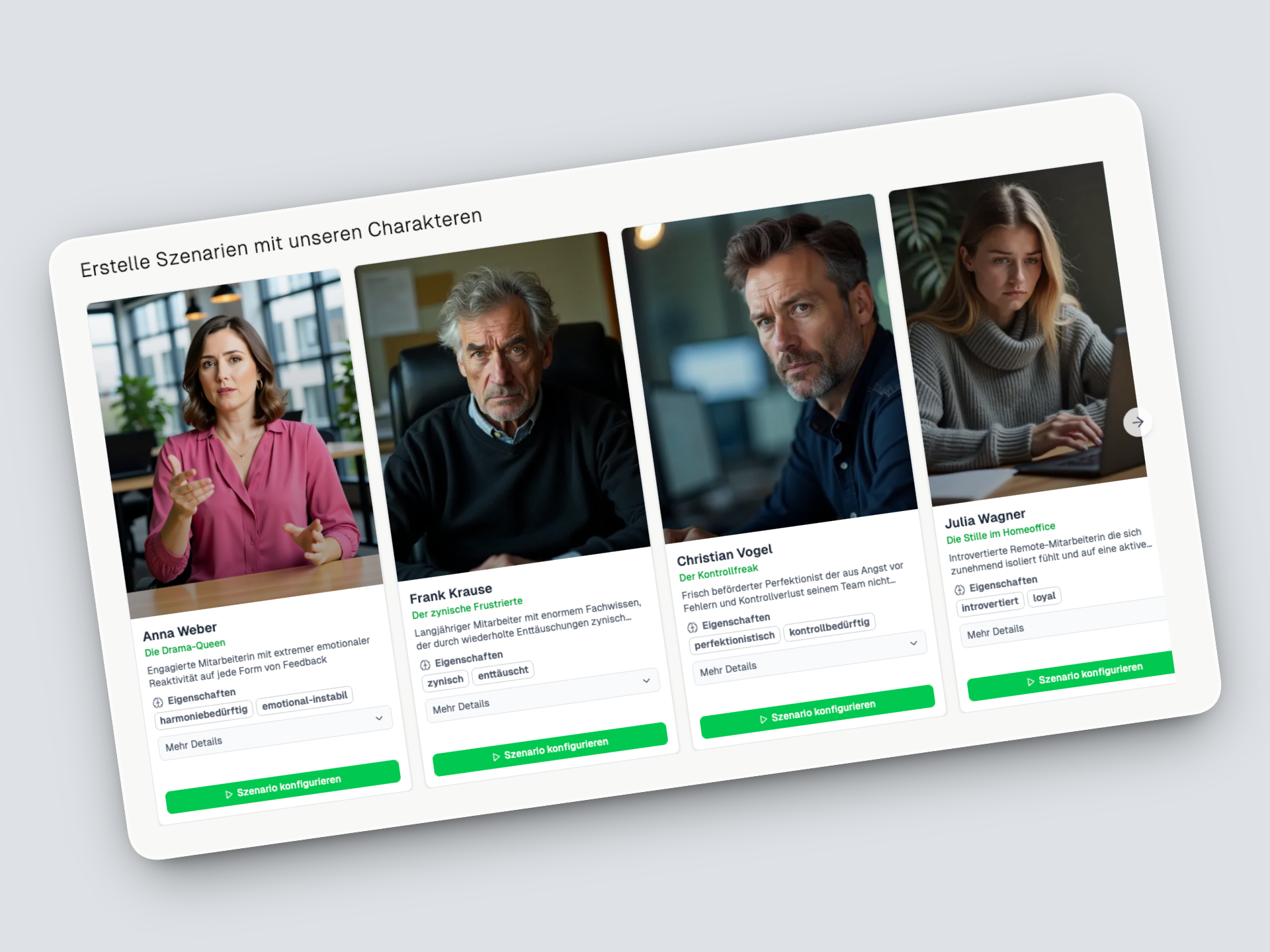
Every AI character has its own purchasing motives: the price-sensitive buyer, the security-oriented IT manager, the prestige-driven CEO. These motives are not obvious—salespeople must uncover them through targeted questions. Those who only present features will receive polite disinterest. Those who ask the right questions will open doors.
Over 50 AI characters with unique purchasing motives and decision-making styles.
Emotionally and rationally intertwined motives.
Voice conversations – just like in a real customer meeting.
Immediate feedback: Have you identified the purchasing motivation?
After each practice conversation, the AI analyzes whether the salesperson has uncovered the true buying motives of the customer. Was a genuine needs analysis conducted? Were the right questions asked? Were the identified motives translated into appropriate benefit arguments? Specific points in the conversation are used as a basis for feedback, along with alternative phrasing for challenging moments.
Evaluation of needs analysis, benefit argumentation, and relationship building.
Concrete discussion points as a basis for feedback.
Professional tips with formulations for motivation-based argumentation.
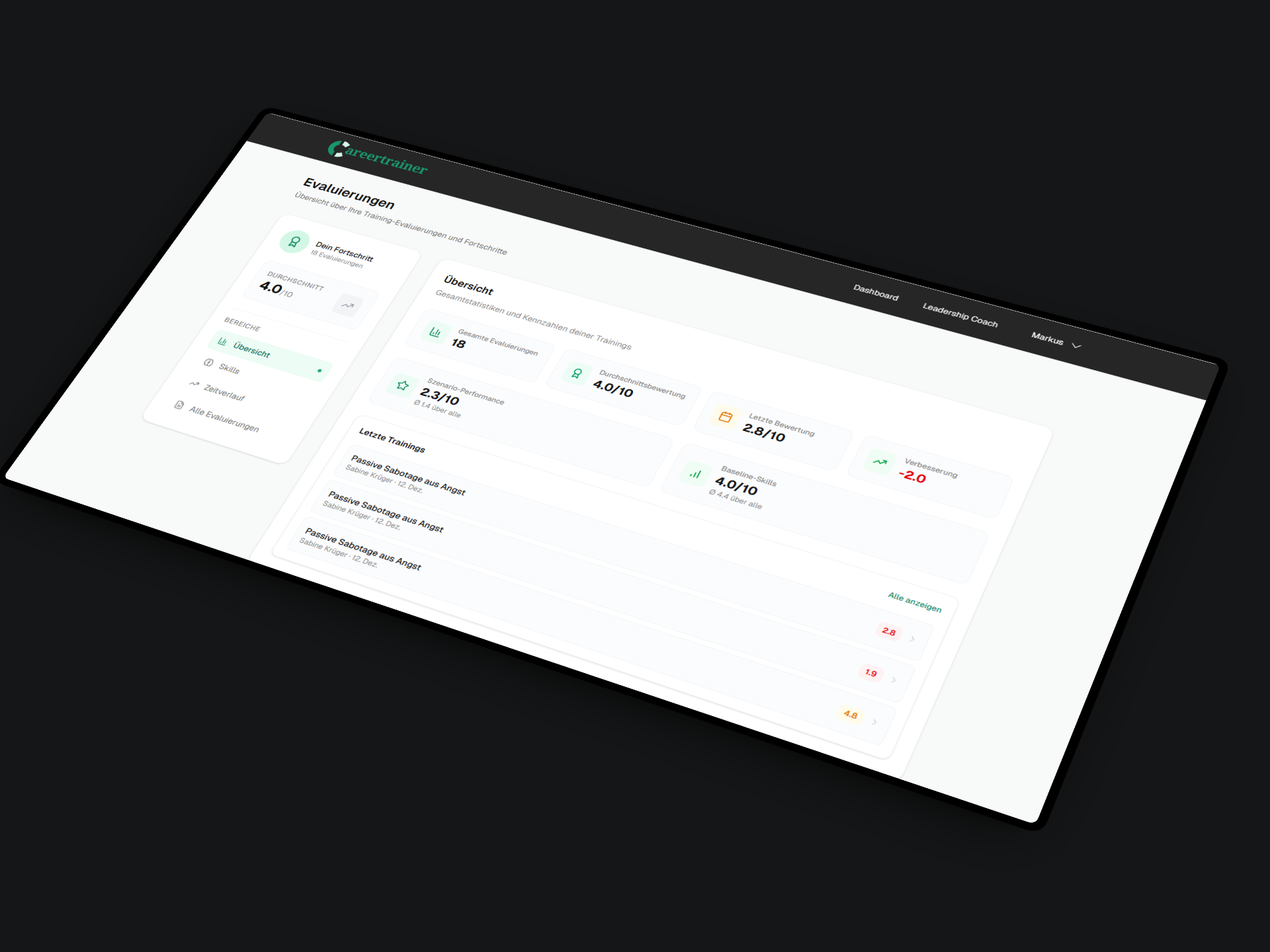
Create your own customer scenarios from your sales routine.
The pre-built scenarios cover the most common sales situations. However, each company has its own products, customer types, and objections. With the Scenario Generator, you can describe your specific situation—such as: Our enterprise team needs to address the different buying motives of stakeholders in a buying committee—and the AI will create a playable training scenario from that.
Scenario Generator creates training programs from free-text situation descriptions.
Customizable to your products, customer types, and common objections.
Scenarios created in minutes, ready to play instantly.
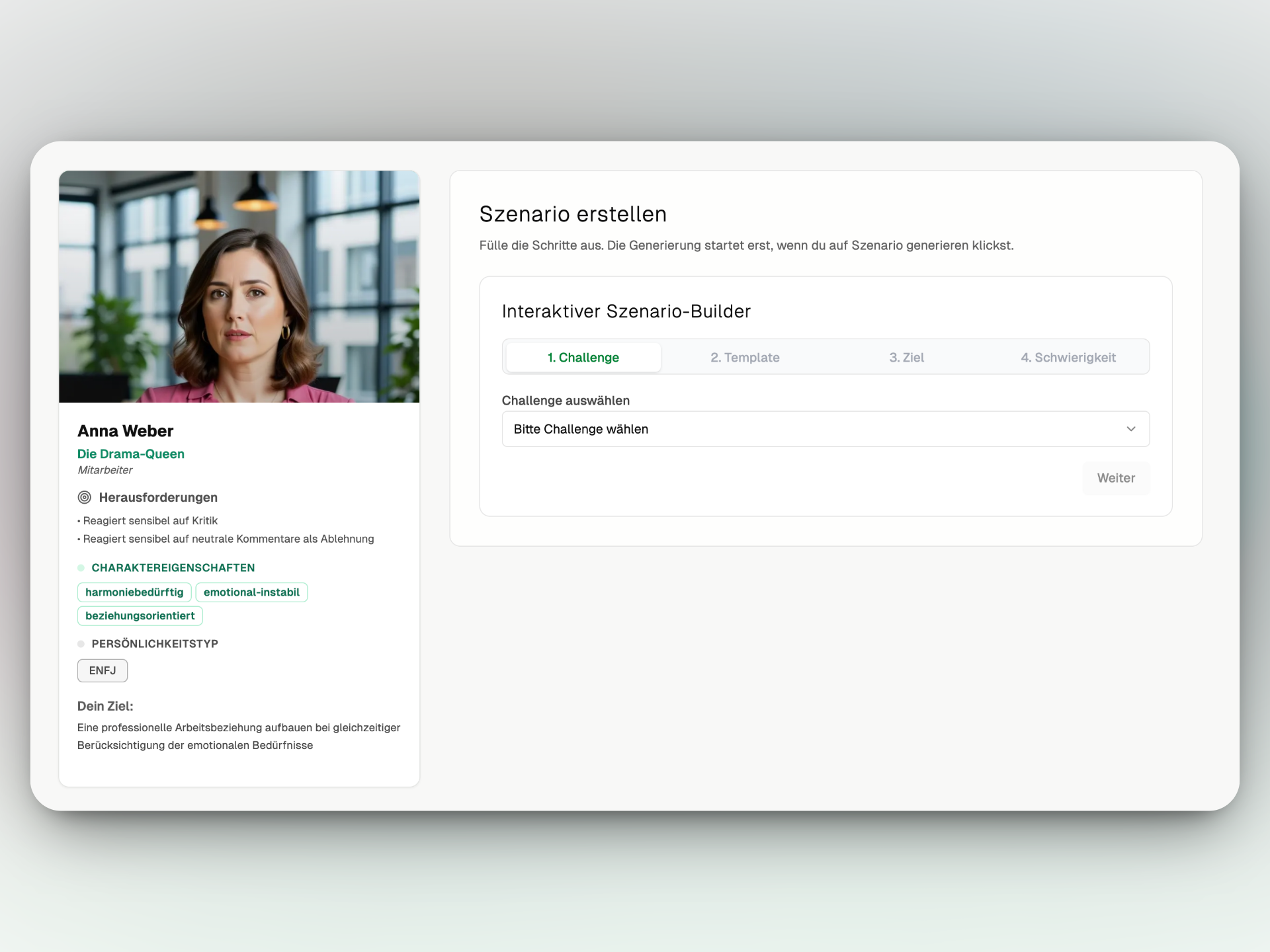
Structured learning paths from the initial consultation to completion.
Instead of isolated individual exercises, sales representatives go through curated training series: from needs analysis to motivation recognition, benefit argumentation, and closing. Each learning path systematically builds competencies and makes progress visible—for the individual sales representative and for the entire team.
Progressively challenging scenarios.
Mandatory and optional deepening scenarios per path
Progress bars and completion tracking for every employee.
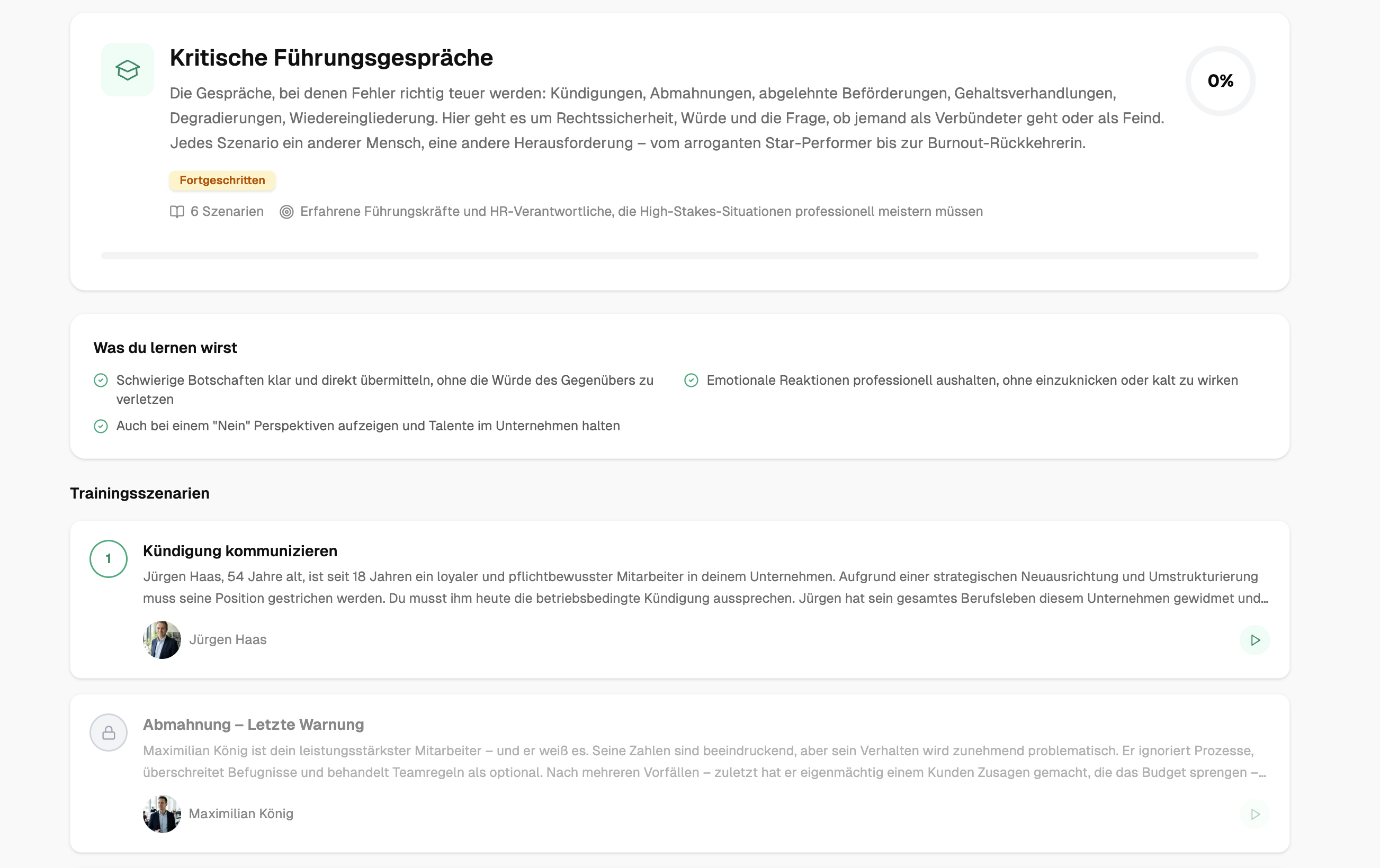
Measure competency development and identify training needs.
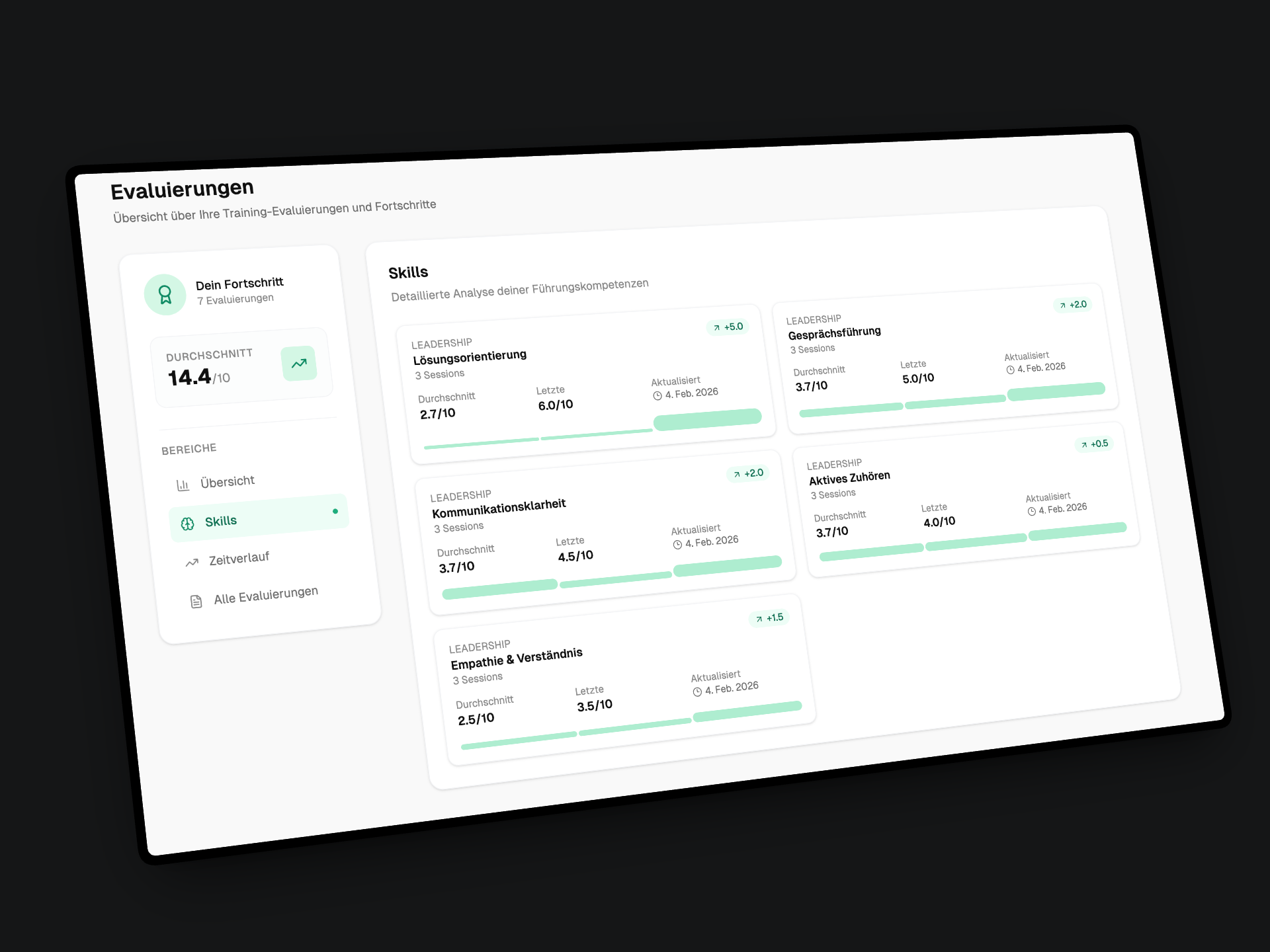
The skill gap analysis reveals the current standing of individual salespeople and teams in their core competencies. Who conducts strong needs assessments but closes weakly? Who argues persuasively yet fails to listen actively? This data assists sales leaders in strategically deploying training where it will have the greatest impact on win rates.
Strengths/Weaknesses Profile per Sales Representative and Team
Development trends over 7 and 30 days
Export for HR documentation and training certificates
GDPR-compliant and hosted in Germany
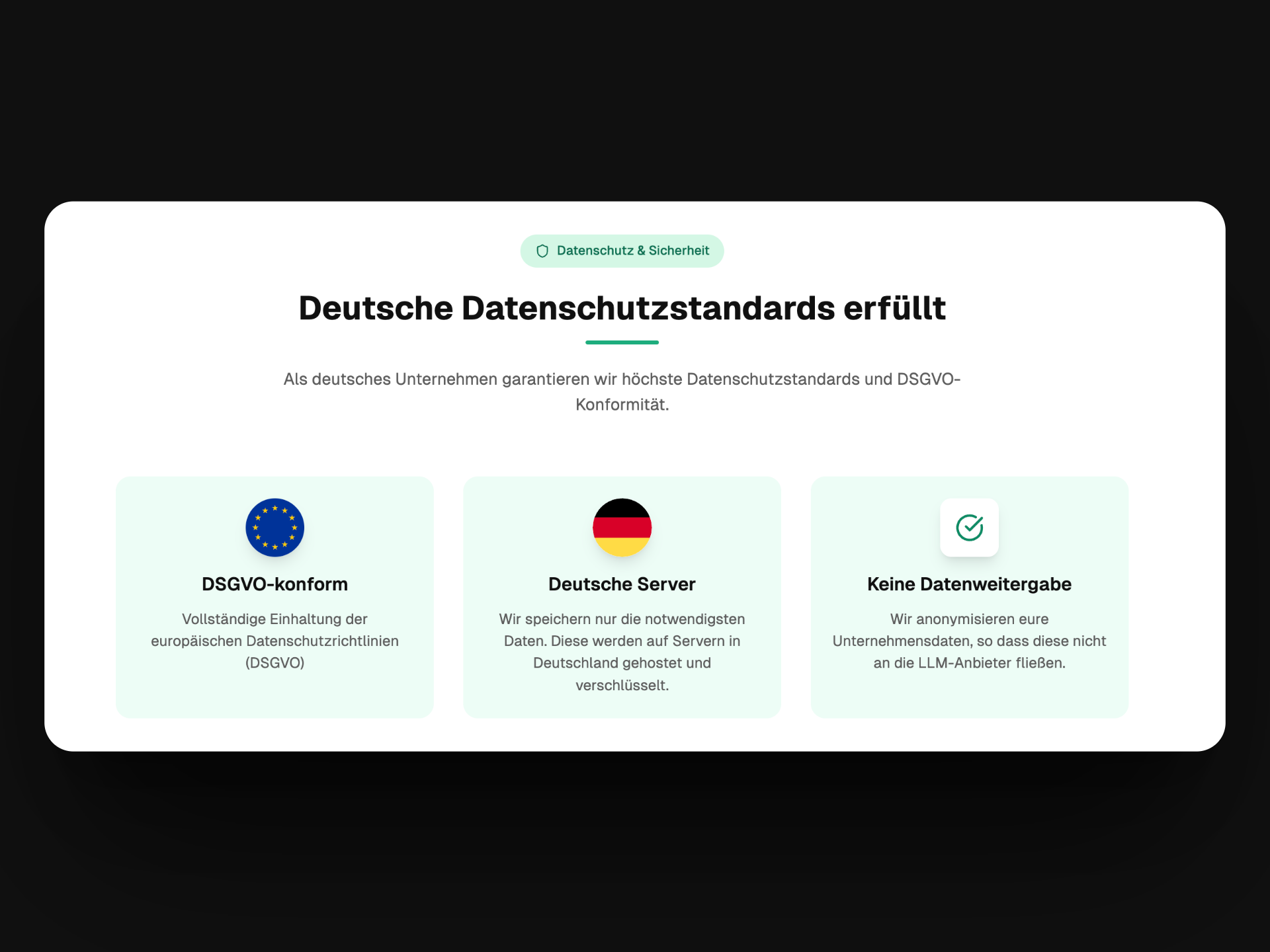
All conversation data is encrypted and processed on German servers. Sales representatives train in a secure environment—practice calls are not used for performance evaluations. This allows even less confident sellers to work on their weaknesses without fear of judgment.
GDPR-compliant, EU hosting, Made in Germany
Training data is accessible only to the employee themselves.
No sharing of sensitive conversation content with third parties.
Train sales conversations with realistic buyers
Every buyer is different. Practice ROI discussions with CFOs, technical depth with IT Directors, the first impression with gatekeepers – and the final push with C-suite decision-makers.
Lade Charaktere...
Every buyer role
CFO, COO, IT Director, Director of Finance, Executive Assistant – train every role that matters in the deal.→ No surprises in the buying center
Every sales phase
From cold call and discovery to demo, negotiation, and closing – the right character for every stage.→ Prepared for every step
Measurably better
Clear conversation goals, real-time reactions, and a full debrief after every session. See your progress in numbers.→ No more guessing what works
When do companies use Careertrainer.ai?
Five scenarios for sales teams, sales leaders, and revenue operations
Sales Onboarding – new salespeople productive from day 1
Structured learning paths instead of shadowing and seminar waiting lists. Your team becomes productive faster. The first 90 days determine whether new salespeople contribute to quota or cost revenue. Careertrainer.ai guides them through all relevant sales scenarios – with realistic AI customers and immediate feedback.
- Start immediately: learning paths available from day 1
- Realistic AI customers with genuine objections
- Objective feedback after every training conversation
- HR dashboard: onboarding progress in real time


Our plans at a glance
From free to unlimited – find the plan that fits your training needs.
Free
Perfect for trying out and getting to know the platform.
- 3 training conversations total
- Access to free scenarios
- Basic feedback after conversations
Basic
Ideal for occasional preparation for important conversations.
- 15 conversations per month
- Access to all standard scenarios
- Detailed performance evaluation
- Progress tracking
- Email support
Pro
For regular training and continuous improvement.
- 40 conversations per month
- Access to all scenarios
- Detailed performance evaluation
- Progress tracking over time
- Personalized learning recommendations
- Priority support
Unlimited
For power users and small teams with intensive training needs.
- Unlimited conversations
- Access to all scenarios
- Detailed performance evaluation
- Progress tracking over time
- Personalized learning recommendations
- Create your own scenarios
- Priority support
Team
Everything from Pro, plus:
- Central user management
- HR analytics dashboard
- Learning path assignments for employees
- Skill gap analysis at team level
- Progress tracking across all users
- Export (CSV/PDF) for reporting
- Email and chat support
Enterprise
Everything from Team, plus:
- Custom scenarios with company context
- AI customization to company guidelines
- Single Sign-On (SSO)
- Dedicated account manager
- White-label option
- API access
- Individual contract terms
Pricing depends on team size and contract duration. In the demo, we'll discuss your needs and create a custom offer.
For HR software providers, learning platforms, staffing agencies and companies that want to integrate Careertrainer.ai into their own infrastructure. No flat fee – you only pay for what your users actually train.
View all pricing & partner optionsStill have questions? We're happy to advise you.
Contact UsFrequently Asked Questions about Purchase Motivation Training
How does AI training help identify buying motives in sales conversations?
What purchasing motives do AI customers represent?
What questioning techniques can I train with the platform?
How does AI training differ from a traditional sales seminar on purchasing motives?
Can we tailor the scenarios to our products and customer types?
Which sales roles is the training suitable for?
How do I measure whether my team is improving in recognizing buying motives?
Is the platform GDPR-compliant, and how is conversation data protected?
More Careertrainer.ai Solutions
Discover more professional solutions for your leadership development.
Sales onboarding with AI – Get new salespeople up to quota faster | Careertrainer.ai
Sales onboarding with structured AI learning paths: New sales representatives train in needs analysis, objection handling, and closing from day one. Measurable, scalable, without blocked seminar days.
AI Sales Training – Realistically Simulating Sales Conversations
Sales training with AI conversation simulations: Your sales team practices initial conversations, objection handling, and closing with realistic AI customers. Measurable, scalable, and GDPR-compliant.
AI Sales Coaching
Sales coaching with AI simulations: Objective feedback, skill gap analysis, and structured learning paths for your sales team. Scalable, measurable, and GDPR-compliant.
Train cold calling with AI
Train cold calling with realistic AI conversation partners: from the silent gatekeeper to the dismissive decision-maker. Practice endlessly, receive immediate feedback, and track measurable progress.
AI Sales Coaching
AI-powered sales coaching with conversation simulations: Train objection handling, closing, and cold calling. Personalized feedback, measurable progress, GDPR-compliant.
