
Objection Handling Training for Sales Professionals
Objections are not rejections; they are buying signals. Train the conversations where you address concerns and turn them into closures.
In B2B sales, just a few seconds can make the difference: The customer says, "That's too expensive," "We already have a provider," or "We need to discuss this internally" – and the salesperson must respond immediately. Those who hesitate lose the deal. Those who respond confidently gain trust and move closer to closing. Careertrainer.ai simulates these high-pressure situations through realistic AI role-playing scenarios – ensuring your team has encountered every objection before it arises in a real conversation.
Try for free

Thomas Weber
Head of IT
Practice scenario
Practice a realistic conversation with our AI employee. Improve your conversation skills in a safe environment.
Why handling objections is so challenging in everyday sales.
Objection handling is the sales skill with the greatest gap between theory and practice. In the seminar, everything sounds logical – but in real conversations under pressure, the learned techniques fail. These five patterns cost deals.
Objections trigger stress instead of curiosity.
For many salespeople, an objection feels like a rejection. The natural reaction is to justify, withdraw, or hastily offer a discount. Instead of using the objection as a conversation starter, a defensive posture emerges—and the customer senses it.
Memorized techniques sound memorized.
Bumerang Method, Yes-But Technique, Reframing – the theory of objection handling fills entire bookshelves. However, memorized phrases sound wooden and inauthentic in customer conversations. Customers can immediately tell when a technique is being used instead of a genuine dialogue.
Price objections lead to hasty discounts.
As soon as the customer says "too expensive," many salespeople instinctively resort to discounts. The problem is that the price often isn't the real issue—behind the objection lies a lack of understanding of the value, budget uncertainty, or negotiation tactics. Those who concede too quickly lower their margins and signal that the original price was not serious.
Delay tactics are not recognized as such.
"Send me a quote," "We'll get back to you," "We need to discuss this internally" – many salespeople take these statements at face value and wait. In reality, they are often polite rejections or delay tactics that can be resolved with the right questions.
No practice space for objections that have never occurred.
In a real customer conversation, the new objection arises at the worst possible moment: just before closing, in the presence of the decision-maker, under time pressure. When encountering an objection for the first time, the response is rarely optimal. However, in everyday sales, there is no safe space to practice.
Your team trains objection handling with Careertrainer.ai.
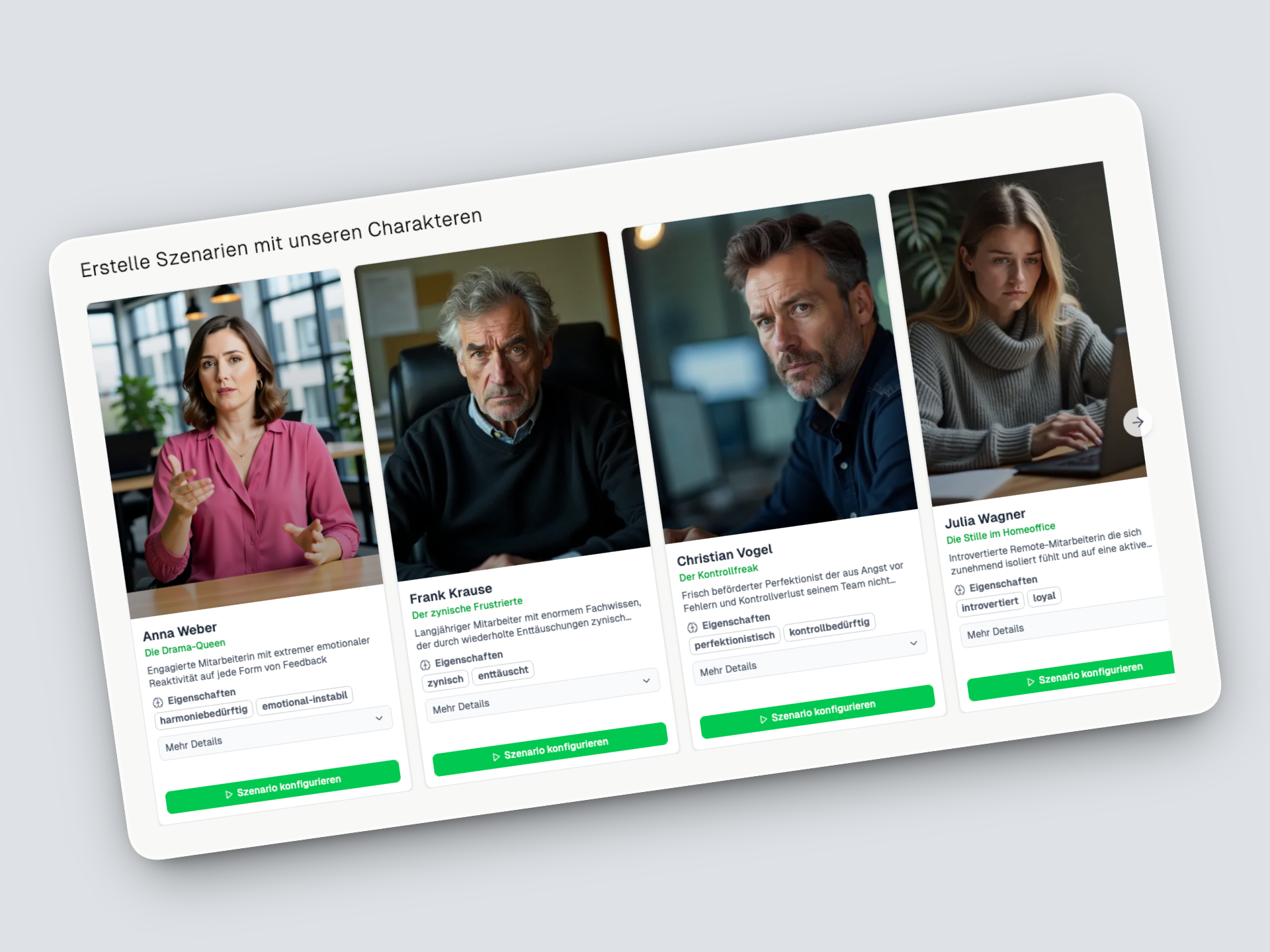
Careertrainer.ai addresses the objections that determine success or failure in real sales scenarios. Your team practices with AI customers who raise price objections, introduce competitors, and delay decisions – receiving specific feedback after each conversation.
AI customers with realistic objections and negotiation tactics
The AI characters present the objections your team encounters in everyday situations: 'It's too expensive,' 'We can handle this internally,' 'The competitor offers more,' 'We need to discuss this internally first.' Each character has a unique negotiation style—some can be persuaded with strong arguments, while others deliberately test the salesperson's resilience. The objections arise at unexpected moments, just like in real conversations.
Over 50 AI characters with unique objections and negotiation tactics.
Price objections, competitive comparisons, delay tactics, and fundamental objections.
Voice conversations – 10 to 25 minutes, repeatable and available anytime.
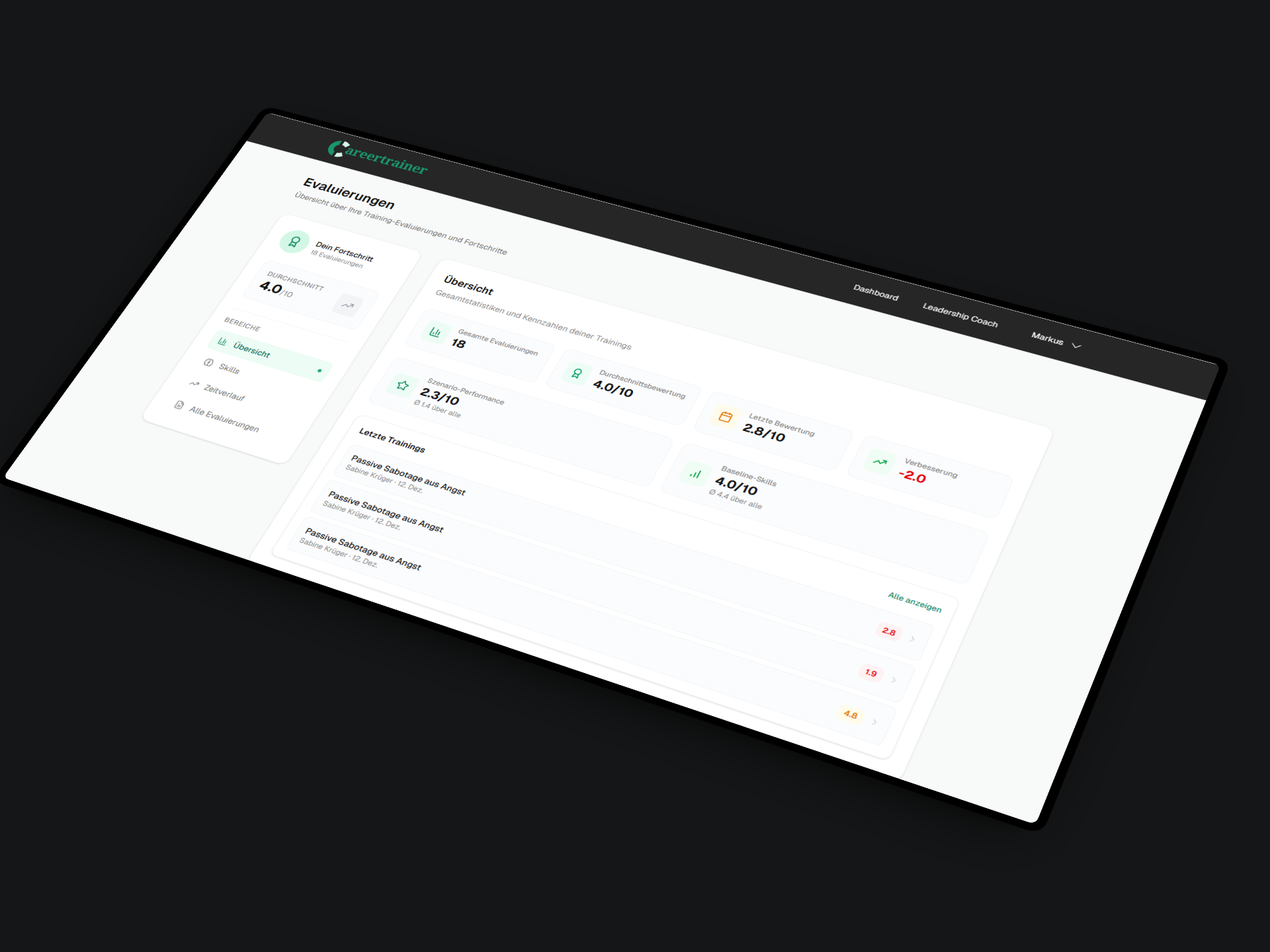
Specific feedback: How did you respond to the objection?
After each practice conversation, the AI analyzes how the salesperson responded to objections. Was the objection taken seriously or dismissed? Was the underlying need behind the objection recognized? Was the benefit reframed, or was a discount offered reflexively? The feedback focuses on specific moments in the conversation, highlighting key points and providing alternative phrasing.
Evaluation of objection handling, benefit argumentation, and closing orientation.
Concrete discussion points as a basis for feedback.
Professional tips with alternative responses and conversation strategies.
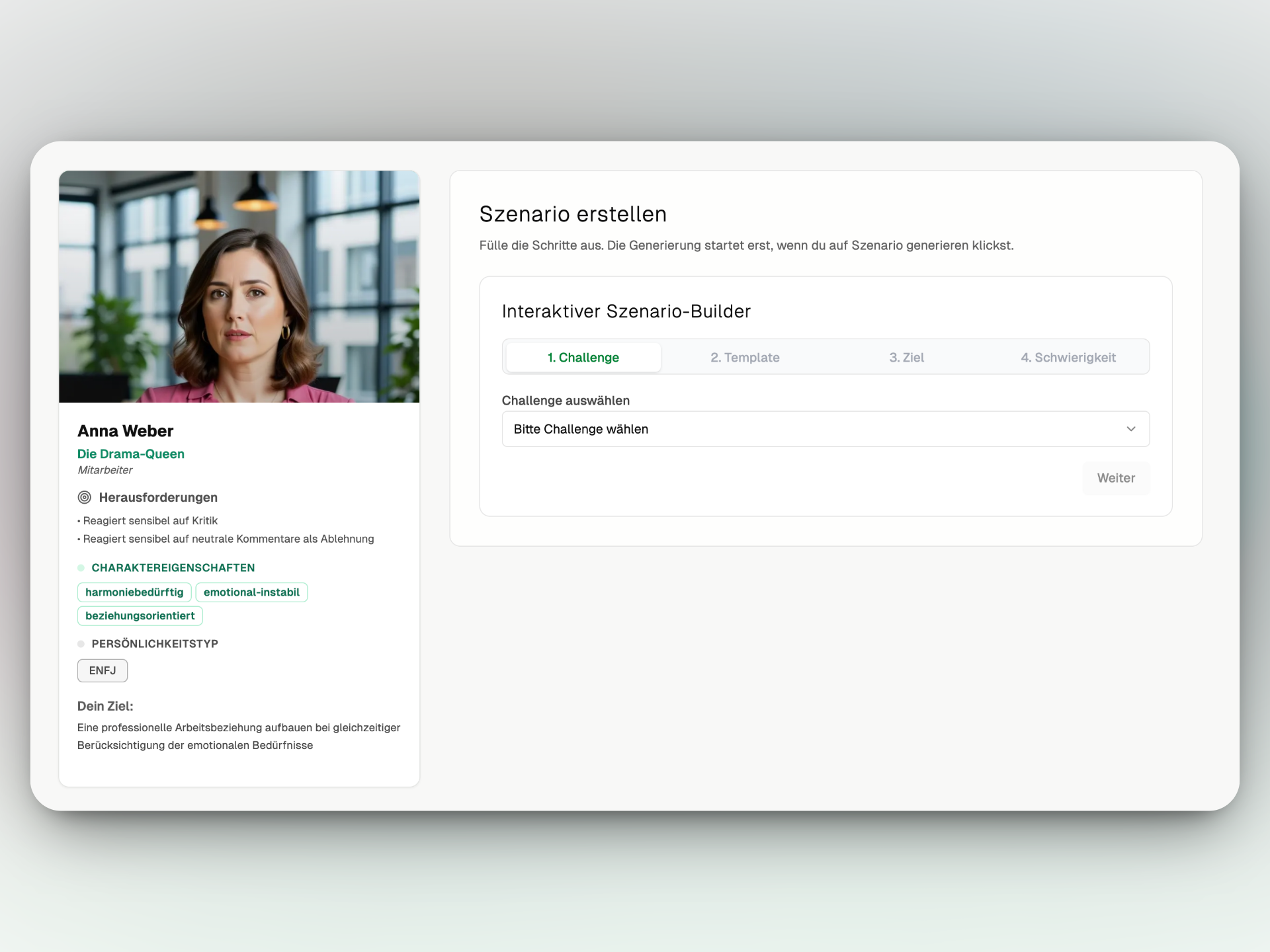
Custom objection scenarios with your typical customer responses.
Every company has its own typical objections – regarding price, technology, or switching from an existing provider. With the Scenario Generator, you can outline your most common objections and customer situations, and the AI will create playable training scenarios from them. This way, your team practices exactly the objections that will arise in the next customer conversation.
Scenario Generator creates training from free-text situation descriptions.
Customizable to your products, pricing models, and typical customer objections.
Scenarios created in minutes, ready to play instantly.
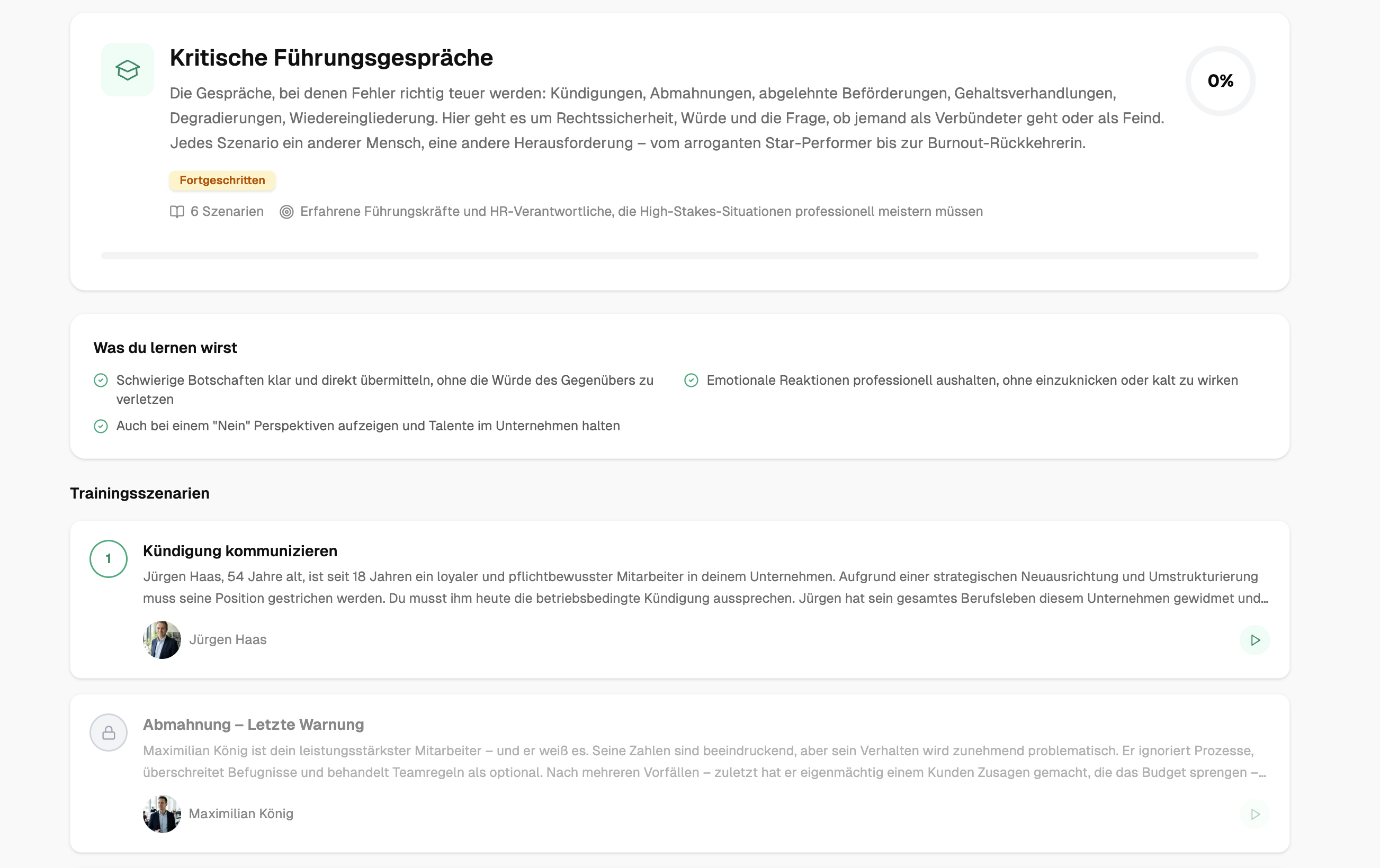
Structured learning paths from simple to complex objections.
Instead of isolated individual exercises, salespeople go through curated training series: from simple information objections to price negotiations and complex situations with multiple objections simultaneously. Each learning path systematically builds confidence – from the initial handling of standard objections to a composed response to unexpected objections under time pressure.
Progressively challenging scenarios.
Mandatory and optional deepening scenarios per path
Progress bars and completion tracking for every employee.
Measure competency development and systematically address weaknesses.
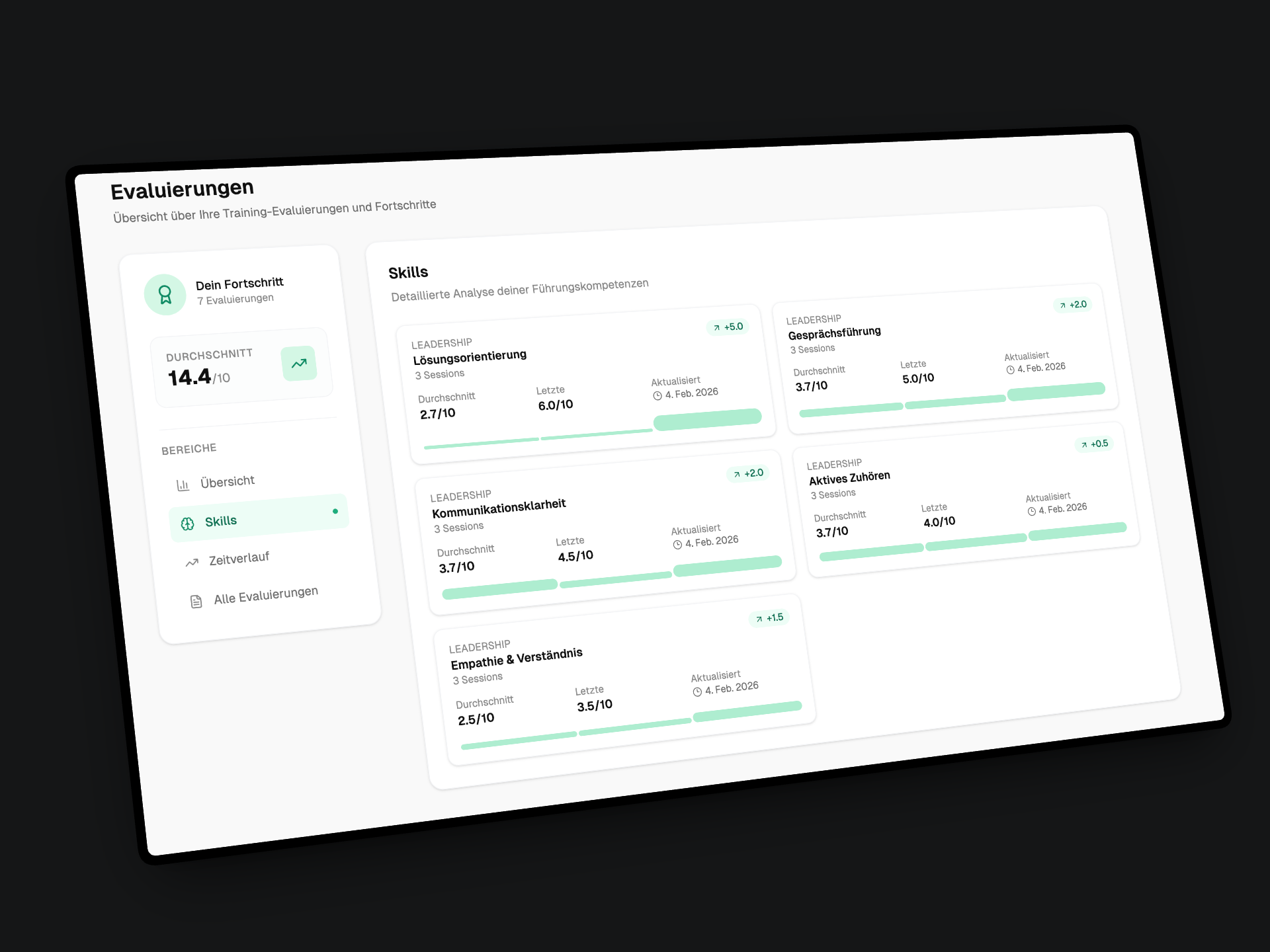
The skill gap analysis reveals how effectively objections are handled by each salesperson and team. Who falters at price objections? Who fails to recognize delay tactics? Who manages objections well but struggles to close? This data assists sales leaders in targeting training where it will have the greatest impact on win rates.
Strengths/Weaknesses Profile per Sales Representative and Team
Development trends over 7 and 30 days
Export for HR documentation and training certificates
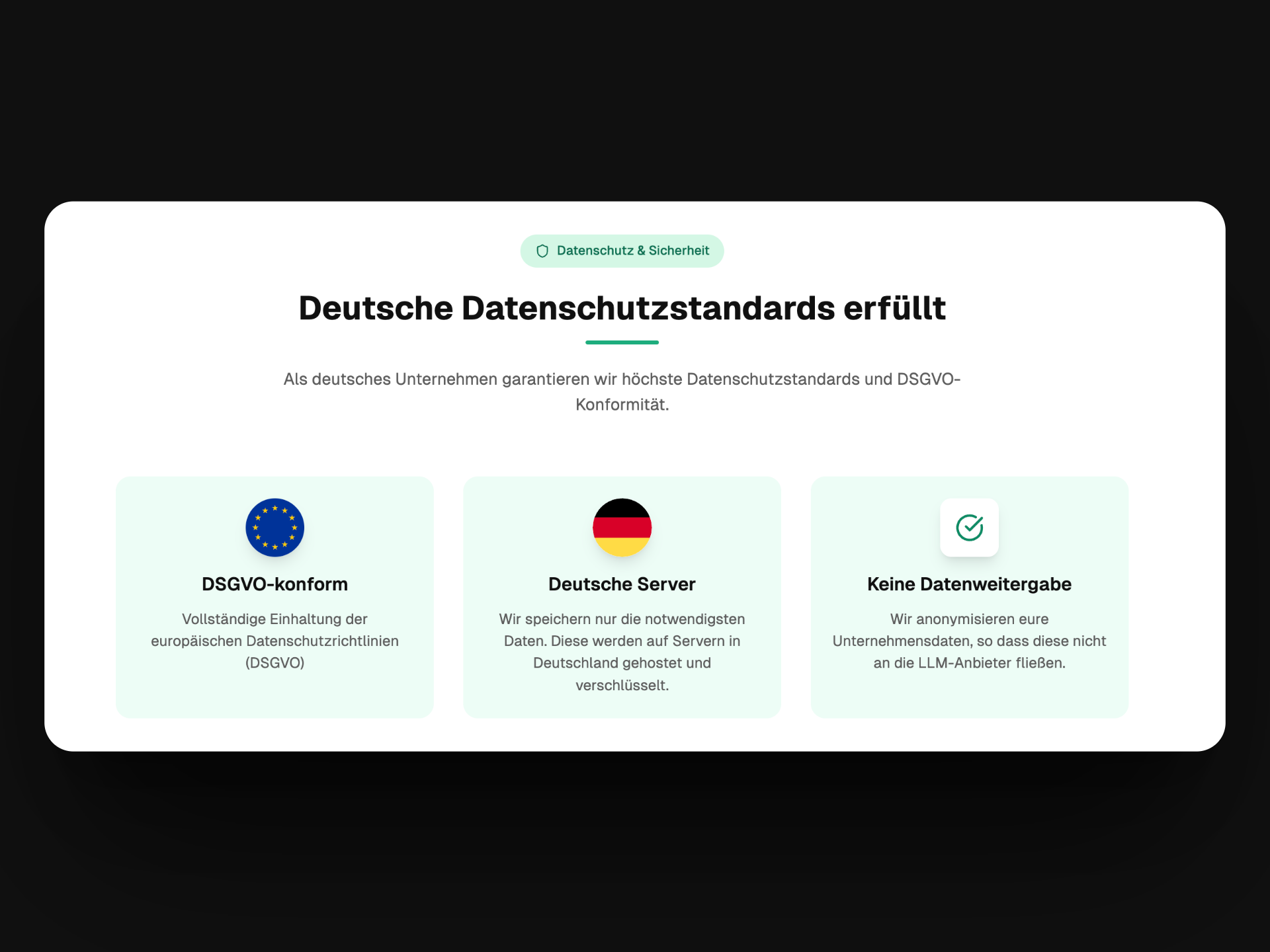
GDPR-compliant and hosted in Germany
All conversation data is encrypted and processed on German servers. Sales representatives train in a secure environment—practice calls are not used for performance evaluations. This is particularly crucial for handling objections: those who fear being observed during failure do not train on their true weaknesses.
GDPR-compliant, EU hosting, Made in Germany
Training data is only accessible to the employee themselves.
No sharing of sensitive conversation content with third parties.
Train sales conversations with realistic buyers
Every buyer is different. Practice ROI discussions with CFOs, technical depth with IT Directors, the first impression with gatekeepers – and the final push with C-suite decision-makers.
Lade Charaktere...
Every buyer role
CFO, COO, IT Director, Director of Finance, Executive Assistant – train every role that matters in the deal.→ No surprises in the buying center
Every sales phase
From cold call and discovery to demo, negotiation, and closing – the right character for every stage.→ Prepared for every step
Measurably better
Clear conversation goals, real-time reactions, and a full debrief after every session. See your progress in numbers.→ No more guessing what works
When do companies use Careertrainer.ai?
Five scenarios for sales teams, sales leaders, and revenue operations
Sales Onboarding – new salespeople productive from day 1
Structured learning paths instead of shadowing and seminar waiting lists. Your team becomes productive faster. The first 90 days determine whether new salespeople contribute to quota or cost revenue. Careertrainer.ai guides them through all relevant sales scenarios – with realistic AI customers and immediate feedback.
- Start immediately: learning paths available from day 1
- Realistic AI customers with genuine objections
- Objective feedback after every training conversation
- HR dashboard: onboarding progress in real time


Our plans at a glance
From free to unlimited – find the plan that fits your training needs.
Free
Perfect for trying out and getting to know the platform.
- 3 training conversations total
- Access to free scenarios
- Basic feedback after conversations
Basic
Ideal for occasional preparation for important conversations.
- 15 conversations per month
- Access to all standard scenarios
- Detailed performance evaluation
- Progress tracking
- Email support
Pro
For regular training and continuous improvement.
- 40 conversations per month
- Access to all scenarios
- Detailed performance evaluation
- Progress tracking over time
- Personalized learning recommendations
- Priority support
Unlimited
For power users and small teams with intensive training needs.
- Unlimited conversations
- Access to all scenarios
- Detailed performance evaluation
- Progress tracking over time
- Personalized learning recommendations
- Create your own scenarios
- Priority support
Team
Everything from Pro, plus:
- Central user management
- HR analytics dashboard
- Learning path assignments for employees
- Skill gap analysis at team level
- Progress tracking across all users
- Export (CSV/PDF) for reporting
- Email and chat support
Enterprise
Everything from Team, plus:
- Custom scenarios with company context
- AI customization to company guidelines
- Single Sign-On (SSO)
- Dedicated account manager
- White-label option
- API access
- Individual contract terms
Pricing depends on team size and contract duration. In the demo, we'll discuss your needs and create a custom offer.
For HR software providers, learning platforms, staffing agencies and companies that want to integrate Careertrainer.ai into their own infrastructure. No flat fee – you only pay for what your users actually train.
View all pricing & partner optionsStill have questions? We're happy to advise you.
Contact UsFrequently Asked Questions about Objection Handling Training
What objections can my team train with the platform?
How does feedback work after an objection handling training?
How does AI training differ from an objection handling seminar?
How does the training specifically address price objections?
Which sales roles are suitable for objection handling training?
Can we represent our company-specific objections as training scenarios?
How quickly does objection handling improve within the team?
Is the platform GDPR compliant?
More Careertrainer.ai Solutions
Discover more professional solutions for your leadership development.
AI Sales Coaching
Sales coaching with AI simulations: Objective feedback, skill gap analysis, and structured learning paths for your sales team. Scalable, measurable, and GDPR-compliant.
AI Sales Training – Realistically Simulating Sales Conversations
Sales training with AI conversation simulations: Your sales team practices initial conversations, objection handling, and closing with realistic AI customers. Measurable, scalable, and GDPR-compliant.
Sales onboarding with AI – Get new salespeople up to quota faster | Careertrainer.ai
Sales onboarding with structured AI learning paths: New sales representatives train in needs analysis, objection handling, and closing from day one. Measurable, scalable, without blocked seminar days.
Train cold calling with AI
Train cold calling with realistic AI conversation partners: from the silent gatekeeper to the dismissive decision-maker. Practice endlessly, receive immediate feedback, and track measurable progress.
AI Sales Coaching
AI-powered sales coaching with conversation simulations: Train objection handling, closing, and cold calling. Personalized feedback, measurable progress, GDPR-compliant.
