
careertrainer.ai

AI role-plays for leaders

Mastering Annual Performance Reviews

Transform the dreaded annual review into your greatest strength. Learn to conduct performance discussions that your employees will look forward to through AI role-playing scenarios. Realistic AI simulations prepare you for every possible reaction—from the demotivated to the overambitious employee.

Realistic AI Characters
Train with real scenarios from your daily work
Structured Checklists
Preparation with professional conversation guides
Enterprise & Privacy
German software, GDPR-compliant for companies
Product Demo

Try for free

Reese Campbell

Reese Campbell

Annual Review

Practice scenario

Practice a realistic conversation with our AI employee. Improve your conversation skills in a safe environment.

Annual Review Guide & Preparation
Annual Performance Reviews Guide

Follow this proven 5-phase structure for professional and successful Annual Performance Reviews.

The 5 Phases for successful Annual Performance Reviews

THEORY READ — PRACTICE NOW

Practice this conversation with AI

Deliver direct feedback about the HR complaints and secure her commitment to change her communication style.

Coaching: The High Performer Who Thinks Feedback Doesn't Apply to Them

Reese Campbell

Reese Campbell

Medium

Senior · ENTJ

Lets her numbers do the talking — and the deflecting

the Untouchable Top Performer

Free·5-10 Minuten·With feedback

Practice now
1

Strukturierter Einstieg

5-10 Minuten

Du schaffst einen respektvollen Rahmen und klärst die Gesprächsstruktur. Besonders bei erfahrenen Mitarbeitern ist es entscheidend, ihre Expertise anzuerkennen und gleichzeitig deine Führungsrolle zu etablieren.

Tips

  • Beginne pünktlich – Verspätungen signalisieren mangelnden Respekt, besonders bei erfahrenen Mitarbeitern
  • Schalte alle Geräte stumm und leite Anrufe um – Unterbrechungen zerstören die Gesprächsqualität
  • Plane 60-75 Minuten ein, nicht die üblichen 45 – bei komplexen Themen brauchst du Puffer
  • Notiere Roberts Ergänzungspunkte sichtbar – zeigt, dass du seine Anliegen ernst nimmst

Example phrases

  • "Ihre Lösung beim Projekt X hat uns konkret Y erspart"
  • "Ich habe drei Schwerpunkte vorbereitet – was möchten Sie ergänzen?"
  • "Lassen Sie uns 60 Minuten einplanen, damit wir alles in Ruhe besprechen können"

Standard situations

"Danke, dass Sie sich die Zeit nehmen – ich weiß, Sie haben gerade viel um die Ohren."

"Ich möchte heute sowohl auf Ihre Erfolge als auch auf Entwicklungsfelder schauen."

"Am Ende sollten wir konkrete Vereinbarungen für das nächste Jahr haben."

"Gibt es aus Ihrer Sicht Themen, die unbedingt auf den Tisch müssen?"

Difficult situations

"Ich merke, das Thema löst bereits Spannung aus – genau deshalb ist es wichtig, dass wir es heute klären."

"Lassen Sie uns die Agenda durchziehen, auch wenn einzelne Punkte unbequem sind."

"Ihre Skepsis nehme ich wahr – trotzdem bitte ich Sie, dem Prozess eine Chance zu geben."

"Wir werden heute auch über schwierige Themen sprechen müssen – das gehört zu meiner Verantwortung."


2

Leistungsrückblick & Bewertung

20-25 Minuten

Du bewertest faktenbasiert die Zielerreichung und Leistung. Bei Robert bedeutet das: Anerkennung seiner fachlichen Expertise bei gleichzeitiger klarer Benennung der Defizite im Transformationsverhalten.

Tips

  • Beginne immer mit messbaren Erfolgen – schafft psychologische Offenheit für Kritik
  • Nutze die Formulierung \"Gleichzeitig\" statt \"Aber\" beim Übergang zur Kritik – wirkt weniger konfrontativ
  • Halte deine Bewertungsunterlagen sichtbar – zeigt, dass du vorbereitet bist und nicht aus dem Bauch heraus kritisierst
  • Frage nach Roberts Selbsteinschätzung erst NACH deiner Bewertung – verhindert, dass er die Agenda übernimmt

Example phrases

  • "Ihre Projektabschlüsse lagen bei 100% – das ist hervorragend"
  • "Gleichzeitig sehe ich bei der Transformation ein anderes Bild"
  • "Konkret meine ich folgende drei Situationen: erstens…"

Standard situations

"Ihre fachliche Expertise ist unbestritten – die Zahlen sprechen für sich."

"Ich habe drei konkrete Situationen dokumentiert, in denen das Verhalten problematisch war."

"Die Zielerreichung lag bei 85% – das ist solide, aber unter Ihrem Potenzial."

"Wie bewerten Sie selbst Ihre Leistung im Bereich Zusammenarbeit?"

Difficult situations

"Ich höre Ihre Rechtfertigung. Die Fakten bleiben trotzdem: Sie haben das System nicht genutzt."

"Das ist keine Diskussion über die Richtigkeit der Entscheidung – die ist gefallen."

"Ihre Sicht respektiere ich. Meine Bewertung basiert auf messbarem Verhalten."

"Wenn Sie die Beispiele anzweifeln, können wir die E-Mails und Protokolle jetzt gemeinsam durchgehen."

3

Stärken-Schwächen-Analyse

15-20 Minuten

Du analysierst gemeinsam mit Robert, wie seine Stärken in der neuen Situation wirksam bleiben und welche Entwicklungsfelder existieren. Ziel ist, die Blockade als Entwicklungschance zu reframen.

Tips

  • Beginne immer mit mindestens drei konkreten Stärken – schafft positive Basis für Entwicklungsthemen
  • Frage direkt nach Ängsten statt um den heißen Brei herumzureden – spart Zeit und schafft Vertrauen
  • Nutze Roberts eigene Worte wenn du Stärken beschreibst – erhöht Akzeptanz
  • Verbinde jede Schwäche sofort mit einem Entwicklungsweg – verhindert Resignation

Example phrases

  • "Ihre Stärke X wird im neuen System sogar noch wichtiger, weil…"
  • "Was genau befürchten Sie bei dieser Veränderung?"
  • "Ich verstehe diese Sorge – lassen Sie uns schauen, ob sie begründet ist"

Standard situations

"Ihr Prozessverständnis ist einzigartig – genau das brauchen wir beim System-Setup."

"Ihre Entwicklungsaufgabe ist, neue Tools zu nutzen ohne Ihre Methodik aufzugeben."

"Lassen Sie uns gemeinsam überlegen, wie Ihre Expertise digital wirksam wird."

"Welche Ihrer Stärken möchten Sie im nächsten Jahr besonders ausbauen?"

Difficult situations

"Ich höre viel Verteidigung des Status quo. Was genau macht Ihnen an der Veränderung Angst?"

"Ihre Stärken sind unbestritten. Die Frage ist: Wollen Sie sie einbringen oder blockieren?"

"Diese Sorge verstehe ich. Trotzdem: Der Zug fährt. Sind Sie dabei oder nicht?"

"Ihre Expertise ist wertvoll – aber nur, wenn Sie sie auch in neuen Kontexten einsetzen."

4

Zielvereinbarung & Entwicklung

15-20 Minuten

Du definierst gemeinsam mit Robert klare, messbare Ziele für das kommende Jahr – mit besonderem Fokus auf sein Verhalten in der Transformation und seine neue Rolle als Brückenbauer zwischen Alt und Neu.

Tips

  • Schreibe Ziele während des Gesprächs auf und zeige sie Robert – verhindert spätere Missverständnisse
  • Priorisiere die Ziele gemeinsam: Was ist das wichtigste? – schafft Fokus
  • Definiere für jedes Ziel einen konkreten Überprüfungstermin – nicht erst das nächste Jahresgespräch
  • Frage explizit: \"Was könnte Sie daran hindern, dieses Ziel zu erreichen?\" – deckt Hindernisse früh auf

Example phrases

  • "Konkret bedeutet das: Sie tun X bis Datum Y"
  • "Was brauchen Sie von mir, um dieses Ziel zu erreichen?"
  • "Lassen Sie uns das messbar machen: Wie oft? Bis wann?"

Standard situations

"Ihr Leistungsziel bleibt: 12 erfolgreiche Projektabschlüsse bei 4,5+ Kundenzufriedenheit."

"Neues Entwicklungsziel: Sie schulen bis Juni zwei Kollegen in Ihren Troubleshooting-Methoden."

"Wir treffen uns am 1. Mai für ein Zwischengespräch – 30 Minuten, Status-Check."

"Was würde Ihnen helfen, dieses Ziel leichter zu erreichen?"

Difficult situations

"Dieses Ziel ist gesetzt – die Frage ist nur, ob Sie Unterstützung brauchen oder nicht."

"Ich höre viele Wenns und Abers. Sagen Sie klar: Können Sie das Ziel erreichen oder nicht?"

"Wenn Sie das Ziel nicht erreichen wollen, müssen wir über Konsequenzen sprechen."

"Ihre Bedenken notiere ich. Trotzdem: Ich brauche Ihre Zusage, dass Sie es versuchen."

5

Dokumentation & Ausblick

5-10 Minuten

Du sicherst die Vereinbarungen schriftlich ab, klärst nächste Schritte und beendest das Gespräch mit einem klaren Commitment. Bei Robert ist es entscheidend, dass er das Protokoll mitgestaltet und unterschreibt.

Tips

  • Fasse maximal 3-4 Kernpunkte zusammen, nicht das gesamte Gespräch – Fokus auf das Wesentliche
  • Verwende Roberts Formulierungen im Protokoll, nicht deine eigenen – erhöht Akzeptanz
  • Vereinbare den nächsten Überprüfungstermin jetzt, nicht \"irgendwann\" – trägt ihn sofort ein
  • Beende mit einer offenen Frage: \"Was nehmen Sie aus diesem Gespräch mit?\" – zeigt seine Perspektive

Example phrases

  • "Wie würden Sie dieses Ziel in Ihren Worten formulieren?"
  • "Ich schreibe mit – sagen Sie Stopp, wenn etwas nicht stimmt"
  • "Nächste Schritte: Ich mache X bis Datum Y, Sie machen Z bis Datum W"

Standard situations

"Ich fasse zusammen: Ihre drei Hauptziele sind X, Y und Z – korrekt?"

"Das Protokoll geht heute Nachmittag raus, bitte checken Sie es bis übermorgen."

"Wir treffen uns am 6. Mai um 10 Uhr für 30 Minuten – ich schicke die Einladung."

"Gibt es aus Ihrer Sicht noch etwas, das wir klären müssen?"

Difficult situations

"Ich brauche Ihre klare Zusage: Setzen Sie diese Vereinbarungen um oder nicht?"

"Wenn Sie das Protokoll nicht bestätigen, können wir die Ziele nicht als verbindlich betrachten."

"Ich notiere Ihre Vorbehalte – trotzdem erwarte ich, dass Sie es versuchen."

"Lassen Sie uns klar sein: Dies ist keine Diskussionsgrundlage, sondern eine Vereinbarung."

Full Annual Review guide

All phases, examples, and dialogues on one page

Open full guide

The Challenges in
Annual Performance Reviewsn

In the Leadership context, conducting Annual Performance Reviews confidently is one of the most demanding tasks. You should know these typical pitfalls to successfully master Annual Performance Reviews.

Manager Avatar 1
Avoiding Difficult Topics
You shy away from uncomfortable subjects. "I should really address the lack of teamwork, but..." The employee remains unaware of critical issues and cannot improve. Avoidance exacerbates problems. Our AI suggests: "I've noticed that collaboration on project XY has been challenging. Let's work together to find solutions." Difficult conversations are a leadership responsibility – with the right approach, they can be constructive.
Manager Avatar 2
Lack of Self-Confidence in Criticism
You doubt yourself. "Am I entitled to criticize this? Perhaps I'm seeing it wrong." Your uncertainty weakens the feedback and undermines your authority. Our AI suggests: "Based on my observations, I see the following areas for development..." Prepare yourself with facts—constructive criticism is a gift for growth.
Manager Avatar 3
Imbalanced Feedback
You praise too much to hide criticism or criticize too harshly. "You are doing many things well, but..." or "There is definitely room for improvement." Such feedback is often not taken seriously or can be demotivating. Our AI suggests: "Your customer service is impressive. At the same time, I see potential in project organization." A clear distinction between strengths and areas for development creates clarity.
Manager Avatar 4
Communication Misses the Mark
You express yourself too vaguely or too directly. Phrases like "It would be nice if..." or "You are simply disorganized." Vague messages do not inspire change, while overly direct ones can hurt. Our AI suggests: "I expect deadlines to be met. What support do you need to achieve this?" Clear, respectful communication with proposed solutions fosters understanding.
Manager Avatar 5
Emotional Reactions Overwhelm You
You feel insecure when faced with tears or anger. "Oh no, she's crying. Was I too harsh?" You interrupt important conversations instead of maintaining professionalism. Our AI suggests: "I can see that this is troubling you. Let’s take a short break and then continue our discussion." Emotional sovereignty means acknowledging feelings while continuing the conversation.
Manager Avatar 6
Vague Goal Setting
You are setting unmeasurable goals. "You should try harder" or "Be more punctual." Without clear objectives, no one can assess success. Our AI suggests: "By March, I expect 95% punctuality. We will review this in April." SMART goals provide clarity and motivation.
AI Role-Playing

MasterAnnual Performance Reviewswith Careertrainer.ai

From scenario selection to detailed feedback – Careertrainer makes Annual Review training in the Leadership context simple, effective, and measurable.

1
Select Annual Review scenario

Select Scenario

Choose the appropriate scenario from various Annual Performance Reviews or create your own individual training scenario.

2
Train Annual Review with AI

Conduct Conversation with AI

Conduct a realistic Annual Review with our AI. Train different situations and conversation flows in a safe environment.

3
Feedback on Annual Review

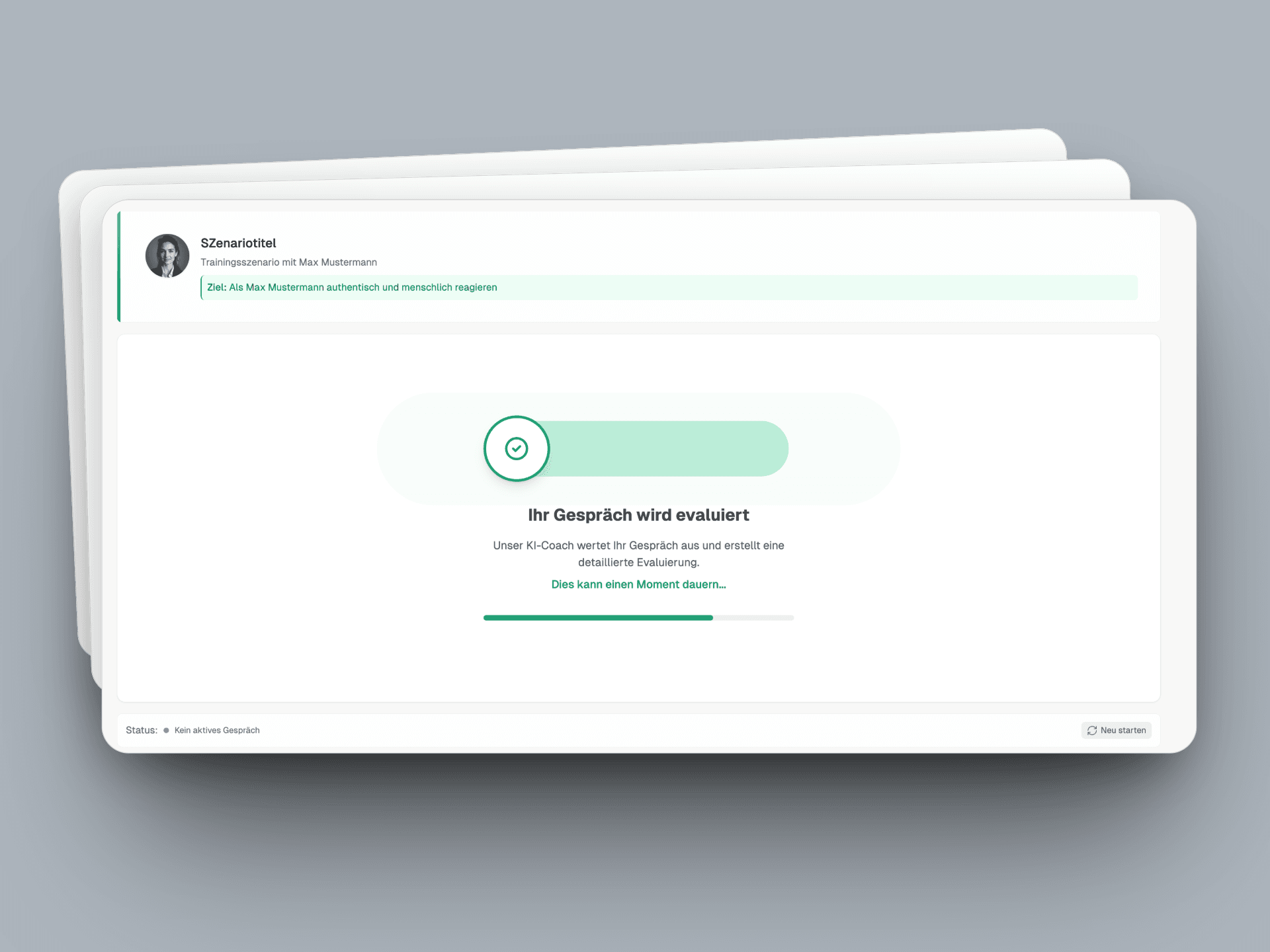
Receive Feedback

Receive detailed, constructive feedback on your Annual Review and concrete improvement suggestions for practice.

Practice Scenario
Reese Campbell

Reese Campbell

ENTJ

Your top performer's behavior just triggered an HR escalation. Can you make her see that numbers aren't everything?

Try this scenario
Checklists for Annual Performance Reviews

Our checklists for successful Annual Performance Reviews

With a clear checklist, you prepare optimally for your Annual Review and avoid typical mistakes in a Leadership context.

Typical Use Cases

Standard Annual Review
The annual review is a central tool for employee management to assess performance, set objectives, and promote development. This checklist provides a comprehensive guide for a structured and effective standard annual review suitable for most employees, laying a solid foundation for annual employee development.
View immediate checklist
Annual Review for Performance Issues
When an employee consistently falls short of expectations, the annual review is a crucial opportunity to explore the underlying causes and develop a plan for performance improvement. This checklist assists managers in conducting a challenging conversation constructively and getting the employee back on track without destroying motivation.
View immediate checklist
Annual Review with High Performers
The annual review with high performers requires a different focus than standard discussions. It is about motivating, retaining, and strategically advancing the development of these top talents. This checklist helps leaders to optimally utilize the potential of high performers and keep them engaged with the company in the long term.
View immediate checklist
Annual Review During Restructuring
During times of restructuring, the annual review becomes more complex and sensitive. Employees are often uncertain, and the manager must provide clarity, alleviate fears, and present new perspectives. This checklist helps structure the conversation, build trust, and motivate employees despite changes.
View immediate checklist
Annual Development Planning Conversation
An annual conversation primarily focused on development planning is crucial for long-term employee engagement and motivation. It aims to recognize the employee's potential and create a tailored plan that considers both individual aspirations and organizational needs. This checklist helps facilitate a forward-looking dialogue.
View immediate checklist

Discover all checklist examples and create your individual checklist with our generator on the detail page.

View all checklists for Annual Performance Reviews
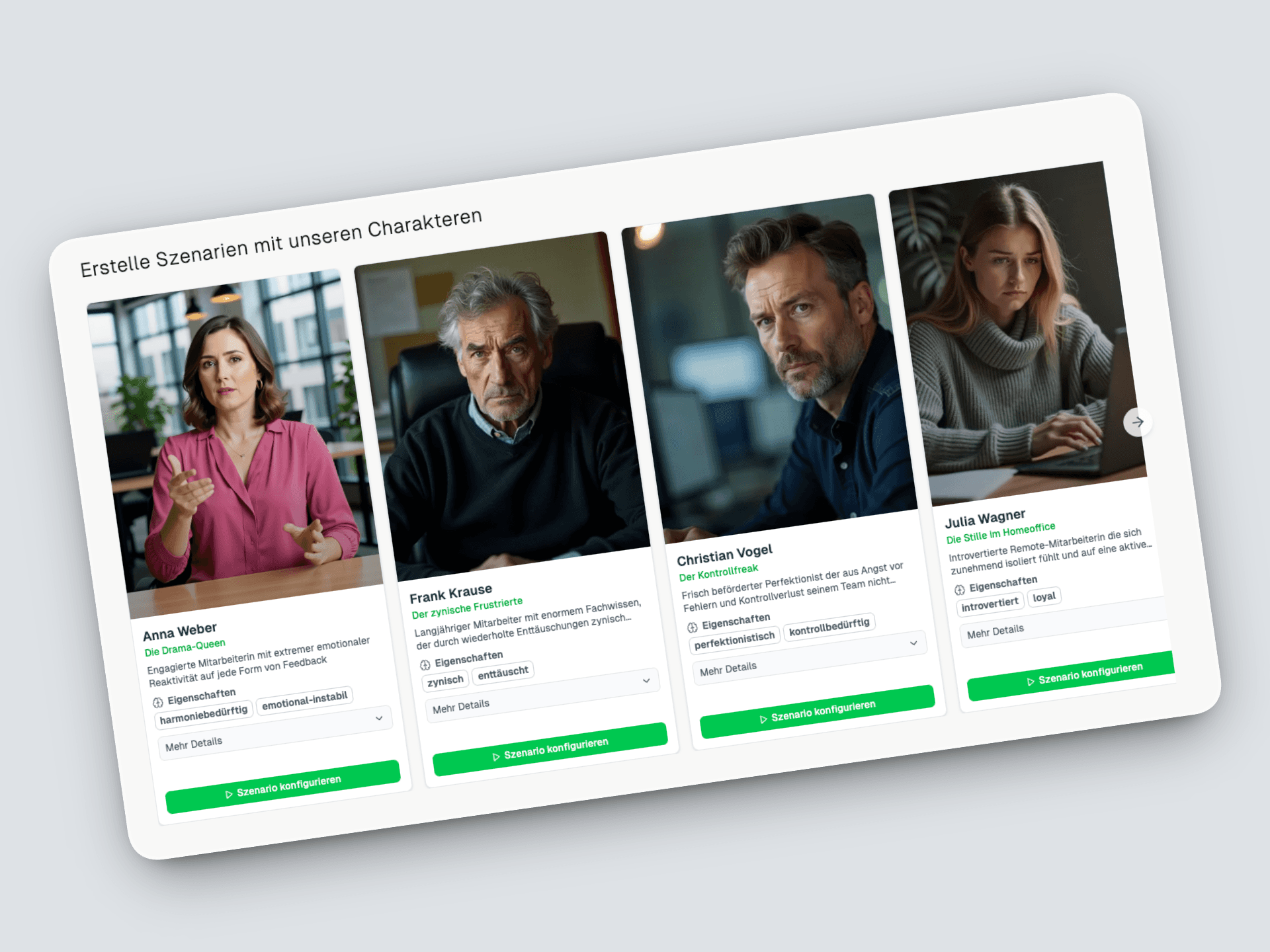
AI Character Library

Train Annual Performance Reviews with AI characters

Every employee is different – and reacts differently to feedback. Our characters are built on scientifically validated personality models and simulate realistic conversation dynamics: from the insecure junior employee to the critical senior developer.

Every character reacts differently

Maximilian König

Maximilian König

The arrogant star performer

Sales & Compliance

Top performance but repeated compliance violations. Believes he's irreplaceable and subtly threatens to quit.

emphasizes own indispensabilitysubtly threatens to quitrespects only clear consequences
Introverted
Extroverted
Detail-oriented
Conceptual
Analytical
Emotional
Structured
Flexible
Timo Lindner

Timo Lindner

The charming facade carrier

Corporate Management

Charming, clever, talks his way out of everything. Beneath the facade: growing exhaustion and inability to ask for help.

deflects with charmbecomes irritated when confrontedcan't ask for help
Introverted
Extroverted
Detail-oriented
Conceptual
Analytical
Emotional
Structured
Flexible
Laura Schneider

Laura Schneider

The quiet top performer

Technology

Wants more responsibility but won't say so. Only opens up after genuine empathetic follow-up questions.

doesn't voice wishes directlywaits for invitationshows engagement through actions not words
Introverted
Extroverted
Detail-oriented
Conceptual
Analytical
Emotional
Structured
Flexible
Cem Yildirim

Cem Yildirim

The defensive veteran expert

Consulting

23 years of experience. Perceives criticism as an attack on competence. Opens up when expertise is genuinely valued.

references experiencebecomes defensive at criticismneeds recognition before change
Introverted
Extroverted
Detail-oriented
Conceptual
Analytical
Emotional
Structured
Flexible
16+
Different Personality Types
50+
Realistic scenarios
24/7
Available for training anytime
Questions & Answers

Frequently Asked Questions

How does Careertrainer.ai assist me in preparing for difficult annual reviews?

CareerTrainer simulates realistic conversation scenarios with different employee types and reactions. You practice critical phrasing in a safe environment, receive immediate feedback on your communication, and build confidence for real conversations. The AI varies scenarios—from defensive to emotional employees—and helps you find the appropriate strategy for each situation.

How should I proceed if an employee reacts emotionally during the annual review?

Stay calm and empathetic, yet assertive. Acknowledge the emotions ("I understand that this is affecting you"), offer a brief pause, and return to the topic objectively. Do not cut the conversation short—emotional reactions often indicate that the issue is important. CareerTrainer will train you in these moments until you can remain composed.

How can I improve my communication in annual reviews using Careertrainer.ai?

The AI provides you with direct feedback on your phrasing and suggests alternative approaches. You'll learn to strike the right balance between being too diplomatic and too direct. Through repeated practice of various conversation scenarios, you'll develop a sense for effective communication and build confidence in challenging situations.