
AI role-plays for leaders
Mastering Annual Performance Reviews
Transform the dreaded annual review into your greatest strength. Learn to conduct performance discussions that your employees will look forward to through AI role-playing scenarios. Realistic AI simulations prepare you for every possible reaction—from the demotivated to the overambitious employee.
Try for free
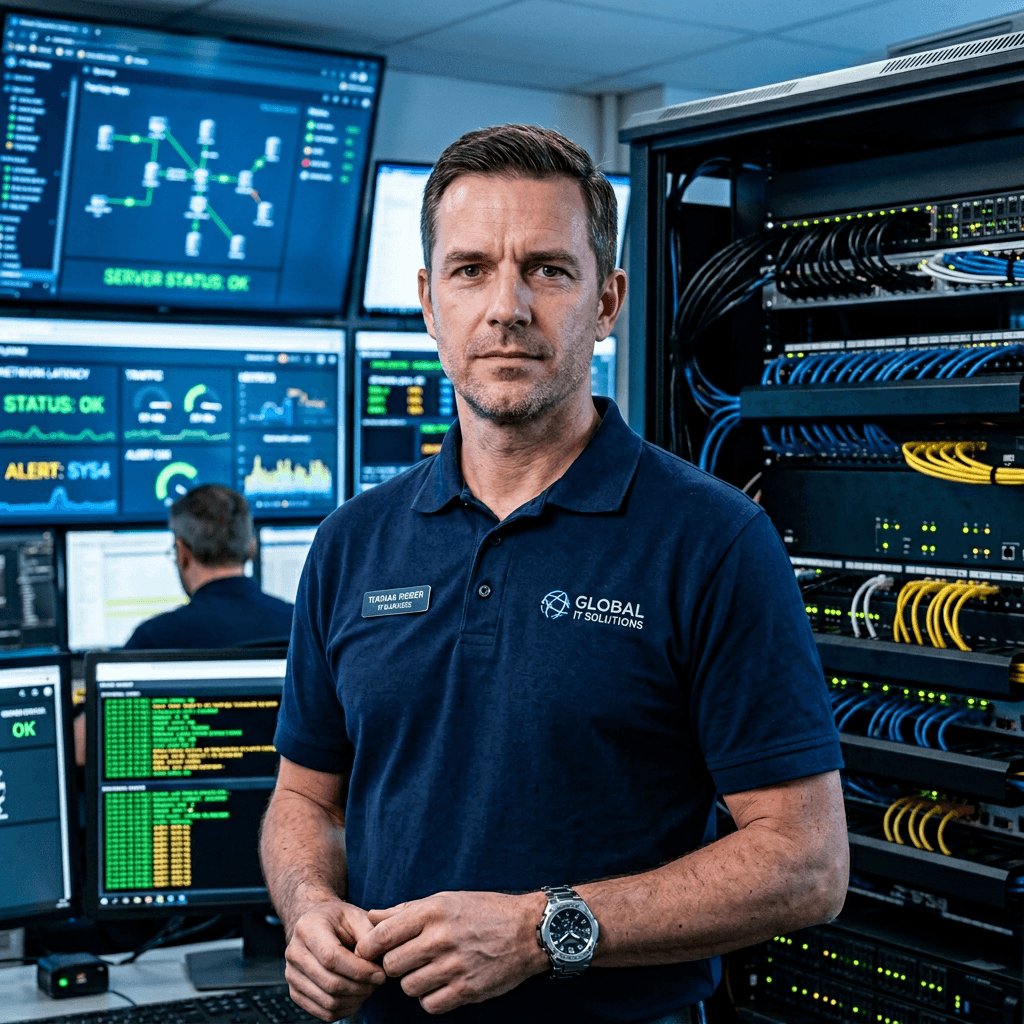
Thomas Weber
Head of IT
Annual Review
Practice scenario
Practice a realistic conversation with our AI employee. Improve your conversation skills in a safe environment.
The Challenges in
Annual Performance Reviewsn
In the Leadership context, conducting Annual Performance Reviews confidently is one of the most demanding tasks. You should know these typical pitfalls to successfully master Annual Performance Reviews.






MasterAnnual Performance Reviewswith Careertrainer.ai
From scenario selection to detailed feedback – Careertrainer makes Annual Review training in the Leadership context simple, effective, and measurable.
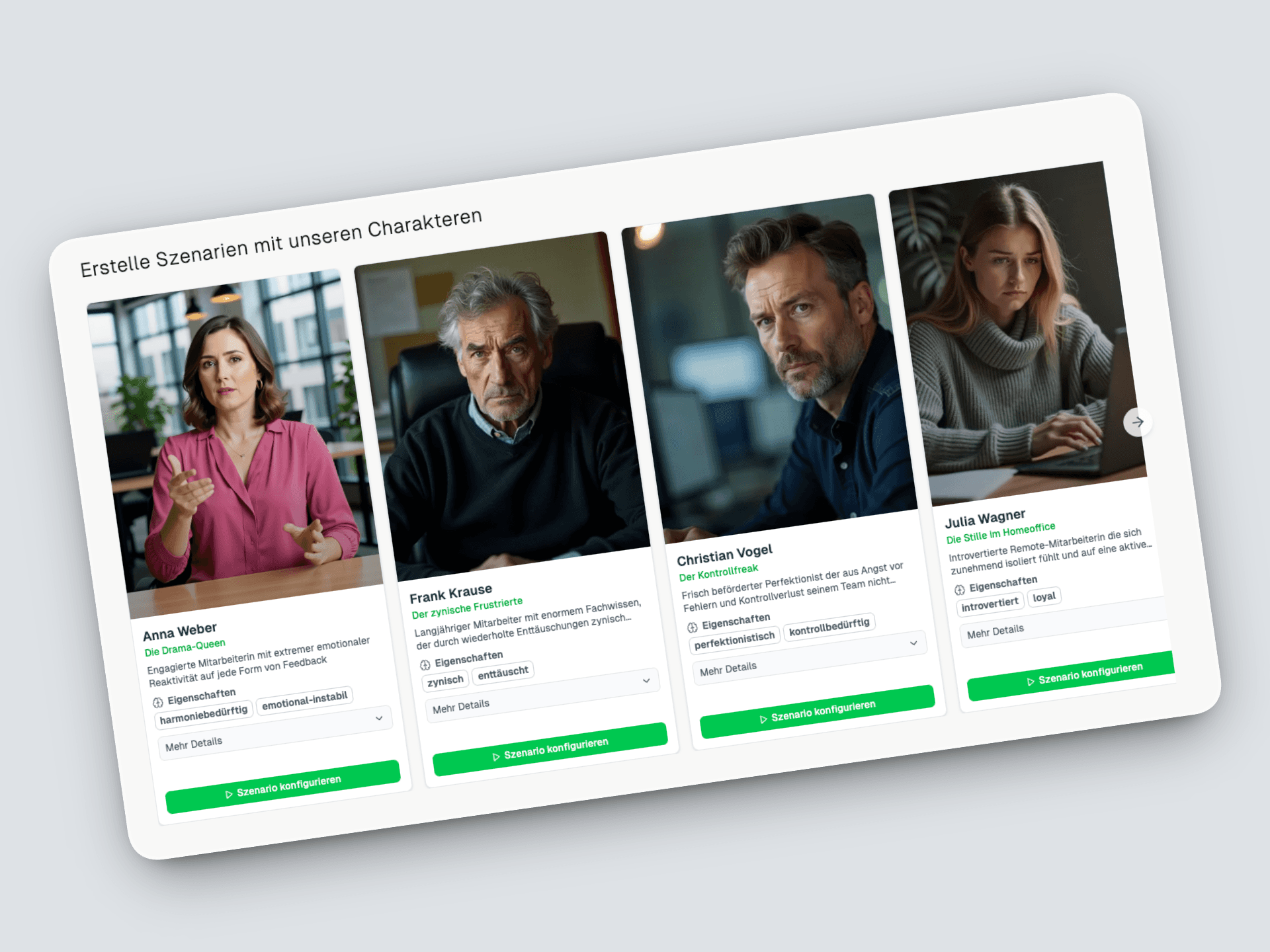
Select Scenario
Choose the appropriate scenario from various Annual Performance Reviews or create your own individual training scenario.
.png&w=3840&q=75)
Conduct Conversation with AI
Conduct a realistic Annual Review with our AI. Train different situations and conversation flows in a safe environment.
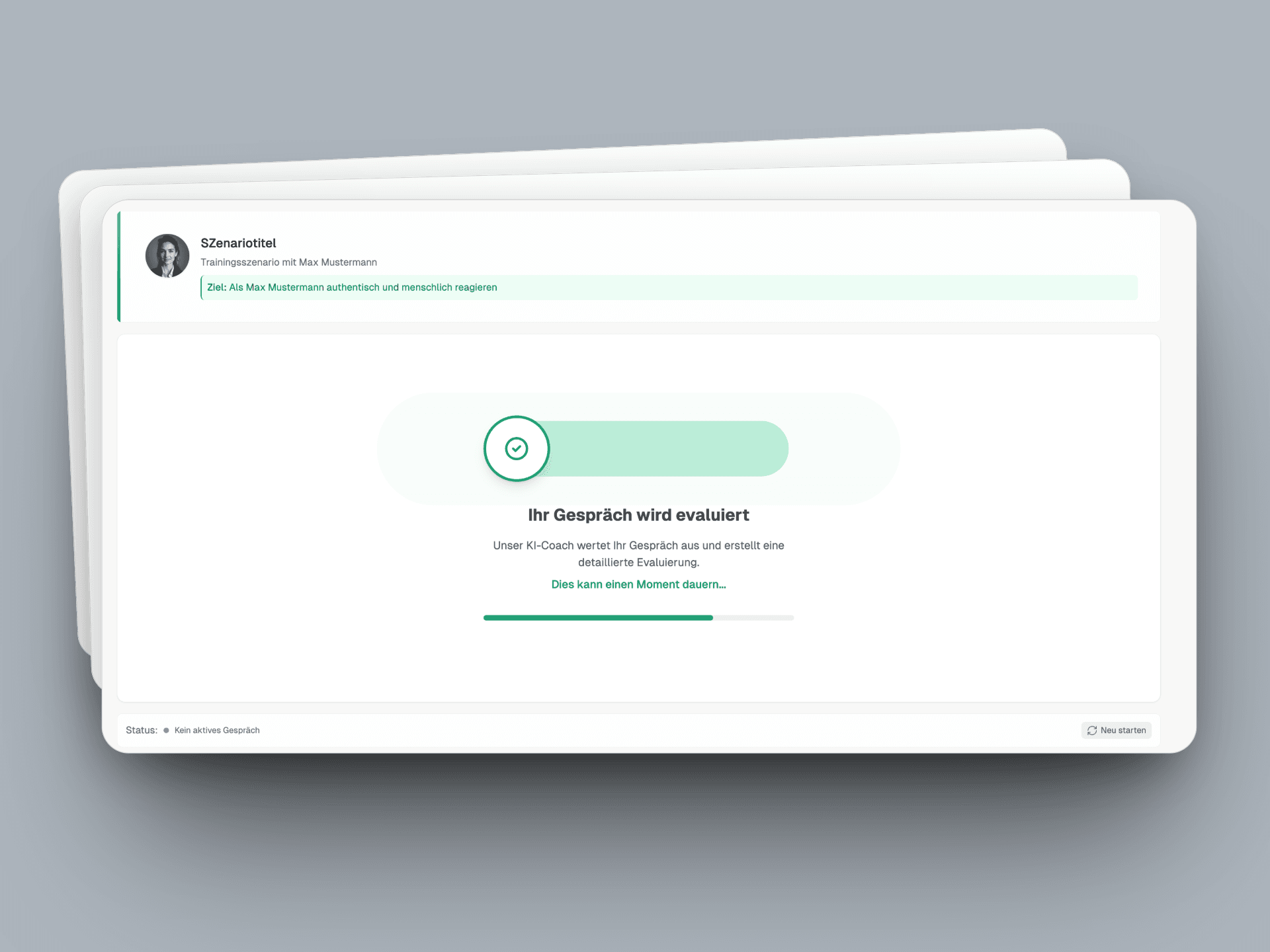
Receive Feedback
Receive detailed, constructive feedback on your Annual Review and concrete improvement suggestions for practice.
The 5 Phases for successful Annual Performance Reviews
Follow this proven 5-phase structure for professional and successful Annual Performance Reviews.
1Structured Introduction
Start the conversation with a clear and respectful introduction. Ensure that the employee feels comfortable and is ready to speak openly.
5-10 minutes
Structured Introduction
Start the conversation with a clear and respectful introduction. Ensure that the employee feels comfortable and is ready to speak openly.
About this Phase
Start the conversation with a clear and respectful introduction. Ensure that the employee feels comfortable and is ready to speak openly.
Practical Tips
- Create a pleasant conversation atmosphere by choosing a quiet room.
2Performance Review & Evaluation
Analyze the employee's performance over the past year together with them. Discuss successes and challenges objectively.
20-25 minutes
Performance Review & Evaluation
Analyze the employee's performance over the past year together with them. Discuss successes and challenges objectively.
About this Phase
Analyze the employee's performance over the past year together with them. Discuss successes and challenges objectively.
Practical Tips
- Use specific examples from the past year to discuss performance.
3Strengths-Weaknesses Analysis
Discuss the strengths and development potentials of the employee. Be honest yet respectful in your evaluation.
15-20 minutes
Strengths-Weaknesses Analysis
Discuss the strengths and development potentials of the employee. Be honest yet respectful in your evaluation.
About this Phase
Discuss the strengths and development potentials of the employee. Be honest yet respectful in your evaluation.
Practical Tips
- Identify at least three strengths and two areas for development for the employee.
4Goal Setting & Development
Collaborate with the employee to establish clear goals for the upcoming year, taking into account their strengths and areas for development.
15-20 minutes
Goal Setting & Development
Collaborate with the employee to establish clear goals for the upcoming year, taking into account their strengths and areas for development.
About this Phase
Collaborate with the employee to establish clear goals for the upcoming year, taking into account their strengths and areas for development.
Practical Tips
- Formulate goals using the SMART criteria (Specific, Measurable, Achievable, Relevant, Time-bound).
5Documentation & Outlook
In this section, summarize the key points discussed during the conversation and document them thoroughly. It is essential to focus on the next steps and future outlook. Begin by clearly outlining the objectives that were discussed, as well as any areas identified for development. This documentation should serve as a reference point for both the employee and their manager, ensuring clarity and mutual understanding regarding the expectations moving forward. Pay special attention to capturing any specific commitments made during the conversation, including timelines and responsible parties for each action item. This will help in tracking progress and accountability. Additionally, consider any potential challenges or resources that may be necessary to achieve the outlined goals. This documentation should not only reflect what was discussed but also inspire motivation and a sense of direction for the employee’s development journey.
5-10 minutes
Documentation & Outlook
In this section, summarize the key points discussed during the conversation and document them thoroughly. It is essential to focus on the next steps and future outlook. Begin by clearly outlining the objectives that were discussed, as well as any areas identified for development. This documentation should serve as a reference point for both the employee and their manager, ensuring clarity and mutual understanding regarding the expectations moving forward. Pay special attention to capturing any specific commitments made during the conversation, including timelines and responsible parties for each action item. This will help in tracking progress and accountability. Additionally, consider any potential challenges or resources that may be necessary to achieve the outlined goals. This documentation should not only reflect what was discussed but also inspire motivation and a sense of direction for the employee’s development journey.
About this Phase
In this section, summarize the key points discussed during the conversation and document them thoroughly. It is essential to focus on the next steps and future outlook. Begin by clearly outlining the objectives that were discussed, as well as any areas identified for development. This documentation should serve as a reference point for both the employee and their manager, ensuring clarity and mutual understanding regarding the expectations moving forward. Pay special attention to capturing any specific commitments made during the conversation, including timelines and responsible parties for each action item. This will help in tracking progress and accountability. Additionally, consider any potential challenges or resources that may be necessary to achieve the outlined goals. This documentation should not only reflect what was discussed but also inspire motivation and a sense of direction for the employee’s development journey.
Practical Tips
- Write down the discussed goals and areas for development in a structured manner. This could include short-term and long-term goals, as well as measurable outcomes to assess progress.
Complete Annual Review Guide
Detailed instructions with more examples and checklists
Our checklists for successful Annual Performance Reviews
With a clear checklist, you prepare optimally for your Annual Review and avoid typical mistakes in a Leadership context.
Typical Use Cases
Discover all checklist examples and create your individual checklist with our generator on the detail page.
View all checklists for Annual Performance ReviewsTrain Annual Performance Reviews with AI characters
Every employee is different – and reacts differently to feedback. Our characters are built on scientifically validated personality models and simulate realistic conversation dynamics: from the insecure junior employee to the critical senior developer.
Lade Charaktere...
Prepared for everything
Practice with introverted, extroverted, defensive, or emotional characters – just like your real employees.→ No surprises in real conversations
Real reactions
The AI becomes emotional, blocks, or opens up – depending on how you conduct the conversation.→ Learn to respond to different reactions
Safe practice space
Test different approaches without consequences. Find out what works – before it matters.→ Making mistakes is allowed
More Leadership Training with Careertrainer.ai
Train different conversation types and challenges in the Leadership context with our AI role-plays.
Mediation Conversations
When team members block each other and positions harden, it's crucial to learn how to facilitate mediation conversations that transform adversaries back into colleagues. Engage in AI role-play scenarios where intelligent AI characters simulate emotional escalations and hidden power dynamics, allowing you to practice the mediator role without igniting real conflicts.
Salary Negotiations
Conquer salary negotiations without the stress. Learn to conduct salary discussions that are fair yet economically viable through AI role-playing scenarios. Various AI characters simulate different negotiation styles—from the reserved to the assertive employee.
Coaching Conversations
Does your team need development, but your advice falls flat? Learn to conduct coaching conversations that create real breakthroughs through AI role-playing. Realistic AI characters respond like actual employees—practice risk-free and become the coach who truly makes a difference.
Frequently Asked Questions
How does Careertrainer.ai assist me in preparing for difficult annual reviews?
CareerTrainer simulates realistic conversation scenarios with different employee types and reactions. You practice critical phrasing in a safe environment, receive immediate feedback on your communication, and build confidence for real conversations. The AI varies scenarios—from defensive to emotional employees—and helps you find the appropriate strategy for each situation.
How should I proceed if an employee reacts emotionally during the annual review?
Stay calm and empathetic, yet assertive. Acknowledge the emotions ("I understand that this is affecting you"), offer a brief pause, and return to the topic objectively. Do not cut the conversation short—emotional reactions often indicate that the issue is important. CareerTrainer will train you in these moments until you can remain composed.
How can I improve my communication in annual reviews using Careertrainer.ai?
The AI provides you with direct feedback on your phrasing and suggests alternative approaches. You'll learn to strike the right balance between being too diplomatic and too direct. Through repeated practice of various conversation scenarios, you'll develop a sense for effective communication and build confidence in challenging situations.
