
AI role-plays for sales
Successfully Navigating Price Negotiations in Sales
Are you too quick to offer discounts? Learn through AI role-playing how to conduct price negotiations that protect your margins instead of sacrificing them. Practice with professional buyers and gain confidence in defending your value.
Try for free

Thomas Weber
Head of IT
Successfully Navigating Price Negotiations in Sales
Practice scenario
Practice a realistic conversation with our AI employee. Improve your conversation skills in a safe environment.
The Challenges in
Price Negotiationsn
In the Sales context, conducting Price Negotiations confidently is one of the most demanding tasks. You should know these typical pitfalls to successfully master Price Negotiations.




MasterPrice Negotiationswith Careertrainer.ai
From scenario selection to detailed feedback – Careertrainer makes Successfully Navigating Price Negotiations in Sales training in the Sales context simple, effective, and measurable.
Select Scenario
Choose the appropriate scenario from various Price Negotiations or create your own individual training scenario.
.png&w=3840&q=75)
Conduct Conversation with AI
Conduct a realistic Successfully Navigating Price Negotiations in Sales with our AI. Train different situations and conversation flows in a safe environment.
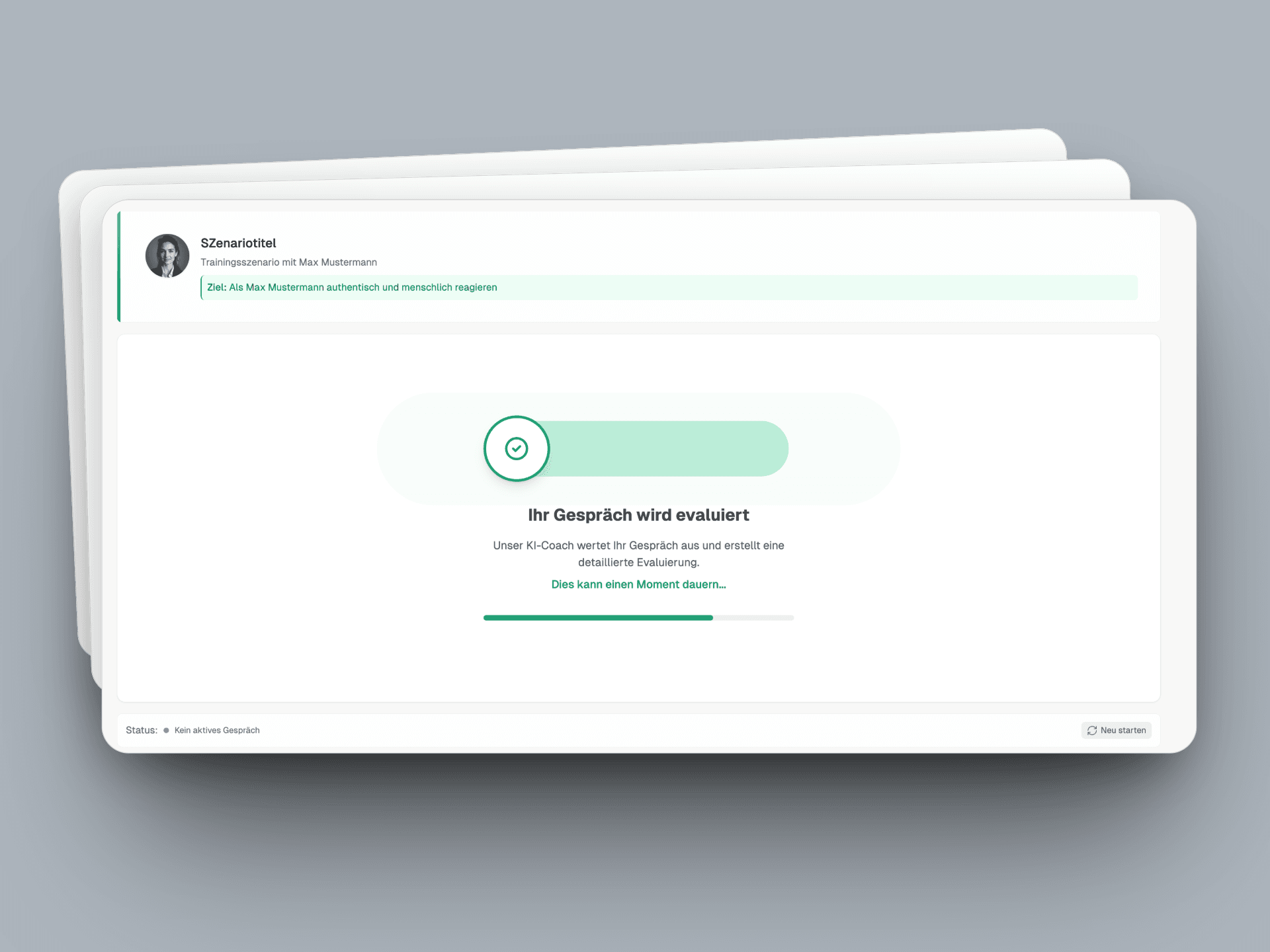
Receive Feedback
Receive detailed, constructive feedback on your Successfully Navigating Price Negotiations in Sales and concrete improvement suggestions for practice.
The 5 Phases for successful Price Negotiations
Follow this proven 5-phase structure for professional and successful Price Negotiations.
1Strengthening Relationships & Setting the Agenda
You start the conversation with a warm greeting, which helps to foster a positive atmosphere and sets the stage for a constructive dialogue. Establishing a clear agenda at the outset not only organizes the discussion but also aligns expectations between you and the client. This initial phase is crucial in sales negotiations, as it cultivates trust and openness, making it easier for both parties to engage in a meaningful exchange. By taking the time to connect personally and professionally, you create a foundation for addressing the client's needs effectively throughout the negotiation process.
5-10 minutes
Strengthening Relationships & Setting the Agenda
You start the conversation with a warm greeting, which helps to foster a positive atmosphere and sets the stage for a constructive dialogue. Establishing a clear agenda at the outset not only organizes the discussion but also aligns expectations between you and the client. This initial phase is crucial in sales negotiations, as it cultivates trust and openness, making it easier for both parties to engage in a meaningful exchange. By taking the time to connect personally and professionally, you create a foundation for addressing the client's needs effectively throughout the negotiation process.
About this Phase
You start the conversation with a warm greeting, which helps to foster a positive atmosphere and sets the stage for a constructive dialogue. Establishing a clear agenda at the outset not only organizes the discussion but also aligns expectations between you and the client. This initial phase is crucial in sales negotiations, as it cultivates trust and openness, making it easier for both parties to engage in a meaningful exchange. By taking the time to connect personally and professionally, you create a foundation for addressing the client's needs effectively throughout the negotiation process.
Practical Tips
- Begin the conversation with a personal touch, such as asking about the client's day or referencing a previous interaction. This approach helps to build rapport and establishes a foundation of trust that is essential in sales negotiations.
Example Formulations
"I'm looking forward to our conversation today. "
"Let's go through the agenda to ensure we work efficiently. "
+2 more examples
Difficult Situations
"I understand that you may be skeptical. What are your main concerns? "
"If there are topics you'd like to address specifically today, please let me know. "
+2 more examples
2Clarifying Your Position & Priorities
In this critical phase of the negotiation process, you will clarify your negotiation position and gain a deep understanding of the customer's priorities. Establishing a solid foundation at this stage is essential for a successful negotiation outcome. By effectively identifying and aligning both parties' objectives, you create an environment conducive to collaboration and mutual benefit. Understanding your own position enables you to articulate your value proposition clearly, while grasping the client's priorities allows you to tailor your approach and solutions accordingly. This dual awareness not only enhances your negotiating power but also fosters trust and rapport with the customer, which are vital components in achieving favorable results.
15-20 minutes
Clarifying Your Position & Priorities
In this critical phase of the negotiation process, you will clarify your negotiation position and gain a deep understanding of the customer's priorities. Establishing a solid foundation at this stage is essential for a successful negotiation outcome. By effectively identifying and aligning both parties' objectives, you create an environment conducive to collaboration and mutual benefit. Understanding your own position enables you to articulate your value proposition clearly, while grasping the client's priorities allows you to tailor your approach and solutions accordingly. This dual awareness not only enhances your negotiating power but also fosters trust and rapport with the customer, which are vital components in achieving favorable results.
About this Phase
In this critical phase of the negotiation process, you will clarify your negotiation position and gain a deep understanding of the customer's priorities. Establishing a solid foundation at this stage is essential for a successful negotiation outcome. By effectively identifying and aligning both parties' objectives, you create an environment conducive to collaboration and mutual benefit. Understanding your own position enables you to articulate your value proposition clearly, while grasping the client's priorities allows you to tailor your approach and solutions accordingly. This dual awareness not only enhances your negotiating power but also fosters trust and rapport with the customer, which are vital components in achieving favorable results.
Practical Tips
- Actively inquire about the customer's priorities by asking open-ended questions. This technique not only helps you gather critical information about their needs but also demonstrates your genuine interest in understanding their perspective. For instance, you can ask questions like, "What are the most important factors you consider when making a decision?" or "Can you share what challenges you’re currently facing that we can help address?"
Example Formulations
"Could you elaborate on your key priorities? "
"I want to ensure that we fully understand your needs. "
+2 more examples
Difficult Situations
"I sense that something is unclear. What can we clarify? "
"If there are any concerns, let's address them openly. "
+2 more examples
3Presenting Your Offer & Demonstrating Value
In this phase, you will present your offer and articulate its value clearly and convincingly. This step is crucial for persuading the client of the advantages your offer brings. To successfully navigate this stage, you need to communicate not just the features of your product or service but also how these features translate into tangible benefits for the client. Understanding your client's needs and priorities is essential, as it allows you to tailor your presentation to resonate with their specific situation. By effectively demonstrating the value of your offer, you can set the stage for successful negotiations and ultimately drive the sale forward. Additionally, being well-prepared and confident in your delivery can significantly influence the client's perception of your offer and increase their willingness to engage in further discussions.
15-20 minutes
Presenting Your Offer & Demonstrating Value
In this phase, you will present your offer and articulate its value clearly and convincingly. This step is crucial for persuading the client of the advantages your offer brings. To successfully navigate this stage, you need to communicate not just the features of your product or service but also how these features translate into tangible benefits for the client. Understanding your client's needs and priorities is essential, as it allows you to tailor your presentation to resonate with their specific situation. By effectively demonstrating the value of your offer, you can set the stage for successful negotiations and ultimately drive the sale forward. Additionally, being well-prepared and confident in your delivery can significantly influence the client's perception of your offer and increase their willingness to engage in further discussions.
About this Phase
In this phase, you will present your offer and articulate its value clearly and convincingly. This step is crucial for persuading the client of the advantages your offer brings. To successfully navigate this stage, you need to communicate not just the features of your product or service but also how these features translate into tangible benefits for the client. Understanding your client's needs and priorities is essential, as it allows you to tailor your presentation to resonate with their specific situation. By effectively demonstrating the value of your offer, you can set the stage for successful negotiations and ultimately drive the sale forward. Additionally, being well-prepared and confident in your delivery can significantly influence the client's perception of your offer and increase their willingness to engage in further discussions.
Practical Tips
- Clearly explain the value of your offer using specific examples and data that are relevant to the client's industry or situation. This helps to ground your arguments in reality and makes them more compelling.
Example Formulations
"Our proposal offers you the following advantages... "
"Here are the key features that set our product apart from the competition. "
+2 more examples
Difficult Situations
"I understand that the price may seem high. What key benefits are most important to you? "
"If you have any concerns, let's discuss them in detail. "
+2 more examples
4Managing Price Negotiations
You conduct the price negotiation with the aim of protecting your margin while creating a win-win situation. This phase is crucial for the financial success and satisfaction of both parties involved.
20-25 minutes
Managing Price Negotiations
You conduct the price negotiation with the aim of protecting your margin while creating a win-win situation. This phase is crucial for the financial success and satisfaction of both parties involved.
About this Phase
You conduct the price negotiation with the aim of protecting your margin while creating a win-win situation. This phase is crucial for the financial success and satisfaction of both parties involved.
Practical Tips
- Avoid making hasty concessions and focus on the added value.
Example Formulations
"Let's consider the price in the context of the value provided. "
"I am confident that the price reflects the added value. "
+2 more examples
Difficult Situations
"I understand that the price seems high. What alternatives do you see? "
"If the price is a significant barrier, what can we do to change that? "
+2 more examples
5Closing & Implementation
In this phase, you finalize the negotiation process and outline the next steps for implementation. This stage is crucial for ensuring a seamless transition from negotiation to execution. It involves confirming all terms agreed upon during the negotiation, preparing for contract signing, and addressing any outstanding questions or concerns. Effective communication is essential at this point to foster trust and clarity with the client. Additionally, collaborating with the client to plan the implementation process not only ensures that all parties are aligned but also promotes a smooth handover. By maintaining open lines of communication, you strengthen the foundation for a long-term partnership, which can lead to further opportunities for collaboration and growth.
10-15 minutes
Closing & Implementation
In this phase, you finalize the negotiation process and outline the next steps for implementation. This stage is crucial for ensuring a seamless transition from negotiation to execution. It involves confirming all terms agreed upon during the negotiation, preparing for contract signing, and addressing any outstanding questions or concerns. Effective communication is essential at this point to foster trust and clarity with the client. Additionally, collaborating with the client to plan the implementation process not only ensures that all parties are aligned but also promotes a smooth handover. By maintaining open lines of communication, you strengthen the foundation for a long-term partnership, which can lead to further opportunities for collaboration and growth.
About this Phase
In this phase, you finalize the negotiation process and outline the next steps for implementation. This stage is crucial for ensuring a seamless transition from negotiation to execution. It involves confirming all terms agreed upon during the negotiation, preparing for contract signing, and addressing any outstanding questions or concerns. Effective communication is essential at this point to foster trust and clarity with the client. Additionally, collaborating with the client to plan the implementation process not only ensures that all parties are aligned but also promotes a smooth handover. By maintaining open lines of communication, you strengthen the foundation for a long-term partnership, which can lead to further opportunities for collaboration and growth.
Practical Tips
- Confirm all discussed points and ensure clarity regarding the next steps. This includes summarizing the key agreements and expectations to avoid any misunderstandings.
Example Formulations
"I look forward to our collaboration and will prepare the next steps. "
"Let's clarify the details of the contract finalization. "
+2 more examples
Difficult Situations
"If there are still concerns, let's address them openly. "
"I understand that you still have questions. How can we clarify those? "
+2 more examples
Train Price Negotiations with AI characters
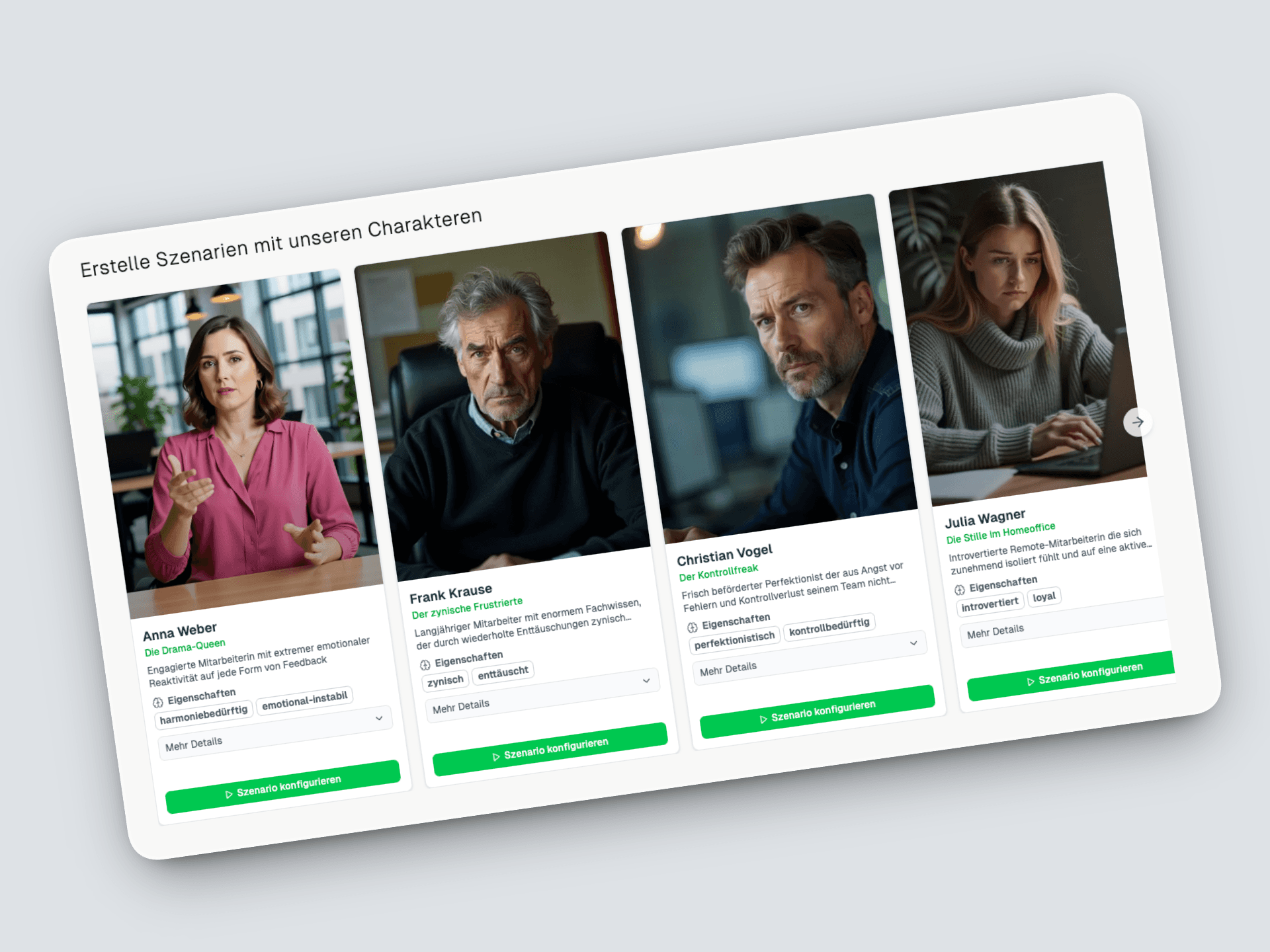
Every employee is different – and reacts differently to feedback. Our characters are built on scientifically validated personality models and simulate realistic conversation dynamics: from the insecure junior employee to the critical senior developer.
Lade Charaktere...
Prepared for everything
Practice with introverted, extroverted, defensive, or emotional characters – just like your real employees.→ No surprises in real conversations
Real reactions
The AI becomes emotional, blocks, or opens up – depending on how you conduct the conversation.→ Learn to respond to different reactions
Safe practice space
Test different approaches without consequences. Find out what works – before it matters.→ Making mistakes is allowed
More Sales Training with Careertrainer.ai
Train different conversation types and challenges in the Sales context with our AI role-plays.
Sales Conversations
Losing deals despite having a great product? Learn in AI-driven role plays how to conduct sales conversations that persuade rather than pressure. Practice with various customer types, from skeptical buyers to urgent decision-makers.
Cold Calls
Do you hesitate to pick up the phone? Learn through AI role-plays how to conduct cold calls that open doors instead of shutting them. Practice with realistic gatekeepers and skeptical decision-makers until cold calling becomes second nature.
Frequently Asked Questions
What is a pricing negotiation in sales?
A pricing negotiation is the process in which sellers and customers discuss the price, terms, and scope of an offer. It often represents a critical phase in the sales process, where it becomes clear whether a deal will be finalized and under what conditions. Professional pricing negotiation does not mean rigidly sticking to a price but rather effectively demonstrating the value of one’s solution and finding fair terms for both parties. The ability to negotiate pricing successfully directly impacts revenue and margins.
Why do many salespeople unnecessarily give away margin?
The most common reasons are lack of preparation, fear of rejection, and insufficient negotiation skills. Many salespeople find price discussions uncomfortable and quickly concede to end the conversation. They underestimate the value of their solution or become unsettled by buyer tactics such as time pressure or competitor comparisons. Studies show that companies with trained sales teams achieve, on average, 12 percent higher margins. Training makes the difference between giving away margin and protecting margin.
How does Careertrainer.ai assist me in conducting successful price negotiations?
Careertrainer simulates professional buyers with various negotiation tactics, ranging from friendly price inquirers to tough professional negotiators. You practice confidently handling typical pressure situations, effectively presenting your value, and demanding concessions in return for any compromises. The AI adjusts its tactics based on your responses and demonstrates which strategies work in different scenarios. This way, you build confidence for real price negotiations.
What distinguishes a price negotiation from handling objections?
Handling objections involves addressing various concerns of the customer, of which price may be just one. In contrast, price negotiation specifically focuses on bargaining over terms when the customer is fundamentally interested in making a purchase. Objection handling typically occurs earlier in the conversation, while price negotiation usually takes place towards the end. Both require different techniques: handling objections is about understanding and persuading, whereas price negotiations are about tactical give and take. With Careertrainer, you can effectively train both of these skills.
Can I really train for price negotiations with AI?
Price negotiations are an ideal practice scenario for AI training because they follow specific tactics that can be learned and practiced. You can experiment with various strategies risk-free, make mistakes, and experience the consequences without losing actual margins. The AI buyers employ realistic negotiation tactics such as anchoring effects, time pressure, and competitive comparisons. Many sales professionals specifically use career training tools to prepare for critical price negotiations or to test new negotiation strategies.
How do I prepare for an important price negotiation?
Thorough preparation involves several elements. Define your objectives, your minimum price, and your best alternative if no deal is reached. Gather arguments that demonstrate your value and provide concrete evidence of benefits. Consider what concessions you can make and what reciprocations you will demand in return. Research the negotiation position and typical style of your counterpart. With Careertrainer, you can role-play the conversation in its entirety and identify weaknesses in your argumentation.
What negotiation tactics do professional buyers use?
Professional buyers are trained in negotiation techniques and employ proven tactics. The anchoring effect sets the stage with an extremely low initial price expectation. The Good Cop, Bad Cop strategy pits different decision-makers against each other. Artificial time pressure creates stress. The competitive comparison leverages real or fabricated alternative offers. The salami tactic demands incremental concessions. Recognizing these tactics enables you to respond confidently. With Careertrainer, you practice identifying and countering each of these strategies effectively.
How do I respond to "Your competitor is cheaper"?
This statement is a classic negotiation tactic that is not always truthful. Ask specifically which competitor and what offer is being referred to. Often, the offers are not directly comparable. Highlight the added value of your solution and calculate the ROI. Inquire why the customer isn't purchasing from the cheaper provider, as this often uncovers hidden concerns. Do not offer a discount simply because someone claims to have cheaper alternatives. With Careertrainer, you'll practice how to skillfully question such statements.
How can I tell if my price negotiation was successful?
A successful price negotiation concludes with a deal that satisfies both parties. You have achieved a price that protects your margin while still being acceptable to the customer. If you made concessions, you received valuable trade-offs in return. The customer feels treated fairly, and the business relationship is strengthened rather than strained. In the long run, success is reflected in the customer returning and recommending you, rather than negotiating even harder next time.
How do I negotiate without jeopardizing the customer relationship?
The key lies in separating the person from the issue, a core principle of the Harvard Negotiation Project. Remain friendly and respectful, even when negotiating firmly on the matter at hand. Show understanding for the customer's position and their cost pressures, but do not compromise unnecessarily. Look for creative solutions that benefit both parties, such as bundled offers or revised payment terms. Avoid using ultimatums and always provide alternatives. With Careertrainer, you'll learn to negotiate assertively yet fairly.
What does BATNA mean and why is it important?
BATNA stands for Best Alternative to a Negotiated Agreement, which refers to your best alternative if no deal is reached. Knowing your BATNA allows you to negotiate from a position of strength, as you are not reliant on closing that one deal. Before any significant negotiation, prepare your BATNA: What happens if this customer does not buy? Who are your other prospects? What other revenue streams do you have? The stronger your BATNA, the more confidently you can negotiate, and the less you will need to make unnecessary concessions.
How much discount is considered normal in price negotiations?
There is no "normal" discount, only the discount you are willing to offer. In some industries, negotiation margins are common and factored into pricing, while in others, they are not. More important than the percentage is the principle: never give something without receiving something in return. A discount should always be tied to conditions such as larger order quantities, longer contract durations, or advance payments. Routinely offering high discounts signals that your list prices are not genuine. With Careertrainer, you'll learn to confidently defend your pricing.
Does the training also work for complex B2B pricing negotiations?
Complex B2B negotiations involving professional procurement departments are an ideal training ground. Careertrainer simulates various buyer types and negotiation styles, from the analytical decision-maker to the aggressive price negotiator. You will practice scenarios such as annual discussions, tenders, or renegotiations after price increases. The scenarios take into account typical B2B dynamics like multi-year contracts, framework agreements, and collaboration with multiple stakeholders on the client side.
How do I implement price increases with existing customers?
Implementing price increases with existing customers requires special sensitivity. Prepare thoroughly with a clear justification, whether it’s due to rising costs, expanded service offerings, or market developments. Communicate proactively and well in advance, not just when sending the invoice. Highlight the added value the customer has received from the partnership. Offer alternatives if the new price poses a problem, such as adjusted service packages. With Careertrainer, you can practice handling these difficult conversations confidently and retaining existing customers.
