
AI role-plays for sales
Mastering Cold Calling with Confidence
Do you hesitate to pick up the phone? Learn through AI role-plays how to conduct cold calls that open doors instead of shutting them. Practice with realistic gatekeepers and skeptical decision-makers until cold calling becomes second nature.
Try for free

Thomas Weber
Head of IT
Cold Calling
Practice scenario
Practice a realistic conversation with our AI employee. Improve your conversation skills in a safe environment.
The Challenges in
Cold Callsn
In the Sales context, conducting Cold Calls confidently is one of the most demanding tasks. You should know these typical pitfalls to successfully master Cold Calls.




MasterCold Callswith Careertrainer.ai
From scenario selection to detailed feedback – Careertrainer makes Cold Calling training in the Sales context simple, effective, and measurable.
Select Scenario
Choose the appropriate scenario from various Cold Calls or create your own individual training scenario.
.png&w=3840&q=75)
Conduct Conversation with AI
Conduct a realistic Cold Calling with our AI. Train different situations and conversation flows in a safe environment.
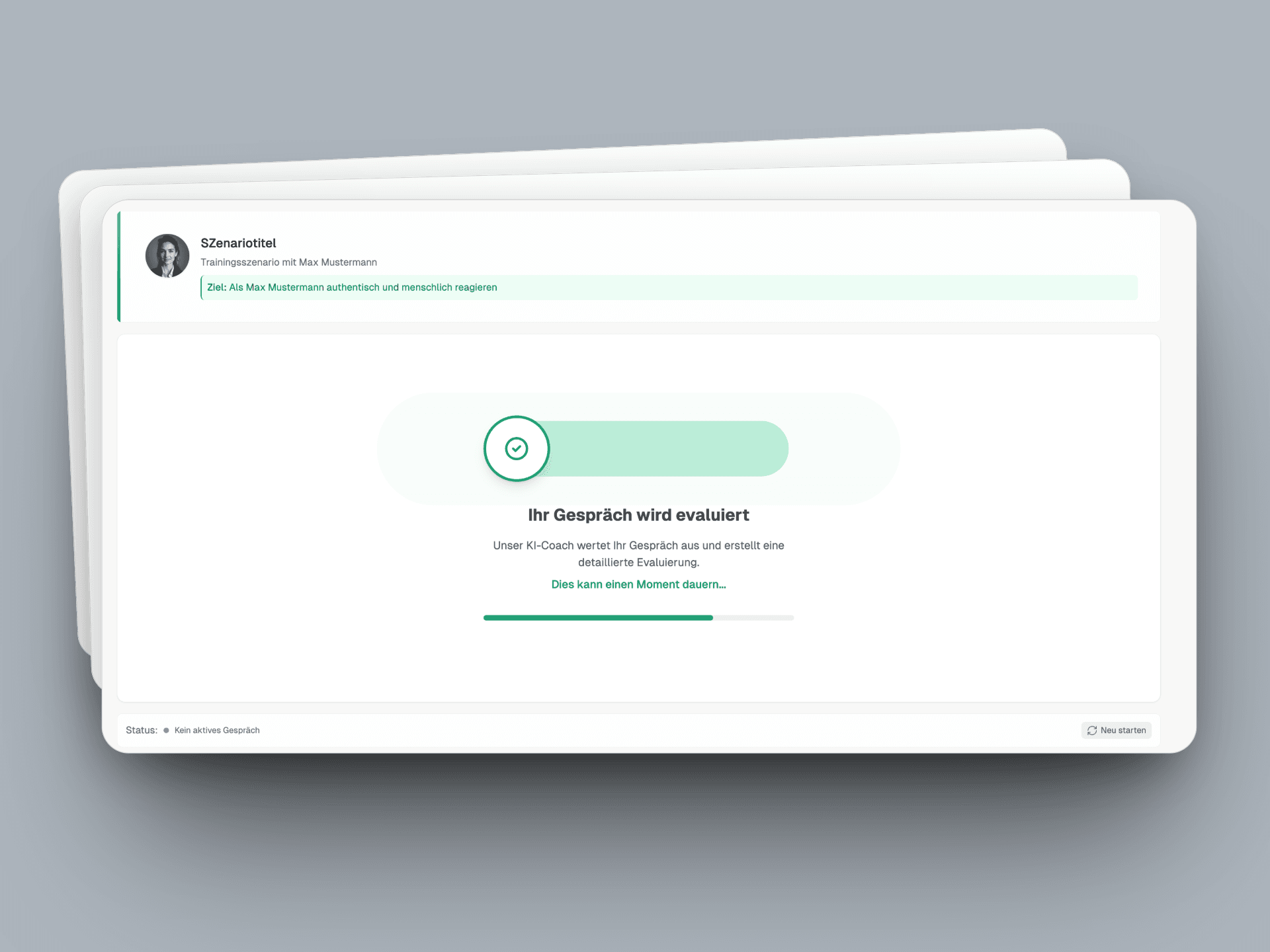
Receive Feedback
Receive detailed, constructive feedback on your Cold Calling and concrete improvement suggestions for practice.
The 5 Phases for successful Cold Calls
Follow this proven 5-phase structure for professional and successful Cold Calls.
1Capturing Attention
You start the conversation with a personal greeting and an engaging introduction that piques the customer's interest. This phase is crucial for establishing a positive foundation for the conversation and motivating the customer to listen actively.
3-5 minutes
Capturing Attention
You start the conversation with a personal greeting and an engaging introduction that piques the customer's interest. This phase is crucial for establishing a positive foundation for the conversation and motivating the customer to listen actively.
About this Phase
You start the conversation with a personal greeting and an engaging introduction that piques the customer's interest. This phase is crucial for establishing a positive foundation for the conversation and motivating the customer to listen actively.
Practical Tips
- Begin with a friendly and confident tone to build trust.
Example Formulations
"Good morning Mr./Ms. Müller, this is Max Mustermann from XY. I recently read that your company..."
"Hello Mr./Ms. Schmidt, I'm calling because I've learned something interesting about your industry..."
+2 more examples
Difficult Situations
"Mr./Ms. Becker, I understand that you are busy. Allow me to briefly explain why I'm calling..."
"I can appreciate your skepticism, Mr./Ms. Fischer. Let me take a moment to clarify..."
+2 more examples
2Conducting a Needs Analysis
You ask targeted questions to understand the customer's needs and challenges. This phase is crucial in demonstrating to the customer that you take their situation seriously and can provide a tailored solution.
10-15 minutes
Conducting a Needs Analysis
You ask targeted questions to understand the customer's needs and challenges. This phase is crucial in demonstrating to the customer that you take their situation seriously and can provide a tailored solution.
About this Phase
You ask targeted questions to understand the customer's needs and challenges. This phase is crucial in demonstrating to the customer that you take their situation seriously and can provide a tailored solution.
Practical Tips
- Actively listen and take notes on important points to refer back to later.
Example Formulations
"Before I present our solution, could you share what your biggest challenges are currently regarding...?"
"Could you tell me more about how your team is currently managing...?"
+2 more examples
Difficult Situations
"I understand that this is a challenge. Are there specific goals you would like to achieve?"
"What improvements are you looking for in your current process?"
+2 more examples
3Presenting Solutions
You present a tailored solution to the client and emphasize the added value. This phase is crucial for demonstrating how your offering addresses the client's specific needs and provides a clear benefit.
10-15 minutes
Presenting Solutions
You present a tailored solution to the client and emphasize the added value. This phase is crucial for demonstrating how your offering addresses the client's specific needs and provides a clear benefit.
About this Phase
You present a tailored solution to the client and emphasize the added value. This phase is crucial for demonstrating how your offering addresses the client's specific needs and provides a clear benefit.
Practical Tips
- Directly connect the solution to the previously identified pain points.
Example Formulations
"Based on what you've shared with me, our product could assist you by..."
"Our solution directly addresses the challenges you've mentioned by..."
+2 more examples
Difficult Situations
"Let me show you how our product meets your specific needs."
"I understand you have concerns. Many of our clients have found that..."
+2 more examples
4Handling Objections
Address the customer's concerns and overcome potential obstacles. This phase is crucial for building trust and convincing the customer of your offering by taking their objections seriously and countering them effectively.
10-15 minutes
Handling Objections
Address the customer's concerns and overcome potential obstacles. This phase is crucial for building trust and convincing the customer of your offering by taking their objections seriously and countering them effectively.
About this Phase
Address the customer's concerns and overcome potential obstacles. This phase is crucial for building trust and convincing the customer of your offering by taking their objections seriously and countering them effectively.
Practical Tips
- Listen attentively and demonstrate understanding of the customer's concerns.
Example Formulations
"I understand your concern. Many of our clients had similar reservations until..."
"That's a valid point. Let me explain how we address this..."
+2 more examples
Difficult Situations
"Some clients had similar questions and found our solution very helpful because..."
"I appreciate your openness. Here’s how we can address this aspect..."
+2 more examples
5Closing & Next Steps
In this phase, you summarize the key points, align on the next steps, and bring the conversation to a close. This stage is crucial for guiding the client towards a decision and establishing a clear agreement for the future course of action.
5-10 minutes
Closing & Next Steps
In this phase, you summarize the key points, align on the next steps, and bring the conversation to a close. This stage is crucial for guiding the client towards a decision and establishing a clear agreement for the future course of action.
About this Phase
In this phase, you summarize the key points, align on the next steps, and bring the conversation to a close. This stage is crucial for guiding the client towards a decision and establishing a clear agreement for the future course of action.
Practical Tips
- Briefly recap the benefits and the solution to emphasize the value proposition.
Example Formulations
"How about we schedule a meeting so I can walk you through the details?"
"I look forward to collaborating with you. When would be a good time for our next conversation?"
+2 more examples
Difficult Situations
"Based on our conversation, I suggest that we..."
"I look forward to your feedback and am excited about the next step."
+2 more examples
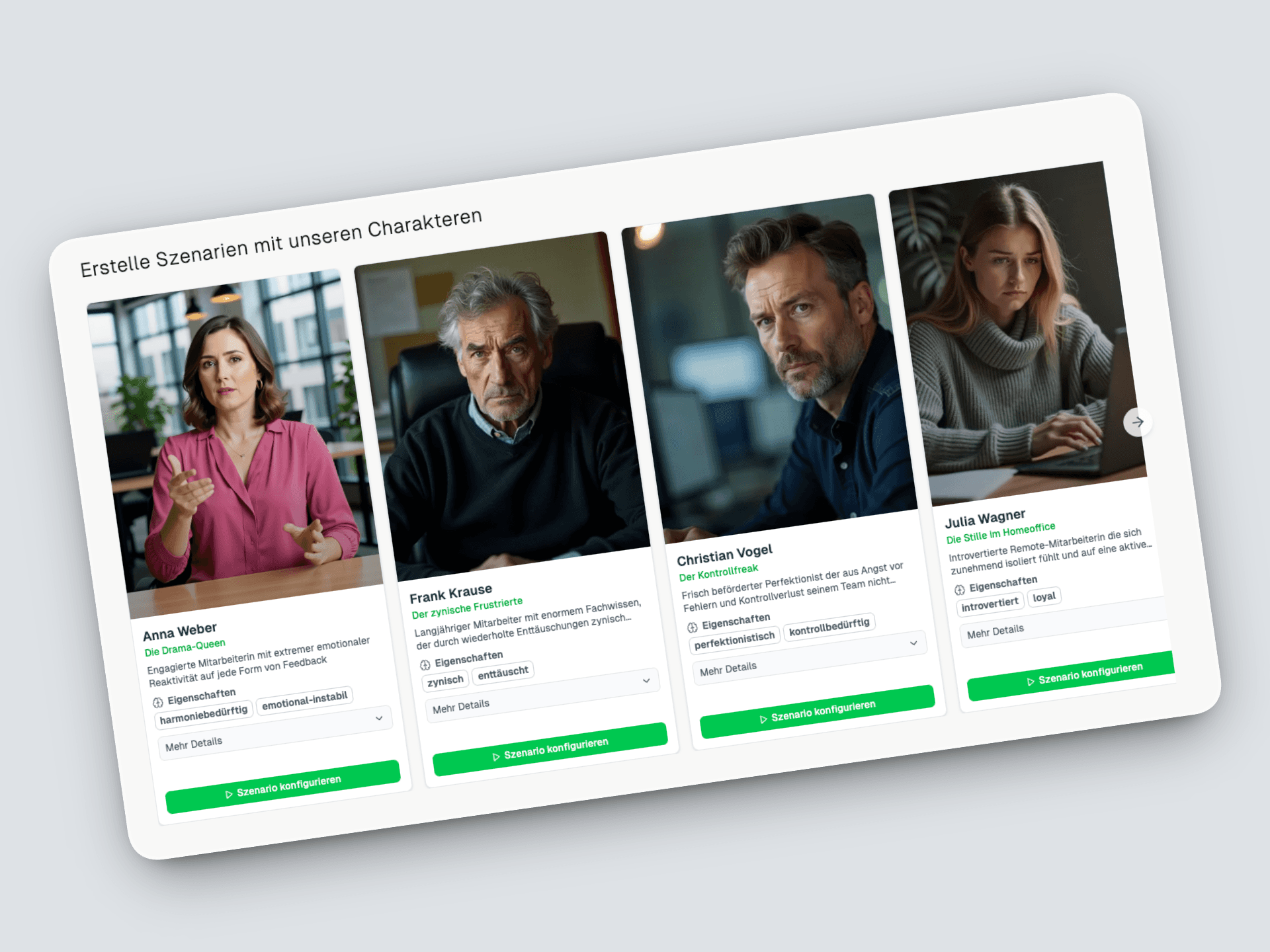
Train Cold Calls with AI characters
Every employee is different – and reacts differently to feedback. Our characters are built on scientifically validated personality models and simulate realistic conversation dynamics: from the insecure junior employee to the critical senior developer.
Lade Charaktere...
Prepared for everything
Practice with introverted, extroverted, defensive, or emotional characters – just like your real employees.→ No surprises in real conversations
Real reactions
The AI becomes emotional, blocks, or opens up – depending on how you conduct the conversation.→ Learn to respond to different reactions
Safe practice space
Test different approaches without consequences. Find out what works – before it matters.→ Making mistakes is allowed
More Sales Training with Careertrainer.ai
Train different conversation types and challenges in the Sales context with our AI role-plays.
Sales Conversations
Losing deals despite having a great product? Learn in AI-driven role plays how to conduct sales conversations that persuade rather than pressure. Practice with various customer types, from skeptical buyers to urgent decision-makers.
Price Negotiations
Are you too quick to offer discounts? Learn through AI role-playing how to conduct price negotiations that protect your margins instead of sacrificing them. Practice with professional buyers and gain confidence in defending your value.
Frequently Asked Questions
What is cold calling?
Cold calling refers to the initial outreach to potential customers with whom no prior business relationship exists. In contrast to warm leads, where there is already some contact or interest, cold calling starts from scratch. Telephone cold calling is considered the pinnacle of sales techniques. It requires thorough preparation, a compelling pitch, and the ability to handle rejection professionally.
Why is cold calling still important?
Despite the rise of digital marketing channels, telephone cold calling remains an effective tool for acquiring new customers. Studies show that companies that do not engage in cold calling experience up to 42 percent less growth compared to those that actively pursue leads. The direct personal contact allows for immediate responses to questions and objections, fostering relationship-building. Particularly in the B2B sector, decision-makers can often be reached more quickly by phone than through overcrowded email inboxes or social media platforms.
How does Careertrainer.ai assist me with cold calling?
Careertrainer simulates various conversation scenarios, ranging from skeptical gatekeepers to dismissive receptionists and stressed decision-makers. You practice finding a compelling opening, getting past the gatekeeper, and generating interest before the prospect hangs up. The AI adjusts its responses based on your word choice and timing, providing you with specific feedback after each session. This way, you build confidence before reaching out to real decision-makers.
What distinguishes cold calling from warm calling?
In warm calling, there is already a point of contact: the potential customer is familiar with your company, has made an inquiry, or has been referred to you. In contrast, with cold calling, you are reaching out to individuals who have never heard of you before. This makes cold calling more challenging, as you must establish trust and generate interest within a matter of seconds. The techniques differ accordingly: cold calling primarily focuses on capturing attention and relevance, while warm calling emphasizes deepening the relationship and closing the deal.
Can I really train for cold calling with AI?
Cold calling is ideal for AI training because the first few seconds of a cold call are crucial and need to be practiced repeatedly. You can experiment with different opening lines, role-play gatekeeper scenarios, and learn to handle rejection without burning real leads. The AI responds realistically to your choice of words and timing. Many sales professionals use career coaching tools to overcome their fear of the phone and increase their success rate.
How do I prepare for a cold call?
Thorough preparation is key to success. Research the company and the contact person, ideally using LinkedIn or the company's website. Find a relevant hook, such as a recent press release or a recognizable industry challenge. Craft your elevator pitch to convey the benefits in no more than 30 seconds. Prepare responses to common objections and define your goal for the call, whether it's to schedule an appointment, arrange a follow-up conversation, or obtain specific information.
How do I get past gatekeepers?
Gatekeepers, such as assistants or receptionists, are not adversaries but potential allies. Treat them with respect and briefly and confidently explain why your call is relevant to the decision-maker. Ask for their name and use it during the conversation. Avoid typical sales clichés and instead sound like a business partner. If you are not transferred, inquire about the best time to call back or request a direct extension. With CareerTrainer, you can practice various gatekeeper scenarios.
How can I overcome the fear of cold calling?
The fear of cold calling is common, even among seasoned sales professionals. The key lies in preparation and practice. The better prepared you are and the more you practice, the more confident you will become. Shift your perspective: you are not calling to interrupt, but to offer a solution. Set realistic goals and celebrate small victories. Work in focused time blocks instead of trying to call all day. With CareerTrainer, you can build your routine in a stress-free environment.
How can I tell if my cold call was successful?
A successful cold call does not necessarily end with a sale but rather with a clear next step. You have set an appointment, gathered relevant information, or identified a qualified lead. The person you called showed genuine interest and was willing to invest time in the conversation. Even if an immediate appointment is not secured, the call is considered successful if you have established a validated contact that you can follow up with later.
How many cold calls should I make per day?
The optimal number depends on your industry, product, and experience. In the B2B sector, making 30 to 50 calls per day is a realistic benchmark for focused outreach. More important than the sheer quantity is the quality of the conversations. Work in concentrated 90-minute blocks with short breaks in between. AIm to schedule at least three to five of these blocks on your acquisition days. Carefully document each call to learn from both successes and setbacks.
What should I say in the first 10 seconds of a cold call?
The first few seconds determine whether the prospect will engage or hang up. Avoid dull clichés and start with a relevant hook that piques interest. Briefly introduce your name and your company, then immediately state the purpose of your call and the potential benefits for the prospect. Pose a thought-provoking question or mention a specific problem that you can solve. With Careertrainer, you can test different opening lines and discover which ones are effective.
Is cold calling allowed in B2B?
In the B2B sector, cold calling is generally permitted in Germany, provided there is presumed consent. This means you can assume that the contacted company may have an interest in your offering due to a relevant connection. For instance, if you sell logistics software, you are allowed to call logistics companies. However, cold emailing without prior consent is more problematic. Make sure to familiarize yourself with the current legal regulations in your country and industry.
Does the training also work for complex B2B cold calling?
Especially in the B2B sector with complex products, cold calling can be particularly challenging. Careertrainer simulates various company sizes and industries, from small to medium-sized business executives to corporate buyers. You will practice how to articulate complex solutions clearly in just a few sentences and persuade decision-makers to engage in a follow-up conversation. The scenarios take into account typical B2B dynamics such as lengthy decision-making cycles, multiple stakeholders, and high demands for professionalism.
When is the best time for cold calls?
The optimal timing varies depending on the industry and target audience. Generally, the morning hours between 8 and 10 AM and the late afternoon between 4 and 6 PM are often promising, as decision-makers are more likely to be available during these times. Avoid Monday mornings and Friday afternoons. Wednesday and Thursday are considered the best days for cold calling. Experiment with different times and document your results to determine the ideal timing for your specific target audience.
