
Leadership development in mechanical and plant engineering – AI role-playing games for technical leaders
Project managers, department heads, and technical leaders in mechanical engineering train difficult conversations using AI role-playing.
Leadership in mechanical and plant engineering means: project responsibility, leading highly qualified engineers, managing customer projects under time pressure, and navigating the interface between technical depth and commercial requirements. Interim leaders, project managers, and department heads train with Careertrainer for the most challenging conversations in their leadership roles.
Try for free

Practice scenario
Practice a realistic conversation with our AI employee. Improve your conversation skills in a safe environment.
The biggest leadership challenges in machinery and plant engineering.
Highly qualified engineers often find leadership to be disruptive.
Engineers and technicians in mechanical engineering are highly intrinsically motivated and require autonomy. Leadership that is overly controlling or lacks objectivity quickly loses acceptance. AI role-playing trains leadership conversations with technically strong yet independent employees: How do I provide feedback that is perceived as technically justified? How do I delegate without micromanaging?
Project management without disciplinary authority: How do you motivate a team without the power to issue directives?
Project managers in mechanical engineering often lead interdisciplinary teams without direct authority. AI scenarios train how to establish commitment without hierarchy: clearly communicate expectations, address resistance early, and align individuals from different departments towards a common project goal—even if they formally report to different supervisors.
Seamlessly facilitate communication between design, manufacturing, purchasing, and sales?
In mechanical engineering, many projects span across all functional areas, each with varying priorities and communication styles. Leaders are trained to act as translators between technical depth and commercial requirements, de-escalate interface conflicts, and facilitate cross-departmental decisions.
Attracting qualified engineers and technicians in a highly competitive job market?
In mechanical engineering, companies compete intensely for experienced engineers. Career discussions, development opportunities, and honest feedback are the most effective retention tools—but they are often conducted too infrequently and superficially in many engineering firms. AI role-playing trains retention conversations, development discussions, and handling counteroffers.
executive-on-time-mechanical-engineering
Train realistic leadership situations with AI characters
Features for engineering companies and technical executives
The essential tools for sustainable leadership competence in mechanical and plant engineering.
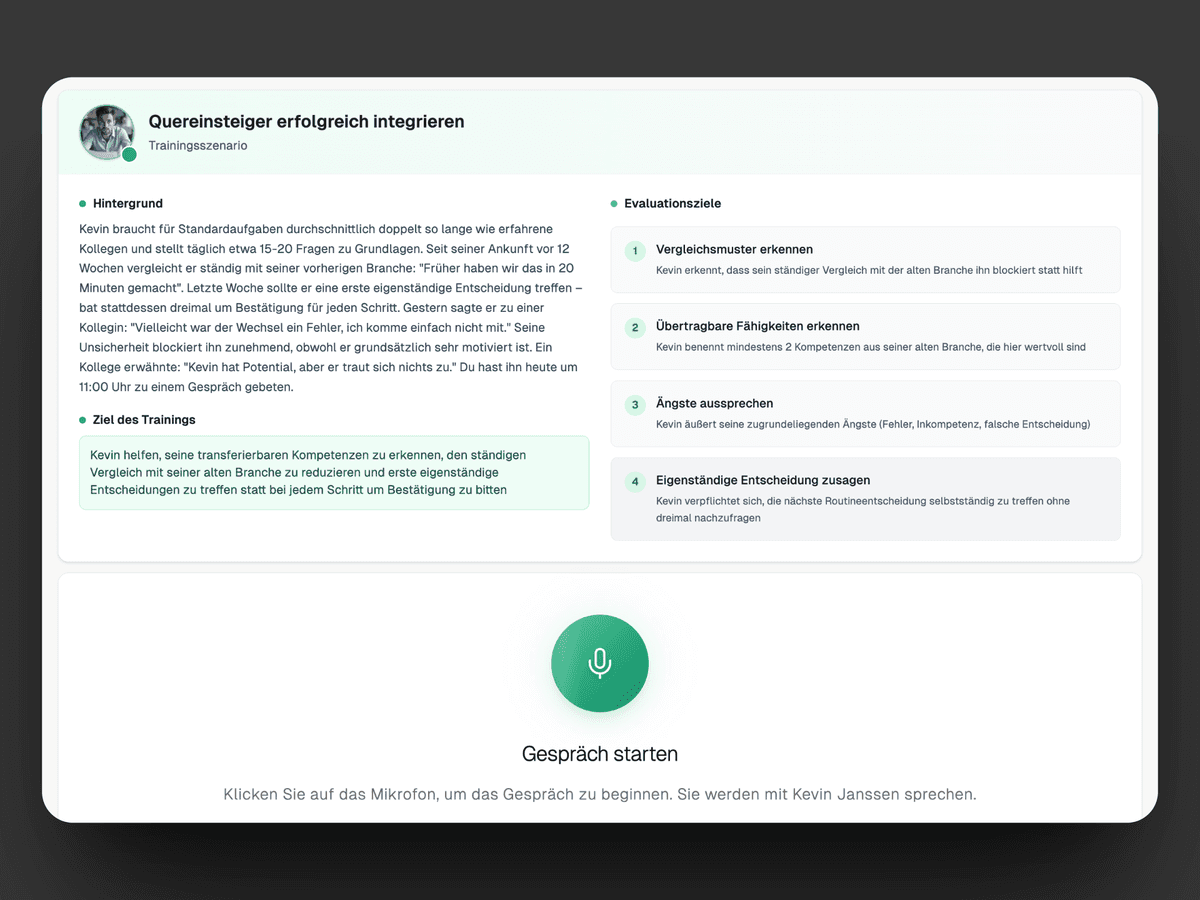
Realistic engineering team conversation simulations
Executives train audio conversations with AI engineering characters – from the opinionated senior designer to the introverted specialist who struggles to accept feedback. The AI responds to the quality of the conversation: factual grounding and genuine appreciation open the dialogue, while hierarchical gestures lead to resistance.

Machine engineering-specific employee characteristics
Over 50 AI characters featuring typical engineer and technician profiles: the experienced designer who is skeptical of new methods, the ambitious young engineer who moves too quickly, the specialist who thinks only within his domain, and the project engineer who is worn down by tight deadlines. Each character is realistic and consistent.
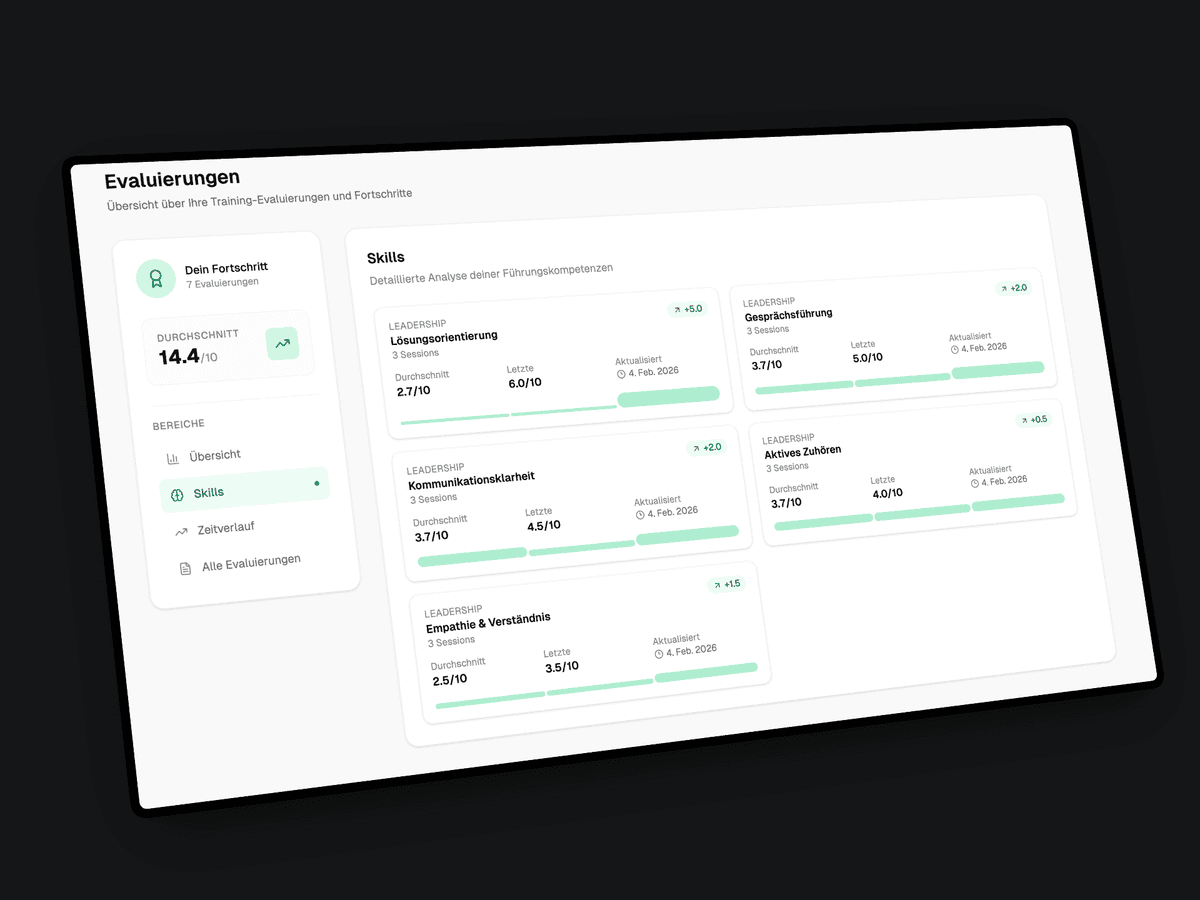
Skill Gap Analysis for Technical Leaders
Automatic analysis of leadership quality based on five core competencies: active listening, empathy, conversation management, solution orientation, and communication clarity. The dashboard displays strengths and areas for development for each project manager and department head—over time and in comparison to the company.
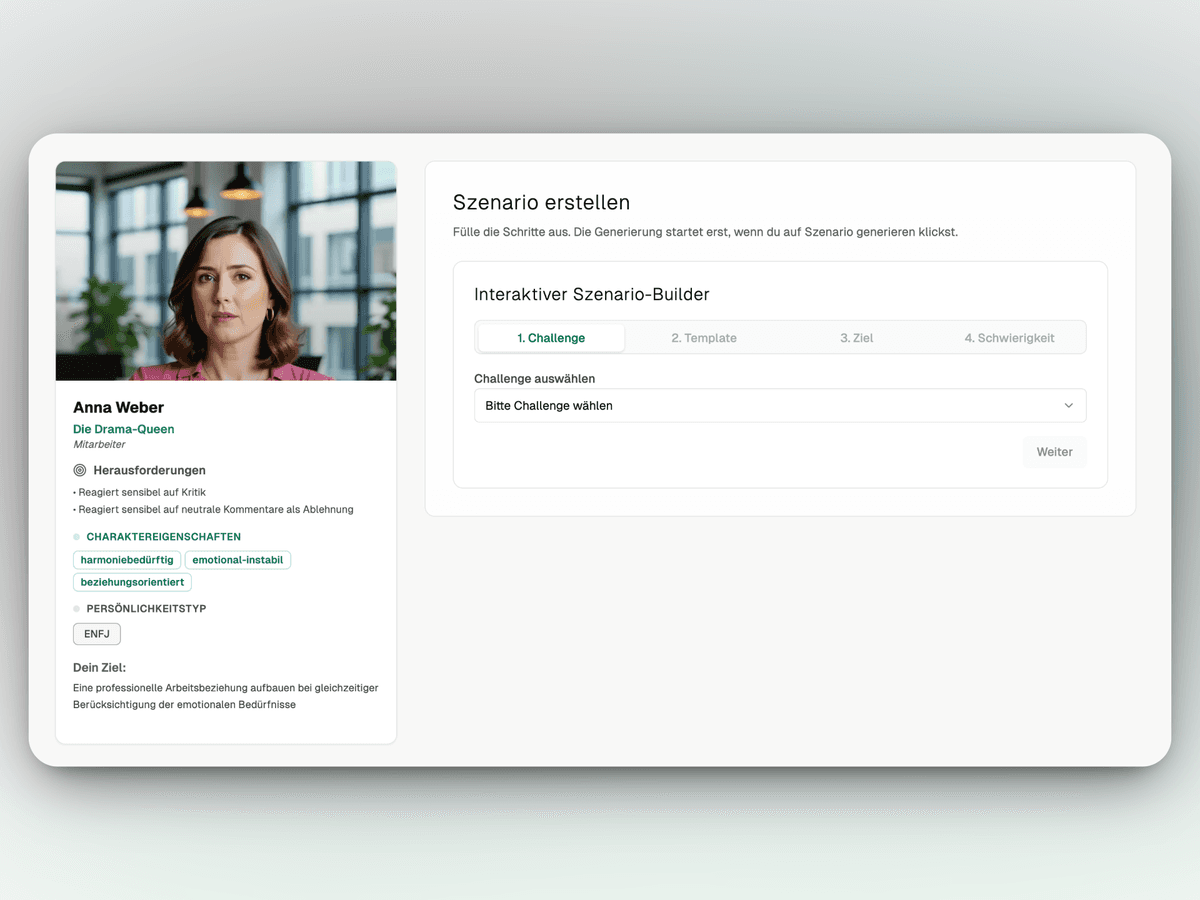
Scenario generator for project-specific leadership situations
HR and project management can create their own training scenarios in minutes based on real situations: a conversation with an engineer blocking project goals, conflict mediation between design and production, or a retention discussion with a key developer who has an external offer. No external trainer required.
Leadership in Mechanical and Plant Engineering in Numbers
Why leadership competence in mechanical engineering determines project performance, innovation capability, and employee retention.
This is how AI leadership training works for machinery and plant engineering.
In four steps to measurable leadership competence for technical leaders.
Start immediately or configure project-specific scenarios.
Standard scenarios for typical leadership conversations in mechanical engineering are immediately available: feedback discussions with engineers, project leadership conversations without decision-making authority, motivational talks under time pressure, and cross-departmental conflict discussions. For company-specific training, the scenario generator creates scenarios based on your project culture.
Training realistic engineering team conversations
Executives engage in audio conversations with AI engineer characters – the opinionated senior designer, the introverted specialist, the project engineer under pressure, and the unconventional thinker who rejects standard solutions. The AI responds authentically: factual grounding and genuine appreciation foster dialogue, while hierarchical gestures lead to resistance.
Immediate feedback on leadership behavior and conversation quality.
After each conversation, we analyze active listening, empathy, conversation management, solution orientation, and communication clarity. We provide specific phrasing suggestions for more effective feedback discussions, clearer expectation communication, and improved conflict moderation between departments.
Measure and develop leadership skills over time.
The dashboard displays skill scores and development curves for each leader. HR and talent development can identify who excels in feedback discussions and who needs support in conflict resolution or project leadership without authority—based on data and without extensive development conversations.
Tailored for all leadership roles in machinery and plant engineering.
Careertrainer supports project managers, department heads, technical directors, and HR teams.
Project managers and technical leaders on a temporary basis
Leading without directive authority and with interdisciplinary teams.
Establish commitment without hierarchy.
Project managers in mechanical engineering often lead teams without disciplinary authority—commitment must be built through communication, clarity, and trust. AI role-playing exercises train how to establish accountability in interdisciplinary teams, address resistance from other departments early on, and mediate conflicts between technical and commercial priorities.
Head of Construction, Development, and Manufacturing
Lead and retain highly qualified engineering talents for the long term.
From industry authority to leadership figure
Department heads in design and development lead teams with a high level of professional confidence. Leadership skills are cultivated not through hierarchy, but through respect, empathy, and the feeling of being supported in personal development. AI role plays train development conversations, retention discussions, and feedback sessions that are perceived as professionally legitimate.
New Technical Leaders in Mechanical Engineering
Systematically build leadership fundamentals – immediately and without waiting for a seminar.
From the best engineer to a compelling leader.
Engineers taking on leadership responsibilities for the first time face a role transition for which they are rarely prepared. Structured learning paths train them in the conversations of the initial leadership phase: clarifying expectations with the team, conducting the first feedback session, delegation, and managing their former colleague role.
HR and personnel development in mechanical engineering
Scale leadership development and make impact measurable.
Data-driven executive development without external trainers.
HR and personnel development in mechanical engineering face the challenge of developing technical leaders who rarely have time for seminars and are skeptical of traditional training formats. Careertrainer offers a solution tailored to this target group: precise, efficient, directly applicable – and with measurable progress displayed on a dashboard.
Your situation not included?
No problem — that’s exactly what Careertrainer.ai is for. With state-of-the-art AI we tailor the platform to your organisation and industry, so your teams practise in scenarios that feel as realistic as possible.
Create yourself
Describe your situation in your own words. The scenario generator creates a playable training in minutes — tailored to your processes and typical conversations.
We develop for you
On request, we develop custom training scenarios for your company — tailored to your specific challenges, culture and conversation situations.
With training partner
Want to combine AI training with in-person coaching? In our network you'll find experienced coaches who integrate Careertrainer into existing development programmes.
Example from practice
We have very specific conversation situations in our daily work — none of the standard trainings really covered that. With Careertrainer we could train exactly what actually matters to us.
We map exactly these situations — as self-service, with our help, or together with a training partner
When do companies use Careertrainer.ai?
Six typical scenarios for HR teams, leaders, and training providers
Onboarding for new leaders
Productivity from week 2 instead of month 6. New leaders practice their first difficult conversations before they have to lead them – from the first feedback conversation to taking over a team. No more learning by doing with real employees.
- Practice first leadership conversations risk-free
- Avoid typical beginner mistakes
- Faster effectiveness in the new role
- Structured onboarding program with progress tracking
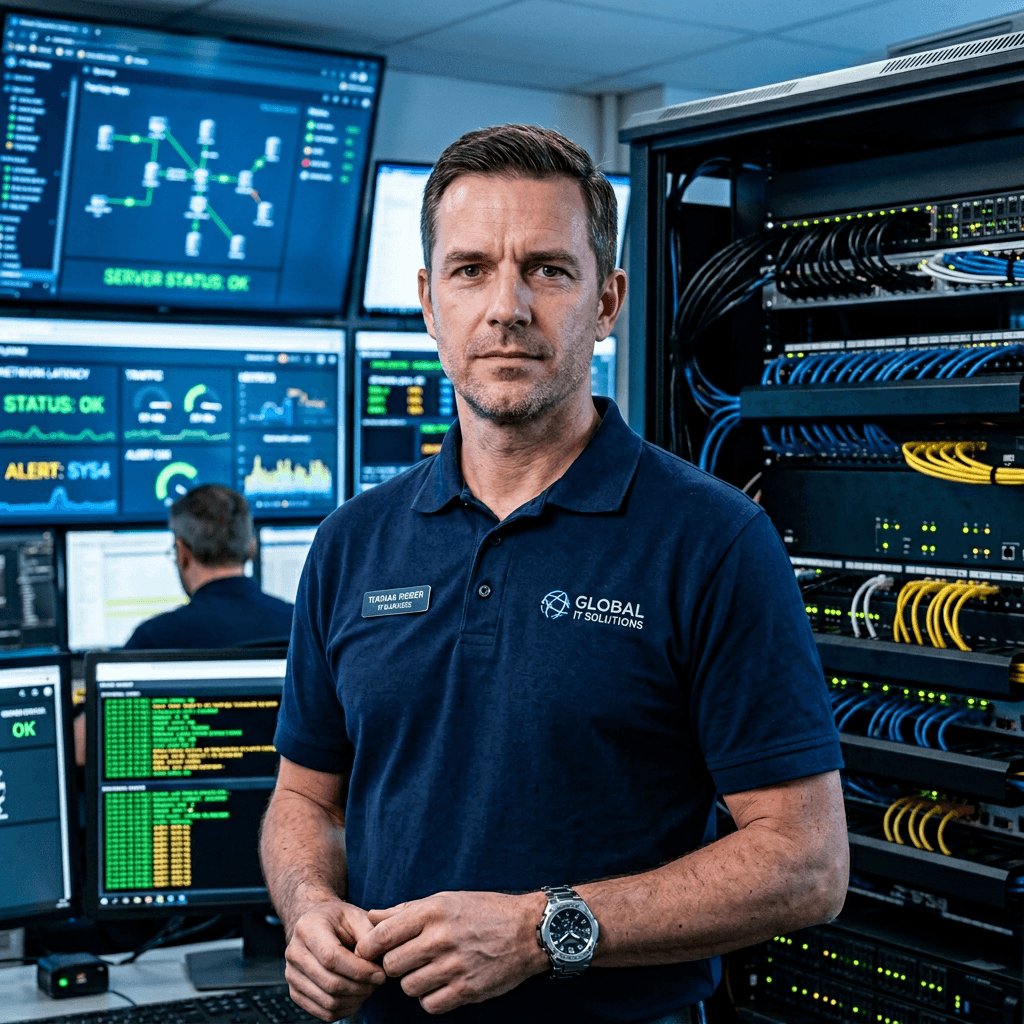


Other Industries for Leadership Training
Discover industry-specific leadership development and leadership training for other industries.

Leadership Training in the IT Industry
Executives in IT companies train with AI role-playing to handle challenging employee conversations, remote leadership, conflict resolution within development teams, and communication between technology and business.

Leadership Training in Retail
Branch managers, team leaders, and retail executives train with AI role-playing to handle challenging employee conversations, shift management, performance reviews, and conflict resolution within the sales team.

AI Role-Playing Games for Educational Institutions
Leaders in educational institutions, training providers, and social organizations train difficult employee conversations, educational leadership, and team development using AI role-playing.
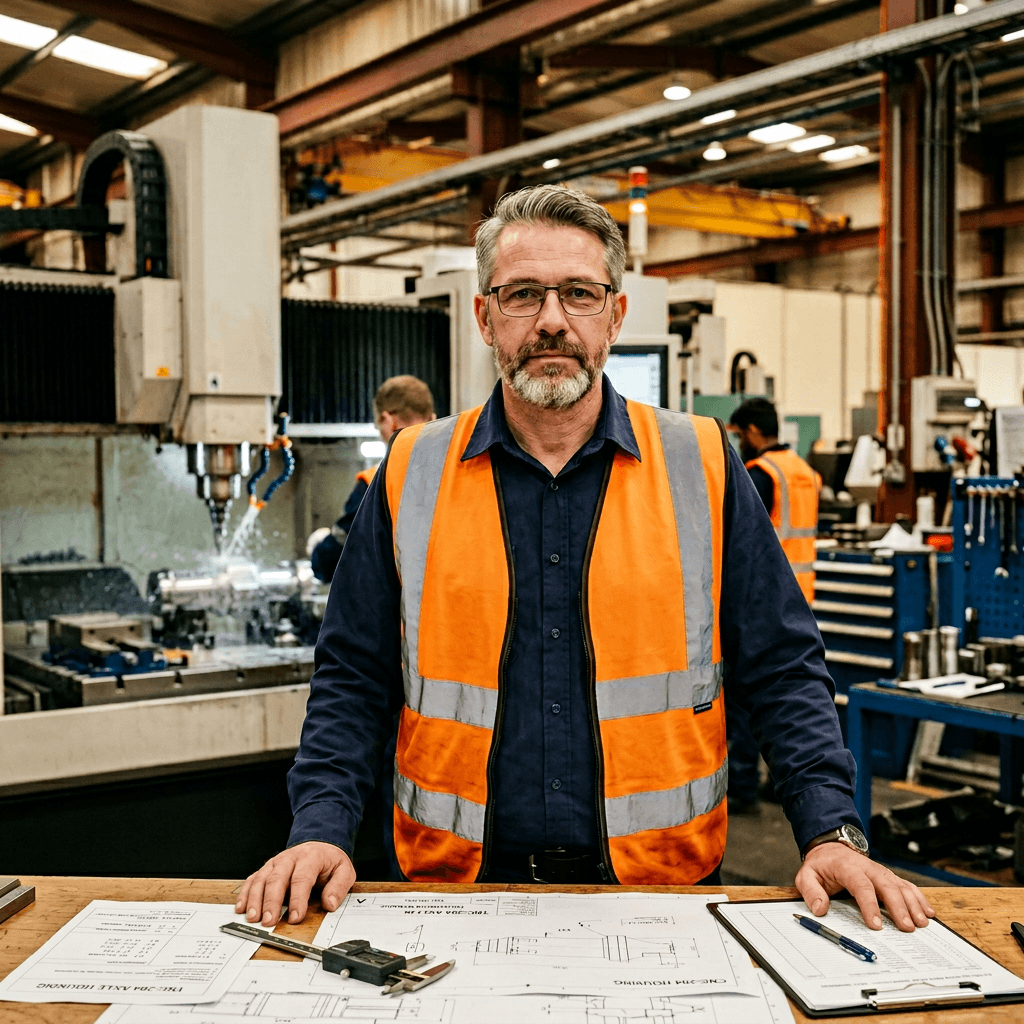
Leadership training in manufacturing
Masters, shift leaders, and executives in industrial companies train with AI role-playing to handle challenging employee conversations, shift management, performance reviews, and conflict resolution in production.

Leadership Training in Healthcare
Healthcare executives train with AI role-playing to handle difficult employee conversations, shift management, conflict resolution within nursing teams, and leadership under high emotional stress.
Frequently Asked Questions about Leadership Development in Mechanical and Plant Engineering
Everything that engineering companies, project managers, and HR teams need to know.
