
AI role-plays for leaders
Mastering Salary Negotiations
Conquer salary negotiations without the stress. Learn to conduct salary discussions that are fair yet economically viable through AI role-playing scenarios. Various AI characters simulate different negotiation styles—from the reserved to the assertive employee.
Try for free

Thomas Weber
Head of IT
Salary Conversation
Practice scenario
Practice a realistic conversation with our AI employee. Improve your conversation skills in a safe environment.
The Challenges in
Salary Negotiationsn
In the Leadership context, conducting Salary Negotiations confidently is one of the most demanding tasks. You should know these typical pitfalls to successfully master Salary Negotiations.





MasterSalary Negotiationswith Careertrainer.ai
From scenario selection to detailed feedback – Careertrainer makes Salary Conversation training in the Leadership context simple, effective, and measurable.
Select Scenario
Choose the appropriate scenario from various Salary Negotiations or create your own individual training scenario.
.png&w=3840&q=75)
Conduct Conversation with AI
Conduct a realistic Salary Conversation with our AI. Train different situations and conversation flows in a safe environment.
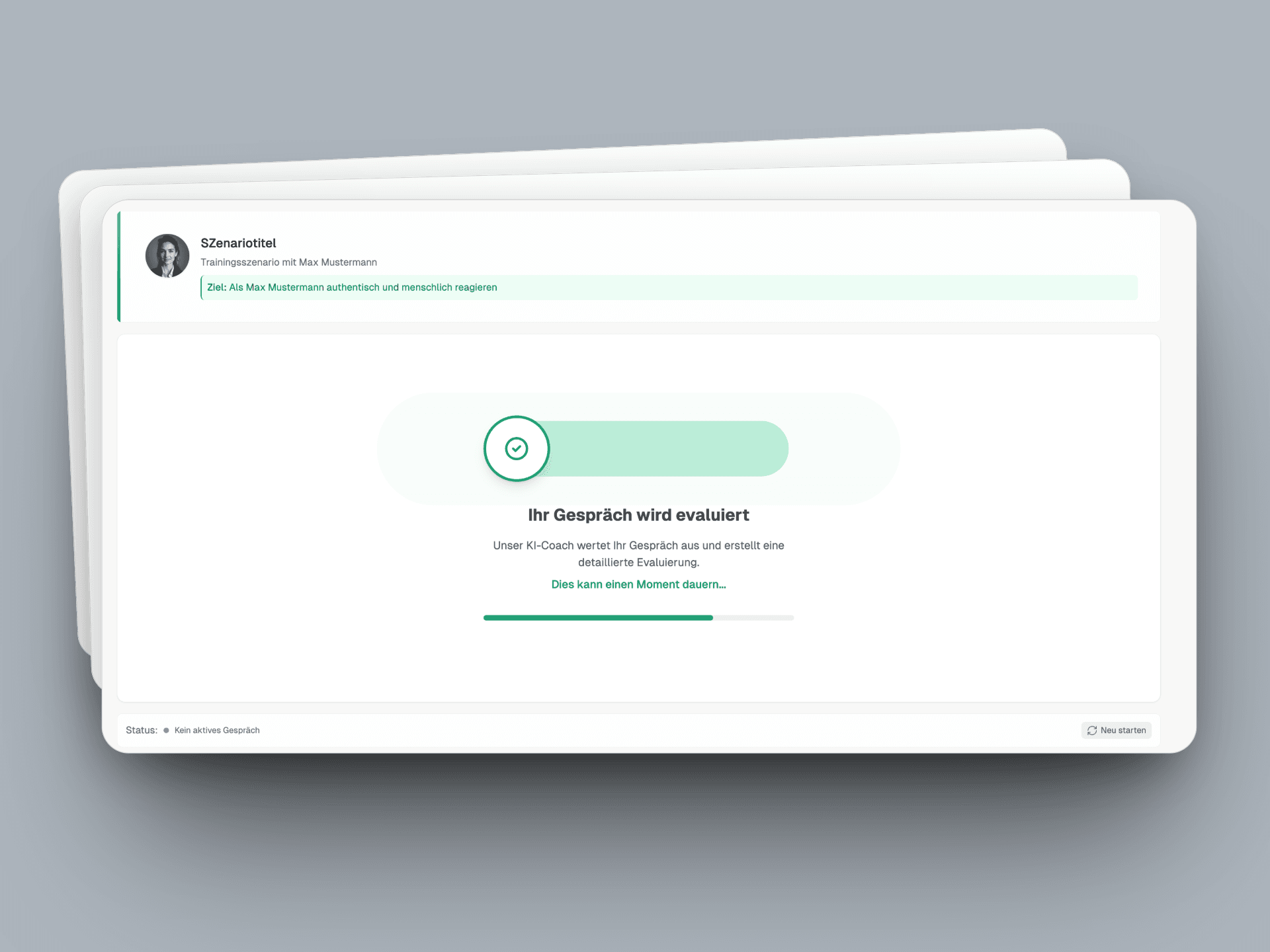
Receive Feedback
Receive detailed, constructive feedback on your Salary Conversation and concrete improvement suggestions for practice.
The 5 Phases for successful Salary Negotiations
Follow this proven 5-phase structure for professional and successful Salary Negotiations.
1Preparation & Setting the Framework
Prepare thoroughly for the conversation. Define your goals and create a list of arguments that support your position.
5-10 Minuten
Preparation & Setting the Framework
Prepare thoroughly for the conversation. Define your goals and create a list of arguments that support your position.
About this Phase
Prepare thoroughly for the conversation. Define your goals and create a list of arguments that support your position.
Practical Tips
- Analyze market conditions and salaries for similar positions.
2Performance Presentation & Market Positioning
Present the employee's achievements and compare them to the market. Highlight how the employee's contributions have contributed to the company's success.
15-20 Minuten
Performance Presentation & Market Positioning
Present the employee's achievements and compare them to the market. Highlight how the employee's contributions have contributed to the company's success.
About this Phase
Present the employee's achievements and compare them to the market. Highlight how the employee's contributions have contributed to the company's success.
Practical Tips
- Prepare specific examples of outstanding performance.
3Negotiation & Argument Exchange
Begin the negotiation by asking the employee for their salary expectations and argue based on that. Make sure to promote an open discussion.
20-25 Minuten
Negotiation & Argument Exchange
Begin the negotiation by asking the employee for their salary expectations and argue based on that. Make sure to promote an open discussion.
About this Phase
Begin the negotiation by asking the employee for their salary expectations and argue based on that. Make sure to promote an open discussion.
Practical Tips
- Actively inquire about the employee's salary expectations.
4Agreement & Alternative Solutions
Find a mutually acceptable agreement. Also consider alternative solutions such as bonuses or professional development opportunities.
15-20 Minuten
Agreement & Alternative Solutions
Find a mutually acceptable agreement. Also consider alternative solutions such as bonuses or professional development opportunities.
About this Phase
Find a mutually acceptable agreement. Also consider alternative solutions such as bonuses or professional development opportunities.
Practical Tips
- Propose various options to make the salary discussion more flexible.
5Agreement & Documentation
Record the agreements made in writing and ensure that both parties understand and accept the outcomes.
5-10 Minuten
Agreement & Documentation
Record the agreements made in writing and ensure that both parties understand and accept the outcomes.
About this Phase
Record the agreements made in writing and ensure that both parties understand and accept the outcomes.
Practical Tips
- Summarize the discussed points at the end of the conversation.
Train Salary Negotiations with AI characters
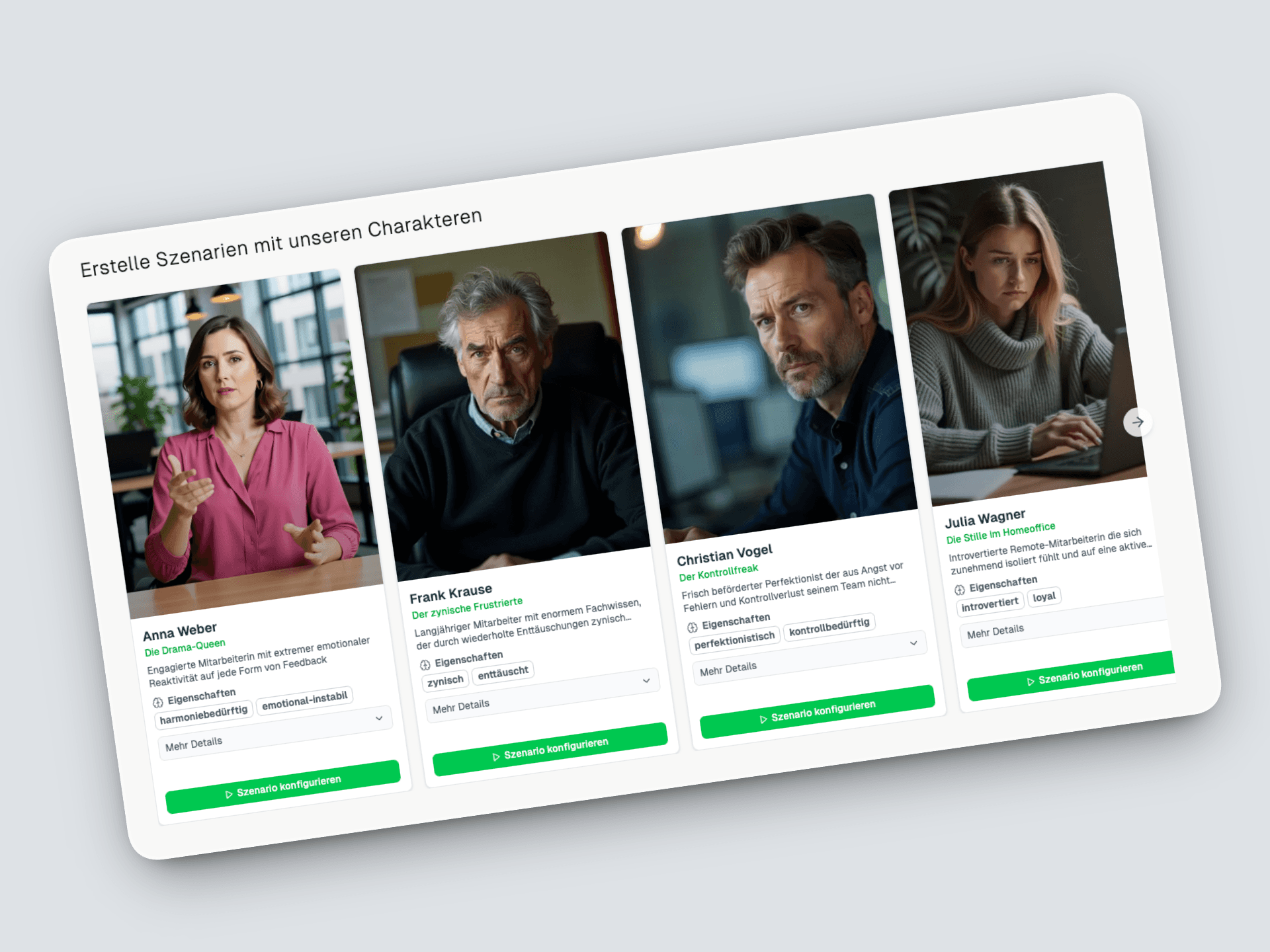
Every employee is different – and reacts differently to feedback. Our characters are built on scientifically validated personality models and simulate realistic conversation dynamics: from the insecure junior employee to the critical senior developer.
Lade Charaktere...
Prepared for everything
Practice with introverted, extroverted, defensive, or emotional characters – just like your real employees.→ No surprises in real conversations
Real reactions
The AI becomes emotional, blocks, or opens up – depending on how you conduct the conversation.→ Learn to respond to different reactions
Safe practice space
Test different approaches without consequences. Find out what works – before it matters.→ Making mistakes is allowed
More Leadership Training with Careertrainer.ai
Train different conversation types and challenges in the Leadership context with our AI role-plays.
Mediation Conversations
When team members block each other and positions harden, it's crucial to learn how to facilitate mediation conversations that transform adversaries back into colleagues. Engage in AI role-play scenarios where intelligent AI characters simulate emotional escalations and hidden power dynamics, allowing you to practice the mediator role without igniting real conflicts.
Coaching Conversations
Does your team need development, but your advice falls flat? Learn to conduct coaching conversations that create real breakthroughs through AI role-playing. Realistic AI characters respond like actual employees—practice risk-free and become the coach who truly makes a difference.
Employee Development Conversations
Conduct career conversations without empty promises? Learn to lead employee development discussions that inspire rather than frustrate through AI role-playing scenarios. Practice with intelligent AI characters in various development scenarios and accurately identify potentials.
Frequently Asked Questions
How realistic are the AI role plays for salary negotiations?
The AI simulates various types of negotiations, from modest to demanding employees. You practice factual salary negotiations with authentic responses to your arguments.
How do I conduct a structured salary discussion?
You train the different phases: acknowledging performance, assessing the market situation, outlining development perspectives, and making fair agreements. The AI assists you in conducting balanced salary negotiations.
How long does a salary negotiation training session last?
15-30 minutes per session, depending on the complexity of the negotiation. You can practice specific argumentation techniques or run through complete negotiations multiple times.
Will I receive feedback on my negotiation techniques?
Yes, you will receive immediate feedback on your approach to presenting arguments, responding to demands, and developing fair solutions, along with tips for objective and balanced salary negotiations.
Are my practice salary negotiations confidential?
Completely private. You can practice various salary scenarios and even difficult negotiations without your employees or colleagues knowing about it.
